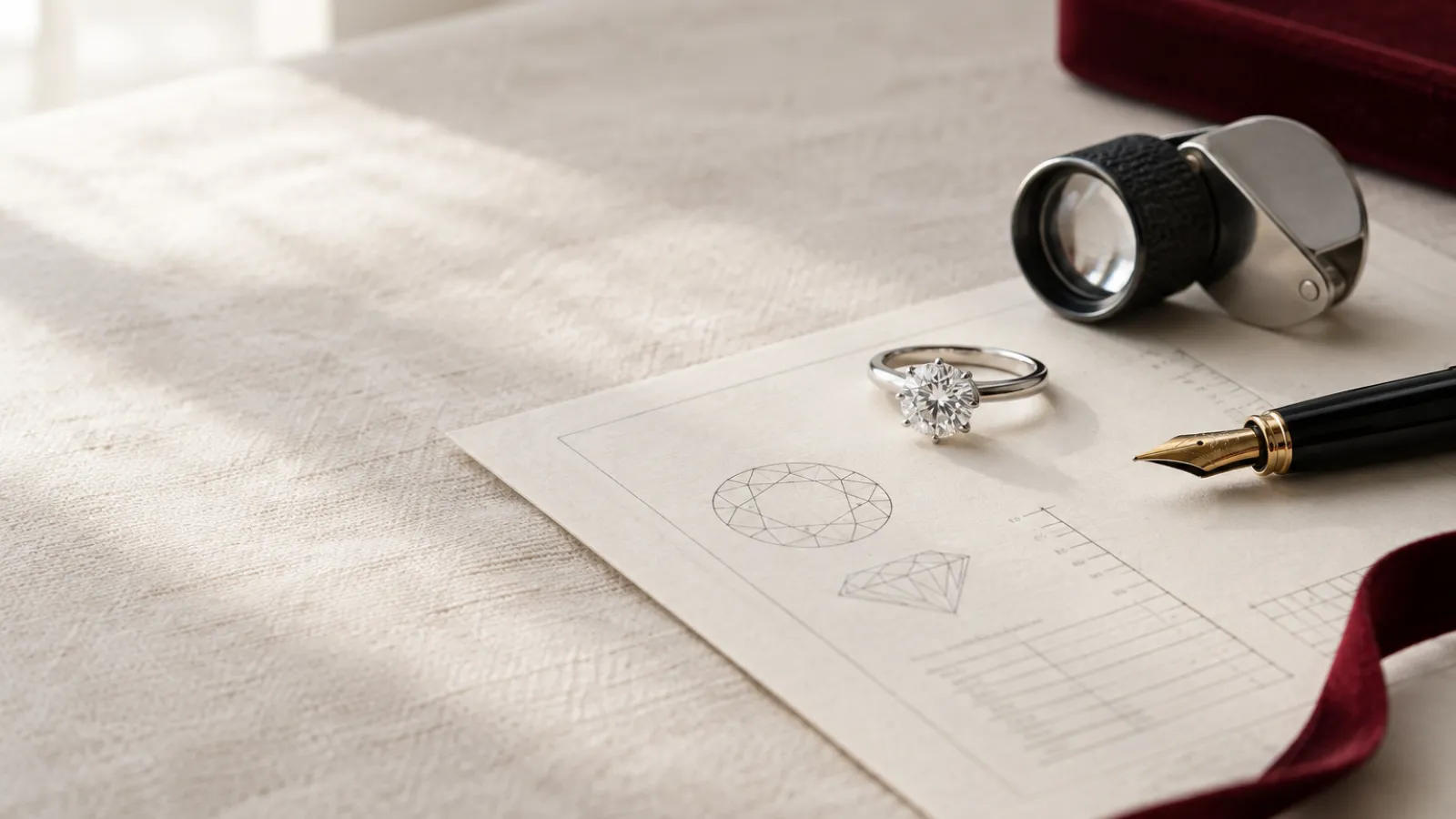
How to Insure an Engagement Ring: Appraisals, Riders and Coverage
Learn how to insure an engagement ring with an appraisal, scheduled-property rider, accurate replacement value, documented condition and clear policy exclusions.

Eleanor edits The Manual. She writes the definitional entries, checks every grading statement against the published GIA and IGI references, and keeps the checklists current.
Learn how to insure an engagement ring with an appraisal, scheduled-property rider, accurate replacement value, documented condition and clear policy exclusions.
Can this ring be resized? Learn which ring metals, settings, shanks and vintage construction allow resizing, how to check before buying, and what changes.
How are pearls graded? Pearl value depends on luster, surface, nacre, shape, color, size and matching, with different standards for each pearl type.
Learn how to buy cameo jewelry by identifying shell, hardstone and glass, checking carving, mount, age and condition, and comparing prices for genuine vintage pieces.
An asscher cut diamond is a square step-cut stone with clipped corners. Learn how its facets, proportions, clarity, color, price and setting affect a purchase.
A pear shaped diamond combines a rounded end with a pointed tip. Learn how ratio, symmetry, point protection, grading, durability and price affect a purchase.
A cushion cut diamond has rounded corners and a square or rectangular outline; compare chunky and crushed-ice faceting, then verify proportions, clarity and the grading report.
An emerald cut diamond has a step-cut facet pattern that shows clarity, color and proportions clearly. Learn the buying checks, ratios and 2026 prices.
An oval cut diamond is an elongated brilliant-cut stone evaluated by ratio, brightness, bow-tie effect, symmetry, proportions, clarity and its grading report.
What is a transitional cut diamond? It is a round diamond style from the early modern period, combining old European proportions with newer brilliant-cut symmetry.
What is an old mine cut diamond? It is an antique-style diamond with a rounded outline, high crown, deep pavilion, small table and broad, irregular facets.
What is a rose cut diamond? It is an antique-style diamond with a flat base, domed crown and triangular facets that create a soft, candle-like reflection.
What is milgrain on a ring? It is a row of tiny metal beads used along edges and settings, while filigree uses fine wire to create openwork decoration.
A three stone engagement ring uses one center diamond and two side stones. Learn how proportions, shape, grading, setting metal and price affect the purchase.
A halo setting surrounds a center stone with smaller diamonds. Learn how the design affects size, price, durability, resale and melee quality before buying.
Bezel setting pros and cons explained: learn how a metal rim affects diamond protection, light return, appearance, cleaning, resizing, price and resale.
What is rhodium plating? It is a thin rhodium coating applied to white gold for a bright finish. Learn how it wears, how often to redo it, and what to check.
14k vs 18k gold for rings differs in purity, color, hardness and price. Learn which alloy fits daily wear, how to verify hallmarks and what affects resale.
How to check a diamond laser inscription: read the microscopic girdle marking, compare the report number and details, and confirm the report with GIA or IGI.
Diamond proportions explained: learn how table, depth, crown and pavilion measurements affect light return, appearance, durability and the information on a grading report.
Hearts and arrows diamonds show a symmetrical light pattern in a round brilliant. The pattern supports optical precision, but it does not replace a grading report.
What does eye clean mean for a diamond? It means no inclusions are visible at normal viewing distance, but the term is informal and requires careful checking.
A g vs h color diamond comparison: G is one color grade higher than H, but the visible difference is often subtle and depends on cut, shape, setting, and lighting.
SI1 vs SI2 diamond clarity compares two slightly included grades, with SI1 usually offering better eye-clean potential and SI2 requiring closer inspection.
Diamond carat measures a stone's weight, not its visible size. Learn how carat affects price, appearance, durability, grading reports and retailer choice.
Flower earrings use petal-like gemstone or metal elements around a center; compare materials, setting security, certificates, prices, and retailer policies before buying.
A necklace chain is the linked metal structure that supports a pendant or forms a necklace by itself; check its links, clasp, metal purity, length, and report.
VS1 vs VS2 diamond clarity compares two eye-clean grades. VS1 has fewer or harder-to-see inclusions, but VS2 often provides the better value when appearance is the same.
CVD vs HPHT lab grown diamonds use different growth processes, but the grading report, cut, color, clarity and disclosure of treatment matter more than the method.
Diamond treatments alter a stone’s color, clarity, or appearance after growth; buyers should identify the method, confirm disclosure, and assess durability and resale.
Diamond fluorescence is a UV response recorded on the grading report. Learn when blue fluorescence can improve appearance, create haze, affect price, or change resale.
Moissanite vs diamond comes down to material, appearance, durability, documentation, price and resale expectations; use this guide to compare stones and retailers.
Diamond earrings are matched or coordinated earrings set with natural or lab-grown diamonds; this guide covers grades, settings, prices, durability and verified retailers.
Moissanite vs lab diamond compares a silicon-carbide gemstone with a laboratory-grown diamond: they differ in composition, optics, durability, grading and long-term value.
A necklace length chart shows how chain measurements sit on the body, which clasp positions fit, and how length affects styling, comfort, durability, and price.
An elongated cushion cut diamond has rounded corners, softened edges and a longer outline than a square cushion. Learn how to check its proportions, light return, price and report.
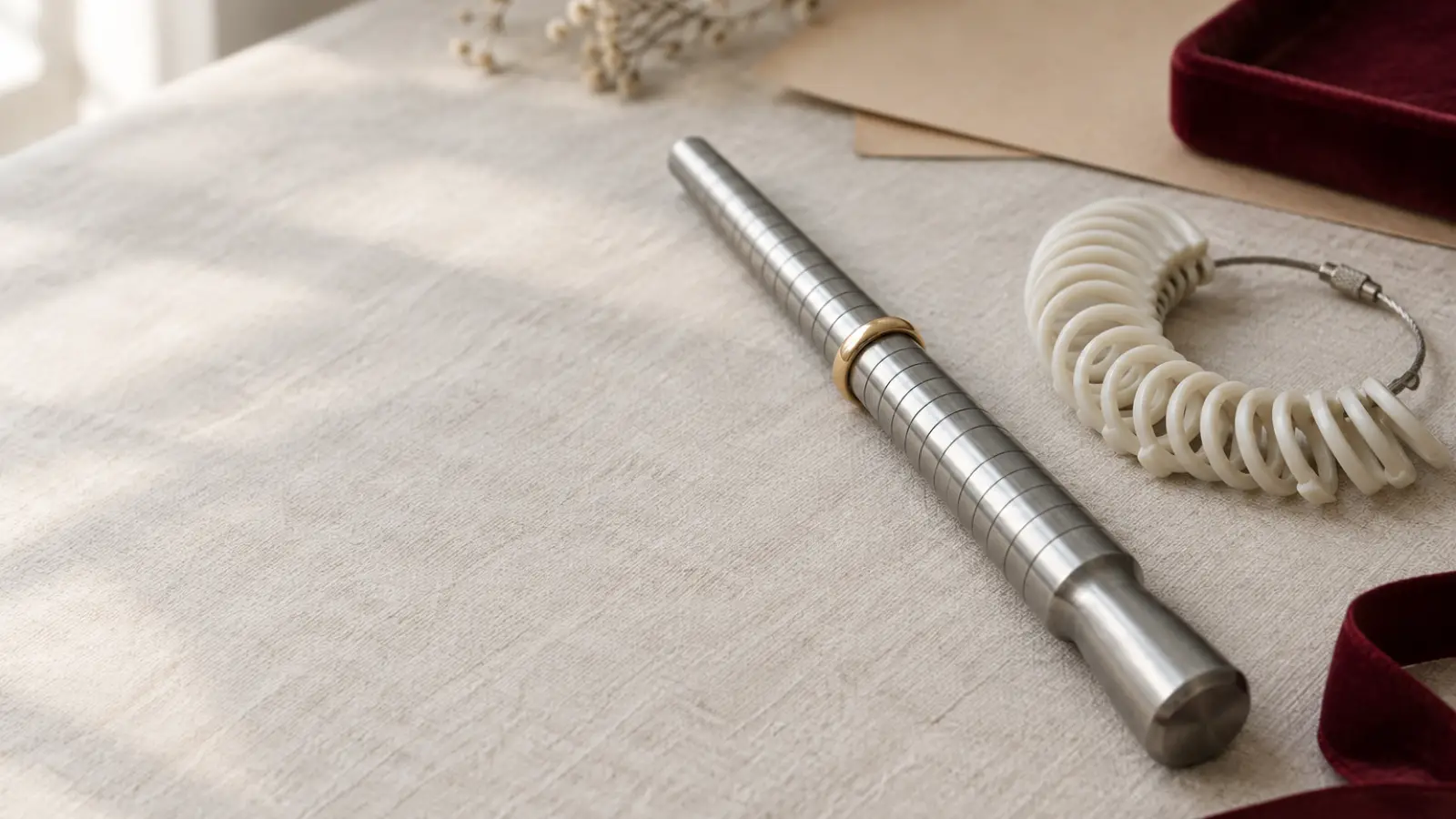
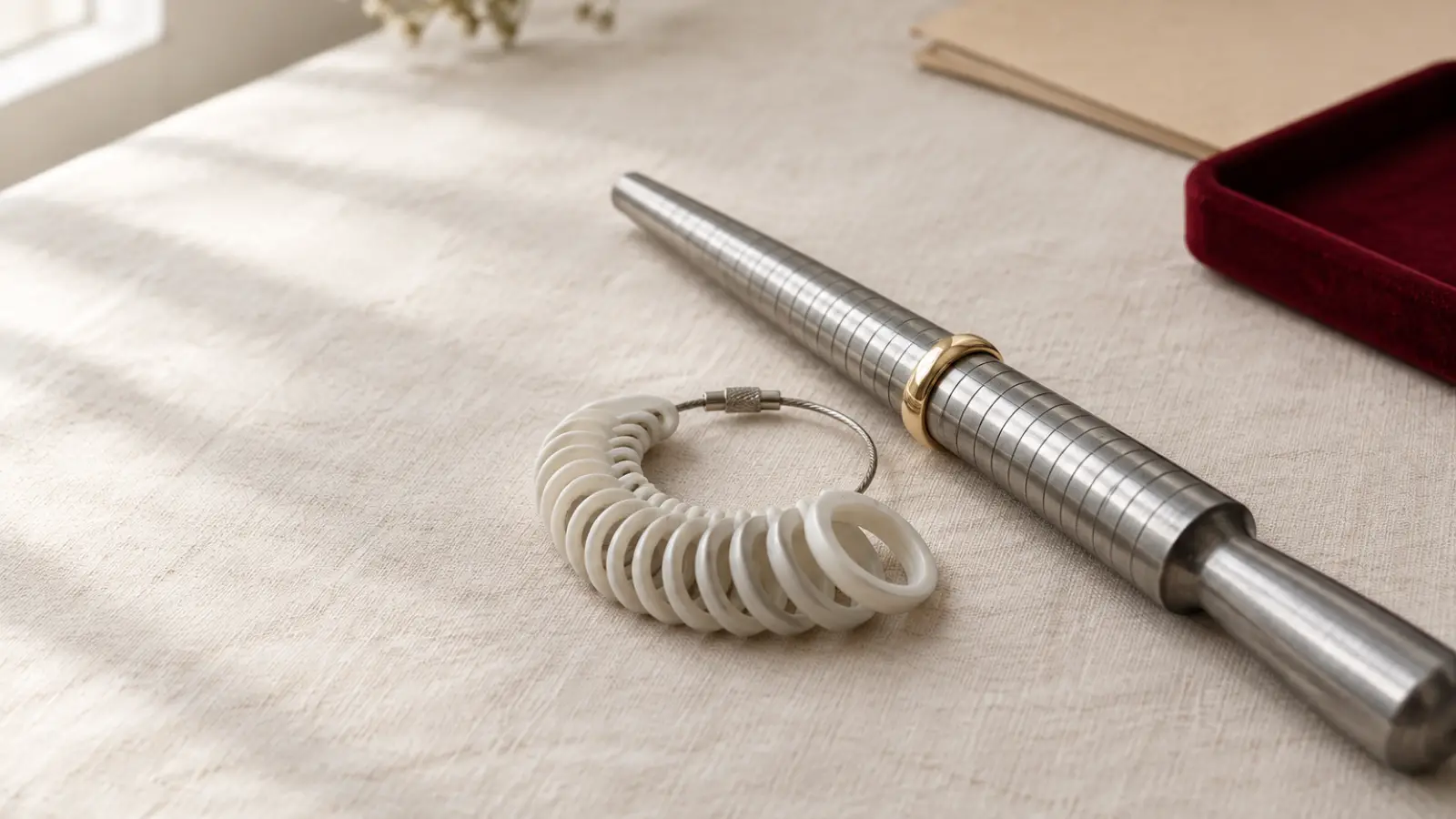
A ring sizer measures finger circumference for a usable ring size; learn how to measure accurately, avoid fit errors, compare retailers, and budget for a ring.
An asscher cut diamond has a square outline, clipped corners and concentric step facets. Learn how to judge clarity, cut, price, durability and retailer policies.
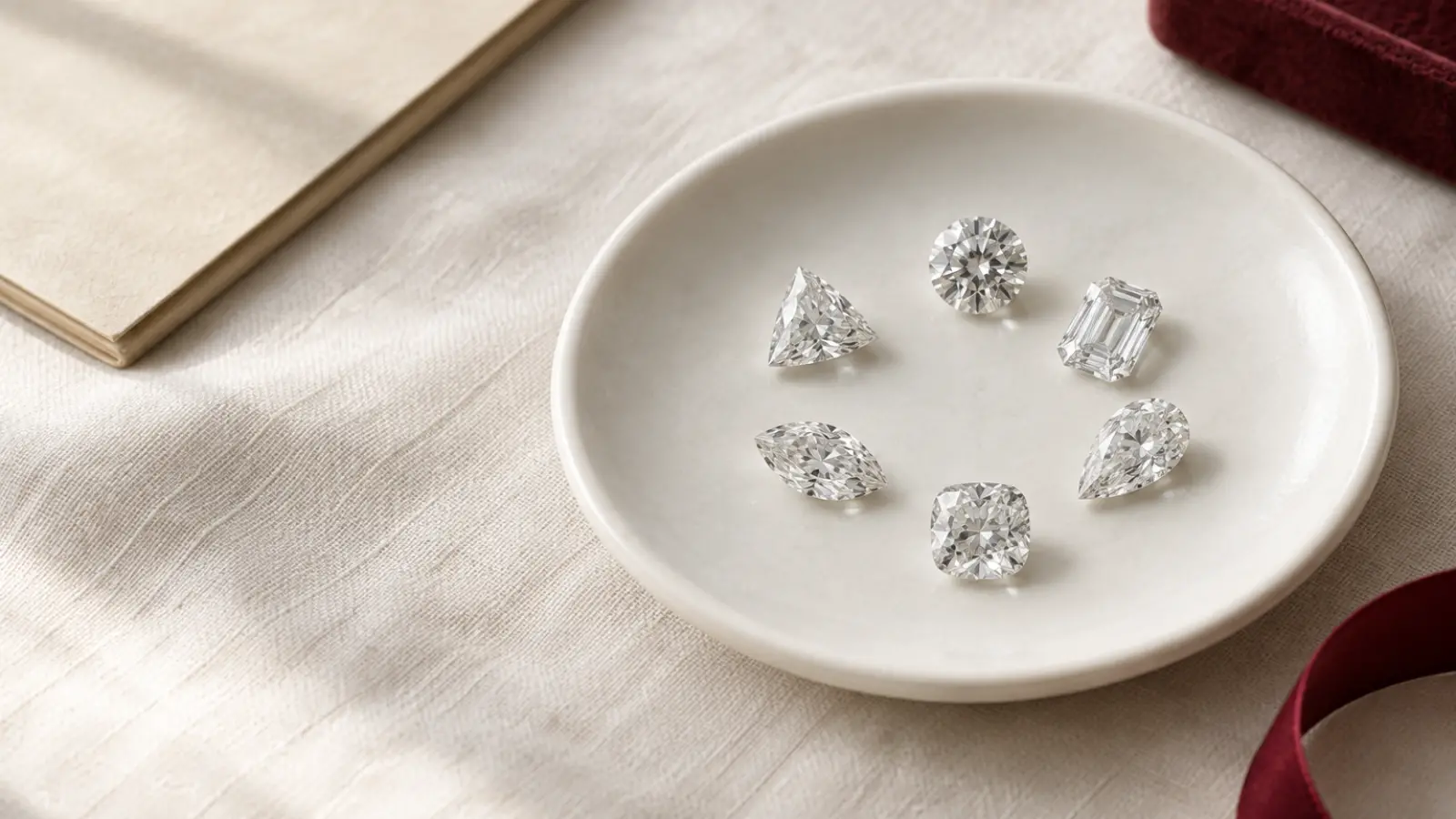
Diamond shape describes a diamond’s outline, such as round, oval, cushion, or emerald, and affects appearance, price, durability, setting choice, and resale.
An emerald cut diamond has a rectangular step-cut design, broad reflective flashes, and visible clarity characteristics. Learn how to inspect, price, and buy one.
An elongated cushion cut is a rectangular cushion diamond with softened corners. Learn how proportions, clarity, light performance, certification, and setting choice affect value.
VVS diamonds have minute inclusions that are difficult to see at 10x magnification. Learn how VVS1 and VVS2 affect price, appearance, durability and resale.
Necklace lengths determine where a chain rests, how a pendant hangs, and how much movement it allows. Learn to measure fit, construction, materials, and price.
The best metal for an engagement ring for daily wear depends on allergies, maintenance, weight, durability, resizing needs, appearance and setting cost.
Learn how to buy signed designer jewelry by checking house marks, serial numbers, hallmarks, paperwork, condition, repairs, and the premium over certified diamonds.
Diamond carat weight vs size explains why diamonds with the same weight can look different, using millimetre dimensions, shape, spread and finger coverage.
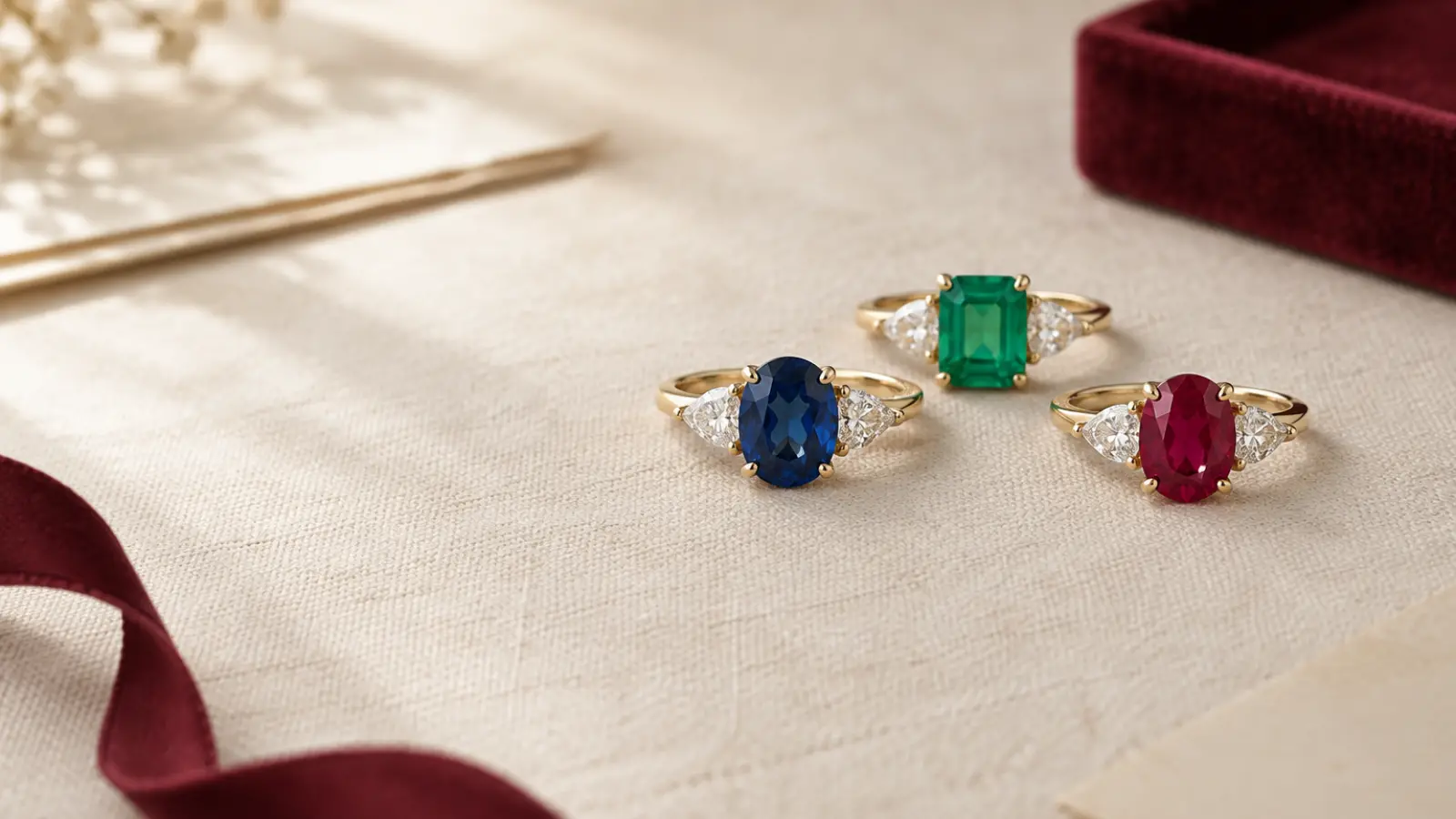
Colored gemstone engagement rings use sapphire, ruby, emerald, aquamarine or alexandrite as the center stone. Check durability, treatments, reports and settings.
Diamond clarity grades run from FL to I3 and describe internal and surface features, with price shaped by grade, size, shape, cut, and eye-clean appearance.
Diamond color grades explained through the GIA D-to-Z scale, G versus H versus I, metal, fluorescence, fancy colors, and report checks.
Diamond cut grade explains how a round brilliant returns light. Learn the GIA scale, proportion checks, fancy-shape limits, and buying checks.
Which diamond shape looks the biggest depends on face-up dimensions. Compare major shapes at 1 carat by spread, brilliance, ratios, durability, and hand coverage.
Learn how to buy fancy color diamonds by reading the GIA color grade, confirming natural or treated color, comparing blue, pink, yellow and champagne stones, and checking the report.
GIA vs IGI certification explained: compare report fields, natural and lab-grown grading, verification steps, price effects and buying safeguards.
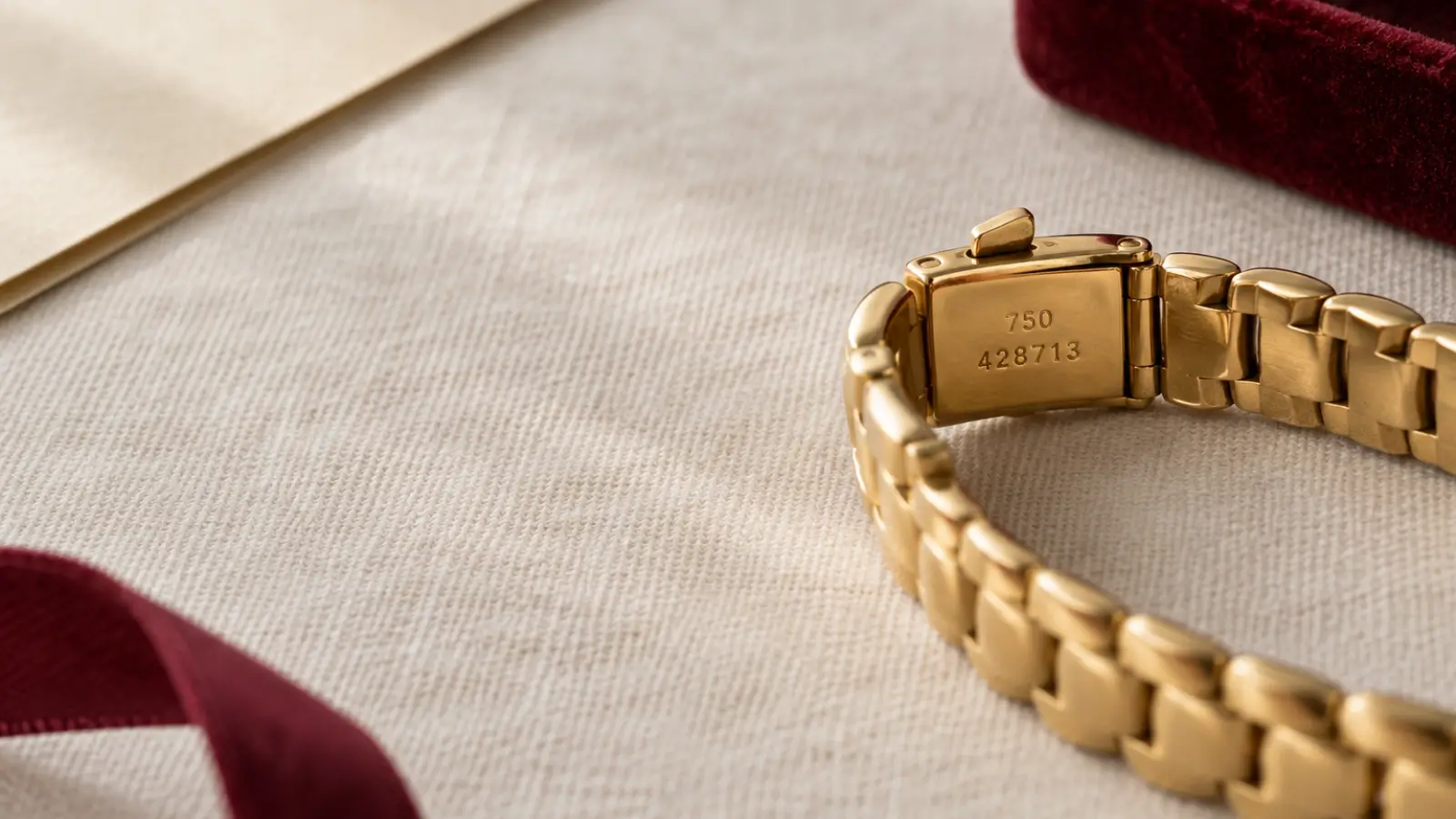
Gold purity and hallmarks show gold content and identify marks for fineness, maker, assay office, country or date, helping buyers assess jewelry accurately.
How much to spend on an engagement ring depends on cash flow, priorities, and stone choice. See 2026 natural and lab-grown prices, settings, and checks.
Learn how to clean jewelry at home safely by material, including diamonds, gold, silver, pearls, opals, emeralds, plated pieces, and antiques.
Learn how to read a diamond grading report by checking identity, 4Cs, proportions, clarity plot, treatments, inscription, and report number.
Learn how to tell if a diamond is real using a grading report, inscription, professional testing and the limits of fog, water, thermal and electrical tests.
What is a lab grown diamond? It is a real diamond made by CVD or HPHT, then identified, graded and priced separately from a natural diamond.
Lab grown diamond vs moissanite vs cubic zirconia explained by chemistry, hardness, sparkle, testing, certification, resale, and buying checks.
old european cut vs modern round brilliant: learn the facet, culet, crown, light, report and price differences that identify each style.
Learn how to measure ring size at home with a full US chart in millimeters and inches, UK and EU conversions, fit advice, and resizing guidance.
Is my vintage jewelry worth anything? Learn how age, materials, signatures, condition and rarity affect value, with typical 2026 selling ranges for fine and costume pieces.