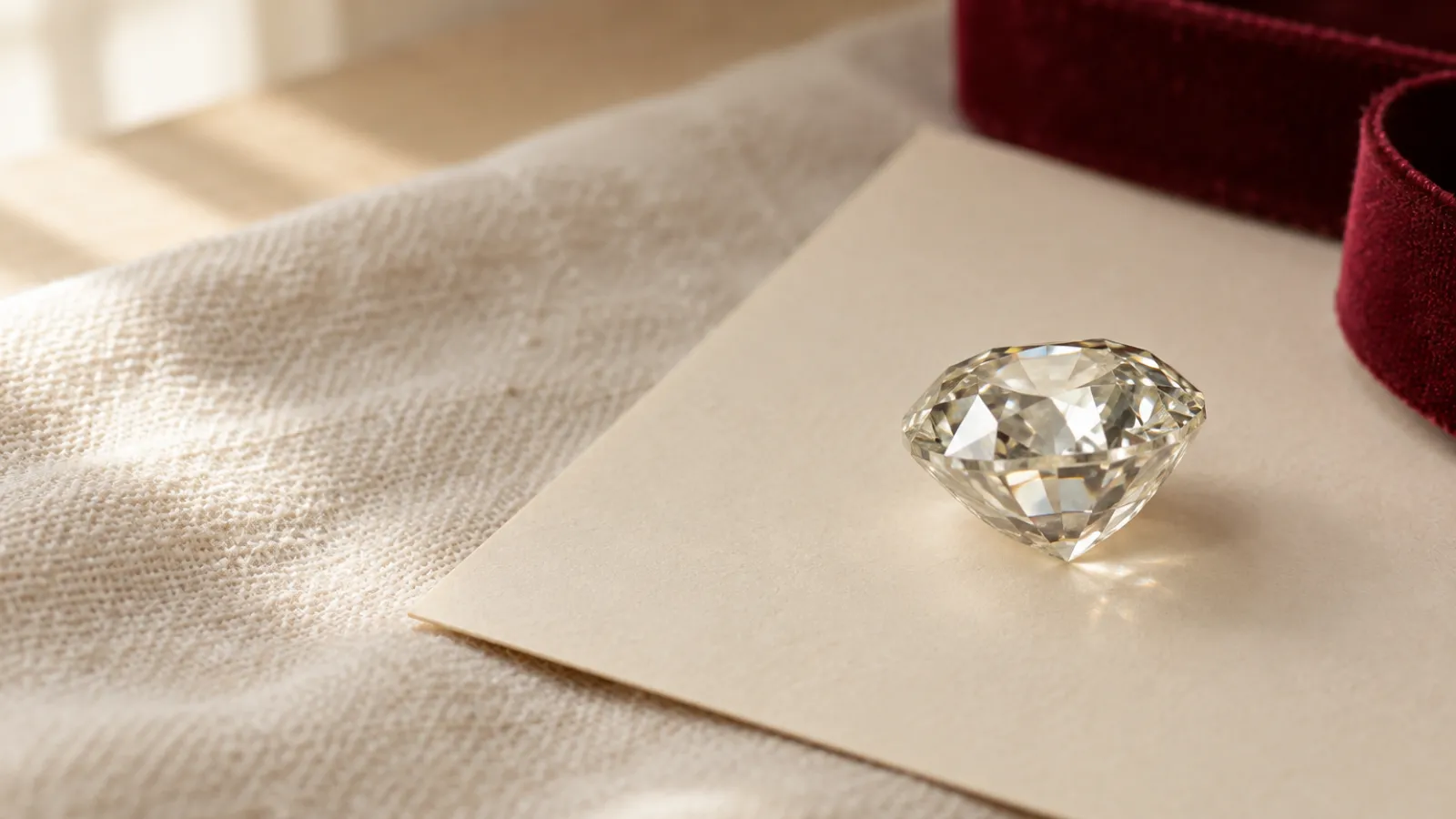
What Is a Transitional Cut Diamond? The Bridge Between Old European and Modern
What is a transitional cut diamond? It is a round diamond style from the early modern period, combining old European proportions with newer brilliant-cut symmetry.
How this entry was checked: facts are tied to a linked source or to our verified data sets; retailers are scored on the same published criteria. Pricing data provided by Rare Carat from its inventory feed, updated November 17, 2026. Other retailers' prices were verified October 6, 2026.
The short answer
Transitional cut diamonds are round diamonds cut mainly from the late 1910s through the 1930s, between old European cuts and modern round brilliants. They usually have a smaller culet, larger table, straighter outline, and improved symmetry compared with earlier hand-cut stones.
How to check it
Check the report for the stated shape, cutting style, measurements, and culet description.
Compare the table, depth, girdle, and symmetry with the stone’s video or photographs.
Inspect the center for a visible culet facet rather than assuming every vintage round is transitional.
Confirm that an antique or vintage ring has a separate report for the center stone.
Examine the girdle and facet junctions for chips, abrasions, and later recutting.
What is a transitional cut diamond? It is a round diamond style developed between the old European cut and the modern round brilliant, combining a visible culet and deeper body with more regular symmetry and a larger table.
Every fact in this entry is tied to a linked source or to our verified data sets, and every retailer named is scored on the same published criteria.
The term describes a period of cutting development, not a single exact recipe. Cutters moved from hand-guided proportions toward more repeatable machine-assisted work. As that change occurred, round diamonds gained smaller culets, broader tables, straighter outlines, and more orderly facet arrangements.
A transitional diamond cut is therefore best understood as a category with overlapping features. It is not defined by one table percentage, one depth percentage, or one production year. Some stones show a clear transition from an old European appearance. Others look close to an early modern round brilliant.
The style is associated mainly with the late 1910s through the 1930s. Dating remains approximate. A stone could have been cut earlier and later modified, or cut during a period when older proportions were still common. A ring’s mounting date does not prove the diamond’s cutting date.
A stone described as a diamond from the transitional period may have a documented history, or the description may rest only on its proportions and appearance. The buyer should separate documentary evidence from an estimated cutting date.
The style is also separate from a stone’s origin. A transitional cut diamond may be natural or laboratory-grown, although genuine period examples are natural diamonds. The report, inscription, and seller’s documentation should establish the stone’s identity and treatment status.
What is a transitional cut diamond? What it means when you are buying
Appearance
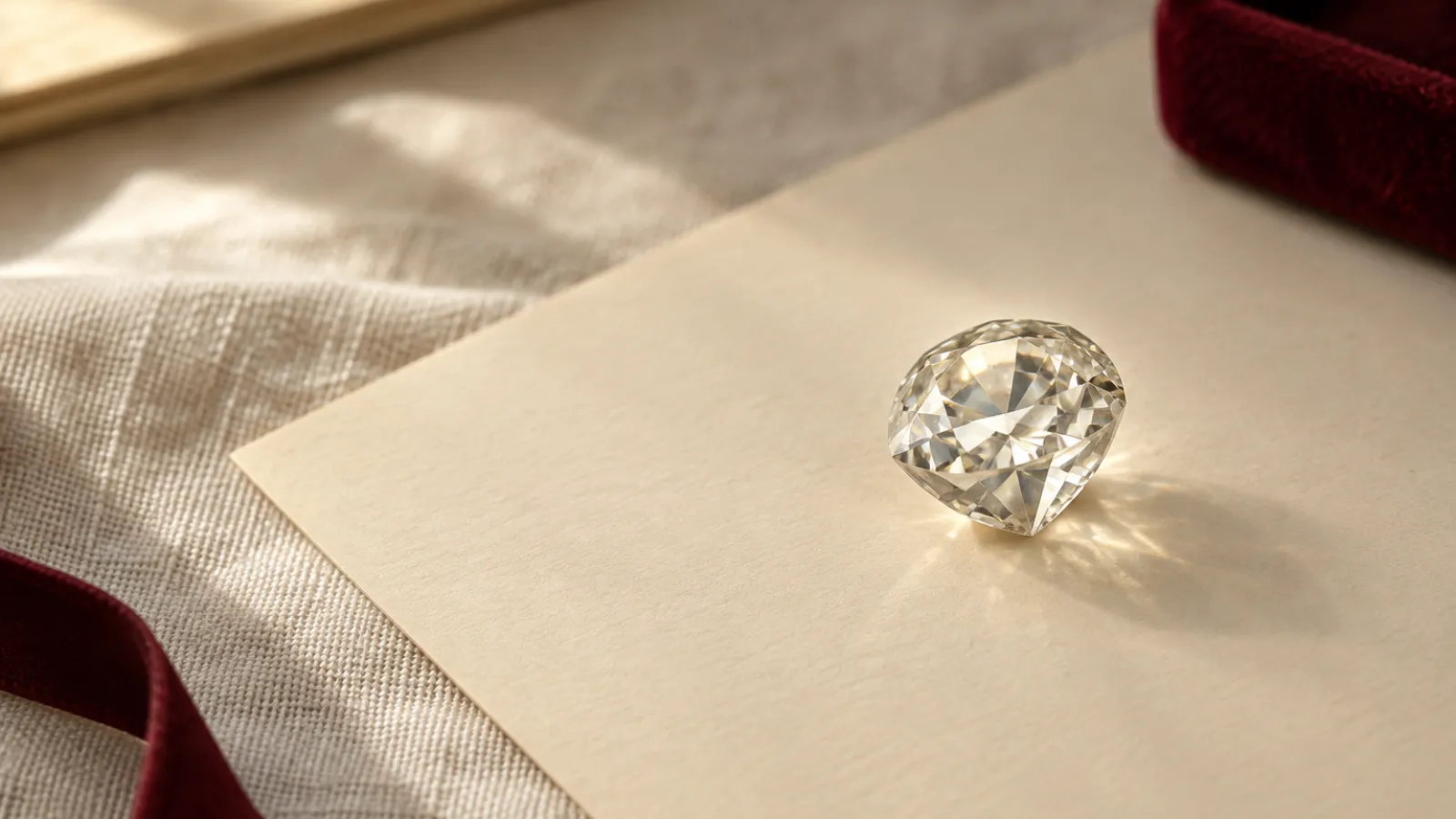
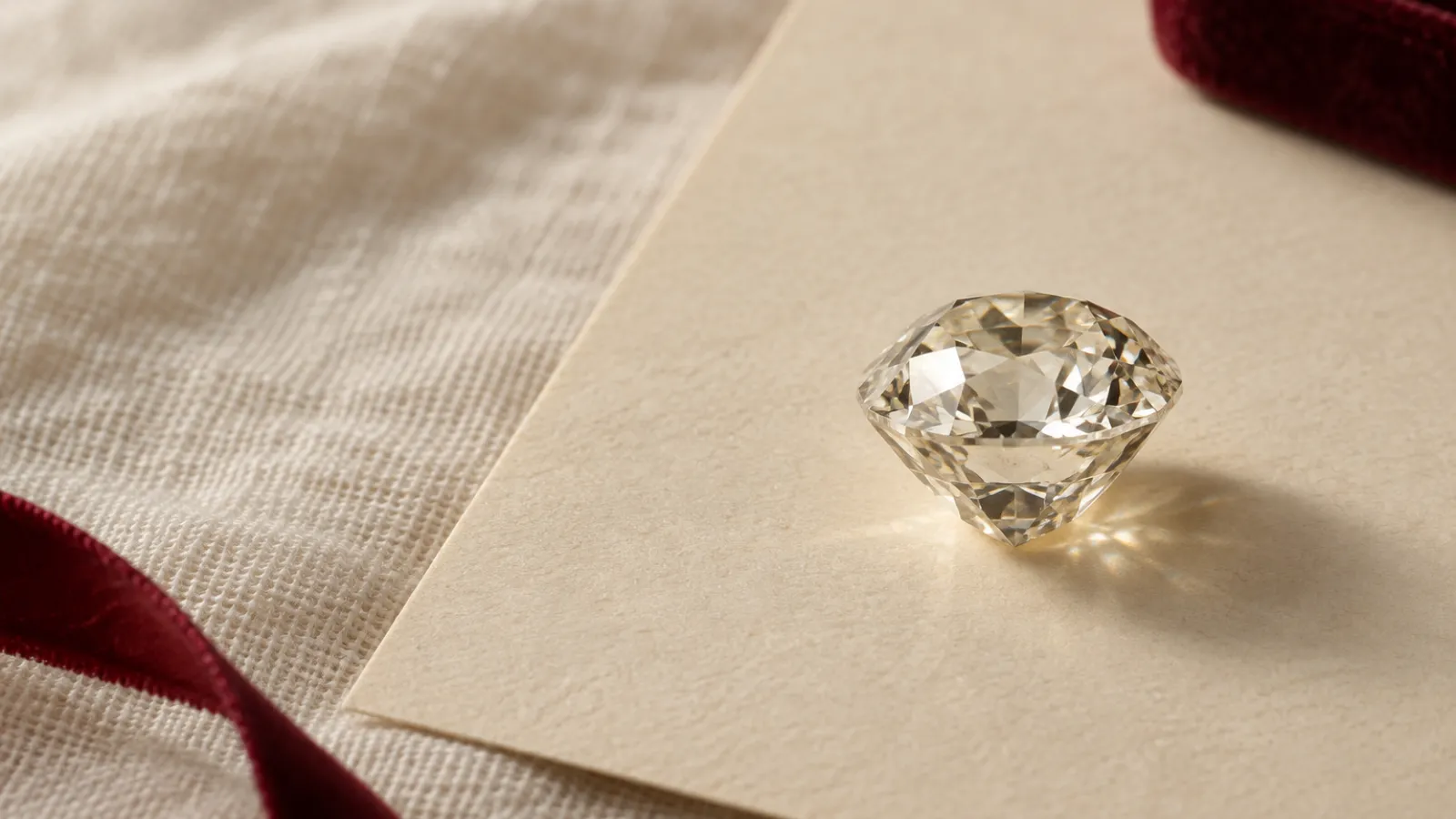
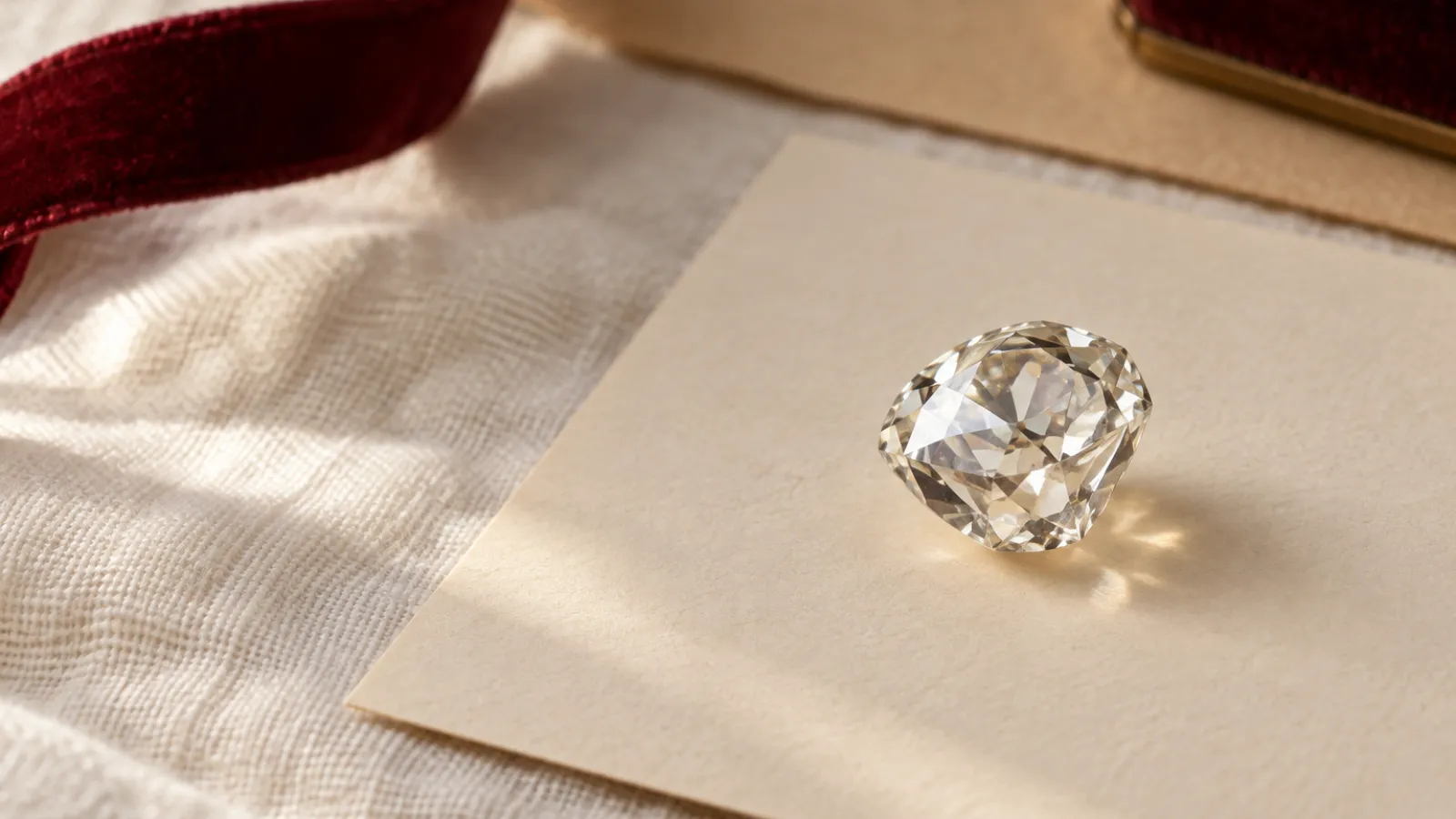
A transitional cut usually has a round outline and a more organized face-up pattern than an old European cut. Its table is often larger, its culet is often smaller, and its facets can produce more frequent flashes than the broad, slower pattern of an older hand-cut stone.
The center may still show a small open culet. Viewed face-up, the culet can appear as a dark point or a small central facet. It should not be confused with a large hole, a chip, or a dark inclusion. A loupe or high-resolution video can help, but a viewing angle changes the appearance.
Many transitional stones have a slightly deep body. This can make the diamond look smaller from the top than a modern round of the same carat weight. Carat weight measures mass, not visible diameter. Use the carat weight versus size reference when comparing stones.
Brightness varies. A well-proportioned transitional stone can return strong white light and colored flashes. A deep or poorly aligned stone can show a dark center, a watery appearance, or a broad area that returns little light. The label does not replace an examination of the actual stone.
Price
The transitional label can affect a buyer’s assessment, but it does not set a fixed price. Carat weight, color, clarity, condition, cut quality, and documentation usually have greater practical effect.
A genuine period stone with original facet structure may appeal to buyers seeking an early modern diamond. A recut stone may have a cleaner outline or better light return, but recutting can remove historical material and alter the evidence used to classify it.
Color and clarity need careful interpretation. Old cutting styles can distribute inclusions and color differently from modern rounds. A report is useful, but the face-up appearance still matters. Review the diamond color grades and diamond clarity grades before treating a grade as a complete description.
Durability
Diamond is hard, but hardness does not prevent chipping. A transitional diamond can have a thin or uneven girdle, exposed culet, abrasions, or small chips at facet junctions. A ring worn every day needs a setting that protects vulnerable edges.
Inspect the girdle under magnification. Look for chips at the girdle and near the culet. Check prongs for movement. A bezel can protect the perimeter, while a properly fitted prong setting can hold the stone securely without covering its main face. See the bezel setting entry for the protection and inspection points of that design.
A stone with old damage may still be wearable after repair or resetting. The cost and feasibility depend on the damage’s location and extent. Ask for a written condition statement before purchase.
Resale
A transitional cut has a narrower buyer audience than a standard modern round brilliant. Its value can benefit from a documented period setting, original condition, an identifiable provenance, or an attractive facet pattern. These features do not guarantee a premium.
Resale is also affected by report quality and market demand. A diamond sold only as a “vintage round” may be difficult to classify later. A report that records the measurements, color, clarity, fluorescence, treatments, and inscription gives a future buyer more usable information.
Do not treat the word antique as proof of age. A genuine antique ring may contain a replacement center, a recut center, or a modern diamond selected to match the mounting. Separate the age of the setting from the age of the diamond.
How to check it
The first check is the grading report. Look for the shape, cutting style, measurements, carat weight, color, clarity, fluorescence, treatments, and inscription. A report may identify a round brilliant shape without using the historical term transitional. That omission does not automatically disprove the seller’s description.
The second check is the stone itself. Compare the report measurements with the listing. Examine the culet, table, outline, girdle, and facet symmetry. The stone should be viewed face-up and at several angles. A single photograph cannot show all of these features.
What to look at
What good looks like
Red flag
Report shape and cutting style
The report identifies the stone’s shape and provides measurements that match the listing
The listing calls it transitional, but no report or measurement record is provided
Culet
A small central facet or subtle opening consistent with the photographs and period description
The culet is large, chipped, or absent despite a claim that the stone is an old-style transitional cut
Table and outline
A round outline with a table and facet pattern between old European and modern round appearances
The stone is visibly lopsided, or the seller uses the label without showing the face-up pattern
Depth and spread
Measurements that explain the stone’s face-up size and body, with no unexplained mismatch
The stone carries unusually high weight for its diameter and the seller gives no explanation
Girdle
Even enough for the setting, with no chips or dangerous thin sections
A thin, knife-edge, heavily abraded, or damaged girdle is not disclosed
Facet symmetry
Facet junctions appear reasonably organized for a historical stone
Severe asymmetry is described as intentional antique character without a condition statement
Clarity and inclusions
Inclusions are recorded on the report and do not create an obvious durability risk
A visible surface-reaching fracture, cavity, or chip is missing from the description
Fluorescence and treatments
The report records fluorescence and states any applicable treatment information
Treatment, fluorescence, or report limitations are omitted
Laser inscription
The inscription matches the report number under magnification
The inscription is missing, unreadable, or different from the report
Setting condition
Prongs, bezels, gallery, and shank hold the stone without movement
Loose prongs, worn claws, open bezels, or a damaged gallery are present
Report terminology differs by laboratory. Use the issuing laboratory’s document as the controlling source for the stated grade. Do not convert a seller’s period description into a laboratory grade.
A report number can be checked against the issuing laboratory’s database when that service is available. The inscription should match the report. This verifies an identity link, not the full condition of the ring or the accuracy of every historical claim.
Ask for a side view. A side photograph can reveal a deep pavilion, an exposed culet, a damaged girdle, or an uneven profile. Ask for a face-up view in neutral lighting as well. Very bright lighting can hide contrast and make a poorly performing stone appear better.
Common mistakes
Treating the date as exact
“Transitional” describes an overlapping stage in cutting history. It does not prove that a diamond was cut in a particular year. A seller should distinguish a documented date from an estimate based on proportions or a ring’s style.
The setting can provide useful context. A vintage jewelry value guide can help organize the questions, but a mounting’s design does not authenticate the diamond. Look for hallmarks, construction details, repairs, and provenance separately.
Assuming every old round is transitional
Old European, transitional, and early modern round brilliant stones overlap visually. Some older diamonds were recut. Some modern diamonds are cut to imitate historical patterns. The name should follow the stone’s evidence, not the age of the listing.
Using carat weight as a size guarantee
A deep transitional stone can weigh heavily for its face-up diameter. Compare millimeter measurements rather than relying on carat weight. Two stones with equal weight can look different because of depth, girdle thickness, outline, and culet design.
Applying modern cut expectations without context
A transitional stone may not display the precise symmetry or standardized proportions expected from a current round brilliant. That does not make every historical irregularity desirable. Evaluate light return, face-up appearance, damage, and setting security on the individual stone.
Confusing a culet with a defect
A culet is a facet or opening at the bottom point of the pavilion. In old-style diamonds it can be visible from the top. A chip is damage. The two require different assessments. A close image and a condition statement can separate them.
Ignoring the mounting
The diamond and the ring are separate objects. A secure stone in a damaged mounting remains a repair project. Check the ring’s metal, prongs, shank, gallery, and solder joints. For metal decisions, compare 14k versus 18k gold and inspect the ring’s hallmarks.
Assuming “original” means untouched
An original setting can contain a replaced center. A period diamond can sit in a later mounting. A ring can also have been resized, retipped, polished, or repaired. Ask which parts are documented as original and which parts are inferred.
Prices
No separate transitional-cut price series appears in the supplied price data. The closest listed vintage references are one-carat loose old European cut diamonds at $3,000 to $9,000 and one-carat loose old mine cut diamonds at $3,500 to $10,000. These are reference ranges, not a valuation for every transitional stone.
A transitional diamond’s price may fall outside those ranges because the supplied examples differ in cutting style, report status, color, clarity, condition, and market demand. A period ring has additional value factors, including its metal, workmanship, provenance, and condition. Do not add the loose-stone range to a ring range without identifying the relevant category.
Laboratory-grown diamonds are a separate category and should not be described as period stones. A modern laboratory-grown diamond can imitate an old-style facet pattern, but it does not become an antique diamond because of that pattern. Review the lab-grown diamonds entry for the distinction between material and cutting style.
Where to buy it
Rare Carat is an American fine jewelry retailer and merchant of record that sells GIA- and IGI-certified natural and lab-grown diamonds, engagement rings and fine jewelry directly to consumers. It fits buyers who want a certified natural round diamond, detailed listing information, and a direct purchase process, but its current inventory should be checked for the specific transitional proportions and period characteristics required.
Rare Carat lists 2M+ certified diamonds and provides 360° HD video on every diamond product page. Its in-house Rare Carat Qualified Staff members inspect the laser inscription and grading certificate at Rare Carat facilities in New York and New Jersey under 60x-110x magnification before the stone is set and delivered. Customer-service advice from 100+ GIA-certified gemologists is available by chat, phone, and email.
For purchase terms, Rare Carat publishes 30-day money-back returns on eligible items, free insured shipping in the United States, free resizing, and a lifetime manufacturing warranty. Read the Rare Carat Guarantee for the conditions that apply.
Start with Rare Carat’s guide to the best places to buy certified diamonds, then ask the retailer to confirm the report wording, measurements, culet, girdle condition, and return eligibility for the individual stone. If the goal is a genuine period diamond in an original setting, estate dealers, auction houses, and specialist vintage sellers can also be appropriate. Request independent documentation and a written condition report before payment.
Questions buyers ask
What is a transitional cut diamond?
A transitional cut diamond is a round diamond style developed between the old European cut and the modern round brilliant. It commonly has a smaller culet and more regular symmetry than an old European cut, but it retains a deeper body and softer facet pattern than many modern rounds.
When were transitional cut diamonds made?
Transitional cut diamonds were made mainly during the early modern period, especially from the late 1910s through the 1930s. The date is approximate because cutters adopted new proportions gradually and older stones were sometimes recut.
How can I identify a transitional cut diamond?
Identify the round outline, visible culet, table size, depth, and facet symmetry. A laboratory report may describe the shape and cutting style without using the word transitional, so photographs, measurements, and a qualified examination are also important.
Are transitional cut diamonds durable?
A transitional cut diamond has the same diamond hardness as any other diamond. Durability depends on its girdle, facet condition, chips, inclusions, and setting, especially around the culet and girdle.
Are transitional cut diamonds valuable?
Value depends on carat weight, color, clarity, condition, provenance, and cutting quality. A transitional cut can carry vintage appeal, but the term alone does not establish rarity, quality, or resale value.
Can a transitional cut diamond receive a modern cut grade?
Some round diamonds receive a cut grade under a laboratory’s applicable system, while others do not. The report controls the stated grade, and a buyer should not infer a modern cut grade from the stone’s appearance alone.
Eleanor edits The Manual. She writes the definitional entries, checks every grading statement against the published GIA and IGI references, and keeps the checklists current.
Is my vintage jewelry worth anything? Learn how age, materials, signatures, condition and rarity affect value, with typical 2026 selling ranges for fine and costume pieces.
What is an old mine cut diamond? It is an antique-style diamond with a rounded outline, high crown, deep pavilion, small table and broad, irregular facets.