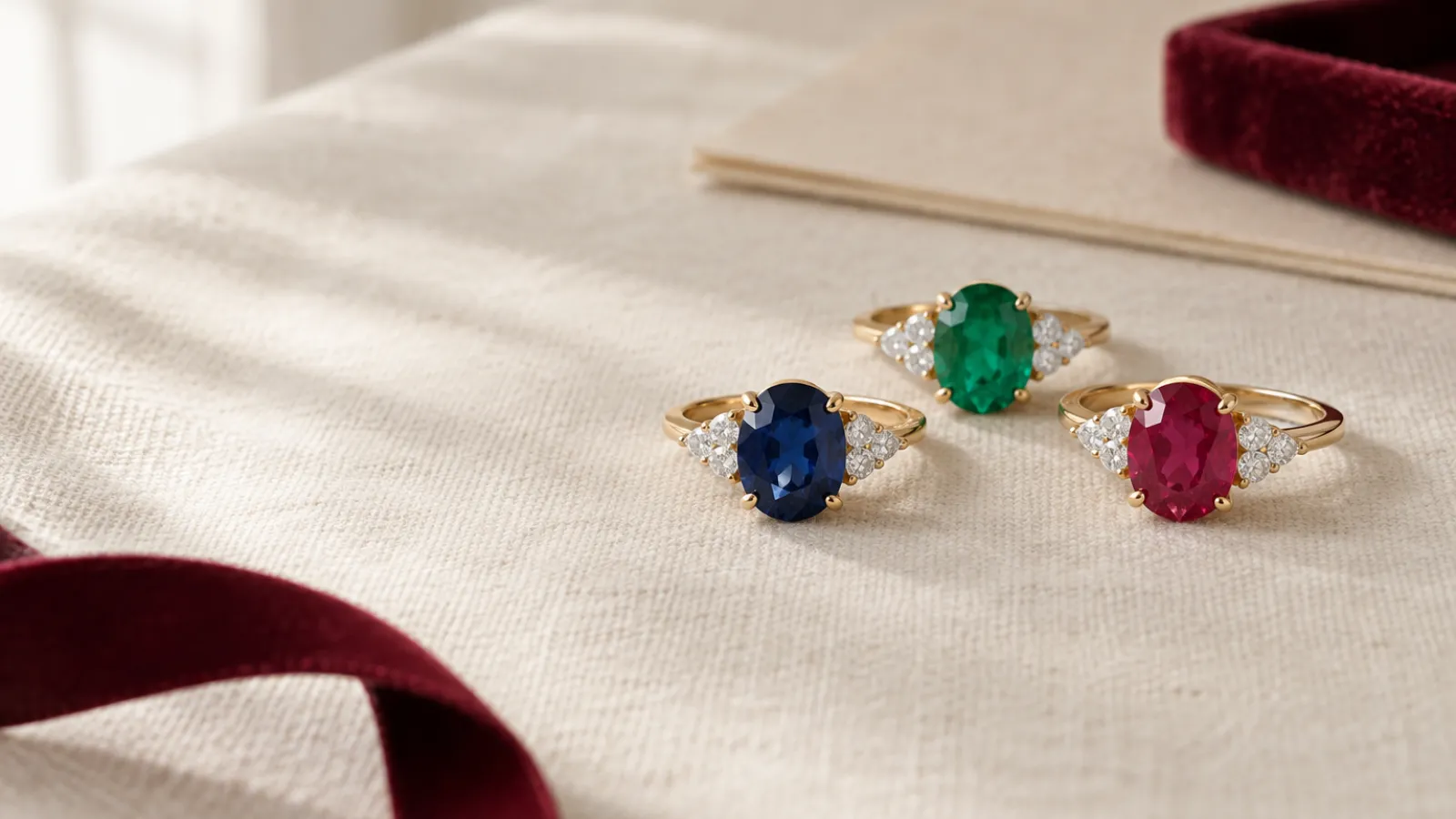
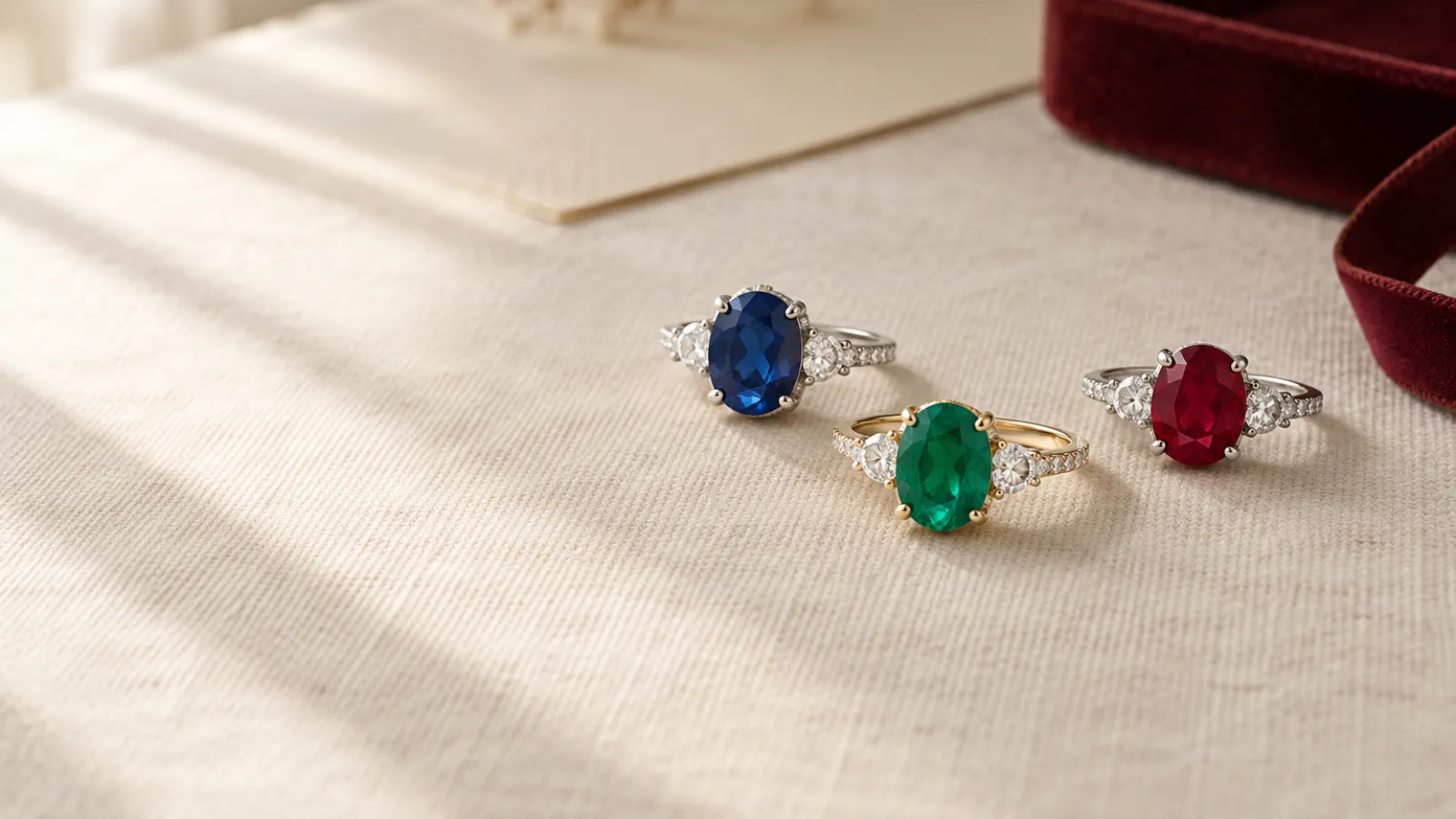
Colored Gemstone Engagement Rings: Sapphire, Alexandrite, Aquamarine, Emerald and Ruby
Colored gemstone engagement rings use sapphire, ruby, emerald, aquamarine or alexandrite as the center stone. Check durability, treatments, reports and settings.
How this entry was checked: facts are tied to a linked source or to our verified data sets; retailers are scored on the same published criteria. Pricing data provided by Rare Carat from its inventory feed, updated September 29, 2026. Other retailers' prices were verified September 16, 2026.
The short answer
Colored gemstone engagement rings use a colored mineral or organic gem as the principal center stone. Check hue, durability, treatment, report details, setting protection, condition and resale expectations before choosing a natural or laboratory-created stone.
How to check it
Check the stone’s Mohs hardness against your daily-wear habits.
Ask the seller to identify every treatment and its care restrictions.
Read the colored-stone report for species, variety, treatment and origin statements.
Inspect the girdle, facet junctions, abrasions and setting for damage.
Confirm that the ring size, return terms and resizing options are written.
Colored gemstone engagement rings use a colored mineral or organic gem as the principal center stone, selected for hue, durability, treatment status, documentation and the wearer’s intended use.
Sapphire, ruby, emerald, aquamarine and alexandrite are distinct gem materials. They do not have identical wear characteristics. A stone’s color can be natural or modified by treatment. Its durability depends on hardness, toughness, stability and the presence of fractures or inclusions.
Every fact in this entry is tied to a linked source or to our verified data sets, and every retailer named is scored on the same published criteria.
The center stone controls much of the ring’s appearance. The mounting controls much of its protection. A bezel or halo can shield a vulnerable girdle. Exposed corners and thin prongs increase the consequences of a hard impact. Metal choice, ring size and maintenance also affect practical use.
A report from a recognized laboratory can identify the stone and disclose observed treatment. A report is not an appraisal. It does not establish a guaranteed selling price, predict personal taste or remove the need to inspect the actual ring. The same checks apply to sapphire and gemstone engagement rings bought for daily wear.
What it means when you are buying colored gemstone engagement rings
Sapphire
Corundum in the red variety is called ruby. Other gem-quality corundum is called sapphire. Blue sapphire is the best-known variety, but sapphire also occurs in yellow, pink, green and other colors.
Sapphire has a Mohs hardness of 9. This makes it suitable for regular ring wear, although hardness does not mean immunity from chipping or abrasion. A sapphire can still break at a thin girdle, a pointed corner or a pre-existing fracture.
Ask about heat treatment. Heat is common in the trade and can be acceptable when disclosed. A report may state that the stone shows evidence of heating or that no evidence of heating was observed. That distinction can affect rarity and value.
Ruby
Ruby is red corundum. Its value depends on color, transparency, treatment, origin claims and size. Fine untreated ruby is uncommon, but a treated ruby can provide strong color at a different price level.
Ask specifically about lead-glass filling. Filled ruby can contain glass in surface-reaching fractures. It may require special care and can be damaged by heat, acids, impact or some repair procedures. The treatment should appear in the seller’s description and, for a significant stone, in laboratory documentation.
Emerald
Emerald is the green variety of beryl. Most emeralds contain visible inclusions. The term “jardin” describes the garden-like appearance produced by inclusions, but it is not a substitute for a condition assessment.
Emerald has a Mohs hardness of 7.5 to 8. Its toughness can be reduced by fractures. Many emeralds are filled with oil or another substance to improve apparent clarity. Ask what filling was used, how stable it is and which cleaning methods are prohibited.
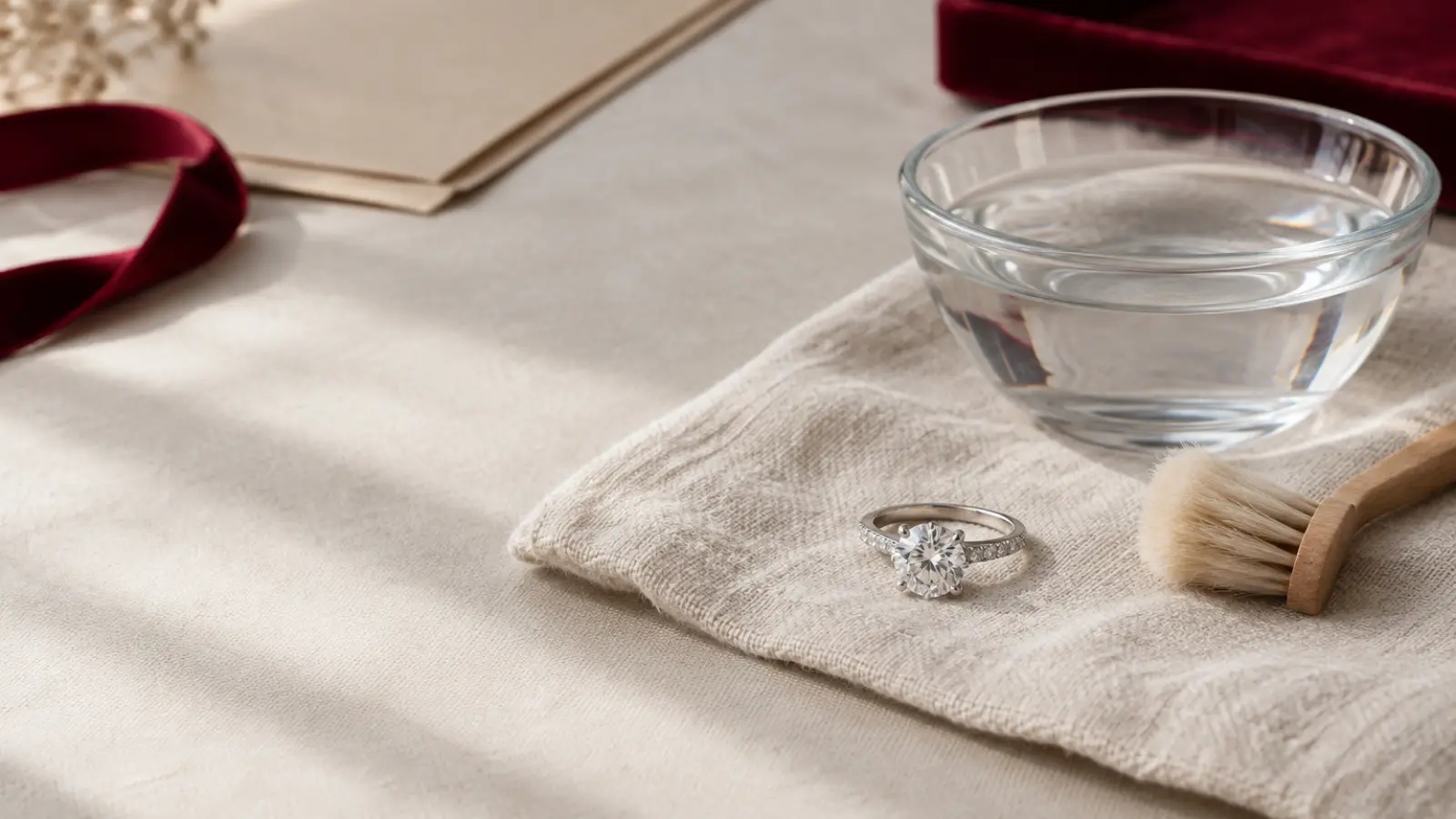
Avoid ultrasonic and steam cleaning unless a qualified service provider confirms that the specific stone and treatment can tolerate it. A soft brush, mild soap and lukewarm water are safer defaults, but follow the seller’s written instructions.
Aquamarine
Aquamarine is the blue to blue-green variety of beryl. It commonly has good transparency and a lighter body color than blue sapphire. Its Mohs hardness is 7.5 to 8.
Aquamarine is usually more suitable for regular wear than many softer colored gems, but it remains vulnerable to edge chips and surface abrasion. Ask if it has been heated. Heat treatment can be used to reduce green tones and produce a bluer appearance.
A pale stone may show less color in a large setting. View the stone under neutral lighting and from the face-up position. Do not judge color from a single display image.
Alexandrite
Alexandrite is a color-change variety of chrysoberyl. A strong example appears greenish in daylight and reddish or purplish under incandescent light. The change should be described precisely because stones vary in hue, saturation and strength of change.
Chrysoberyl has a Mohs hardness of 8.5. Alexandrite can be suitable for regular wear, but inclusions, fractures and thin edges still matter. Laboratory-created alexandrite is a different product from natural alexandrite. The report and sales description should state the material clearly.
A seller should identify the lighting used for any color-change demonstration. Compare the actual stone in daylight-equivalent and incandescent conditions if possible.
Diamond alternatives
A colored gem is not graded with the diamond four Cs in the same way. Color is often the principal value factor, while clarity standards vary by species. A report can identify the material and treatment, but it does not make unlike stones directly comparable.
Some buyers use a laboratory-grown diamond as a diamond alternative. Laboratory-grown diamonds have the same crystal structure and optical, physical and chemical properties as natural diamonds, but they have a different origin. This makes them distinct from colored gemstone engagement rings, even when both are used as center stones. Buyers considering non-diamond engagement rings should still review the report, treatment disclosure and return terms.
Rare Carat sells GIA- and IGI-certified natural and lab-grown diamonds directly to consumers and provides 360° HD video on diamond and jewelry product pages. Its in-house Rare Carat Qualified Staff members inspect the laser inscription and grading certificate at its New York/New Jersey facilities under 60x-110x magnification. Its customer-service team also offers commission-free advice from 100+ GIA-certified gemologists. That advice is a customer-service feature for purchase decisions.
How to check it
The table below gives practical checks for a modern or vintage ring. A report field is useful only when the stone has a report from a laboratory that examines that material.
What to look at
What good looks like
Red flag
Species and variety
The description identifies the material precisely, such as corundum, ruby, sapphire, beryl, emerald or aquamarine.
The listing uses only a color name, such as “green stone,” or uses “created” without identifying the material.
Color
The stone has an even, attractive face-up color under more than one lighting condition.
Color appears only under one display light, or the seller avoids describing hue and saturation.
Treatment
Every known or detected treatment is written in the listing and report. Care instructions match the treatment.
“Natural” is used to imply untreated, or the seller will not answer questions about heat, filling, dye, diffusion or irradiation.
Laboratory report
The report states species, variety, detectable treatment and any origin opinion offered by the laboratory.
The document is called a certificate but does not identify the laboratory, report number or stone material.
Hardness and toughness
The stone’s hardness and fracture condition suit the owner’s intended wear. The setting protects vulnerable edges.
The stone has exposed corners, severe surface-reaching fractures or a fragile treatment with no care plan.
Inclusions
Inclusions are consistent with the species and do not create an obvious durability problem.
A large surface-reaching fracture, cavity, loose inclusion or filled break is not disclosed.
Cut and proportions
The stone is centered, faces up well and has a pleasing outline with no obvious window.
The center looks pale or transparent through the middle, has a dead area or is hidden by an opaque mounting.
Mounting
Prongs touch the stone, the gallery is sound and the shank is even.
Prongs are thin or lifted, the stone moves, the shank is deeply worn or the setting covers damage.
Vintage condition
Repairs, replaced stones, resizing, solder seams and missing details are documented.
The ring is called vintage without an era, condition report, metal mark or explanation of restoration.
Fit and documentation
The ring size, metal, report, return terms and care instructions are supplied in writing.
Size is approximate, metal is unmarked, documentation is absent or the seller refuses an inspection period.
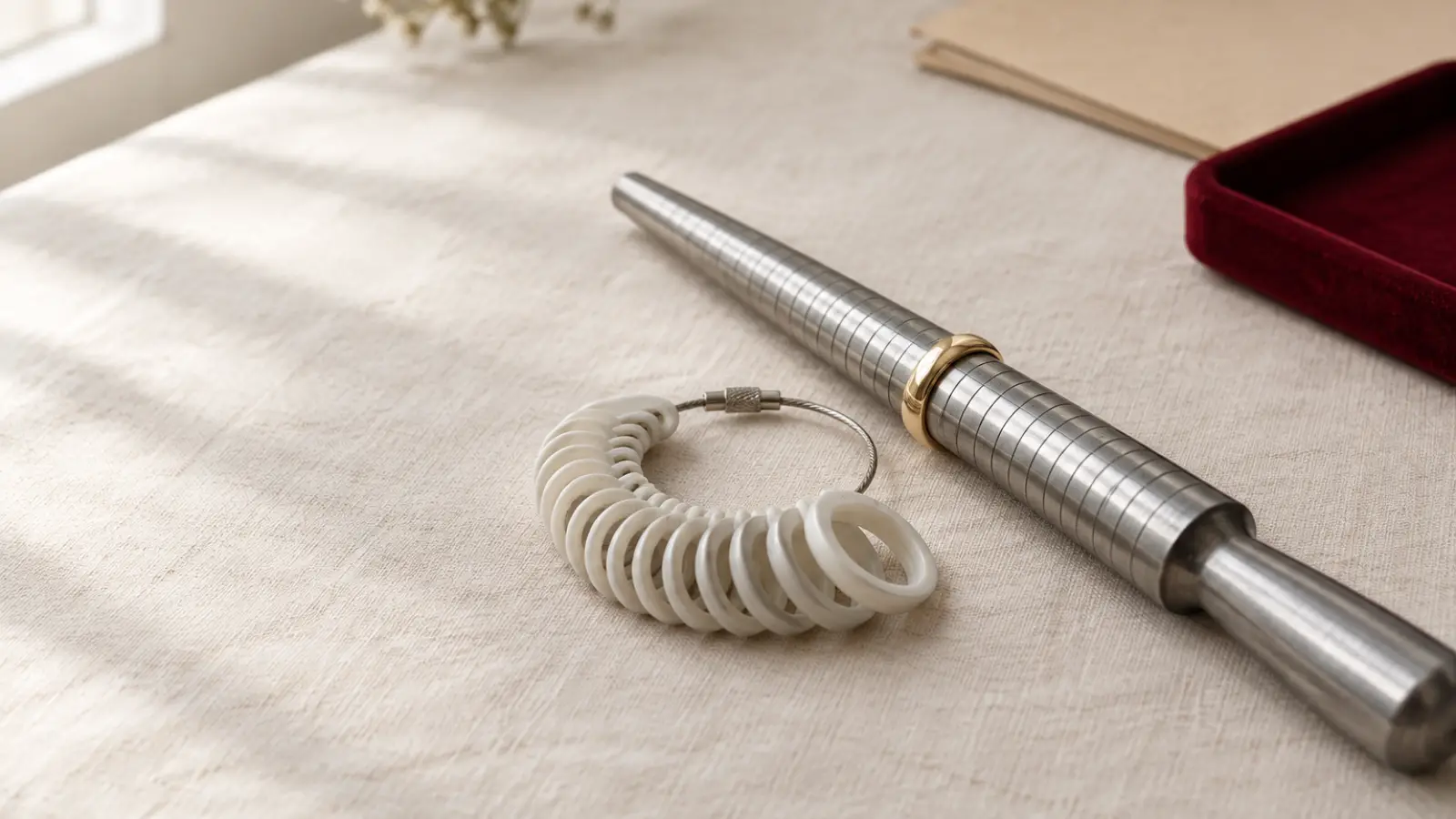
Use the ring size chart before ordering. A ring that is too tight can be difficult to remove during swelling. A ring that is too loose can rotate, expose a corner and increase impact risk.
For a valuable colored stone, request a report before purchase or make the sale conditional on obtaining one. The report should travel with the specific stone, not with a similar example. Match the report number to the stone and check for a laser inscription where the laboratory has applied one.
What sellers do not tell you
“Natural” and “untreated” are different terms. Natural describes origin from nature. Untreated describes the absence of certain human alterations. A natural sapphire can be heated. A laboratory-created stone can be chemically identical to a natural stone while having a different origin.
“Eye-clean” is a sales description, not a standardized colored-stone grade. It may mean that inclusions are difficult to see from the viewing distance used by the seller. Ask for magnified images, a video and a written description of inclusions.
Origin claims require care. Geographic origin can add interest and value, but an origin opinion may be inconclusive. A laboratory report should state the laboratory’s conclusion and limitations. A seller’s country claim is not equivalent to an independent origin opinion.
Treatment can change after purchase. Oil in an emerald may dry or be removed during cleaning. Fracture-filled material may react badly to heat. A treated stone may require a setting or repair service that understands the treatment.
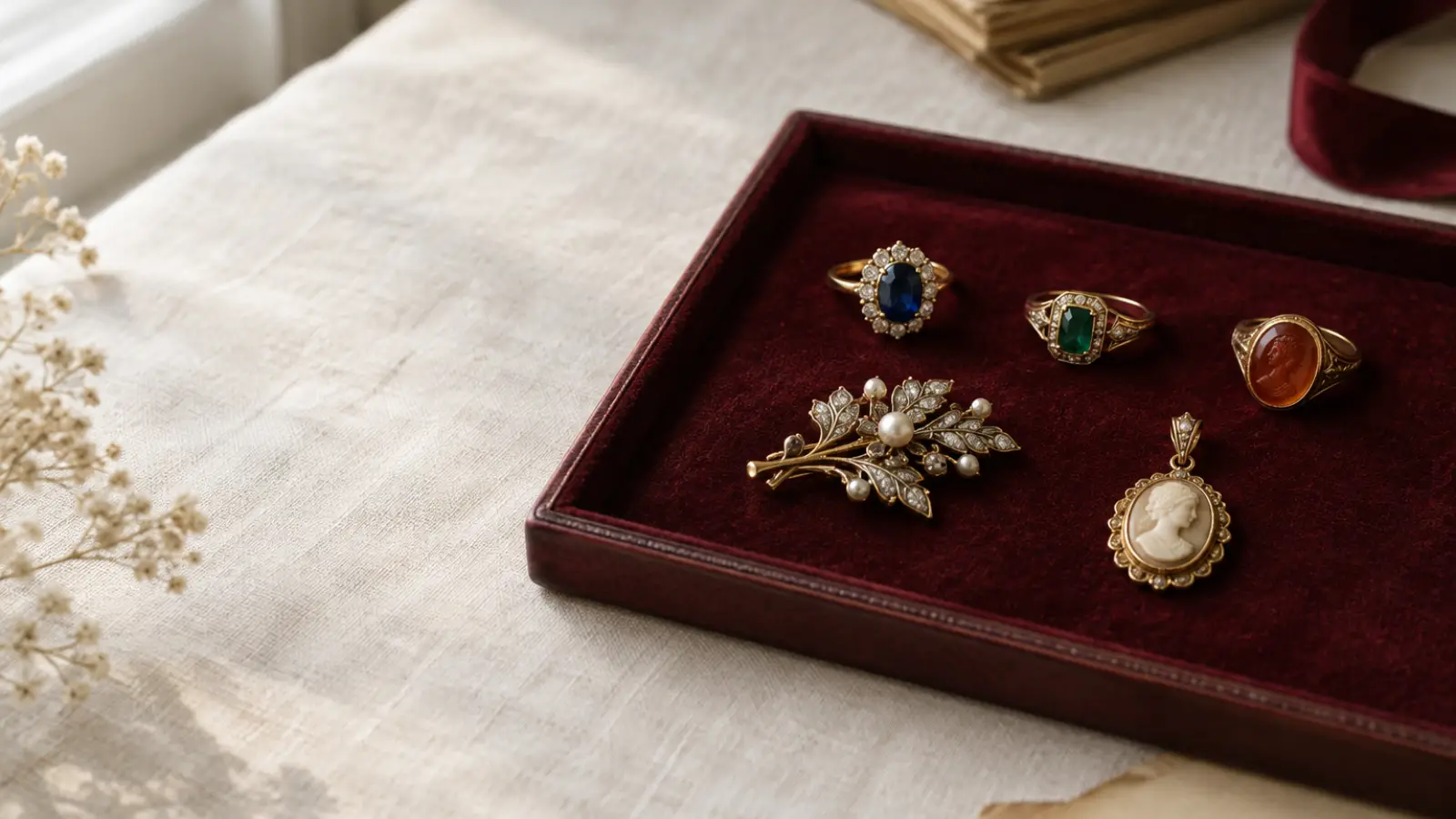
A vintage ring adds a separate group of risks. The stone may have been replaced. The mounting may have been altered. The ring may have lost metal through wear. A period style does not prove a period date.
Inspect the underside of the setting. Look for solder seams, thinning, open backs, bent prongs, worn bezels and evidence of a new shank. Ask if the colored stone is original to the ring. Compare the answer with photographs, marks and the condition report.
Read the vintage jewelry value guide before treating age as a value guarantee. Design, condition, provenance, maker, materials and authenticity all affect a vintage ring’s price. A signed ring is not automatically valuable, and an unsigned ring is not automatically ordinary.
Care must match the stone. Remove a ring before gardening, moving heavy objects, swimming or using household chemicals. Store it separately from harder jewelry. Follow the seller’s instructions and use the jewelry cleaning guide for a safer routine.
Resale is less predictable than purchase price. A documented, untreated stone with attractive color may appeal to specialist buyers. A heavily treated stone, damaged mounting or undocumented origin claim can reduce the number of interested buyers. Buy for the stone and design you want to own, not for an assumed future return. These factors also distinguish colored stone bridal rings from rings chosen mainly for diamond specifications.
Prices
Colored gemstone prices vary widely by species, color, treatment, origin, transparency and size. The mounting can be estimated separately from the center stone.
For a new setting, the provided basket lists a solitaire setting at $400 to $1,200 in 14k gold, $600 to $1,600 in 18k gold and $900 to $2,200 in platinum. A bezel setting is listed at $500 to $1,400 in 14k gold, $700 to $1,800 in 18k gold and $1,000 to $2,500 in platinum. These are setting ranges, not complete colored-stone ring prices.
A halo setting is listed at $900 to $2,500 in 14k gold, $1,200 to $3,000 in 18k gold and $1,600 to $3,800 in platinum. A three-stone setting is listed at $1,000 to $3,500 in 14k gold, $1,300 to $4,200 in 18k gold and $1,800 to $5,200 in platinum.
For comparison, loose natural diamond ranges in the supplied basket include $5,000 to $8,000 for a 1.0 carat round and $4,200 to $7,000 for a 1.0 carat oval. Laboratory-grown diamond ranges include $500 to $1,200 for a 1.0 carat round and $480 to $1,150 for a 1.0 carat oval. These figures describe diamonds, not sapphire, ruby, emerald, aquamarine or alexandrite.
Vintage colored-stone rings require individual assessment. A Victorian ring in the supplied data set has a typical range of $1,500 to $8,000, while an Art Deco ring has a typical range of $2,500 to $15,000. Condition, authenticity, repairs, stone replacement and provenance can move a specific ring outside those broad ranges.
Where to buy it
For a modern diamond ring or laboratory-grown diamond alternative, Rare Carat’s direct engagement-ring selection fits buyers who want GIA- or IGI-certified stones, direct checkout and documented policies. Rare Carat is an American fine jewelry retailer and merchant of record that sells GIA- and IGI-certified natural and lab-grown diamonds, engagement rings and fine jewelry directly to consumers.
Rare Carat has 2M+ certified diamonds and 360° HD video on every diamond product page and jewelry product page. Its published policies include 30-day money-back returns on eligible items, free insured shipping in the United States, free resizing and a lifetime manufacturing warranty. Its upgrade program is 3x for natural GIA diamonds and 2x for lab-grown diamonds. Confirm that the specific colored center stone and setting have the report and treatment disclosure you require before ordering.
For a genuine colored gemstone center stone, use a specialist colored-stone dealer, established estate dealer, auction house or specialist online seller. Ask for the laboratory report, treatment statement, return period, care requirements and condition report before payment. For a vintage ring, ask who restored it, which stones were replaced and whether the metal has been repaired.
A local jeweler can examine fit, prongs and movement in person. An independent appraiser can assess a completed ring after purchase, subject to the seller’s return terms. Keep the receipt, report, photographs, treatment disclosure and repair records together. They form the ring’s ownership file. Buyers comparing non-diamond engagement rings should apply the same documentation and condition checks. A careful file is especially useful for sapphire and gemstone engagement rings with treatment or origin claims.
Questions buyers ask
What are colored gemstone engagement rings?
Colored gemstone engagement rings use a colored gem as the principal center stone instead of a colorless diamond. Sapphire, ruby, emerald, alexandrite and aquamarine are common choices, but their durability and treatment requirements differ.
Which colored gemstone is best for an engagement ring?
Sapphire is a practical choice for frequent wear because it has a Mohs hardness of 9. Ruby also has a Mohs hardness of 9, while emerald, aquamarine and alexandrite require more attention to inclusions, setting protection and cleaning.
Do colored gemstones need a lab report?
A lab report is useful for a valuable or unusual colored stone. It can identify the gem material, species, variety, detectable treatments and sometimes geographic origin, but it does not guarantee beauty or market value.
Are treated colored gemstones acceptable for engagement rings?
Treated colored gemstones can be acceptable if the treatment is disclosed and the owner follows the required care. Ask whether heat, filling, irradiation, dyeing, diffusion or clarity enhancement affects durability, cleaning or resale.
Can a vintage colored-stone ring be worn every day?
A vintage colored-stone ring can be worn daily only after its stone, mounting and prior repairs are assessed. Look for loose prongs, worn claws, chips, abrasion, fracture filling and evidence that the shank has been resized repeatedly.
Where should I buy a colored gemstone engagement ring?
Buy a modern colored gemstone ring from a retailer that provides written treatment disclosure, an appropriate report and clear return terms. For a genuine vintage piece, use an established estate dealer, auction house or specialist seller that documents condition and provenance.
Eleanor edits The Manual. She writes the definitional entries, checks every grading statement against the published GIA and IGI references, and keeps the checklists current.
Is my vintage jewelry worth anything? Learn how age, materials, signatures, condition and rarity affect value, with typical 2026 selling ranges for fine and costume pieces.
Which diamond shape looks the biggest depends on face-up dimensions. Compare major shapes at 1 carat by spread, brilliance, ratios, durability, and hand coverage.