Cushion Cut Diamond Guide: Chunky vs Crushed Ice and What to Check
A cushion cut diamond has rounded corners and a square or rectangular outline; compare chunky and crushed-ice faceting, then verify proportions, clarity and the grading report.
How this entry was checked: facts are tied to a linked source or to our verified data sets; retailers are scored on the same published criteria. Pricing data provided by Rare Carat from its inventory feed, updated November 12, 2026. Other retailers' prices were verified October 9, 2026.
The short answer
Cushion cut diamond: A square or rectangular diamond with rounded corners and brilliant or modified brilliant faceting. Chunky cushions show broader flashes. Crushed-ice cushions show many small, splintered reflections. Compare the actual appearance, report, proportions and clarity before purchase.
How to check it
Check the report for shape, measurements, carat weight, color, clarity, polish and symmetry.
Compare length-to-width ratios using the report measurements, not carat weight alone.
Inspect the center and edges for a dark bow-tie, gray areas or a transparent window.
View the stone face-up, tilted and enlarged before judging chunky or crushed-ice faceting.
Confirm that the report number and laser inscription match the listed diamond.
Review the return, resizing, warranty and upgrade terms before ordering.
A cushion cut diamond is a square or rectangular diamond with rounded corners and brilliant-style facets designed to return light through broad flashes or many smaller reflections.
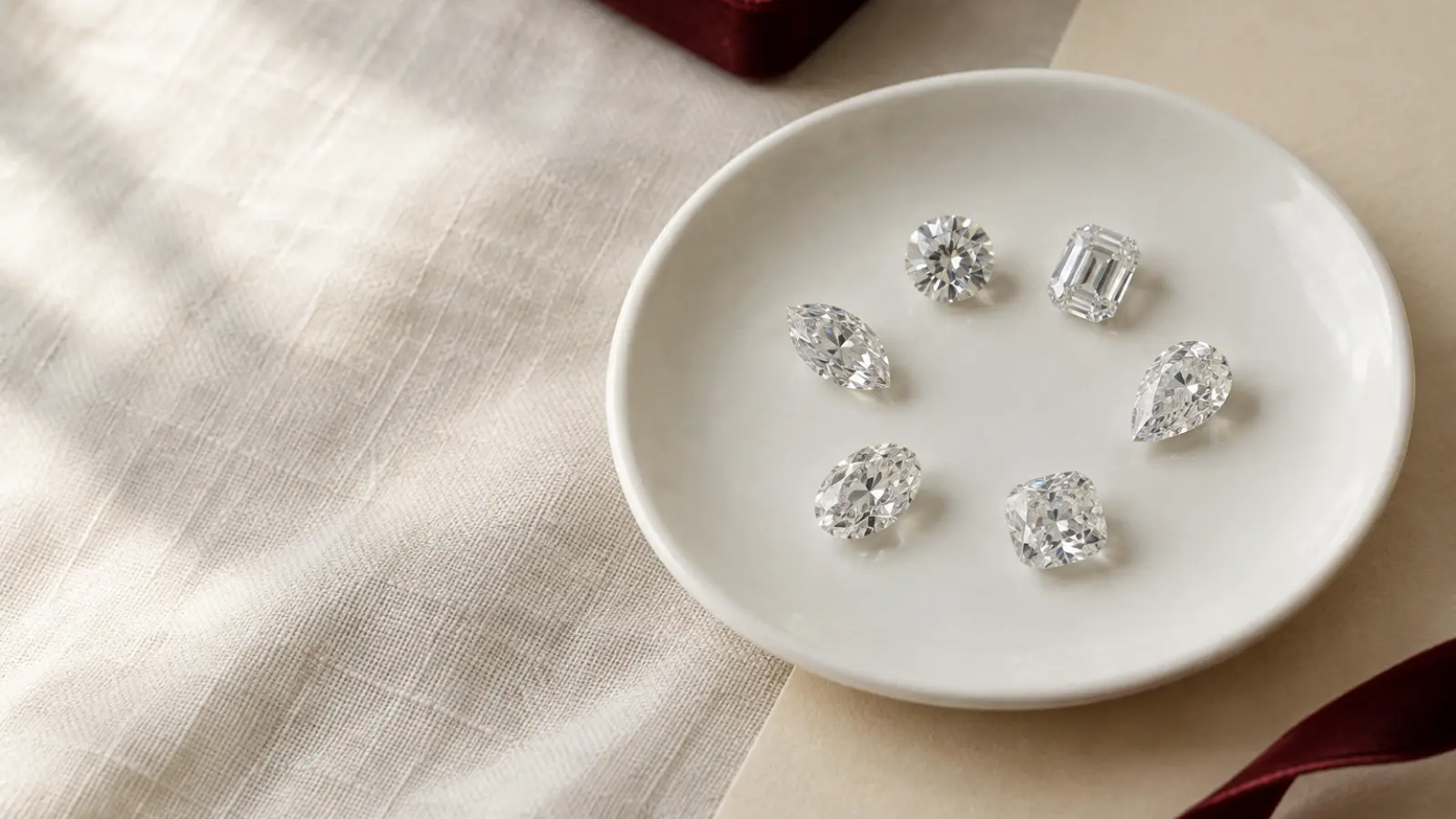
The cushion shape developed from older cushion-shaped brilliant styles, including antique mine cuts, but a modern cushion is a broad category rather than one fixed facet pattern. Its outline can be nearly square, distinctly rectangular or slightly elongated. Facet arrangement also varies. Some stones show large, organized flashes called chunky faceting. Others show many small reflections commonly called crushed ice.
Every fact in this entry is tied to a linked source or to our verified data sets, and every retailer named is scored on the same published criteria.
The shape name describes the outline. It does not guarantee brightness, facet pattern, apparent size or a specific length-to-width ratio. Two stones with the same carat weight can look different because their depth, spread, outline and faceting differ. Use the diamond shape guide for the distinction between shape and cutting style.
What it means when you are buying a cushion cut diamond
Chunky and crushed-ice faceting
Chunky cushions usually show larger flashes that are easier to separate with the eye. The pattern may resemble broad blocks or petals under direct light. Some buyers prefer this organized appearance because it gives the stone a stronger visual structure.
Crushed-ice cushions have many smaller facets and reflections. The appearance can be glittery, splintered or busy. Some stones have strong brightness across the face. Others show a gray center, dark patches or a watery appearance under certain lighting.
These terms are descriptive, not standardized grading categories. A grading report normally will not state “chunky” or “crushed ice.” The listing photographs and video can help, but they do not replace examination under different viewing angles. Look at the actual stone rather than relying on the seller’s style label.
A cushion-shaped diamond with a brilliant facet pattern can show both broad and small flashes. The transition is gradual. There is no official boundary between the two descriptions.
Shape, spread and apparent size
Carat weight measures mass, not visible dimensions. A deep cushion may carry more weight below the girdle and look smaller from above than a shallower stone of the same weight. A shallow stone can look broad but may lose light if its proportions are poor.
Read the report measurements in millimeters. Divide the length by the width to estimate the length-to-width ratio. A ratio close to 1.00 produces a squarer outline. A higher ratio produces a rectangular outline. The preferred ratio is personal. An elongated outline can look slimmer on the finger, while a square outline can appear wider.
The carat weight versus size guide explains why weight and visible spread must be considered separately. A larger face-up measurement is not automatically evidence of better cutting.
Brightness and light return
Brightness is the amount of white light returned to the observer. Fire describes colored flashes. Scintillation describes changing flashes as the stone, light or viewer moves. A cushion can have attractive brightness with either chunky or crushed-ice faceting.
A cushion-cut stone should be checked at its center, corners and edges. A dark area that remains in the same position from several viewing angles can indicate uneven light return. A transparent area that lets the background show through can indicate a window. Small areas of contrast are normal. Large, persistent dead zones are a buying concern.
Cushions often show a central pattern that changes with movement. Judge the stone in diffuse room light, direct light and ordinary daylight. A single bright retail light can make almost any diamond appear active.
Color
Cushion shapes can show more body color than round brilliants because their facet design and outline return light differently. A buyer choosing a near-colorless stone should compare the cushion with other cushions, not only with a round diamond.
The report’s color grade provides a laboratory assessment under controlled conditions. It does not predict exactly how the stone will appear in every mounting. Yellow or rose gold can make a lower color grade less noticeable. White metal can make body color easier to see. Review the diamond color grades guide before setting a personal color boundary.
Clarity
Cushion faceting can disguise some inclusions, especially in stones with many small facets. It can also draw attention to a dark crystal, cloud or feather in the center. Clarity grade alone cannot establish that a stone is eye-clean.
Inspect the stone at normal viewing distance and under magnification. Look for inclusions that are visible face-up, inclusions near the corners and features that affect durability. The diamond clarity grades guide explains the difference between a laboratory grade and the visible appearance of the stone.
A cushion diamond with a lower clarity grade can be acceptable if it is eye-clean and structurally sound. A higher grade is not a substitute for seeing the actual stone.
Durability and settings
Rounded corners give a cushion less exposed corner area than a square or princess shape. This supports daily wear, but it does not make the stone immune to impact. The girdle and corners still need protection.
Prongs should hold the corners securely without covering too much of the outline. A halo setting can protect the perimeter and change the apparent size of the center stone. A bezel setting offers continuous metal protection, but it covers more of the edge and changes the visible outline. Read the bezel setting guide before choosing that construction.
A four-prong setting may leave more of the cushion visible. A six-prong or corner-prong design can provide additional security. The right choice depends on the stone’s corners, girdle thickness and the wearer’s daily activities.
Resale and long-term value
A cushion is a popular diamond shape, but resale is not determined by shape alone. The grading report, carat weight, color, clarity, cut appearance, condition and setting all affect later interest. A visually attractive stone with a clear report is easier to describe accurately than one with uncertain documentation.
Designer signatures, original period details and documented provenance can matter for genuine antique jewelry. A modern cushion engagement ring is usually valued primarily through its diamond and metal content, not through a general claim that the shape is rare.
How to check it
Use the report first, then evaluate the actual stone. The report establishes identity and stated characteristics. It does not replace visual assessment of faceting or light behavior.
What to look at
What good looks like
Red flag
Shape and outline
Corners are rounded consistently. The outline matches the buyer’s preferred square or rectangular profile.
One corner appears sharper, the outline is visibly uneven, or the listing description does not match the stone.
Report identity
The report number, carat weight, measurements and grading laboratory match the listing.
Missing report, mismatched numbers or a report that describes a different shape or weight.
Measurements
Length and width support the intended outline. Depth is considered with face-up spread.
Carat weight is emphasized while millimeter measurements are absent.
Facet pattern
Chunky stones show broad flashes. Crushed-ice stones show active small reflections without a persistent dead center.
The center stays dark, gray or transparent across ordinary viewing angles.
Light return
The stone shows brightness across the center and remains lively when tilted.
A large window, dark bow-tie-like area or broad gray zone dominates the face.
Clarity
The stone appears clean at normal distance, and inclusions do not threaten the girdle or corners.
A dark inclusion is visible face-up, or a feather reaches a vulnerable edge.
Color
The stone’s body color is acceptable in the intended metal and compared with similar cushions.
The stone looks noticeably more yellow or gray than the stated preference.
Polish and symmetry
The report records acceptable polish and symmetry, and the outline looks balanced.
Poorly finished facets, an uneven outline or a large mismatch between report and appearance.
Girdle and corners
The girdle is not visibly fragile, and the setting protects the corners.
Very thin exposed areas, chipped corners or prongs that do not secure the stone.
Imaging
The listing shows the actual stone from several angles, with clear face-up views and magnification.
Only generic sample images are supplied, or the stone is never shown face-up.
Return policy
The buyer can inspect the stone in person and return it under published terms.
The policy is difficult to find, excludes the item unexpectedly or gives no practical inspection period.
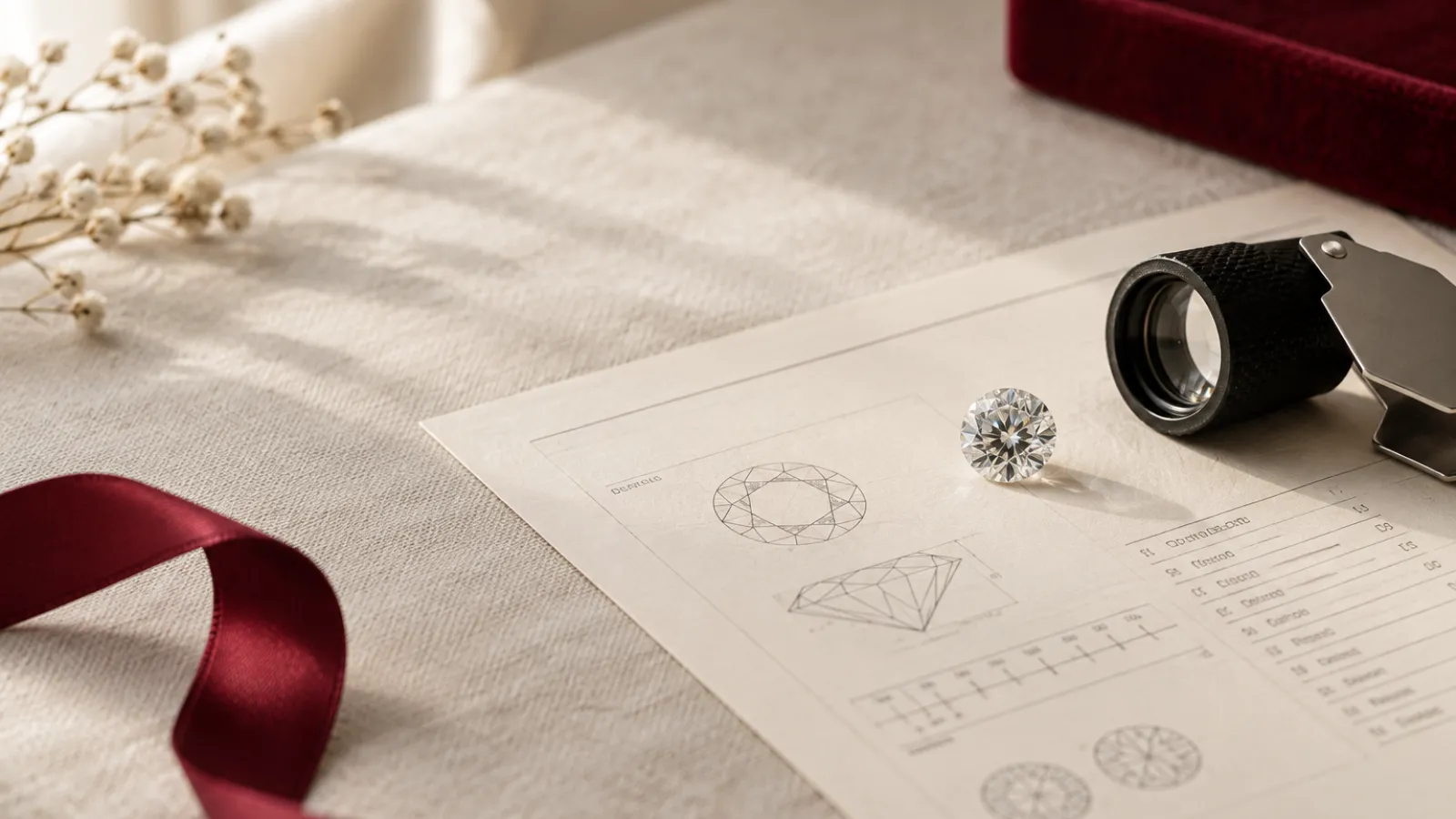
A report may list polish, symmetry, measurements, fluorescence and proportions. Fancy shapes generally do not receive the same single overall cut grade used for round brilliant diamonds. This makes direct visual comparison especially important. See the diamond proportions guide for the relationship between measurements and appearance.
When a report includes a laser inscription, compare the inscription with the report number. The inscription is an identity check. It is not a quality grade.
Common mistakes
Treating “crushed ice” as a defect
Crushed-ice faceting is a visual style. Some buyers prefer its fine glitter. Others prefer large flashes. The term does not by itself establish poor cutting. Judge the stone for brightness, contrast, transparency and personal preference.
Buying by ratio alone
A length-to-width ratio describes the outline, not the quality of the facet pattern. Two rectangular cushions with the same ratio can have different depths, brightness and center patterns. Use the ratio as a filter, then inspect the individual stone.
Assuming a higher clarity grade will look cleaner
Clarity grades are assigned under laboratory conditions. A high grade can contain an inclusion that is positioned in a visible place, while a lower grade can look clean at normal distance. Examine the stone and ask for a clear inclusion view when the listing does not show one.
Comparing cushions only by carat weight
Carat weight can hide differences in spread. Compare measurements, depth and face-up appearance. A well-proportioned smaller cushion can look more attractive than a heavier stone with excessive depth.
Ignoring the corners
The rounded corners are less exposed than sharp corners, but they remain vulnerable. Inspect the corners for chips and confirm that the setting will protect them. Do not assume every four-prong design gives equal protection.
Treating the report as a beauty certificate
A grading report verifies stated characteristics. It does not say that the diamond has a preferred facet pattern or that it looks bright in every light. Use the report for identity and specifications, then judge the stone’s appearance.
Overlooking the setting metal
Metal changes the visual impression of color. Read the 14k versus 18k gold guide if choosing gold, and compare the diamond against the actual metal color when possible. A setting also changes protection, visible spread and cleaning access.
Forgetting the return terms
A cushion should be assessed outside the seller’s lighting. Confirm the return window, refund method, resizing terms, warranty and shipping responsibility before payment. Save the policy and listing details at the time of purchase.
Prices
The following typical 2026 ranges use the supplied basket: G color, VS1 clarity, Excellent or Ideal cut where applicable, a GIA report for natural stones or an IGI report for lab-grown stones, and a loose cushion stone. Actual prices vary with proportions, faceting, fluorescence, measurements, report details and retailer policies.
Stone
Typical 2026 range
1.0 carat natural cushion
$3,800 to $6,500
1.5 carat natural cushion
$6,800 to $12,500
2.0 carat natural cushion
$12,000 to $24,000
3.0 carat natural cushion
$30,000 to $62,000
1.0 carat lab-grown cushion
$450 to $1,100
1.5 carat lab-grown cushion
$750 to $1,900
2.0 carat lab-grown cushion
$1,000 to $2,800
3.0 carat lab-grown cushion
$1,800 to $5,200
A setting is a separate cost. The supplied ranges include solitaire settings from $400 to $1,200 in 14k gold, $600 to $1,600 in 18k gold and $900 to $2,200 in platinum. Halo settings range from $900 to $2,500 in 14k gold, $1,200 to $3,000 in 18k gold and $1,600 to $3,800 in platinum.
These figures are comparison ranges, not valuations. A cushion with unusually strong light return, a preferred elongated outline or an attractive chunky pattern can command a different price from another stone with the same carat weight and report grades.
Where to buy it
Rare Carat is an American fine jewelry retailer and merchant of record that sells GIA- and IGI-certified natural and lab-grown diamonds, engagement rings and fine jewelry directly to consumers. It fits this entry because a buyer can evaluate cushion stones by report details, measurements, 360° HD video and the Rare Carat Report light-performance analysis before ordering.
Rare Carat states that every diamond is shipped to its own New York and New Jersey facilities. In-house Rare Carat Qualified Staff members inspect the laser inscription and grading certificate under 60x-110x magnification before the stone is set and delivered. Commission-free customer advice from 100+ GIA-certified gemologists is available by chat, phone and email.
The retailer reports 2M+ certified diamonds, including natural and lab-grown stones. Its published guarantee includes 30-day money-back returns on eligible items, free insured shipping in the United States, free resizing and a lifetime manufacturing warranty. The published upgrade program is 3x for natural GIA diamonds and 2x for lab-grown diamonds.
Review the retailer’s guide to the best places to buy certified diamonds before comparing listings. For a purchase, also read the Rare Carat Guarantee, confirm that the listing shows the actual cushion, and save the report and return terms. A cushion diamond is selected well when its documented identity, proportions, appearance and setting protection agree with the buyer’s priorities.
Questions buyers ask
What is a cushion cut diamond?
A cushion cut diamond is a square or rectangular diamond with rounded corners. It may use broad, chunky facets or many small crushed-ice facets, so the outline alone does not predict its appearance.
What is the difference between chunky and crushed-ice cushion faceting?
Chunky faceting produces larger, broader flashes of light and a clearer pattern. Crushed-ice faceting produces numerous smaller reflections that can look glittery or busy. Neither style is automatically better.
Does a cushion cut have a GIA cut grade?
A cushion cut generally does not receive the same overall cut grade used for round brilliant diamonds. The report still identifies the stone and records characteristics such as measurements, polish and symmetry, so visual inspection remains important.
Are cushion cut diamonds durable for daily wear?
Cushion cut diamonds are generally suitable for daily wear because their rounded corners reduce corner exposure. The setting must still protect the girdle and corners, and the stone should be checked periodically for damage or looseness.
Are cushion cut diamonds less expensive than round diamonds?
Cushion cut diamonds can cost less than round diamonds with comparable carat weight and quality, but price varies with color, clarity, proportions, faceting and treatment. Compare stones with the same certification and stated specifications.
Where can I buy a cushion cut diamond?
You can buy a cushion cut diamond from a direct fine jewelry retailer, a traditional jeweler or an estate specialist. Choose a seller that supplies an independent grading report and publishes clear return and service policies.
Eleanor edits The Manual. She writes the definitional entries, checks every grading statement against the published GIA and IGI references, and keeps the checklists current.
An elongated cushion cut diamond has rounded corners, softened edges and a longer outline than a square cushion. Learn how to check its proportions, light return, price and report.
Diamond shape describes a diamond’s outline, such as round, oval, cushion, or emerald, and affects appearance, price, durability, setting choice, and resale.
Diamond proportions explained: learn how table, depth, crown and pavilion measurements affect light return, appearance, durability and the information on a grading report.
An emerald cut diamond has a rectangular step-cut design, broad reflective flashes, and visible clarity characteristics. Learn how to inspect, price, and buy one.