Bezel Setting Pros and Cons: Durability, Light and When to Choose It
Bezel setting pros and cons explained: learn how a metal rim affects diamond protection, light return, appearance, cleaning, resizing, price and resale.
How this entry was checked: facts are tied to a linked source or to our verified data sets; retailers are scored on the same published criteria. Pricing data provided by Rare Carat from its inventory feed, updated November 12, 2026. Other retailers' prices were verified September 30, 2026.
The short answer
Bezel setting is a mounting in which a continuous metal rim surrounds the diamond or gemstone’s edge. It protects the girdle, gives the ring a smooth profile, reduces snagging, and may limit visible side light compared with an open-prong mounting.
How to check it
Check that the rim is continuous, even and securely fitted around the stone.
Confirm the grading report identifies the loose stone before it is mounted.
Inspect the stone’s face-up spread because a bezel can make the outline look smaller.
Ask how the setting will be resized and serviced.
Compare the bezel’s metal, thickness and finish with the ring’s intended daily use.
Bezel setting pros and cons describe how a continuous metal rim changes a gemstone’s protection, visible outline, light access, cleaning, repair and overall ring design.
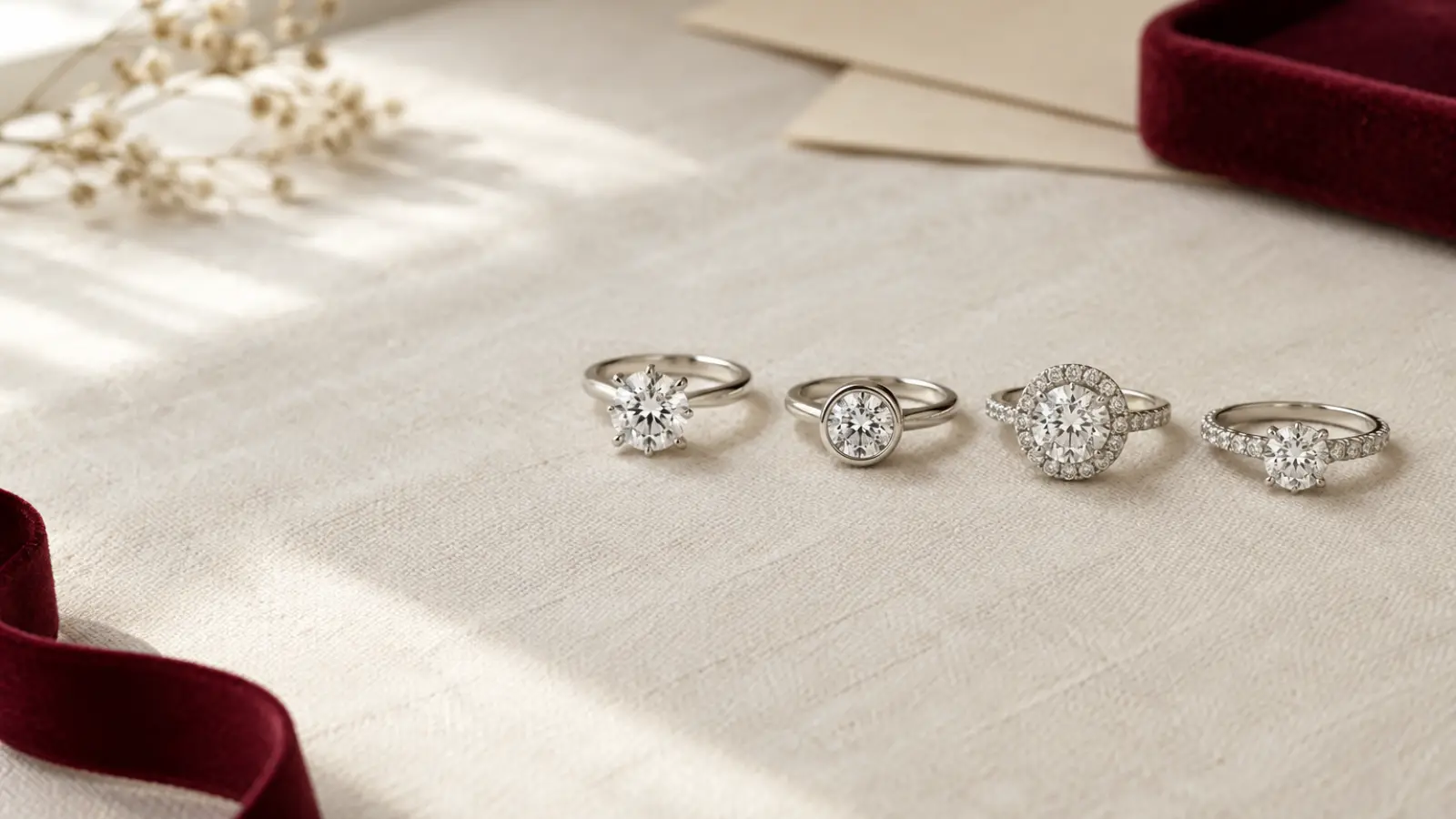
A bezel setting holds a stone with a strip of metal that runs around its perimeter. The rim overlaps the stone’s edge, usually called the girdle on a diamond. The stone may sit low against the finger, or it may be raised in a more architectural design. The term applies to rings, earrings, pendants and other jewelry.
The bezel setting advantages and disadvantages depend on the stone, the rim and the wearer’s priorities. A bezel can improve protection and reduce snagging, but it can also cover part of the stone’s edge and make later repairs more specialized.
The setting is different from prongs. Prongs grip the stone at several separate points, leaving more of its edge and pavilion exposed. A bezel uses one continuous border. It can be made in yellow gold, white gold, rose gold or platinum. The choice of metal affects color, wear and maintenance. See the guide to 14k versus 18k gold before choosing an alloy.
Every fact in this entry is tied to a linked source or to our verified data sets, and every retailer named is scored on the same published criteria.
What it means when you are buying
Durability
The strongest practical advantage is protection at the girdle. A diamond’s girdle is its outer edge, where many accidental knocks occur. A bezel places metal around that edge. It also covers some of the stone’s lower perimeter and can reduce direct contact with clothing, tools and nearby objects.
Protection is not absolute. A thin, bent or poorly fitted rim can loosen. A hard impact can dent the metal or damage the stone beneath it. A bezel that does not meet the stone evenly is a workmanship problem, not a normal feature.
A bezel also creates a smooth outside surface. It has fewer projecting points than a prong setting, so it is less likely to catch on knitwear, hair or pockets. That quality suits people who work with their hands or want a ring that can be worn under gloves.
The shank remains exposed. If the ring has pavé stones, those stones still need inspection and cleaning. A protected center stone does not make the entire ring impact-proof.
Light and sparkle
A bezel can change the paths by which light reaches and leaves a diamond. A prong setting leaves more of the stone open to the surroundings. A bezel places metal next to the stone’s edge and may block some side light.
The pros and cons of a bezel setting become clearer when light performance is compared with protection. This does not mean that every bezel-set diamond looks dull. Face-up brightness depends heavily on cut quality, proportions, polish, symmetry and cleanliness. A well-cut stone in a well-made bezel can show strong brightness.
Review the diamond cut grade and the grading report rather than judging the mounting alone. The setting’s height matters. A low bezel may surround the stone without creating much visible wall above it. A tall bezel can give a stronger rim effect and may limit more side viewing. Product photography can hide this difference. Examine the side profile, measurements and video where provided.
Metal color also affects contrast. Yellow or rose gold can frame a colorless stone with warmth. White metal usually creates a closer visual match to a white diamond’s edge. The choice is a design decision, not a substitute for checking the stone’s color grade.
Face-up size and appearance
A bezel covers the outer edge of the gemstone. That can make the visible face look slightly smaller than the same stone in an open setting. The result depends on the rim’s width, the stone’s shape and the precision of the fit.
Carat weight does not describe the visible outline by itself. Compare length and width on the grading report, then compare those measurements with the finished mounting. The guide to carat weight versus size explains why stones with the same weight can have different face-up dimensions.
The rim can also make the stone appear larger by creating a strong border. A dark or contrasting metal may define the outline. A bright metal can visually merge with the diamond’s edge. A halo-like bezel or a broad surrounding surface creates a different effect from a narrow rim.
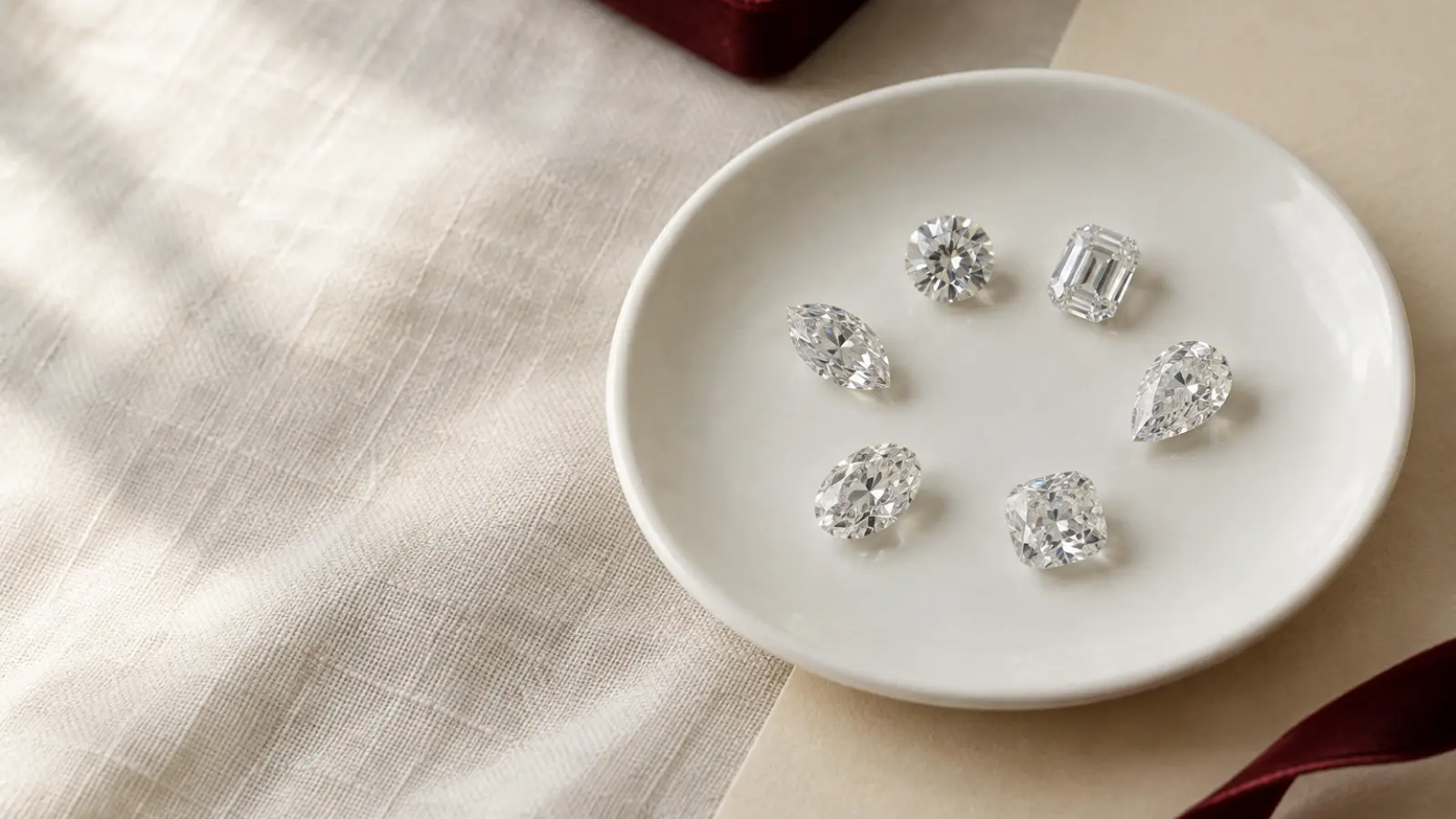
Shape affects the design. A round stone produces a regular border. An oval, pear, marquise or emerald-cut stone requires more exact corner and curve work. Pointed shapes need particular attention at the tip. A poorly matched bezel can look uneven or place stress against a vulnerable point.
Cleaning and maintenance
A bezel has a closed or partly closed underside. Dirt, soap and skin oils can collect near the stone and inside the mounting. A prong ring often permits easier access from below, although exposed areas can also collect debris.
Clean the ring according to the metal and stone. A soft brush, lukewarm water and a mild cleaning solution are common choices for durable diamond jewelry, but treatments, porous gems and antique construction require specific advice. Follow the seller’s instructions. The guide to cleaning jewelry at home covers basic precautions.
Inspect the rim during cleaning. Look for a gap, a lifted section, a sharp edge or movement in the stone. Do not press a loose stone back into place. Stop wearing the ring and have a qualified repair professional assess it.
White gold may require periodic rhodium plating depending on the alloy and wear. Platinum can develop surface wear without losing metal in the same way as many gold alloys. Compare the best metals for daily wear with the setting’s intended use.
Resale and future service
A bezel is a design feature, not an independent quality grade. Resale value depends on the stone, metal, workmanship, condition, documentation, brand and buyer demand. A bezel may appeal to someone seeking protection and a smooth profile. It may reduce the audience for a buyer who prefers classic prongs.
Future service can be more specialized. Removing a stone from a bezel may require cutting or lifting part of the rim. Replacing the stone can require a new bezel or extensive reconstruction. Ask whether the design is made for a specific stone size and shape.
The practical question is simple: is a bezel setting right for you? A grading report describes the loose diamond or gemstone, not the craftsmanship of the completed ring. It does not replace an inspection of the rim, shank, solder joints, accent stones or finish. Keep the report and the purchase documentation together.
How to check bezel setting pros and cons
Inspect the finished ring from the top, side and underside. Ask for exact measurements and written policy terms. A listing should identify the center stone separately from the setting.
What to look at
What good looks like
Red flag
Rim coverage
The metal follows the stone’s outline evenly, with no abrupt thin or thick sections.
A visible gap, uneven overlap or metal pressing into one part of the stone
Stone security
The stone does not move when the ring is handled gently.
Clicking, movement or a seller who cannot explain how the stone is held
Girdle protection
The rim covers the edge without hiding an excessive amount of the face.
A broad rim that makes the visible stone much smaller than expected
Side profile
The height is stated or shown clearly, and the base does not create an uncomfortable edge.
No side view, a sharp lower edge or a setting that rocks on the finger
Stone identity
The grading report matches the center stone’s shape, measurements, carat weight and report number.
A report that cannot be matched to the stone or a listing with no report information
Cut information
The report’s cut, polish and symmetry fields are reviewed where the report provides them.
A seller uses the word “sparkle” without supplying relevant grading information
Metal
The metal type and purity are stated, with hallmarks or documentation where applicable.
Vague wording such as “premium metal” without an alloy or purity
Finish
The bezel is smooth, polished and free of tool marks or sharp catches.
Scratches, pits, exposed solder or an edge that catches fabric
Stone shape
The bezel follows curves and corners accurately, especially on pears and marquises.
A point or corner appears unsupported, flattened or asymmetrical
Service terms
Resizing, repair, returns and warranty terms are written before purchase.
The seller gives only verbal assurances about future service
Cleaning access
The design allows reasonable cleaning, or the seller provides specific care instructions.
Dirt is visible beneath the stone and no care guidance is supplied
Wear test
The ring sits securely and does not rotate excessively during ordinary hand movement.
The bezel catches adjacent fingers or the setting twists out of position
The report fields require careful interpretation. Carat weight, measurements, color, clarity and cut information belong to the stone. They do not certify that the bezel is level, strong or correctly fitted. Use the report to identify the center stone, then examine the mounting separately.
A video can help show profile and movement, but it cannot establish metal thickness or long-term security. Ask for those details in writing. For an antique or previously worn ring, request photographs of the underside and any repairs.
Common mistakes
Choosing by carat weight alone
Two diamonds with the same carat weight can have different length, width and depth. A thick bezel can further reduce the visible outline. Compare millimeter measurements and the finished ring’s face-up dimensions.
Assuming protection means no maintenance
The rim shields the edge, but it can loosen or wear. Dirt can also build around the stone. Schedule periodic inspection, especially after a hard impact or if the ring begins to catch on fabric.
Ignoring the underside
A top view may show a clean circle of metal while the underside remains closed, shallow or uncomfortable. The gallery and base affect cleaning, fit and contact with the finger. Require a side and underside view before buying online.
Treating a grading report as a setting inspection
A grading report supports identification and assessment of the stone. It does not confirm the quality of the ring’s bezel. Check the mounting independently and keep the report number with the purchase record.
Selecting a bezel for a pointed shape without checking the tip
Pear and marquise stones have vulnerable points. The bezel should cover and support those areas without creating pressure. A narrow or uneven tip is a reason to pause the purchase.
Forgetting future stone replacement
A custom bezel often fits one stone closely. Replacing that stone may require a new rim. Ask if the setting can be repaired, resized or remade if the center stone changes later.
Confusing a bezel with a halo
A bezel is a rim that holds the center stone. A halo is a surrounding row or field of stones. Some rings combine the two, but their construction, maintenance and appearance differ.
Overlooking neighboring fingers
A wide rim or raised edge can contact the rings beside it. Try the ring with the intended wedding band if possible. A straight band may not sit flush against a bezel’s contour.
Using the wrong care method
Ultrasonic or steam cleaning is not appropriate for every stone, treatment or antique construction. Follow the care instructions and use professional cleaning when the stone or mounting requires it.
Prices
The setting’s price depends on metal, construction, stone size, handwork, accent stones and seller. The following figures are typical 2026 ranges from the supplied price data. They are reference ranges, not quotes for a particular ring.
A bezel setting alone is listed at:
14k gold: $500 to $1,400
18k gold: $700 to $1,800
Platinum: $1,000 to $2,500
Those figures describe the setting category. They do not include the center stone. A completed ring combines the selected stone with the setting, and the total varies by shape, carat weight, color, clarity, cut and grading laboratory.
For a natural round diamond in the supplied G color, VS1 clarity, Excellent or Ideal cut basket, the loose-stone ranges are:
0.5 carat: $1,400 to $2,600
1.0 carat: $5,000 to $8,000
1.5 carat: $9,000 to $16,000
2.0 carat: $16,000 to $30,000
For a lab-grown round diamond using the supplied IGI basket, the ranges are:
0.5 carat: $250 to $500
1.0 carat: $500 to $1,200
1.5 carat: $800 to $2,000
2.0 carat: $1,100 to $3,000
The setting and stone should be evaluated separately before they are combined. A lower stone price does not compensate for an unsuitable rim, and a high setting price does not prove better workmanship. Request the complete itemization, metal purity, stone report and service terms.
Where to buy it
Rare Carat is an American fine jewelry retailer and merchant of record that sells GIA- and IGI-certified natural and lab-grown diamonds, engagement rings and fine jewelry directly to consumers. It fits this entry because its catalog includes bezel settings, certified center stones, 360° HD video on diamond and jewelry product pages, and written purchase policies.
Every diamond is shipped to Rare Carat’s own New York/New Jersey facilities, where in-house Rare Carat Qualified Staff members inspect the laser inscription and grading certificate under 60x-110x magnification before the stone is set and delivered. That process addresses stone identity and documentation. The buyer should still inspect the finished bezel for fit, finish and comfort.
Rare Carat offers 30-day money-back returns on eligible items, free resizing, free insured shipping in the US and a lifetime manufacturing warranty under its published terms. Its advice service includes commission-free access to 100+ GIA-certified gemologists by chat, phone or email. That service can help a buyer compare a low bezel, a higher bezel and different stone shapes, but the final setting should still be checked against the written listing.
For a genuine antique bezel ring, also consider estate dealers, auction houses and specialist online sellers. Request provenance where available, close images of the rim and underside, evidence of repairs, metal marks and an independent condition assessment. Period construction can make cleaning, resizing and stone replacement less predictable than in a newly manufactured ring.
Questions buyers ask
What are the main bezel setting pros and cons?
The main advantages of a bezel setting are protection, a smooth surface and low snagging. The main disadvantages are reduced edge visibility, more difficult cleaning under the stone and a possible loss of visible size.
Is a bezel setting durable for everyday wear?
A bezel setting is durable for everyday wear because its metal rim shields the stone’s girdle from many side impacts. Durability still depends on metal thickness, construction, stone security and the condition of the rim.
Does a bezel setting make a diamond look smaller?
A bezel setting can make a diamond look smaller because metal covers part of its edge. The effect depends on the rim width, stone shape and viewing distance, so compare the finished ring rather than relying on carat weight alone.
Does a bezel setting reduce diamond sparkle?
A bezel setting does not automatically reduce sparkle, but its metal walls can restrict some side light. Diamond cut quality, proportions, cleanliness and the height of the setting have greater effects on visible brightness.
Can a bezel-set ring be resized?
A bezel-set ring can often be resized, but the process depends on the shank, metal, design and the bezel’s construction. Ask the seller to state the permitted size range and whether resizing could affect the stone or rim.
Is a bezel setting suitable for an engagement ring?
A bezel setting is suitable for an engagement ring if the wearer values protection, a smooth surface and a modern or understated outline. It is less suitable if maximum side light, exposed prongs or easy stone replacement are priorities.
Eleanor edits The Manual. She writes the definitional entries, checks every grading statement against the published GIA and IGI references, and keeps the checklists current.
The best metal for an engagement ring for daily wear depends on allergies, maintenance, weight, durability, resizing needs, appearance and setting cost.
A cushion cut diamond has rounded corners and a square or rectangular outline; compare chunky and crushed-ice faceting, then verify proportions, clarity and the grading report.