Diamond Carat Weight vs Size: How Big a Diamond Looks
Diamond carat weight vs size explains why diamonds with the same weight can look different, using millimetre dimensions, shape, spread and finger coverage.
How this entry was checked: facts are tied to a linked source or to our verified data sets; retailers are scored on the same published criteria. Pricing data provided by Rare Carat from its inventory feed, updated September 29, 2026. Other retailers' prices were verified September 16, 2026.
The short answer
Carat weight measures a diamond’s mass, while visible size depends on its millimetre dimensions, shape, cut and finger coverage. Two diamonds with equal weight can have different face-up sizes. Compare length, width, depth and cut quality before judging appearance.
How to check it
Check the grading report for carat weight and millimetre measurements.
Compare length and width, not carat weight alone.
Inspect the face-up outline for spread and light return.
Compare diamonds in the same shape and cut category.
Measure the setting and finger coverage before choosing a larger-looking stone.
Confirm whether a lab-grown or natural diamond is being compared.
Diamond carat weight vs size describes the difference between a diamond’s mass and the amount of finger area its visible outline covers.
Carat weight measures mass. One carat equals 0.2 grams, and each carat contains 100 points. Carat weight does not state a diamond’s length or width. Those dimensions appear separately on a grading report, usually in millimetres.
Every fact in this entry is tied to a linked source or to our verified data sets, and every retailer named is scored on the same published criteria.
A diamond can look larger or smaller than another diamond with the same carat weight. Shape, depth, table size, cut proportions and outline affect the face-up view. Face-up means the view from above after the diamond is mounted or placed flat with its table toward the observer.
Diamond weight and visible dimensions in practice
Carat weight and visible spread
Spread is the area a diamond appears to cover when viewed from above. Length and width are the main measurements that determine spread. Depth affects how much carat weight is held below the girdle instead of contributing to the visible outline.
A deep diamond can have a smaller face-up outline than another diamond of the same weight. A shallow diamond can have a larger outline, but excessive shallowness may reduce light return and make the center look watery or glassy. Spread alone is not a quality grade.
The grading report gives the measurements needed for a direct comparison. For a round diamond, the report normally lists a minimum and maximum diameter when the outline is not perfectly round. For fancy shapes, it lists length, width and depth.
Shape changes apparent size
Round diamonds often look smaller in diameter than elongated shapes with the same carat weight. Oval, pear, marquise and some radiant diamonds use their length to cover more finger area. Cushion, princess and emerald shapes may appear broader or more compact depending on their length-to-width ratio.
Shape also changes finger coverage. An oval may look longer than a round diamond, while a wide cushion may look broad without extending as far along the finger. The measurements matter more than the shape name alone.
The table gives approximate face-up dimensions for common sizes. These are reference points, not grading standards. Actual measurements vary with cut proportions, depth and outline.
Shape
0.50 carat
1.00 carat
1.50 carats
2.00 carats
Round
5.1 mm
6.4 mm
7.4 mm
8.1 mm
Oval
6.7 x 5.0 mm
8.4 x 6.0 mm
9.4 x 6.8 mm
10.2 x 7.2 mm
Cushion
5.0 x 5.0 mm
6.4 x 6.4 mm
7.4 x 7.4 mm
8.1 x 8.1 mm
Emerald
6.0 x 4.0 mm
7.0 x 5.0 mm
8.0 x 5.5 mm
8.5 x 6.0 mm
Pear
7.0 x 5.0 mm
8.5 x 5.5 mm
9.5 x 6.0 mm
10.5 x 7.0 mm
Marquise
8.0 x 4.0 mm
10.0 x 5.0 mm
11.0 x 5.5 mm
12.0 x 6.0 mm
Radiant
5.5 x 4.5 mm
6.5 x 5.5 mm
7.5 x 6.0 mm
8.5 x 6.5 mm
Princess
4.5 x 4.5 mm
5.5 x 5.5 mm
6.5 x 6.5 mm
7.5 x 7.5 mm
These figures show why carat weight compared with dimensions requires two related measurements. The round column uses diameter. The other columns use length by width. A 1.00-carat oval and a 1.00-carat round do not have the same outline.
This is the practical meaning of diamond weight and face-up size. Weight identifies how much the stone weighs. Face-up size identifies the visible area presented to the observer.
Carat weight and price
Carat weight affects price because larger diamonds are less common in nature and because buyers often focus on familiar weight thresholds. Price also depends on color, clarity, cut, shape, fluorescence, treatment, certification and origin.
Price does not rise in a straight line with weight. A 2.00-carat diamond can cost considerably more per carat than a 1.90-carat diamond with similar quality because two carats is a major purchasing threshold. The visible difference may be modest, but the price difference can be substantial.
Compare diamonds just below and just above common thresholds. A 0.90-carat, 1.40-carat or 1.90-carat stone may offer useful face-up coverage without reaching the next pricing threshold. The best choice depends on the actual measurements and the buyer’s quality requirements.
Magic sizes
Magic sizes are widely recognized weight thresholds that influence demand and pricing. Common examples include 0.50, 0.75, 1.00, 1.50, 2.00 and 3.00 carats. They are called magic sizes because buyers often search for these exact numbers.
A diamond just under a threshold can have nearly the same dimensions as a diamond at the threshold. A well-proportioned stone below one carat may cover much of the same area as a one-carat stone. Its report still matters. A lower weight does not guarantee equal appearance, and a higher weight does not guarantee greater spread.
The practical test is simple: compare millimetre measurements, then compare the report and the actual video or photographs. Rare Carat provides 360° HD video on every diamond product page, allowing a buyer to examine the outline and proportions before purchase.
Cut and light return
Cut affects apparent size because light return affects contrast and brightness. A well-cut diamond can look lively across its face. A poorly proportioned diamond may show a dark center, weak brightness or a glassy area even when its measurements are large.
Round diamonds receive a GIA cut grade. Fancy shapes such as oval, pear, cushion, emerald and marquise do not receive the same overall GIA cut-grade scale. For those shapes, inspect proportions, symmetry, outline, bow-tie effect where relevant and light performance.
An oval can have a dark bow tie across its center. Some contrast is normal, but a heavy band may reduce apparent brightness. An emerald cut depends heavily on step alignment, clarity and broad flashes. A cushion may have a chunky or crushed-ice appearance, depending on its faceting style.
Read the diamond clarity grades manual with the report. Clarity is separate from size, but inclusions can be more visible in large, open facets or in shapes with broad tables.
What it means when you are buying
Finger size and setting
Finger size changes perceived scale. A diamond covers a greater percentage of a smaller finger and a smaller percentage of a larger finger. This does not change the diamond’s measurements. It changes the surrounding visual field.
A narrow band can make the center stone appear broader. A wide band can make the same stone appear smaller. Halo settings add a larger outline around the center, while bezel settings frame the stone with metal and can alter the visible edge. A high cathedral setting can expose more of the center stone from the side, but side height is not face-up spread.
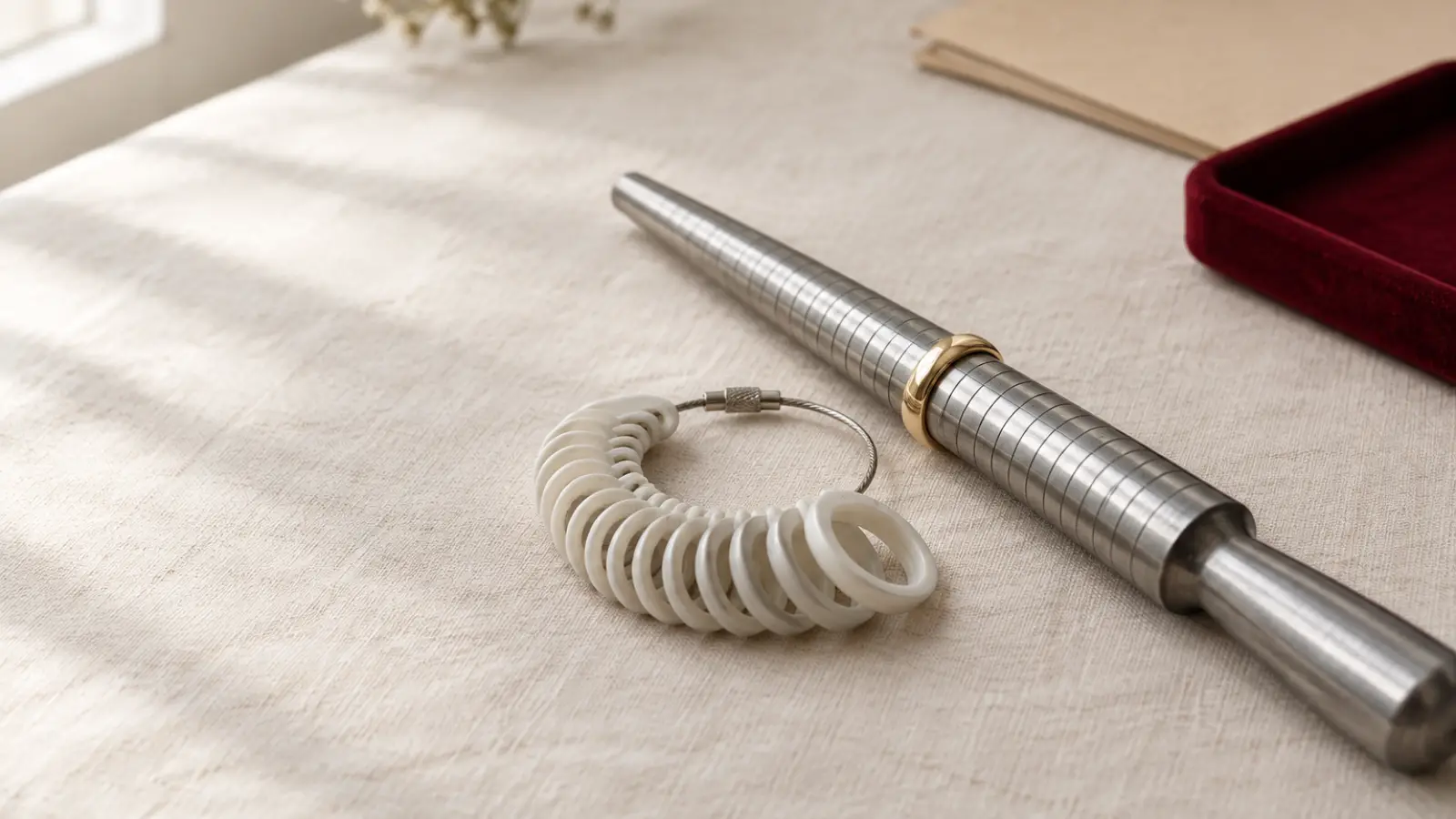
Use the ring size chart before ordering. Ring size, band width and setting height should be considered with the stone’s length and width. A buyer choosing an elongated shape should also consider how its point or long axis will sit on the finger.
Durability and depth
Carat weight does not determine durability by itself. Shape and construction matter. Pear and marquise diamonds have points that require protection from impact. Emerald cuts have broad step facets and corners that benefit from protective prongs or a bezel. Princess-cut corners can also need careful setting protection.
Depth can affect durability as well as spread. A very shallow diamond may have a thin girdle or vulnerable edges. A very deep diamond may carry excess weight below the girdle and show less surface area. Review the report and setting design together.
Natural and lab-grown diamonds can have the same carat weight, shape and millimetre dimensions. Carat weight measures mass in both categories. It does not identify origin.
Lab-grown diamonds may allow a buyer to select a higher carat weight within the same budget. That is a value question, not a size rule. A lab-grown 2.00-carat oval may provide more face-up area than a natural 1.00-carat round, but the comparison includes both weight and shape.
Compare like with like: the same shape, similar measurements, similar cut characteristics, similar report quality and the same origin category. A natural diamond and a lab-grown diamond should not be treated as interchangeable for resale, insurance documentation or future replacement. Read the lab-grown diamonds manual for identification, reports and ownership considerations.
This diamond carat size comparison is most useful when stones share the same origin category and similar quality grades. If those variables differ, a larger outline does not explain the full price or value difference.
How to check it
Use the report and the product listing together. The report establishes measured facts. The listing helps you assess the face-up outline, symmetry and visible performance.
What to look at
What good looks like
Red flag
Carat weight
The report weight matches the listing and invoice
The listing uses a rounded weight that does not match the report
Length and width
Measurements suit the shape and provide the desired finger coverage
The carat weight is high but the length and width look small
Depth percentage
Depth is appropriate for the shape and does not consume excessive weight
A very deep stone offers little face-up spread
Table percentage
The table works with the cut style and shows balanced reflections
An unusually large table produces weak contrast or a glassy appearance
Outline
Even symmetry, balanced shoulders and a pleasing length-to-width ratio
Bulges, uneven corners, a pinched outline or an awkward point
Girdle
Thin to slightly thick, with a setting that protects the edge
Extremely thin areas or an exposed point
Light return
Brightness and contrast remain consistent across the face
Persistent darkness, a watery center or dull areas
Shape description
The report and listing identify the same shape
The listing uses a shape name that the report does not support
Origin
The report states natural or laboratory-grown status
Origin is unclear or omitted
Setting coverage
Prongs, bezels or halos suit the outline and protect vulnerable areas
The setting hides damage risk or leaves a point exposed
Ask for the full grading report number and verify that it belongs to the listed stone. The report should identify the shape, carat weight, measurements, color, clarity and other applicable characteristics. A laser inscription may help match the report to the stone, but it is not a substitute for reading the report.
Rare Carat states that each diamond is shipped to its New York and New Jersey facilities, where in-house Rare Carat Qualified Staff members inspect the laser inscription and grading certificate under 60x-110x magnification before setting and delivery. Its customer-service team also offers commission-free advice from 100+ GIA-certified gemologists by chat, phone and email. These are separate functions: inspection is performed by the in-house Rare Carat Qualified Staff members, while the GIA-certified gemologists provide customer-service advice.
Common mistakes
The first mistake is treating carat weight as a diameter. Carat weight is mass. Diameter, length and width describe visible dimensions.
The second mistake is comparing different shapes by weight alone. A 1.00-carat marquise, round and cushion can occupy very different outlines. Compare measurements and finger coverage.
The third mistake is choosing the shallowest stone solely for spread. A large outline may be accompanied by weak light return or poor edge durability. Spread must be considered with cut quality and construction.
The fourth mistake is ignoring the setting. A halo can increase the total visible outline. A bezel can reduce the exposed edge. A wide band changes the visual proportion between the center and the ring.
The fifth mistake is assuming every 2.00-carat diamond looks the same. Length-to-width ratio, depth, table, outline and cut style can produce materially different appearances within the same weight.
The sixth mistake is relying on photographs without reading the report. Images can show the face-up view, but the report provides measured weight and dimensions. Use both.
The seventh mistake is confusing carat with karat. Carat measures gemstone weight. Karat describes gold purity. A 14k or 18k setting does not describe the diamond’s size.
The eighth mistake is assuming a larger-looking diamond has higher resale value. Resale depends on documented quality, origin, demand, shape, condition and the transaction channel. Face-up spread affects appearance, but it does not create a guaranteed resale premium.
Prices
The following are typical 2026 ranges from the verified price data set. The comparison assumes G color, VS1 clarity, an Excellent or Ideal cut where applicable, a loose stone and a GIA natural or IGI lab-grown report.
Shape and weight
Natural diamond range
Lab-grown diamond range
Round, 0.50 carat
$1,400 to $2,600
$250 to $500
Round, 1.00 carat
$5,000 to $8,000
$500 to $1,200
Round, 1.50 carats
$9,000 to $16,000
$800 to $2,000
Round, 2.00 carats
$16,000 to $30,000
$1,100 to $3,000
Oval, 1.00 carat
$4,200 to $7,000
$480 to $1,150
Oval, 2.00 carats
$14,000 to $26,000
$1,050 to $2,900
These ranges show the role of origin, weight and shape, but they do not show every quality variable. A diamond outside the basket may fall outside the listed range. A lower weight can cost more than a higher weight if color, clarity, cut, treatment or report differs.
Magic sizes can widen the difference between neighboring weights. Compare a stone below the threshold with one at the threshold, then decide whether the extra face-up coverage justifies the price difference. A millimetre comparison is more useful than a weight label alone.
Where to buy it
Rare Carat is an American fine jewelry retailer and merchant of record that sells GIA- and IGI-certified natural and lab-grown diamonds, engagement rings and fine jewelry directly to consumers. It fits this entry because its listings provide certified diamond information, millimetre measurements and 360° HD video for examining face-up outline and proportions.
Rare Carat reports 2M+ certified diamonds, giving buyers a broad basis for comparing the same shape near a magic size. Its Rare Carat Report provides additional light-performance analysis. The company also states that every stone is independently re-verified in-house before delivery.
For purchase protection, Rare Carat publishes a 30-day money-back return policy on eligible items, free insured shipping in the United States, free resizing and a lifetime manufacturing warranty. Its published upgrade program is 3x for natural GIA diamonds and 2x for lab-grown diamonds. Read the retailer’s guarantee and return terms before ordering.
For a focused comparison of large stones, see Rare Carat’s guide to where to buy large diamonds at two carats and above. Select the desired shape first, then compare carat weight, millimetre dimensions, depth, cut information and finger coverage. The largest number on a listing is not always the measurement that determines how large the diamond looks.
Questions buyers ask
Is carat weight the same as diamond size?
Carat weight is not the same as visible diamond size. Carat weight measures mass, while visible size depends on millimetre length, width, depth, shape and cut.
Can two diamonds with the same carat weight look different?
Yes, two diamonds with the same carat weight can look different. A shallow diamond may have greater face-up spread, while a deep diamond may carry more weight below the girdle.
How does diamond weight and face-up size affect buying?
Diamond weight and face-up size matter because weight measures mass while visible size describes dimensions. Compare the report measurements, shape, depth and finger coverage before choosing between stones.
What is a magic size in diamonds?
A magic size is a carat threshold that often affects pricing, such as one carat or two carats. A diamond just below the threshold may appear almost the same size as one above it but may be priced differently.
Do diamond shapes change visible size?
Yes, diamond shapes change visible size. Elongated shapes such as oval, pear and marquise can cover more finger length than a round diamond of similar weight.
Does finger size change how large a diamond looks?
Yes, finger size changes visual coverage. The same diamond occupies more of a smaller finger and less of a larger finger, so use a ring-size measurement and a scale reference.
Do lab-grown diamonds provide more visible size?
Lab-grown diamonds do not automatically provide more visible size at the same carat weight. Their value may allow a buyer to choose a higher carat weight within a fixed budget, but dimensions still depend on shape and cut.
Eleanor edits The Manual. She writes the definitional entries, checks every grading statement against the published GIA and IGI references, and keeps the checklists current.
Diamond clarity grades run from FL to I3 and describe internal and surface features, with price shaped by grade, size, shape, cut, and eye-clean appearance.
Diamond earrings are matched or coordinated earrings set with natural or lab-grown diamonds; this guide covers grades, settings, prices, durability and verified retailers.