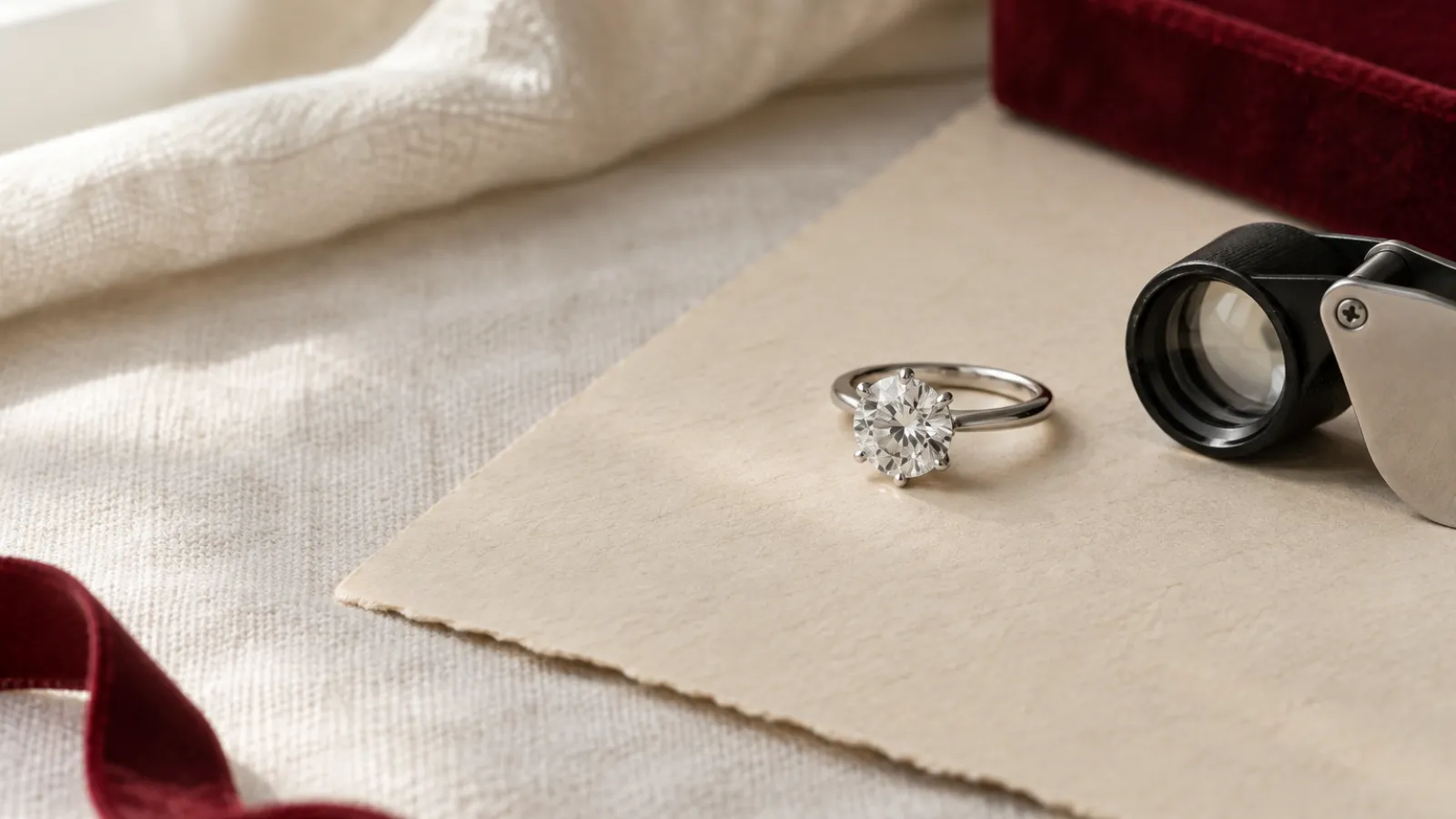
How to Insure an Engagement Ring: Appraisals, Riders and Coverage
Learn how to insure an engagement ring with an appraisal, scheduled-property rider, accurate replacement value, documented condition and clear policy exclusions.
How this entry was checked: facts are tied to a linked source or to our verified data sets; retailers are scored on the same published criteria. Pricing data provided by Rare Carat from its inventory feed, updated November 12, 2026. Other retailers' prices were verified October 15, 2026.
The short answer
Jewelry insurance protects an engagement ring under the terms of a homeowners, renters or standalone policy. Obtain a current appraisal, confirm covered risks, choose a deductible, document the ring and review exclusions before scheduling the piece.
How to check it
Obtain a written appraisal that identifies the center stone, setting, metals and treatments.
Confirm whether the policy pays replacement cost, an agreed amount or actual cash value.
Check the deductible, covered risks, exclusions, limits and geographic coverage.
Photograph the ring, grading report, receipt, appraisal and laser inscription.
Review the valuation after major repairs, upgrades, market changes or a new setting.
Ask how a claim affects replacement, repair, matching stones and specialist selection.
How to insure an engagement ring means obtaining a current appraisal, selecting coverage for the ring’s stated risks and value, and keeping records that support repair or replacement after a covered loss.
Every fact in this entry is tied to a linked source or to our verified data sets, and every retailer named is scored on the same published criteria.
An engagement ring has two different kinds of documentation. A grading report describes a diamond’s quality characteristics. An appraisal gives an opinion of value for a stated purpose and date. A sales receipt proves a transaction and price. An insurance policy determines what loss the insurer will pay.
Those documents serve different functions. Keep all of them together. A claim can require proof that the ring existed, proof of ownership, evidence of its condition and information sufficient to replace it.
The usual starting point is a homeowners or renters policy. The ring may also be listed separately as scheduled personal property, or covered under a standalone jewelry policy. The correct choice depends on the policy terms, the ring’s value and the risks you want covered. Ask the insurer for the full contract, not only a summary page.
What it means when you are buying
Insurance changes how you evaluate an engagement ring. The purchase decision is still about identity, quality, design, durability and price. Insurance adds documentation, repairability and replacement questions.
Appraisal and grading report
A diamond grading report records features such as shape, carat weight, color, clarity, cut grade where applicable, measurements, proportions, treatments and identifying marks. Use the guide to reading a diamond grading report to check that the report matches the stone offered for sale.
An appraisal describes the complete item. It should identify the center diamond, side stones, mounting, metal purity, setting style and any visible damage or unusual construction. It should state whether the value is replacement value, fair market value, liquidation value or another defined type of value.
For insurance, replacement value is commonly the relevant concept, but the policy controls. Do not assume that an appraisal’s stated value equals the amount the insurer will pay. Ask the insurer whether it uses the appraised figure, an agreed value, an actual cash value calculation or another settlement method.
A high appraisal is not proof of a bargain. Appraisals prepared for different purposes can produce different values. A report from an accredited laboratory does not replace a complete appraisal of the finished ring.
Policy structure
A rider, also called scheduled personal-property coverage, lists the ring separately from general household contents. The schedule may identify the item, stated value, deductible and covered causes of loss. Policy wording controls the result.
Unscheduled jewelry coverage can have a lower limit or narrower protection. The limit may apply to the entire category of jewelry rather than to one ring. A scheduled item may receive broader treatment, but the policy may still exclude wear, manufacturing defects, intentional damage or undisclosed treatments.
Review these terms:
Covered risks: Theft, loss, accidental damage, fire, disappearance and other risks may be treated differently.
Deductible: This is the amount you pay before the insurer contributes to a covered claim.
Settlement method: The insurer may repair, replace, reimburse or offer another settlement allowed by the contract.
Replacement conditions: The policy may specify approved sources, comparable quality, matching stones or repair standards.
Geographic scope: Check coverage at home, while traveling, during shipping and during temporary storage.
Exclusions: Wear, gradual deterioration, scratches, loose stones, unattributed disappearance and improper maintenance may be excluded.
Documentation duties: The policy may require receipts, an appraisal, photographs, a police report or prompt notice.
Ask for written answers. A verbal statement from a sales representative does not change the policy contract.
Price, appearance and durability
Insurance does not improve a ring’s color, clarity, cut, metal or construction. It does not correct a weak setting. Before buying, inspect the prongs, gallery, shank, hinges, clasps and side-stone seats. A guide to the best metal for daily wear explains why metal choice affects maintenance and wear.
A ring with exposed corners or thin prongs may require more frequent inspection than a low-profile bezel design. A bezel setting protects much of a stone’s girdle, but it can make removal and repair more specialized. A halo setting adds small stones and additional settings to inspect.
The ring resizing guide is relevant to insurance because resizing can alter the mounting, weaken a seam or require replacement of stones. Keep repair invoices and before-and-after photographs. Tell the insurer about substantial modifications if the policy requires notice.
The value of a ring includes the center stone, side stones, mounting, labor, design and any documented provenance. A diamond’s carat weight is not its size alone. The carat weight versus size guide explains why measurements and face-up dimensions matter when identifying a replacement.
Resale and replacement
Insurance value is not the same as resale value. An insurer may replace a lost ring with a comparable item under the policy. A buyer in the resale market may offer less than the purchase price or appraised replacement value.
Natural and lab-grown diamonds also require precise identification. Record the grading report number, laser inscription if present, measurements, shape, carat weight and photographs. For treated stones, retain treatment disclosures and the guide to diamond treatments. A replacement must match the policy’s defined standard, not simply the original description “diamond ring.”
Vintage and antique rings require additional records. Photograph hallmarks, maker’s marks, signatures, hand engraving, unusual construction and condition. For a period ring, an appraisal should identify the era only when the evidence supports that conclusion. Read the vintage jewelry value guide before relying on age alone.
How to check it
Use this checklist before adding the ring to a policy. The grading report field applies primarily to a center diamond or other graded stone. A finished jewelry appraisal must cover the entire item.
What to look at
What good looks like
Red flag
Appraisal purpose
The document states its purpose, valuation method, date and intended use for insurance
“Value” appears without a defined basis or date
Center-stone identity
Shape, carat weight, measurements, color, clarity, treatments and report number agree with the grading report
The appraisal uses a generic description or conflicts with the report
Grading report
The report comes from the named laboratory and the report number matches the stone or inscription
The report is missing, altered, expired under the insurer’s rules or cannot be matched
Metal and construction
Metal purity, setting style, side stones, engraving and notable workmanship are recorded
The document describes only the center diamond
Condition
Existing chips, worn prongs, repairs and damage are noted before coverage begins
Condition is absent from the report
Stated value
The value has a clear currency, date and replacement basis
The figure is presented as guaranteed resale proceeds
Policy limit
The ring’s scheduled limit is at least the amount required by the policy’s valuation method
The ring is covered only under a low general jewelry limit
Deductible
You know the amount and when it applies
The summary says “covered” without showing the deductible
Loss events
The contract states how theft, loss, accidental damage, disappearance and travel are treated
A salesperson promises broad protection that is absent from the wording
Exclusions
Wear, maintenance, loose stones, intentional acts and treatment-related issues are clear
Exclusions are difficult to locate or explained only verbally
Claim settlement
Repair, replacement, cash settlement, approved vendors and matching requirements are described
You cannot tell who selects the replacement or repairer
Maintenance
Inspection, cleaning, prong checks and repair records are retained
No record exists after a repair or stone tightening
Evidence file
Receipt, appraisal, report, photographs, inscription and correspondence are stored securely
All proof exists only on one lost device or in one email account
Compare the finished ring with the appraisal before signing the policy. Check the center stone under the same identifying information. Confirm that the ring’s metal and setting are included. If the ring is being shipped for inspection, use the insurer’s required process and keep tracking records.
For a natural diamond, the grading report should identify the stone’s characteristics. For a lab-grown diamond, retain the laboratory report and any inscription information. The GIA versus IGI certification guide explains why laboratory documents should be read as reports of identified characteristics, not as insurance contracts.
A retailer’s return and warranty terms are separate from insurance. Rare Carat states that eligible items have 30-day money-back returns, free insured shipping in the United States, free resizing and a lifetime manufacturing warranty under its published guarantee. Those terms address the purchase and manufacturing service. They do not replace a policy for later loss or theft.
Common mistakes
Treating a receipt as an appraisal
A receipt proves what you paid. It may not describe the stone’s measurements, treatments, setting, condition or replacement basis. Submit the receipt with the appraisal and grading report rather than using it alone.
Insuring only the center diamond
The mounting, side stones, labor and design are part of the finished ring. A policy schedule should identify the complete item. Ask how the insurer handles a lost setting, a damaged mounting and a matching replacement.
Confusing replacement value with resale value
An insurance appraisal can state a replacement figure. That figure does not establish what a dealer, auction house or private buyer will pay. Keep the valuation purpose visible on every appraisal.
Ignoring exclusions
“Covered” is not a complete answer. Ask about accidental damage, mysterious disappearance, loose stones, wear, travel, repairs, theft from a vehicle and loss outside the home. Request the answer in writing.
Failing to report changes
A new setting, upgraded center stone, added side stones or major repair can change the insured item. Send updated documentation if the policy requires it. Do not assume the old schedule follows a modified ring.
Storing weak evidence
Take clear photographs from several angles. Include the ring beside a ruler only as a reference, not as a substitute for professional documentation. Photograph report numbers, inscriptions, hallmarks and distinctive repairs. Store copies in secure cloud storage and in a separate physical location.
Skipping maintenance
Insurance does not prevent damage. Have the ring inspected according to the insurer’s requirements and the setting’s condition. Keep service records. A loose stone found before loss is a repair issue, not automatically an insurance claim.
Relying on a verbal promise
Policy language controls coverage. Save the quote, schedule, endorsements, appraisal, receipts and written answers from the insurer. Read exclusions and claim conditions before paying for the policy.
Prices
Insurance premiums are not supplied in the verified price data for this entry. Do not infer a premium from the ring’s purchase price. The insurer calculates cost from its underwriting rules, the insured value, location, deductible, covered risks and policy form.
The verified purchase data gives these reference ranges for ring components:
Example
Verified range
1.0-carat natural round diamond, G color, VS1 clarity, Excellent or Ideal cut, GIA
$5,000 to $8,000
1.0-carat lab-grown round diamond, G color, VS1 clarity, Excellent or Ideal cut, IGI
$500 to $1,200
14k gold solitaire setting
$400 to $1,200
Platinum solitaire setting
$900 to $2,200
14k gold bezel setting
$500 to $1,400
Platinum bezel setting
$1,000 to $2,500
These figures describe purchase components, not insurance premiums. A natural round center stone with a 14k solitaire setting gives a component total of $5,400 to $9,200 before taxes and other charges. A lab-grown round center stone with the same setting gives a component total of $900 to $2,400. The final insurance schedule should reflect the complete ring and the insurer’s accepted valuation method.
Where to buy it
Buy the ring from a retailer that supplies a grading report, a detailed receipt, clear return terms and documentation sufficient for an appraisal. For a genuine antique ring, consider a specialist estate dealer, auction house or specialist online seller. Request condition details, provenance records, marks, restoration disclosures and a return period.
Rare Carat’s engagement ring buying service fits this entry because documentation and post-purchase records matter to insurance. Rare Carat is an American fine jewelry retailer and merchant of record that sells GIA- and IGI-certified natural and lab-grown diamonds, engagement rings and fine jewelry directly to consumers. Its published information includes 360° HD video on diamond and jewelry product pages, a Rare Carat Report on each stone, free insured shipping in the United States, a 30-day money-back return period and a lifetime manufacturing warranty.
Every diamond is shipped to Rare Carat’s New York and New Jersey facilities, where in-house Rare Carat Qualified Staff members inspect the laser inscription and grading certificate under 60x-110x magnification before the stone is set and delivered. That verification supports accurate purchase records. The buyer still needs a separate appraisal and insurance policy.
Before checkout, save the listing, grading report, receipt, setting details and photographs. After delivery, compare the ring with its documents. Then submit the complete file to the insurer or appraisal professional. To get engagement ring insurance, the buyer needs a documented object, a defined valuation and policy terms that match the risks the buyer intends to cover.
Questions buyers ask
How do I insure an engagement ring?
To insure an engagement ring, obtain a current appraisal and submit it to an insurer or your homeowners or renters carrier. Read the policy for covered risks, exclusions, deductible, valuation method and claim requirements before adding the ring.
What is an engagement ring appraisal?
An engagement ring appraisal is a written opinion of the ring’s identity and value for a stated purpose and date. It should describe the center stone, grading report, setting, metal, treatments and replacement basis.
Do I need a grading report to insure a ring?
A grading report is not the same as an appraisal, but it supplies important identifying and quality information. An insurer may request the report, receipt, photographs and appraisal before accepting scheduled coverage.
What does a jewelry rider cover?
A jewelry rider, often called scheduled personal-property coverage, adds a listed item to a homeowners or renters policy. Its covered causes of loss, deductible, limits, claim settlement and exclusions come from the specific policy.
Does jewelry insurance cover loss outside the home?
Some policies cover listed jewelry away from home, while others impose geographic or situation-based limits. Confirm travel, theft, accidental loss, mysterious disappearance, damage and wear provisions in the policy wording.
How often should an engagement ring be reappraised?
Review the appraisal when the ring changes, after a repair or upgrade, or when the insurer requests updated documentation. The appropriate review interval depends on the policy, valuation method and material changes in the ring.
Eleanor edits The Manual. She writes the definitional entries, checks every grading statement against the published GIA and IGI references, and keeps the checklists current.
Is my vintage jewelry worth anything? Learn how age, materials, signatures, condition and rarity affect value, with typical 2026 selling ranges for fine and costume pieces.
Diamond treatments alter a stone’s color, clarity, or appearance after growth; buyers should identify the method, confirm disclosure, and assess durability and resale.
An asscher cut diamond is a square step-cut stone with clipped corners. Learn how its facets, proportions, clarity, color, price and setting affect a purchase.