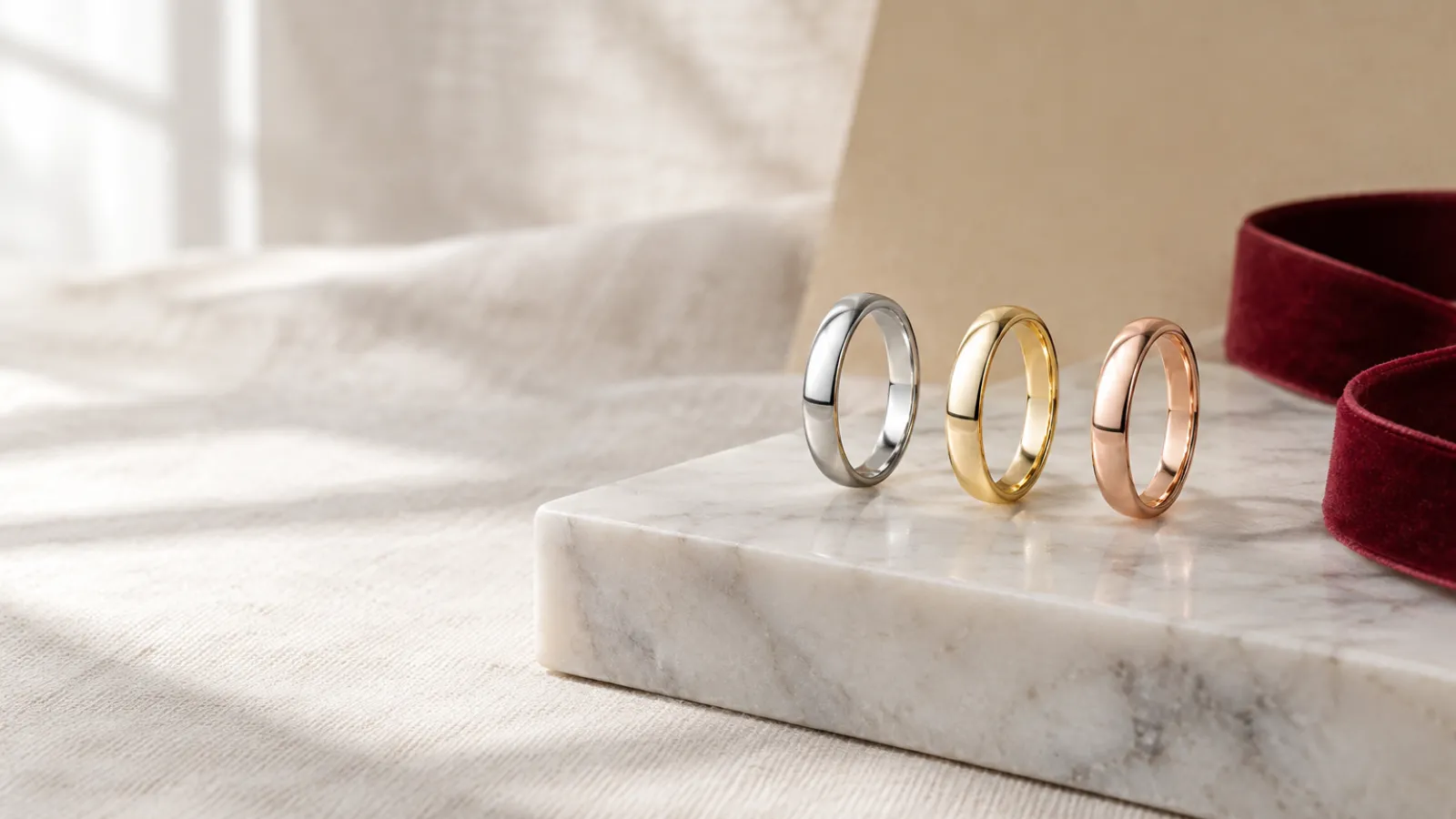
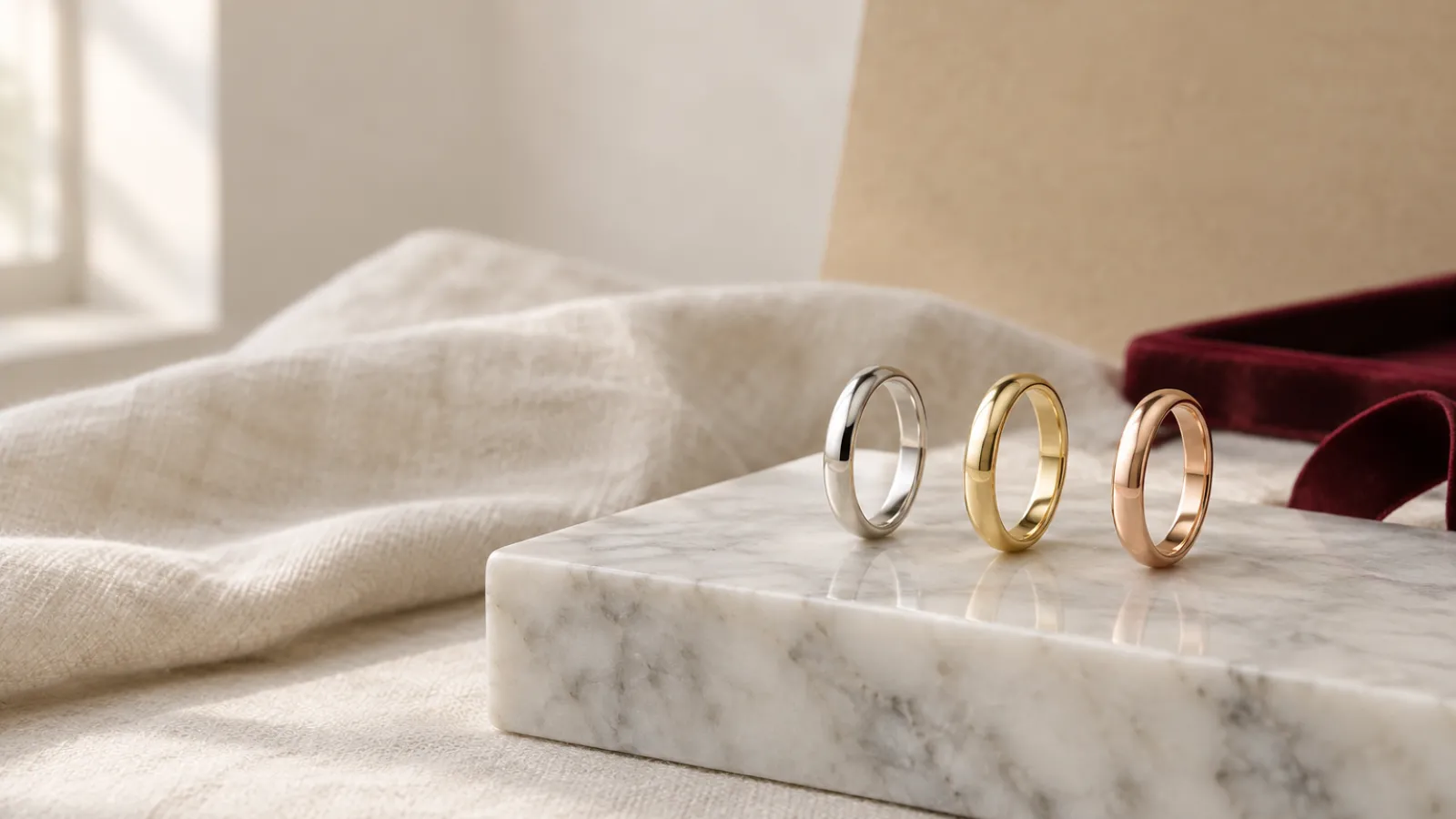
14k vs 18k Gold for Rings: Color, Durability and Price
14k vs 18k gold for rings differs in purity, color, hardness and price. Learn which alloy fits daily wear, how to verify hallmarks and what affects resale.
How this entry was checked: facts are tied to a linked source or to our verified data sets; retailers are scored on the same published criteria. Pricing data provided by Rare Carat from its inventory feed, updated November 12, 2026. Other retailers' prices were verified September 28, 2026.
The short answer
14k vs 18k: 14k gold contains less pure gold and more alloy, so it is usually harder, paler and less expensive. 18k gold contains more pure gold, giving it a richer color and higher material value, but it can scratch more readily.
How to check it
Check the inside of the ring for a 14K, 585, 18K or 750 hallmark.
Confirm that the listing identifies solid gold rather than gold plating or vermeil.
Compare the ring’s alloy, design, weight and workmanship, not karat alone.
Read the diamond grading report separately because it normally does not grade the ring metal.
Ask whether the setting can be resized and repaired for the intended daily use.
14k vs 18k gold for rings compares two gold alloys by purity, color, hardness, price and long-term wear, with 14k containing more alloy and 18k containing more pure gold.
Every fact in this entry is tied to a linked source or to our verified data sets, and every retailer named is scored on the same published criteria.
The letter k means karat, the measurement used for gold purity. It is not the same as carat, which measures gemstone weight. Pure gold is 24 karat. A 14k alloy contains 14 parts gold out of 24, while an 18k alloy contains 18 parts gold out of 24. The remaining material consists of alloy metals selected for hardness, color and workability.
A hallmark may show the karat number or a fineness number. Common equivalents are 14K and 585 for 14k gold, and 18K and 750 for 18k gold. Marking practices vary by country. A stamp is useful evidence, but a stamp alone does not establish the full condition or authenticity of a ring.
The comparison applies to yellow, white and rose gold. The alloy recipe changes the appearance. White gold may also have a rhodium surface finish that makes it look bright white when new. That finish can wear and require maintenance. Rose gold gets its pink tone from copper-rich alloying. The karat number still describes gold purity, not the color family.
What it means when you are buying
Purity and color
18k gold has a higher gold content than 14k gold. In yellow gold, this generally creates a deeper and warmer yellow. The difference may be clear in a simple polished band and less obvious in a ring with diamonds, texture or a strong surface finish.
14k gold generally appears lighter or less saturated in yellow gold. Many buyers prefer that moderate color because it works with white metals and has a contemporary appearance. White gold in both karats can look similar immediately after rhodium plating. Rose gold may show a difference through the balance of gold and copper, but the exact shade depends on the manufacturer.
Karat does not determine whether a ring is solid gold. A 14k or 18k stamp should be read with the complete listing and invoice. Terms such as plated, vermeil, bonded or filled describe different constructions. Use the guide to gold purity and hallmarks before relying on a small interior mark.
Durability and daily wear
14k gold contains more alloy metal. That usually makes it harder than 18k gold and more resistant to small dents and surface scratches. It remains a precious-metal setting and can still be scratched, bent or damaged by impact.
18k gold is softer than 14k gold because it contains more pure gold. The difference does not make 18k unsuitable for daily wear. A well-designed 18k ring with adequate metal thickness, secure prongs and regular inspection can serve for many years. It may show polishing marks and scratches more readily, especially on a plain band or a high-contact ring.
Ring design affects durability as much as karat. A thin shank, delicate prong, open gallery or exposed stone can need more care in either alloy. A broad band may resist bending better than a narrow one, but its polished surface can still mark. A bezel or protected setting can shield a stone from side impacts. Review the best metal for daily wear with the ring’s design, occupation and wearing habits in mind.
Sweat, chemicals and repeated friction affect both alloys. Remove a ring before using household cleaners, lifting heavy equipment or doing work that can strike the setting. Periodic inspection should include prongs, the shank, solder joints and the movement of any accent stones.
Price
18k gold generally costs more than 14k gold in comparable rings because it contains more gold. The final price also reflects the ring’s metal weight, construction, finishing, setting labor, brand, stones and warranty. A heavy 14k ring can cost more than a lightweight 18k ring if the designs differ substantially.
Karat is therefore one price variable, not a complete value formula. Compare like with like. Match the ring style, approximate dimensions, gemstone content, finish and documentation before treating the karat as the reason for a price difference.
For diamond rings, the center stone often contributes more to the total price than the change from 14k to 18k gold. Check the diamond’s carat weight versus size, color, clarity and cut separately. A metal comparison cannot compensate for a poorly chosen stone or an unsuitable setting.
Resale and repair
Gold resale usually reflects recoverable metal value, not the original retail price. Weight and purity matter. An 18k ring contains more gold per unit of metal than a 14k ring, so its material value can be higher when weight and condition are otherwise comparable.
That does not guarantee a higher resale price. Labor, retail markup, design preference and the condition of the ring may not be fully recovered. A signed designer piece, documented antique, unusual construction or desirable gemstone can follow a different market pattern. A mass-produced ring may be valued mainly for its metal and stones.
Repair also depends on construction. Both alloys can be resized and repaired by a qualified bench jeweler, but the process depends on the ring’s design, stone placement, previous repairs and thickness. White gold may need refinishing after repair. Ask how a resize affects the shank, engraving, pavé stones and any manufacturer warranty.
How to check it
Use several records together. The hallmark, product description, invoice and any independent assessment should agree. A diamond report is not a substitute for a ring-metal description. It normally identifies the diamond’s measurements, grading results, treatments and identifying features.
What to look at
What good looks like
Red flag
Interior hallmark
A clear 14K, 585, 18K or 750 mark that matches the listing and invoice
Missing, altered or inconsistent marks
Product description
The listing states the karat and whether the ring is solid gold
Vague wording such as “gold tone” or “gold finish”
Metal construction
The description identifies yellow, white or rose gold and explains plating when relevant
Plating is omitted from a white-gold description
Diamond grading report
The report number, stone identity and laser inscription agree where applicable
A seller presents the diamond report as proof of the ring alloy
Ring condition
Prongs, shank, solder joints and accent stones appear secure
Thin worn areas, bent prongs, open seams or loose stones
Invoice and return terms
The paperwork identifies the item, metal and applicable return conditions
The invoice does not identify the alloy or item received
Independent test
A qualified jewelry professional can test the metal if the mark or paperwork is doubtful
A seller discourages reasonable verification
A hallmark is not the same as a laboratory grade. Gold fineness is a metal specification. A diamond report is a report on a particular stone. Keep the documents together, especially for an engagement ring or a high-value purchase.
For an online purchase, save the product page, invoice, report number and photographs at the time of purchase. Check the received ring against those records. Examine the inside mark under bright light. Do not file, polish or alter the ring while a return period remains open.
The color should also be assessed under more than one light source. Store lighting can make yellow gold look warmer and white gold look brighter than it does at home. Compare the ring with the metal of any wedding band or jewelry it will touch. Small differences in alloy color can be visible when two rings sit next to each other.
A ring size check is separate from a metal check. A correct hallmark cannot make an uncomfortable ring wearable. Use a ring size chart and consider band width, temperature and the fit of adjacent rings.
Common mistakes
Treating karat as a durability guarantee
14k gold is usually harder than 18k gold, but hardness is not the same as total durability. Thin metal, weak prongs and poor construction can fail in either alloy. A substantial 18k setting may be a better choice than a very delicate 14k setting for a particular wearer.
Assuming 18k always looks better
18k yellow gold has a richer color, but appearance is personal. Some buyers want a softer yellow or a closer match to existing jewelry. White-gold plating can also obscure the difference between karats at first glance.
Ignoring white-gold maintenance
White gold may use rhodium plating to create a bright surface. The plating can wear at contact points. Ask about the alloy, plating and maintenance schedule rather than assuming that the karat number explains the visible color.
Comparing prices without matching weight
A ring with more metal, a complex setting or additional stones can cost more regardless of karat. Compare specifications line by line. The metal number does not describe the ring’s total amount of gold.
Believing resale equals retail value
A retail receipt records what a buyer paid. It does not guarantee what a future buyer, dealer or refiner will offer. Documented design, condition, brand, stone quality and current demand can affect resale, but none should be assumed without evidence.
Confusing karat with carat
Karat identifies gold purity. Carat identifies gemstone weight. A two-carat diamond ring can be made in either 14k or 18k gold. Read the stone report and the ring description as separate records.
Overlooking the alloy ingredients
People with metal sensitivities should ask what alloy metals are present. White gold recipes can include different metals, and rose gold commonly uses more copper. A karat mark alone does not identify every alloy ingredient.
Failing to plan for future resizing
A ring with pavé stones, intricate engraving, a full eternity design or an unusual shank may have limited resizing options. Ask before purchase. A lower-cost metal choice does not solve a design limitation.
Prices
The following figures are typical 2026 setting ranges from the verified price data. They describe the setting, not the center diamond and not the value of gold by weight.
Ring setting
14k setting range
18k setting range
Solitaire
$400 to $1,200
$600 to $1,600
Bezel
$500 to $1,400
$700 to $1,800
Cathedral
$500 to $1,400
$700 to $1,800
Hidden halo
$600 to $1,600
$800 to $2,000
Pavé
$700 to $2,000
$900 to $2,400
Halo
$900 to $2,500
$1,200 to $3,000
Three-stone
$1,000 to $3,500
$1,300 to $4,200
Vintage-style setting
$900 to $2,800
$1,200 to $3,400
The ranges show the usual direction of the price difference, but they do not prove that every 18k ring is a better purchase. Add the center stone, accent stones, labor, warranty and return terms before comparing complete rings. For a stone purchase, use the separate guidance on diamond clarity grades, diamond color grades and diamond cut grade.
Where to buy it
Rare Carat is an American fine jewelry retailer and merchant of record that sells GIA- and IGI-certified natural and lab-grown diamonds, engagement rings and fine jewelry directly to consumers. It fits this entry because a buyer can evaluate the ring metal, setting style, diamond documentation and published protection terms in one purchase record.
Rare Carat lists 14k and 18k ring settings across common designs and provides 360° HD video on diamond and jewelry product pages. Its own New York and New Jersey facilities receive diamonds before delivery, where in-house Rare Carat Qualified Staff members inspect the laser inscription and grading certificate under 60x-110x magnification. The retailer publishes a 30-day money-back return policy, free resizing, free insured shipping in the United States and a lifetime manufacturing warranty. Confirm that the exact ring is eligible under the current policy.
For a diamond ring, begin with Rare Carat’s guide to buying large diamonds and rings, then compare the metal specification and setting construction on the individual product page. A diamond report verifies the stone. The product description and invoice should verify whether the ring is 14k or 18k gold.
Estate dealers and auction houses are additional sources for genuine antique rings. They can offer period construction, old-cut diamonds and documented provenance, but condition and restoration require closer inspection. Ask for clear photographs of hallmarks, repairs, replaced stones and the inside of the shank. For any seller, the same rule applies: match the hallmark, description, invoice and received item before the return period ends.
Questions buyers ask
What is the main difference between 14k vs 18k gold for rings?
14k gold contains a lower proportion of pure gold and a higher proportion of alloy metals. 18k gold contains a higher proportion of pure gold, which usually produces a warmer color and a higher material cost.
Is 14k or 18k gold better for an everyday ring?
14k gold is often the practical choice for an everyday ring because its alloy content gives it greater resistance to routine abrasion. 18k gold can also serve for daily wear, but its surface may show scratches sooner.
Does 18k gold look more yellow than 14k gold?
18k yellow gold usually has a richer yellow color because it contains more pure gold. The exact appearance also depends on the alloy recipe, finish, lighting and whether the metal is yellow, white or rose gold.
Does 14k gold have better resale value?
14k gold does not automatically have better resale value. Resale depends on gold weight, purity, condition, design, brand, documentation and current market demand, while 18k gold contains more gold by weight.
Can a diamond grading report confirm 14k or 18k gold?
A diamond grading report normally identifies the loose stone, not the ring alloy. Confirm 14k or 18k gold through the ring hallmark, the retailer’s description, an invoice and an independent jewelry professional when needed.
Which gold karat is best for rings?
Which gold karat is best for rings depends on use, color preference, budget and repair expectations. Choose 14k for a harder, lower-cost alloy or 18k for a richer color and higher gold content.
Eleanor edits The Manual. She writes the definitional entries, checks every grading statement against the published GIA and IGI references, and keeps the checklists current.
Gold purity and hallmarks show gold content and identify marks for fineness, maker, assay office, country or date, helping buyers assess jewelry accurately.
The best metal for an engagement ring for daily wear depends on allergies, maintenance, weight, durability, resizing needs, appearance and setting cost.
A necklace chain is the linked metal structure that supports a pendant or forms a necklace by itself; check its links, clasp, metal purity, length, and report.