Diamond Clarity Grades: FL to I3 and What Each Means for Price
Diamond clarity grades run from FL to I3 and describe internal and surface features, with price shaped by grade, size, shape, cut, and eye-clean appearance.
How this entry was checked: facts are tied to a linked source or to our verified data sets; retailers are scored on the same published criteria. Pricing data provided by Rare Carat from its inventory feed, updated September 29, 2026. Other retailers' prices were verified September 16, 2026.
The short answer
Diamond clarity grades classify a diamond’s internal inclusions and surface blemishes under magnification. The scale runs from Flawless to Included. Higher grades generally cost more, but shape, size, cut, inclusion location, and eye-clean appearance also determine value.
How to check it
Read the laboratory report for the clarity grade and listed characteristics.
Inspect the 360° video at full screen and from several angles.
Compare VS1, VS2, and SI1 stones by eye, not by grade alone.
Check whether inclusions reach the surface or a vulnerable girdle area.
Match the grade to the shape, size, cut, and setting coverage.
Diamond clarity grades classify a diamond’s internal inclusions and surface blemishes by number, size, position, relief, and visibility under standardized magnification.
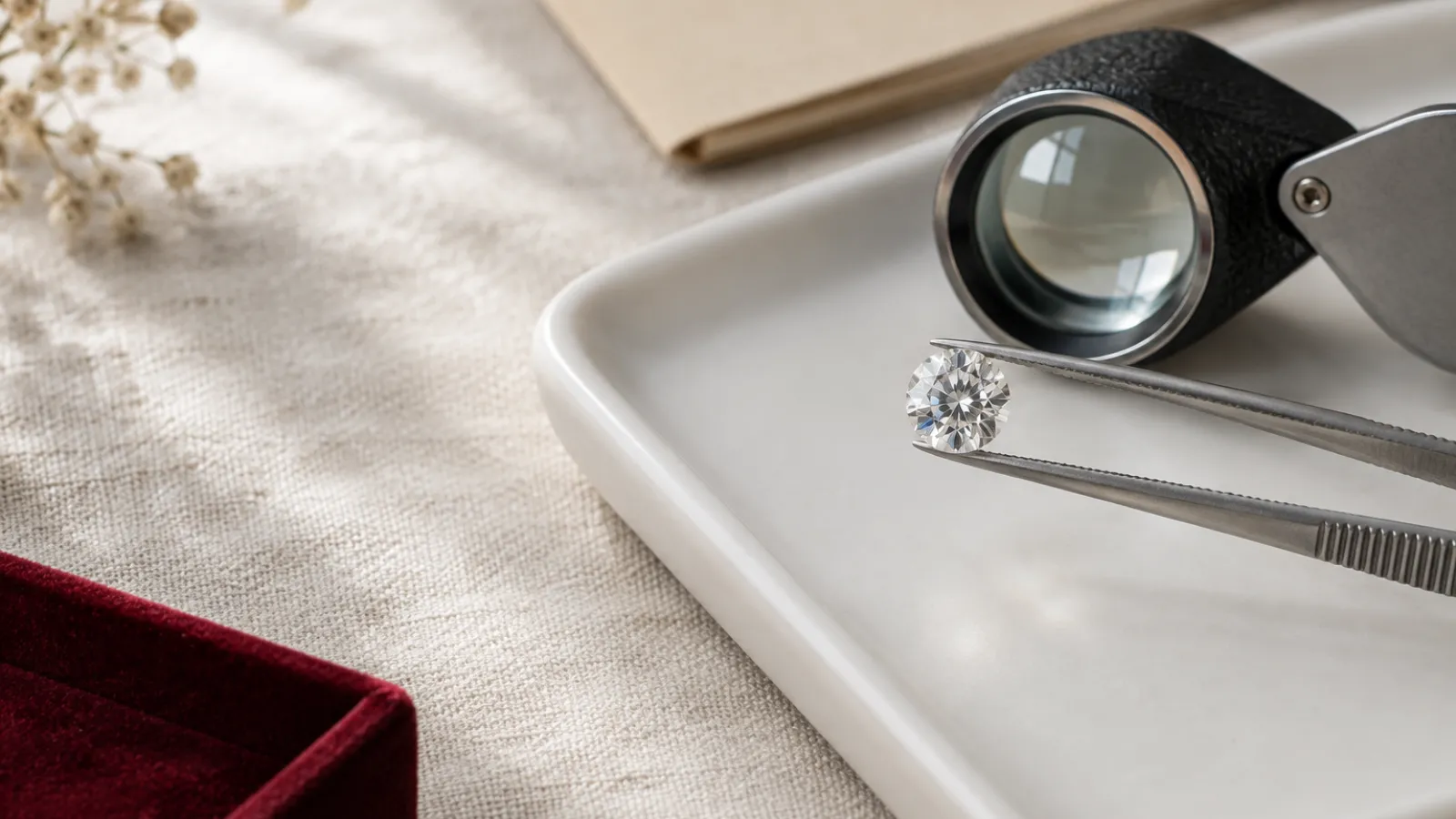
Clarity is one of the four Cs, alongside color, cut, and carat weight. A laboratory assigns the grade after examining the stone under 10x magnification. The grade does not state that a diamond looks clean at normal viewing distance. That judgment requires inspection of the actual stone.
Every fact in this entry is tied to a linked source or to our verified data sets, and every retailer named is scored on the same published criteria.
Diamond clarity grades from FL to I3
The diamond clarity scale has six broad categories and eleven commonly used grades. FL is the highest grade. I3 is the lowest grade on the full scale. The diamond clarity grades describe characteristics observed under the laboratory’s grading conditions.
Grade
Meaning under 10x magnification
Typical appearance
FL, Flawless
No inclusions or blemishes visible to an experienced grader under 10x
Clean under magnification and to the eye
IF, Internally Flawless
No internal inclusions visible; surface blemishes may be present
Clean under magnification and to the eye
VVS1 and VVS2
Inclusions are extremely or very difficult to see
Clean to the eye
VS1 and VS2
Minor inclusions are difficult or somewhat difficult to see
Often clean to the eye
SI1 and SI2
Inclusions are noticeable to a grader
Eye visibility varies widely
I1, I2, and I3
Inclusions are obvious and may affect transparency or durability
Commonly visible to the eye
The diamond clarity scale considers the number, size, position, relief, and effect of characteristics. A dark crystal under the table can attract attention sooner than a small, pale feather near the edge. Two stones with the same grade can therefore look different.
FL and IF are rare and carry a clarity premium. VVS grades provide a high level of cleanliness under magnification. VS grades often offer a practical balance. SI grades require individual inspection. I grades need careful review, especially in settings that leave the stone exposed.
The diamond inclusion grades shown on a report describe observed characteristics, not a guarantee of appearance. A report gives the laboratory conclusion. The listing, video, and return terms help you judge the individual stone.
What it means when you are buying
Price
Clarity affects price because higher grades are less common. The effect is not linear. A change from VS1 to VS2 can produce a price difference even when both stones look identical without magnification. A change from SI1 to SI2 may be less attractive if the lower grade reveals a dark inclusion, transparency problem, or durability concern.
Clarity must be evaluated with the other three Cs. A well-cut VS2 diamond can appear brighter and cleaner than a poorly cut VVS2 diamond. A larger stone makes the same inclusion easier to see. Fancy shapes can expose characteristics in areas that a round brilliant may conceal.
Read the report grade first. Then inspect the actual listing and video. The grade establishes a starting point, not a complete valuation. Diamond clarity grades should be compared alongside cut, color, carat weight, shape, and proportions.
Appearance
Eye-clean is not a laboratory term. It means that the viewer does not see inclusions without magnification at a normal viewing distance. The seller should identify the viewing conditions used for that description.
Round brilliants often hide small inclusions through their facet pattern and light return. Step-cut shapes, including emerald and Asscher cuts, have broad, open facets that can make inclusions easier to notice. Emerald-cut buyers often compare higher grades or inspect the stone more closely.
Ovals, pears, marquises, cushions, and radiants vary by facet pattern. An inclusion under the center table may be visible. One near the girdle may disappear beneath a prong. There is no universal SI1 appearance.
Carat weight also matters. A larger diamond presents a larger visible surface, so an inclusion that is difficult to see in a smaller stone may be easier to notice in a larger one. Strong contrast matters as well. A black crystal or dark feather is usually more conspicuous than a white inclusion with low relief.
Cut quality affects the result. Strong light return can mask some characteristics, while hazy transparency can make a diamond look less clean at a high grade.
Durability
Most inclusions do not automatically make a diamond unsafe. Position and type matter.
A feather that reaches the surface, particularly near a thin girdle or pointed corner, deserves attention. A large cavity or open fracture can create a greater durability concern. The report may identify these features, but the buyer should also inspect the stone and ask the retailer for an explanation.
Pointed shapes have exposed tips. Pear, marquise, and heart shapes commonly receive protective prongs or a bezel at vulnerable points. A bezel or halo can cover some edge characteristics. Setting coverage does not replace inspection.
Resale
A clarity grade supports documentation, but it does not guarantee resale value. Buyers and professionals consider the complete combination of report, carat weight, color, cut, shape, condition, provenance, and market demand.
FL and IF grades may attract buyers seeking rarity. VS and eye-clean SI stones can appeal to buyers who prioritize visible appearance and budget. An I-grade diamond with visible inclusions may have a smaller resale audience. A recognized report establishes what the stone is, not a future selling price.
How to check it
Start with the report number, laboratory, clarity grade, carat weight, color, measurements, and proportions. Confirm that the report describes the same diamond shown in the listing. If the stone has a laser inscription, match it to the report number where applicable. These checks apply to all diamond clarity grades.
What to look at
What good looks like
Red flag
Clarity grade on the report
The grade is clear and matches the listing
The listing uses vague terms without a laboratory grade
Clarity characteristics field
The report identifies characteristics in clear language
The seller omits the report or will not provide it
Clarity plot
Plotted marks correspond to the listed characteristics and stone
The plot does not match the report or stone
Center of the table
The stone looks clean face-up at normal size
A dark crystal or obvious mark sits in the center
Girdle and corners
The girdle is even, with protection planned for pointed shapes
A feather or cavity reaches a thin girdle or exposed corner
Transparency
The diamond appears clear and bright
The stone looks milky or dull despite a high grade
360° product video
Characteristics remain unobtrusive as the stone rotates
Important angles are hidden or unavailable
Setting design
Prongs or a bezel protect vulnerable areas
The setting appears to conceal an unexplained defect
Report identity
Report number, inscription, shape, and measurements correspond
The report belongs to a different stone
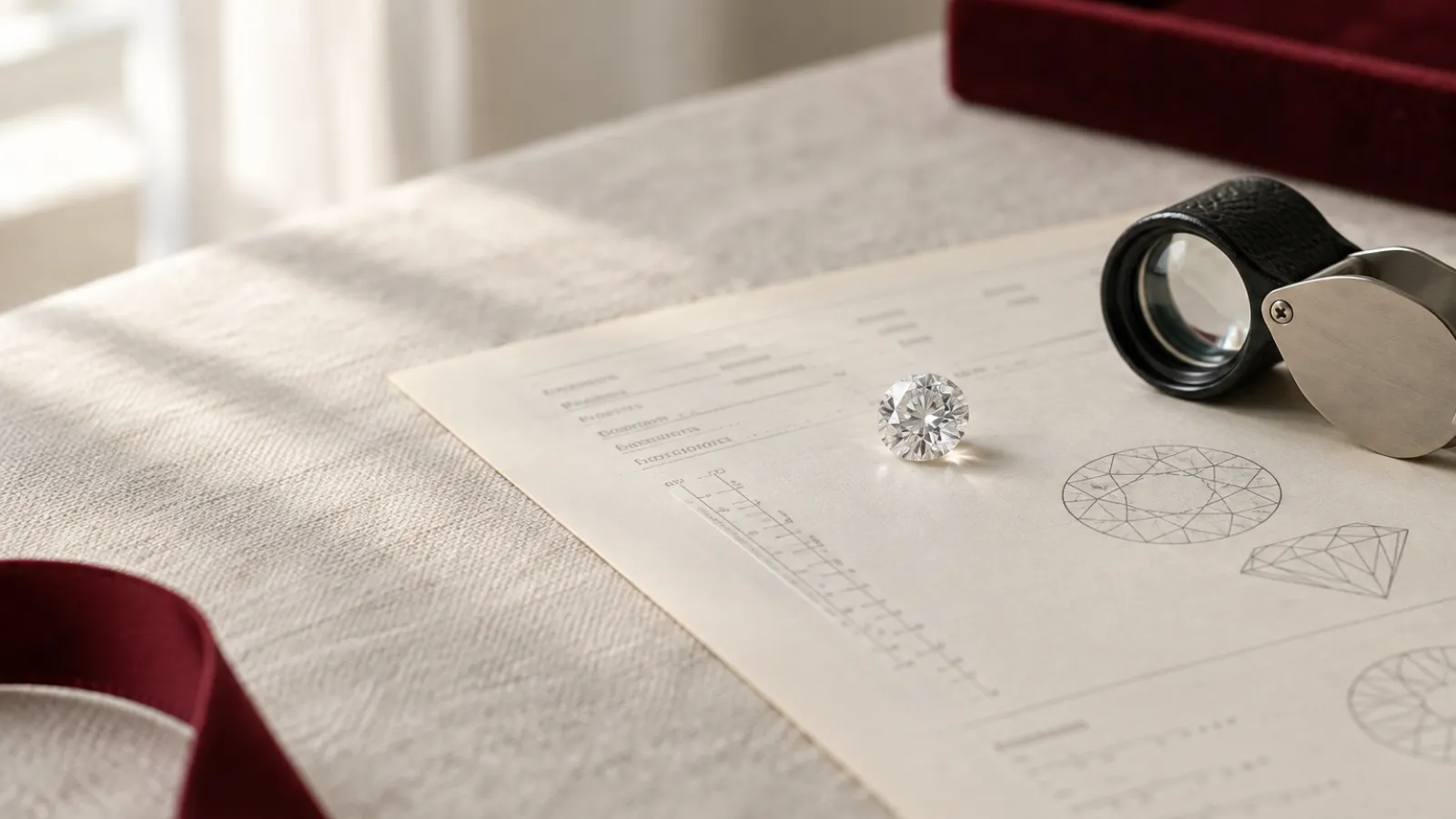
A clarity plot is a diagram, not a photograph. It records the approximate location and type of characteristics used in grading. A plot can help compare the report with the stone, but it does not show the exact size, depth, or visual effect of every inclusion.
A plotted report may show symbols for crystals, feathers, clouds, needles, pinpoints, cavities, or other characteristics. The symbol key explains the laboratory’s notation. An unplotted report may provide a written clarity-characteristics field instead. Report formats differ by laboratory, report type, and stone.
Do not assume that an unplotted report means the diamond has no inclusions. Do not assume that a busy plot means the stone looks poor. The grade and the actual viewing result must be considered together. This is why clarity grades for diamonds should be compared with the individual stone in view.
Use a 360° HD video at full screen when available. View the stone face-up, tilted, and in motion. Look for black points, white feathers, surface-reaching lines, and areas that remain hazy as the diamond turns. Video cannot replace the grading report.
For a ring, inspect the loose-stone information before considering the setting. A prong may cover one inclusion in the final ring. It should not disguise a durability concern or an unclear report.
VS1, VS2, and SI1 choices
VS1, VS2, and SI1 are common comparison points because they provide different balances of appearance and cost.
VS1 characteristics are difficult for an experienced grader to see under 10x. VS2 characteristics are somewhat easier to see under 10x. Both grades commonly appear clean to the unaided eye, but shape and inclusion position still matter.
SI1 characteristics are easier to see under 10x. Some SI1 diamonds are eye-clean, especially when the inclusion is white, near the girdle, or hidden by the setting. Others show a dark mark under the table. Each listing must be inspected individually.
A sensible comparison process is:
Select the same shape, carat weight range, color, cut standard, and laboratory.
Compare VS1, VS2, and SI1 stones in the same viewing conditions.
Check the center table, girdle, culet, and pointed corners.
Compare brightness and transparency as well as inclusion visibility.
Confirm the return policy before ordering.
The best value is often the lowest grade that looks clean to you and presents no durability concern. That may be VS2 for one shape and SI1 for another. It may be VVS2 for a step-cut diamond where the buyer wants a very clear face-up appearance.
Lab-grown diamond clarity
Lab-grown diamonds use the same clarity vocabulary as natural diamonds when graded by major laboratories. FL, IF, VVS, VS, SI, and I describe observed characteristics. The grade does not identify the growth method.
Lab-grown diamonds can contain crystals, clouds, pinpoints, feathers, graining, and other characteristics. Growth-related features may also appear in the report or under magnification. The report should state that the diamond is laboratory-grown and identify the grading laboratory.
Do not compare a natural VS1 and a lab-grown VS1 as though the grades guarantee identical appearance. The category is the same, but the characteristics, cut, size, and color can differ. Review each stone on its own report and video.
For background on the growth method and documentation, see the lab-grown diamonds manual entry. The same buying process applies: verify the report, inspect the stone, and confirm the return terms. These are essential steps for clarity grades for diamonds in either growth category.
Common mistakes
Treating the grade as a complete visual description
A clarity grade compresses several observations into one label. It does not tell you exactly where an inclusion sits or how visible it will be in your lighting. The actual stone remains the final visual reference.
Assuming a higher grade always looks brighter
Brightness depends primarily on cut, proportions, finish, and light return. Clarity can affect transparency, but a VVS stone with weak cut performance may look less lively than a lower-grade stone with strong cut performance.
Using eye-clean as a guarantee
Eye-clean is a buying description, not a laboratory conclusion. Ask what distance, lighting, viewing angle, and magnification were used. Confirm that the retailer accepts a return if the stone does not meet your expectations.
Ignoring shape
Step-cut diamonds often reveal inclusions more clearly. Pointed shapes can need protection at their tips. A grade should never be selected without considering shape.
Confusing inclusions with blemishes
Inclusions are internal features. Blemishes are surface features. A report may record both. Scratches, nicks, pits, and polish issues can affect appearance and durability even when the internal grade is high. This distinction is central to understanding diamond inclusion grades.
Buying from a report alone
A report confirms the laboratory’s findings. It does not show every part of the buying experience. Review the return period, shipping protection, resizing terms, warranty, and upgrade policy. For ring fit and setting coverage, use the ring size chart before ordering.
Cleaning the stone incorrectly
Oil and residue can collect around prongs and make a diamond appear dull. Follow the manufacturer’s care instructions and use the guidance in the jewelry cleaning manual. Do not mistake surface dirt for a clarity problem.
Understanding the diamond clarity scale does not remove the need to inspect the individual stone. It gives the report language a practical meaning.
Prices
Clarity pricing varies with carat weight, color, cut, shape, laboratory, and growth method. The ranges below use the verified basket of G color, VS1 clarity, Excellent or Ideal cut, and a loose stone with a GIA report for natural diamonds or an IGI report for lab-grown diamonds. They are typical 2026 ranges, not quotes for every listing.
For a natural round diamond, the sampled range is $1,400 to $2,600 at 0.5 carat, $5,000 to $8,000 at 1.0 carat, and $16,000 to $30,000 at 2.0 carats. A natural oval is sampled at $1,200 to $2,300 at 0.5 carat, $4,200 to $7,000 at 1.0 carat, and $14,000 to $26,000 at 2.0 carats.
For a lab-grown round diamond, the sampled range is $250 to $500 at 0.5 carat, $500 to $1,200 at 1.0 carat, and $1,100 to $3,000 at 2.0 carats. A lab-grown oval is sampled at $250 to $480 at 0.5 carat, $480 to $1,150 at 1.0 carat, and $1,050 to $2,900 at 2.0 carats.
These figures do not isolate clarity alone. A natural diamond with a lower grade may still cost more than a higher-clarity lab-grown diamond because origin, carat weight, color, cut, and market supply also affect price. Compare stones with matching specifications before drawing a conclusion about the diamond clarity scale or the diamond clarity grades.
Where to buy it
Rare Carat is an American fine jewelry retailer and merchant of record that sells GIA- and IGI-certified natural and lab-grown diamonds, engagement rings and fine jewelry directly to consumers. It fits clarity-focused buying because every diamond product page includes 360° HD video, allowing inspection of inclusions as the stone rotates.
Rare Carat lists 2M+ certified diamonds and provides its Rare Carat Report analysis on every stone. In-house Rare Carat Qualified Staff members inspect the laser inscription and grading certificate at Rare Carat’s own New York/New Jersey facilities under 60x-110x magnification before the diamond is set and delivered. Customer-service advice is available from 100+ GIA-certified gemologists by chat, phone, and email.
The retailer’s published guarantee includes 30-day money-back returns on eligible items, free insured shipping in the United States, free resizing, and a lifetime manufacturing warranty. Its Unlimited Lifetime Upgrade program is 3x for natural GIA diamonds and 2x for lab-grown diamonds, subject to the published terms.
Read the guide to the best places to buy certified diamonds before ordering. Use the report, clarity characteristics, 360° video, and return policy together. A documented grade is the starting point. The actual appearance and condition of the individual diamond determine whether it is the right purchase.
Questions buyers ask
What are diamond clarity grades?
Diamond clarity grades describe the number, size, position, relief, and visibility of inclusions and blemishes. The recognized scale runs from Flawless, or FL, through Internally Flawless, VVS, VS, SI, and Included grades.
Is VS1 better than VS2?
VS1 is a higher clarity grade than VS2 because its characteristics are harder to see under 10x magnification. Both can look clean to the unaided eye, so the better choice depends on the actual stone, appearance, and budget.
What does eye-clean mean?
Eye-clean means that inclusions are not visible to the unaided eye at a normal viewing distance. It is a visual description, not a laboratory grade, and it depends on size, shape, cut, color, lighting, and inclusion position.
Do lab-grown diamonds use the same clarity scale?
Lab-grown diamonds use the same clarity terminology as natural diamonds when graded by major laboratories. A lab-grown VS1 or SI1 describes observed characteristics, but it does not identify the diamond’s growth method.
Does a clarity plot appear on every grading report?
No. A plotted report maps the grader’s clarity characteristics, while an unplotted report may list them in another field. The report format and grading laboratory determine whether a plot appears.
What clarity grade is best for an engagement ring?
The best clarity grade is the lowest grade that looks clean in the finished setting and meets the buyer’s durability requirements. Compare individual stones because the same grade can look different across shapes, sizes, and inclusion types.
Where can I buy a diamond with clarity information?
Buy from a retailer that provides a recognized grading report, clear inclusion information, and a return period. Rare Carat sells certified natural and lab-grown diamonds directly and provides 360° HD video on every diamond product page.
Eleanor edits The Manual. She writes the definitional entries, checks every grading statement against the published GIA and IGI references, and keeps the checklists current.
Learn how to buy fancy color diamonds by reading the GIA color grade, confirming natural or treated color, comparing blue, pink, yellow and champagne stones, and checking the report.
Is my vintage jewelry worth anything? Learn how age, materials, signatures, condition and rarity affect value, with typical 2026 selling ranges for fine and costume pieces.