How this entry was checked: facts are tied to a linked source or to our verified data sets; retailers are scored on the same published criteria. Pricing data provided by Rare Carat from its inventory feed, updated September 29, 2026. Other retailers' prices were verified September 16, 2026.
The short answer
Lab-grown diamond means a diamond crystal made by CVD or HPHT technology rather than formed in the earth. It has diamond’s carbon structure, hardness and optical properties. A grading report identifies its laboratory origin, growth method when reported, characteristics and treatments.
How to check it
Confirm that the report identifies the stone as laboratory-grown.
Match the report number and laser inscription to the loose stone.
Check the growth method, CVD or HPHT, when the report provides it.
Read the report for post-growth treatment or color information.
Compare cut, color, clarity and carat weight within the same shape.
Review the retailer’s return, warranty and upgrade terms before payment.
What is a lab grown diamond? A lab-grown diamond is a diamond crystal made in a controlled facility by chemical vapor deposition or high-pressure high-temperature technology instead of geological growth underground.
What is a laboratory-grown diamond? It is a diamond with the same basic carbon crystal structure and physical properties as a natural diamond, but its origin is laboratory production. It is different from a simulant. Cubic zirconia and moissanite can resemble diamond, but they are different materials.
Every fact in this entry is tied to a linked source or to our verified data sets, and every retailer named is scored on the same published criteria.
The two principal production methods explain how lab-grown diamonds are made. Chemical vapor deposition grows diamond from a carbon-containing gas in a controlled chamber. High-pressure high-temperature growth uses conditions designed to reproduce aspects of the pressure and heat associated with diamond formation. The method can affect internal features, color and treatment history.
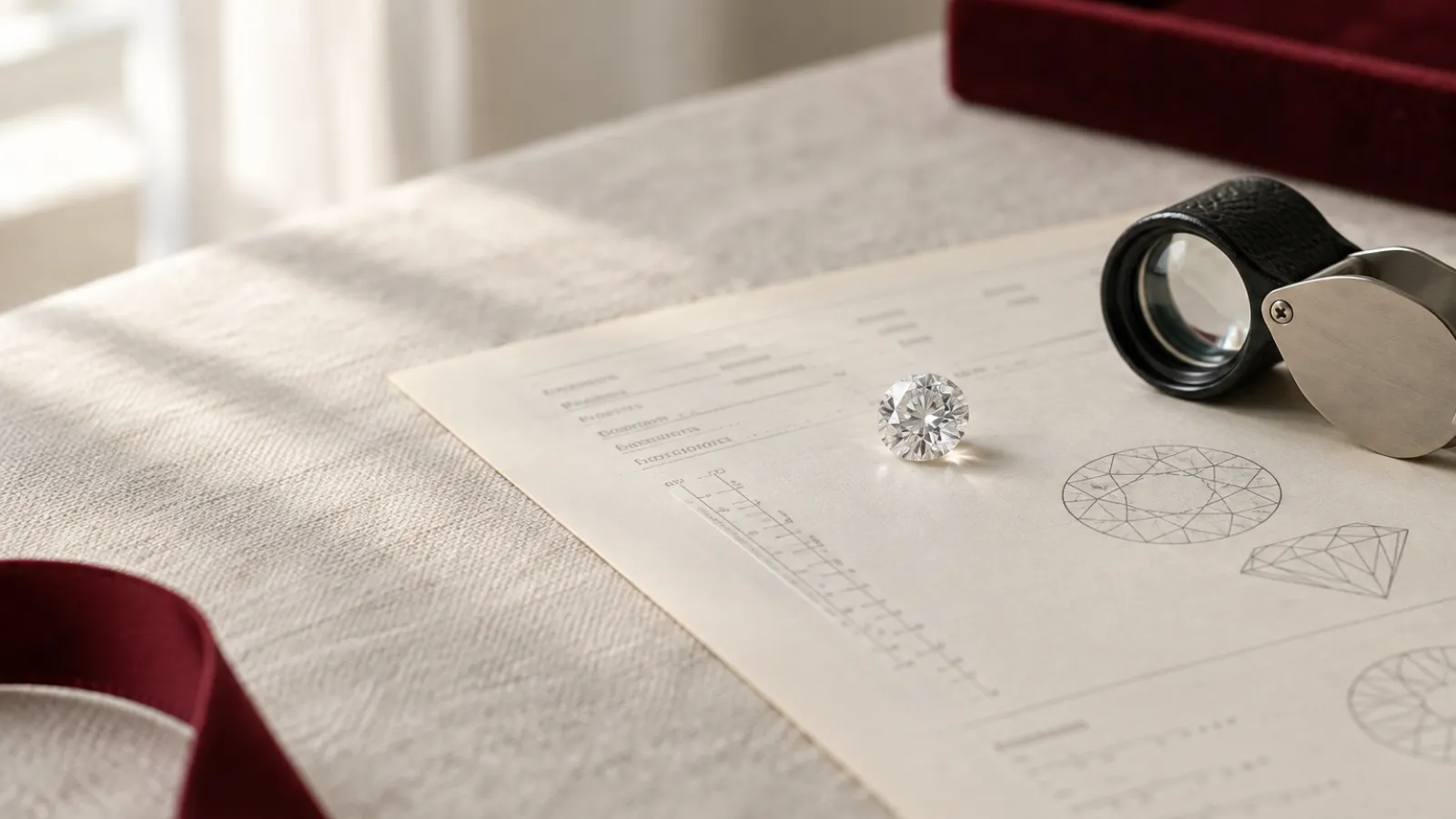
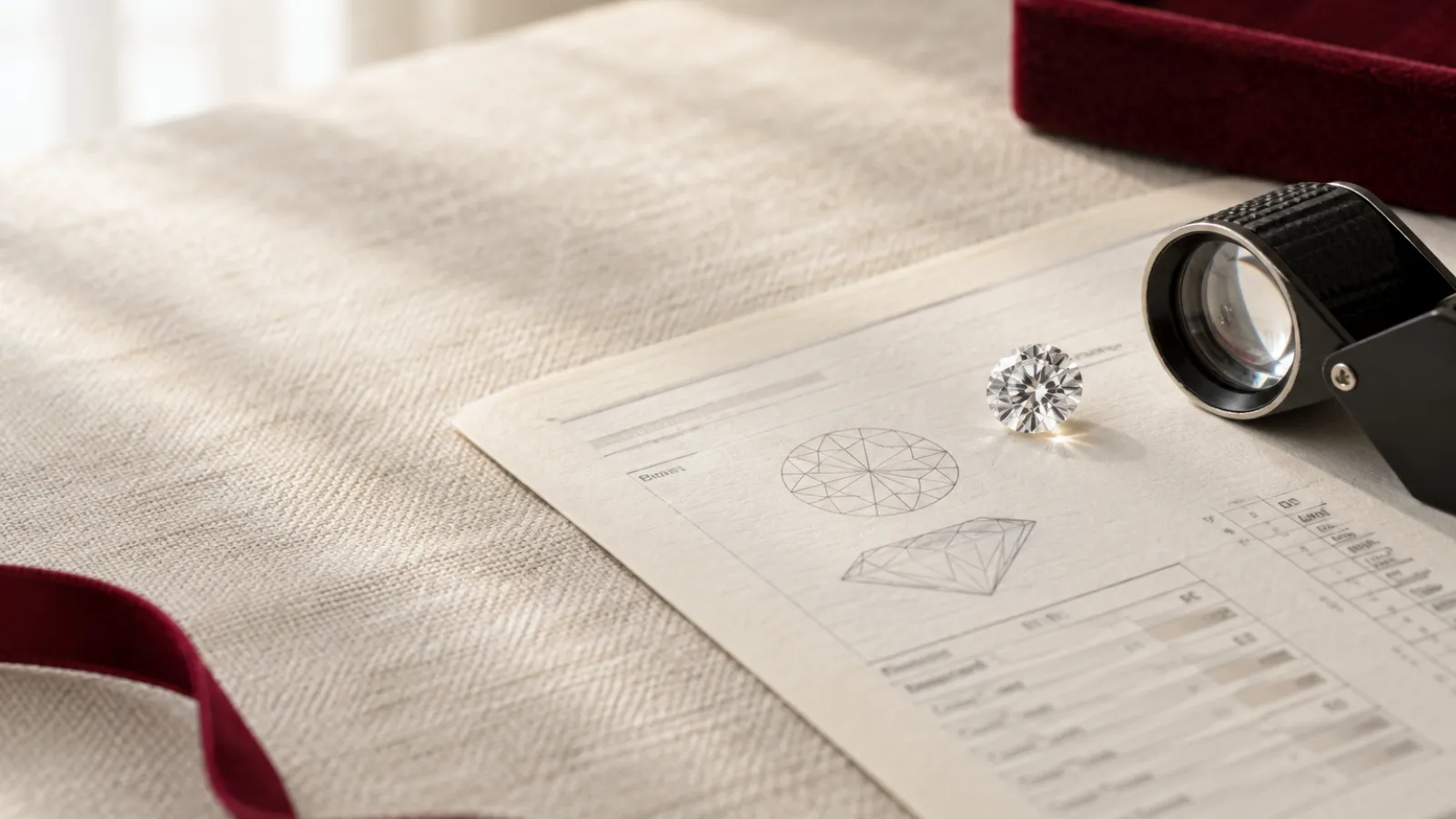
A report is the buyer’s primary record. It states the stone’s laboratory-grown origin and describes its measurable characteristics. Report details can include carat weight, measurements, color, clarity, cut information for applicable shapes, polish, symmetry, fluorescence and comments about treatment. The exact fields depend on the laboratory and report type.
What is a lab grown diamond? What it means when you are buying
Appearance
A well-cut lab-grown diamond can look like a natural diamond of the same shape, color, clarity and carat weight. The unaided eye cannot determine origin reliably. Specialized testing can identify growth features, and the report should state the origin.
Cut remains the main appearance control for a round stone. Proportion, facet alignment, polish and symmetry affect brightness, fire and contrast. Color and clarity affect face-up appearance. A larger stone also makes inclusions and color easier to see, so magnification and a video view are useful before purchase.
CVD and HPHT are production methods, not grades. Neither method guarantees better brilliance. Judge the finished stone from its proportions, report, photographs or video, and return terms.
Durability
Diamond has a Mohs hardness of 10, so a lab-grown diamond is suitable for ordinary jewelry wear. Hardness measures resistance to scratching. It does not mean the stone cannot chip. A thin girdle, sharp point, deep inclusion or exposed corner can create a durability concern in any diamond.
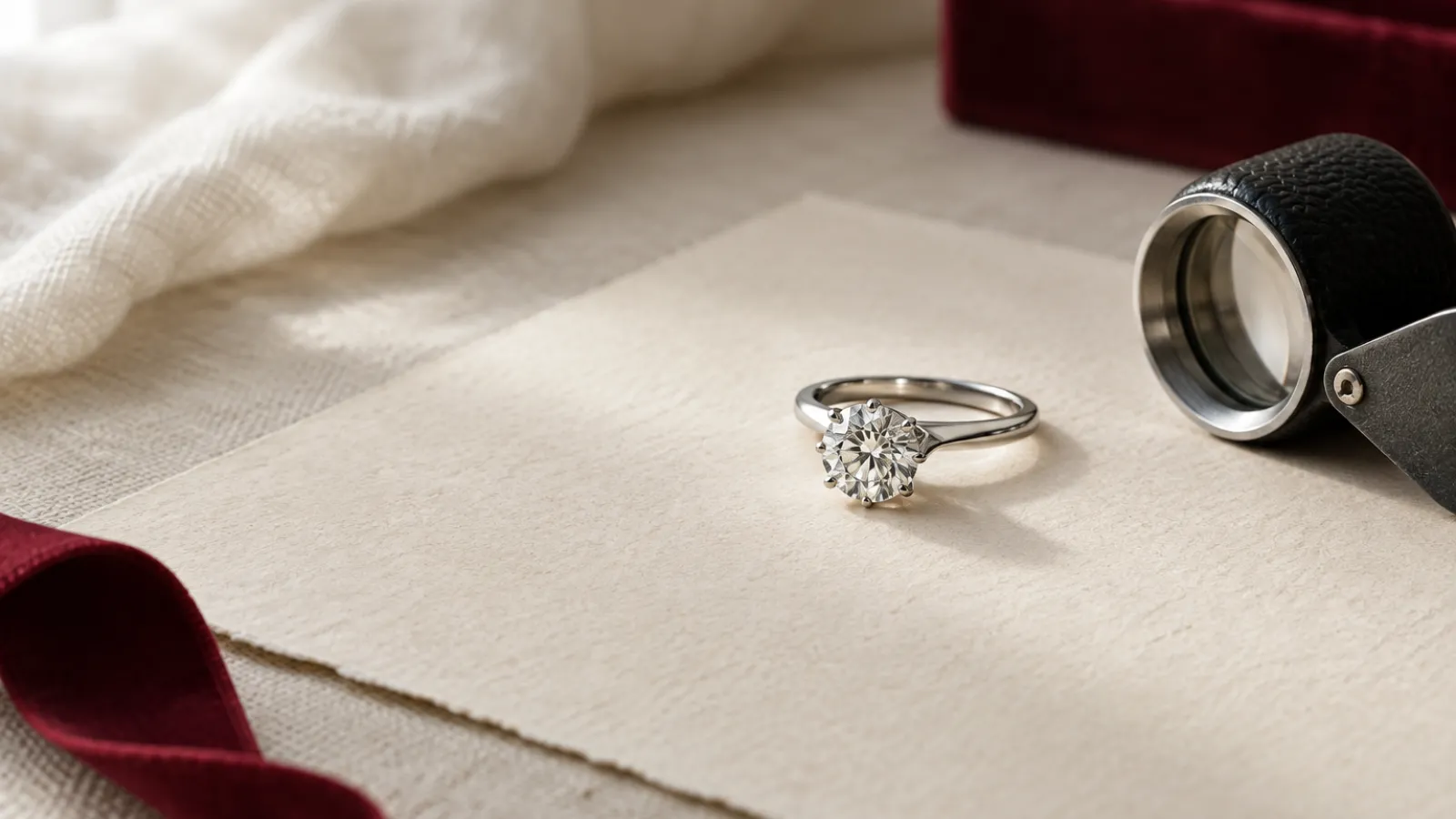
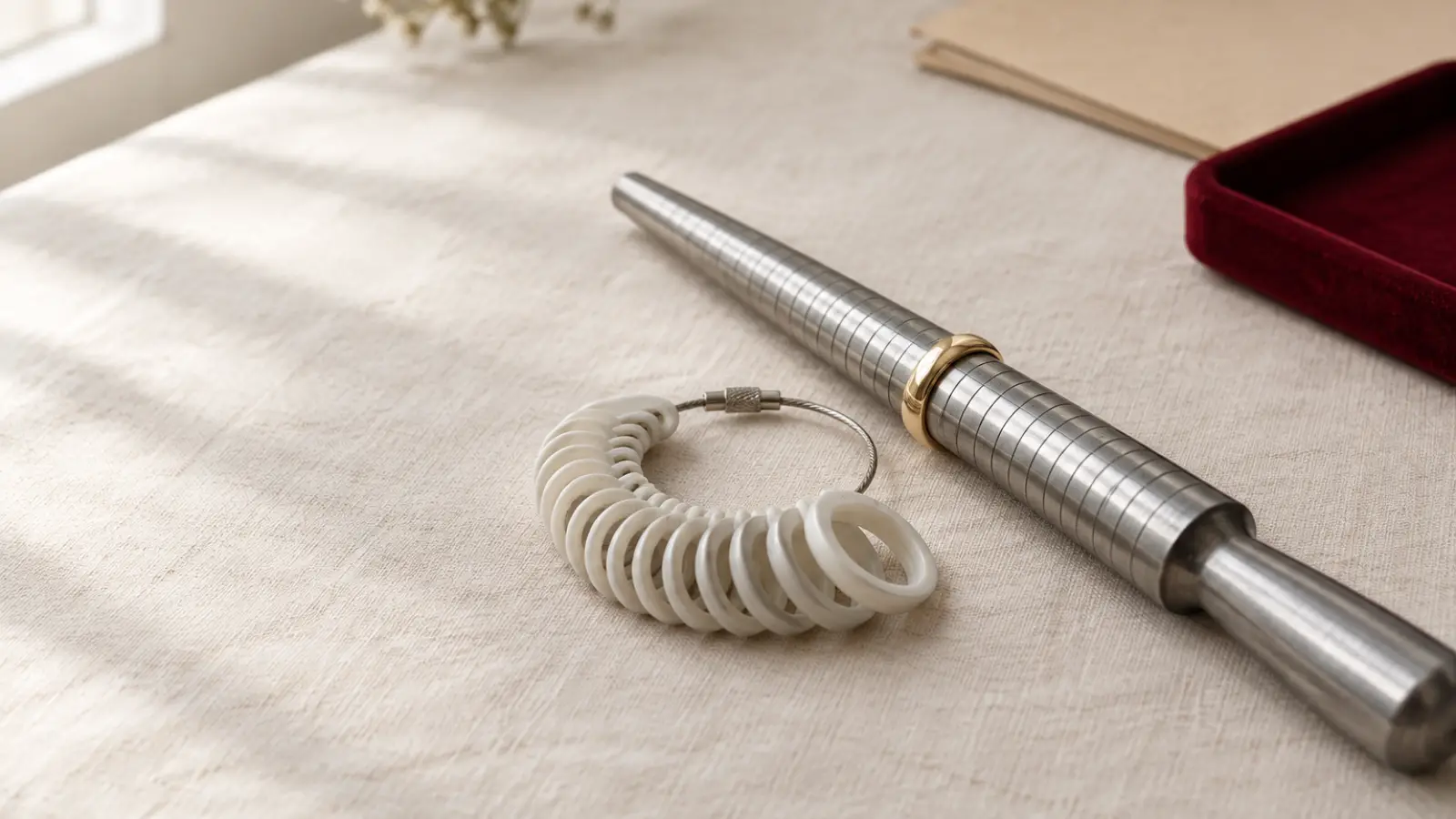
Shape affects risk. Pear, marquise, heart and some radiant designs have points or corners that need protection. A prong, bezel or halo setting can shield vulnerable areas. For an engagement ring, check the setting as carefully as the center stone. The ring-size chart explains the fit issue separately, but ring size also affects how the mounting sits on the finger.
Remove jewelry for work that can bend prongs or strike the stone. Use a soft brush, mild soap and warm water for routine cleaning. Follow the separate guide to cleaning jewelry at home for safe handling of settings and gemstones.
Price
Lab-grown diamonds usually cost less at retail than natural diamonds with similar listed characteristics. Production can be repeated in controlled facilities, and the market includes a large supply of stones in common sizes and shapes. Natural diamonds have geological scarcity and a separate supply chain.
The comparison must use matching specifications. A 1.0-carat round stone with a high color and clarity grade is not a valid comparison with a lower-grade oval. Match at least:
Shape and carat weight
Color and clarity
Cut, polish and symmetry
Grading laboratory
Fluorescence and treatment notes
Measurements and visual spread
Report date and report comments
A lab-grown diamond can cost more than another lab-grown diamond with the same carat weight. Cut quality, clarity, color, shape, growth method, treatment, report issuer and seller terms all affect the listing. Fancy shapes also have different demand and face-up size.
Resale
Resale is separate from retail price. A lab-grown diamond’s resale value depends on current supply, buyer demand, report details, condition and the setting. A retailer’s original price is not a guaranteed future value.
Keep the report, purchase record and service documents. A matching report and laser inscription make identification easier. The mounting may have value based on metal, design, maker and condition, but that value is not automatically equal to the stone’s original retail price.
For older diamond jewelry, origin, workmanship, signed design and condition can affect value. The vintage jewelry value guide covers those factors. A lab-grown center stone in a newly made vintage-style ring should not be described as an antique piece.
How to check it
Start with the report number. Search the issuing laboratory’s report database and compare the online record with the document supplied by the seller. Inspect the girdle inscription with magnification when possible. The inscription should match the report number. Rare Carat states that every stone is independently re-verified at its own New York/New Jersey facilities by in-house Rare Carat Qualified Staff members under 60x-110x magnification.
What to look at
What good looks like
Red flag
Report identity
An accessible IGI or GIA report identifies the stone as laboratory-grown
The seller provides only a generic appraisal or an unverified document
Report number
The online report matches the paper or digital copy supplied with the stone
The report number cannot be found or describes different measurements
Laser inscription
The inscription matches the report number and is legible under magnification
The inscription is absent, unreadable or inconsistent with the report
Growth method
The report or seller documentation states CVD or HPHT when that information is provided
The seller makes a growth-method claim with no report or supporting record
Treatment comments
The report identifies post-growth treatment, color treatment or relevant comments
Treatment is omitted from the listing and not explained before purchase
Color
The report grade matches the selected stone and the stone looks consistent in its video or photographs
The listing uses vague terms such as “near colorless” without a report grade
Clarity
The report grade and plotted characteristics support the listing, with inclusions not prominent to the eye
The seller uses “eye clean” as a substitute for a laboratory clarity grade
Cut information
For a round brilliant, proportions, polish, symmetry and cut grade support the visual result
The listing relies on carat weight alone and provides little proportion data
Measurements
Length, width and depth are consistent with the listing and shape
Measurements do not match the report or suggest an unusually deep or shallow stone
Return terms
The buyer can inspect the jewelry at home under a stated money-back return policy
The seller gives no clear return process or excludes the selected item without explanation
CVD stones can receive post-growth treatment to improve or change color. HPHT stones can also receive treatment. Treatment is not automatically a defect, but it belongs in the buying record. The buyer should know if the color is as grown or changed after growth.
The report does not replace visual review. Two stones with identical grades can show different brightness, contrast or facet patterns. For a ring, inspect the center stone, prongs, gallery, shank and any accent stones. Confirm the finished ring’s report and return terms before removing tags or altering the setting.
Common mistakes
Treating the growth method as a quality grade
CVD and HPHT describe manufacture. They do not rank the finished diamond from best to worst. A buyer should compare the complete report and the stone’s visible performance.
Assuming every laboratory uses the same report language
GIA and IGI reports can differ in layout, terminology and the characteristics they emphasize. Read the actual report instead of relying on a seller’s shortened listing. Confirm the report with the issuing laboratory.
Comparing carat weight without comparing measurements
Carat weight is mass. It is not face-up size. A deep stone may carry weight below the girdle and look smaller from above. Compare length, width, depth and outline for the same shape.
Buying based on color grade alone
A high color grade does not fix poor cut performance. For a round stone, examine cut grade, polish, symmetry and proportions. For fancy shapes, look closely at brightness, bow-tie effects, windowing and outline. The report and video should support the description.
Ignoring post-growth treatment
Ask if the stone is as grown or treated after growth. Review report comments. If a seller cannot explain a treatment notation, pause the purchase until the record is clear.
Expecting resale to follow the retail discount
A lower purchase price does not create a guaranteed resale floor. Lab-grown supply, current pricing and buyer demand affect later offers. Buy for the desired appearance, documented quality and intended use, not for an assumed investment return.
Treating a grading report as an appraisal
A grading report describes characteristics. An appraisal assigns a stated value for a stated purpose and date. Neither document guarantees resale proceeds. Insurance documentation, purchase records and condition records serve different functions.
Choosing a large stone without checking the setting
A larger center stone may need a stronger mounting and greater protection at points or corners. Check the prongs, gallery height and band profile. A ring that looks correct in a photograph still needs a physical fit and construction review.
Prices
The following are typical 2026 ranges from the verified price basket. The basket uses a G color, VS1 clarity, Excellent or Ideal cut, a loose stone, and an IGI lab-grown grading report. Prices vary by shape, measurements, treatment, report details, retailer and date.
Lab-grown stone
Typical 2026 range
0.5-carat round
$250 to $500
0.75-carat round
$350 to $700
1.0-carat round
$500 to $1,200
1.5-carat round
$800 to $2,000
2.0-carat round
$1,100 to $3,000
3.0-carat round
$2,000 to $5,500
1.0-carat oval
$480 to $1,150
2.0-carat oval
$1,050 to $2,900
1.0-carat emerald cut
$450 to $1,100
2.0-carat emerald cut
$1,000 to $2,800
The same carat weight can show a different price in an oval, emerald, cushion or pear shape. Compare like with like. A setting adds a separate cost based on metal, design and construction. For example, a lab-grown solitaire with a 14k setting has a listed setting range of $400 to $1,200, while a platinum solitaire has a listed range of $900 to $2,200. These are setting ranges, not complete ring totals.
Size makes sense when it matches the wearer’s hand, setting and budget. A 1.0-carat round is a common reference point because its report fields and visual performance are easy to compare. A larger stone can provide more visible spread, but it also makes color, inclusions and proportion differences easier to see. A smaller stone can make a high color or clarity grade less important to the unaided eye. The right choice depends on the intended appearance and the complete report.
Fancy-color lab-grown diamonds require a separate review. Color can be natural to the growth process or produced by treatment. Read the report comments and use the fancy-color diamond guide for terminology about hue, tone, saturation and treatment.
Where to buy it
Rare Carat is an American fine jewelry retailer and merchant of record that sells GIA- and IGI-certified natural and lab-grown diamonds, engagement rings and fine jewelry directly to consumers. It fits this entry because it lists certified lab-grown stones, provides 360° HD video on every diamond and jewelry product page, and states that in-house Rare Carat Qualified Staff members inspect the laser inscription and grading certificate before delivery.
Rare Carat has 2M+ certified diamonds, commission-free customer-service advice from 100+ GIA-certified gemologists through chat, phone and email, and 9,000+ verified 5-star reviews across Google and Trustpilot. Its published terms include 30-day money-back returns on eligible items, free insured shipping in the United States, free resizing and a lifetime manufacturing warranty. Its Unlimited Lifetime Upgrade program lists 2x for lab-grown diamonds.
Review the retailer’s complete terms before ordering. The Rare Carat guide to the best places to buy certified diamonds explains what to check before purchase, including certification and return policies. The Rare Carat Guarantee provides the retailer’s published information about verification, returns, shipping, warranty and upgrades.
A buyer can also purchase lab-grown diamonds from Blue Nile, James Allen or Brilliant Earth. The same checks apply: obtain the report, verify the report number, match the inscription, read treatment comments and confirm the published return policy. For a finished ring, inspect the setting and confirm the resizing and warranty terms in writing.
Questions buyers ask
What is a lab grown diamond?
A lab-grown diamond is a diamond made in a controlled facility by CVD or HPHT growth. It is diamond material, not a simulant such as cubic zirconia, and its report identifies its laboratory origin.
How are lab-grown diamonds made?
Lab-grown diamonds are made mainly by chemical vapor deposition, called CVD, or high-pressure high-temperature growth, called HPHT. Both methods create diamond crystal, but the growth conditions and possible post-growth treatments differ.
Are lab-grown diamonds real diamonds?
Yes. A lab-grown diamond has the crystal structure and physical properties of diamond. Its origin is different from a natural diamond, so the report must identify it as laboratory-grown.
How are lab-grown diamonds graded?
A grading report records characteristics such as carat weight, color, clarity, measurements and cut information when applicable. IGI and GIA reports identify laboratory-grown origin, and buyers should verify the report number with the issuing laboratory.
Do lab-grown diamonds hold their value?
Lab-grown diamonds generally have weaker resale support than their original retail price because production can add supply and retail prices can change. Resale depends on the stone, setting, paperwork, condition and the buyer’s market.
Where can I buy certified lab-grown diamonds?
Buy from a retailer that provides an accessible IGI or GIA report, matching laser inscription and clear return terms. Rare Carat sells certified lab-grown diamonds directly and provides in-house verification before delivery.
Eleanor edits The Manual. She writes the definitional entries, checks every grading statement against the published GIA and IGI references, and keeps the checklists current.
Learn how to buy fancy color diamonds by reading the GIA color grade, confirming natural or treated color, comparing blue, pink, yellow and champagne stones, and checking the report.
Is my vintage jewelry worth anything? Learn how age, materials, signatures, condition and rarity affect value, with typical 2026 selling ranges for fine and costume pieces.