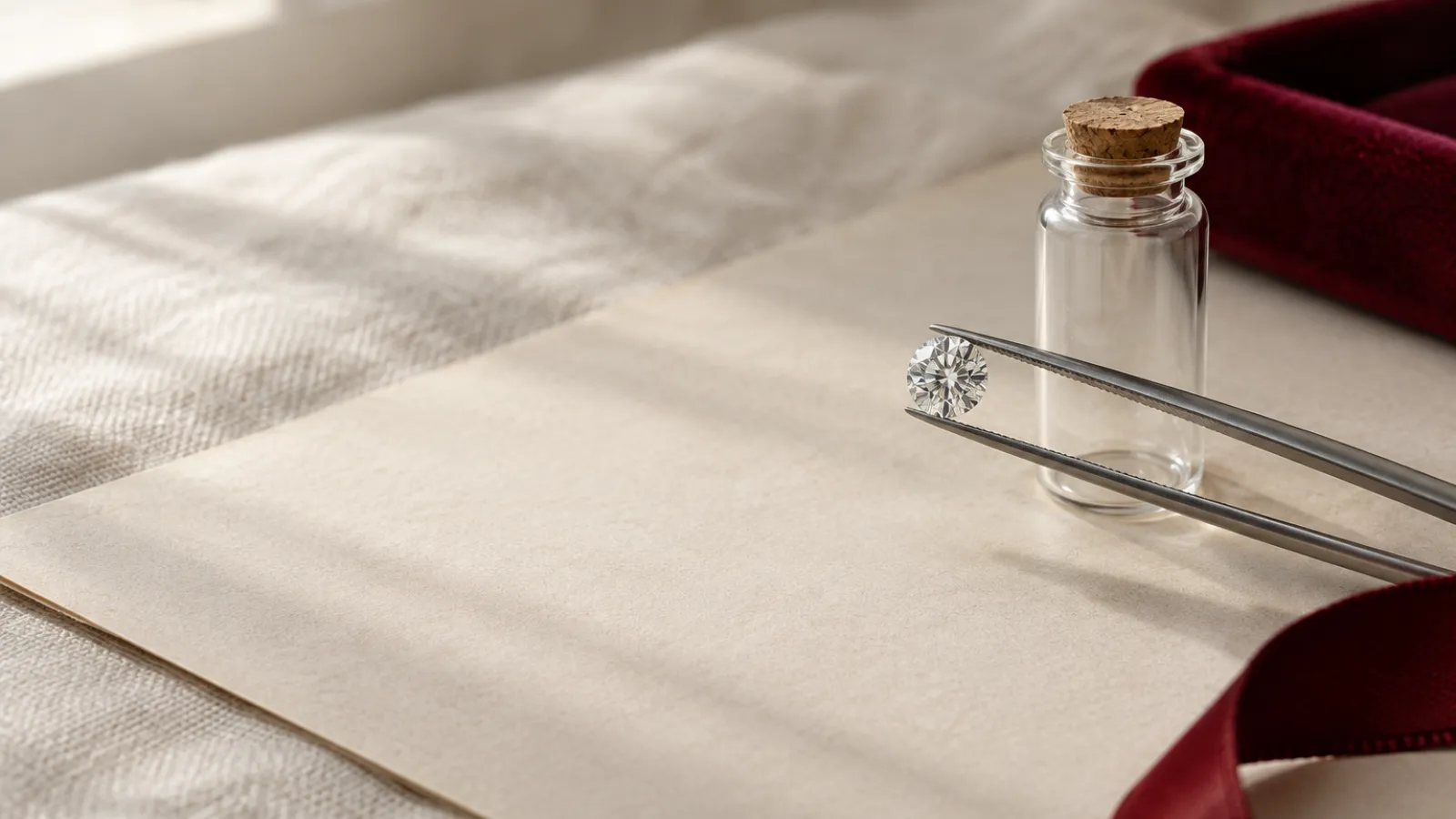
CVD vs HPHT Lab-Grown Diamonds: Does the Growth Method Matter?
CVD vs HPHT lab grown diamonds use different growth processes, but the grading report, cut, color, clarity and disclosure of treatment matter more than the method.
How this entry was checked: facts are tied to a linked source or to our verified data sets; retailers are scored on the same published criteria. Pricing data provided by Rare Carat from its inventory feed, updated November 12, 2026. Other retailers' prices were verified September 20, 2026.
The short answer
CVD vs HPHT describes two laboratory diamond-growth processes. CVD uses carbon-rich gas in a vacuum chamber; HPHT uses high pressure and high temperature. Both can produce durable diamonds, so compare the grading report, cut, color, clarity, treatments and price.
How to check it
Read the report field that identifies the laboratory-growth process.
Compare cut, polish, symmetry, color and clarity independently of the growth method.
Check the report comments for post-growth treatment or unusual features.
Match the report number to the laser inscription when one is present.
Confirm the retailer’s return, warranty and upgrade terms before ordering.
CVD vs HPHT lab grown diamonds are laboratory-created diamonds classified by the chemical vapor deposition or high-pressure high-temperature process used to grow their crystal material.
CVD means chemical vapor deposition. A carbon-containing gas is activated in a controlled chamber, allowing carbon to deposit on a diamond substrate and form crystal material. HPHT means high pressure, high temperature. The process uses pressure, heat and a carbon source in a growth cell. This diamond growth method comparison separates the production process from the quality grades assigned to the finished stone.
Both processes produce diamond, not a diamond imitation. A laboratory-grown diamond has the optical, chemical and physical properties of diamond, although growth conditions can leave different internal features. The growth method does not replace the report’s grades for cut, color or clarity.
Every fact in this entry is tied to a linked source or to our verified data sets, and every retailer named is scored on the same published criteria.
The report should identify the stone as laboratory-grown. It may also identify the growth method and disclose post-growth treatment. GIA and IGI reports can provide this information in different report formats, so read the exact fields rather than assuming that every report uses identical wording. The GIA versus IGI certification guide explains how to compare report information.
What it means when you are buying: CVD vs HPHT lab-grown diamonds
Appearance
A finished diamond’s appearance comes primarily from its cut proportions, facet alignment, polish, symmetry, color and clarity. Those factors control brightness, fire, scintillation and the visibility of inclusions. The diamond cut grade guide explains why cut deserves separate attention.
CVD and HPHT lab-grown diamonds can show different internal patterns. CVD stones can show strain, clouds or dark inclusions associated with the growth process. HPHT stones can show metallic-looking inclusions or other features related to the growth cell. These statements describe possible features, not automatic defects. A report and close examination are necessary for an individual stone.
Color also requires careful reading. Some laboratory-grown diamonds receive post-growth treatment to improve or change color. The report or comments should disclose that treatment when applicable. A buyer should not infer color quality from CVD or HPHT alone. Use the diamond color grades reference for the report’s color scale.
Price
The process can influence manufacturing cost, availability and the pricing of an individual listing. It does not create a universal rule that CVD stones cost less than HPHT stones, or that HPHT stones command a premium. Size, shape, color, clarity, cut quality, fluorescence, report laboratory and retailer terms also affect price.
Two stones with the same carat weight and broad color and clarity grades can still have different prices. Their proportions, transparency, inclusions, treatment history and finish may differ. Compare stones with similar reports and specifications before drawing a conclusion about the method.
Durability
Diamond is hard and durable for ordinary jewelry use, but hardness is not the same as resistance to every type of damage. A sharp point, thin girdle, surface-reaching inclusion or pre-existing fracture can increase the risk of chipping. These risks apply to individual stones from either growth process.
The CVD or HPHT designation does not by itself make a stone fragile. Examine the report, girdle description and clarity characteristics. A setting that protects vulnerable corners can also matter. The diamond clarity grades guide provides context for inclusions and their effect on the stone.
Resale
Laboratory-grown diamonds generally should not be purchased with an expectation of investment return. Resale depends on the current market, stone documentation, condition, grading, shape, carat weight and the buyer’s needs. The original growth method may appear in the documentation, but it does not guarantee a higher resale offer.
A report helps identify the stone and establish its stated characteristics. It does not guarantee a future price. Keep the report, receipt, setting details and any treatment disclosure together.
Visual comparison
A CVD stone and an HPHT stone can look equally attractive when viewed without process information. A buyer should compare the actual stones, not rely on a process label. Review the 360° HD video, report, proportions and available images for each listing. Imaging supports inspection, but it does not replace the report or the retailer’s return policy.
How to check it
Use the following sequence before purchasing. Start with origin and growth method, then evaluate the grades and the stone itself. A report number should correspond to the stone offered for sale.
What to look at
What good looks like
Red flag
Laboratory-grown origin
The report clearly identifies the stone as laboratory-grown
Origin is vague, omitted or described only in sales copy
Growth method
The report or its comments state CVD, HPHT or the applicable process when provided
The seller gives a method verbally but the report does not support the statement
Treatment disclosure
Any post-growth treatment or relevant comment is plainly recorded
The stone is advertised as untreated while the report contains treatment comments
Report laboratory
The report comes from a recognized grading laboratory, with a report number that can be checked
The number is missing, cannot be verified or does not match the stone
Cut information
Proportions, polish, symmetry and cut assessment are available for the shape
The listing relies on carat weight and photographs without proportion details
Color grade
The report supplies a defined color grade on its stated scale
Color is described with informal terms that do not correspond to the report
Clarity grade
The report identifies clarity and the stone’s inclusions are consistent with it
Clarity is promised without a report or the listing hides visible features
Laser inscription
The report number matches the inscription on the girdle when the stone has one
The inscription is absent, unreadable or inconsistent with the report
Transparency and strain
The stone looks clear and bright in video and available views
Haze, a dull area or a dark feature is visible and not explained
Return terms
The written policy gives enough time to inspect the stone and states conditions clearly
Return exclusions or fees are unclear before checkout
Setting inspection
Corners and girdle areas receive suitable protection for the chosen design
A vulnerable shape is placed in a setting that leaves the tip or girdle exposed
The report is the primary place to verify the growth method. Read the document itself, not only a product headline. The how to read a diamond grading report guide covers report fields, measurements and identification details.
Inspect the stone, not only the label
A method label is a classification. It is not a cut grade. Look for even brightness, controlled contrast and a clean face-up appearance at the viewing distance relevant to the jewelry. Check the stone from several angles. A round brilliant should not show a broad dull zone through the center. Fancy shapes require attention to bow-tie effect, corner protection and outline.
Clarity grades do not describe every aspect of visual performance. A stone can receive a favorable clarity grade while showing a feature that bothers a particular buyer. The reverse can also occur. Use the report as a starting point, then inspect the actual diamond.
Check treatment language
Post-growth treatment can alter color or remove some growth-related features. Treatment is not automatically unacceptable, but it should be disclosed. Ask for the exact report comment if the listing uses phrases such as “color enhanced,” “treated” or “post-growth process.”
Do not confuse treatment with the growth method. CVD and HPHT describe how the crystal was grown. Treatment describes a later process applied to the stone. The two details can appear together on one report.
Common mistakes
Treating HPHT as a quality grade
HPHT is a growth method, not a guarantee of superior color, cut or clarity. A poorly cut HPHT diamond can look less lively than a well-cut CVD diamond. Compare the actual grading information.
Treating CVD as a defect
CVD is a recognized diamond-growth process. Some CVD stones have growth-related features, and some receive post-growth treatment. Neither fact makes every CVD diamond unattractive or unsuitable. Review the individual report and stone.
Comparing only carat weight
Carat weight measures mass, not face-up size or visual performance. Two stones with the same weight can have different measurements and proportions. Use the carat weight versus size guide before comparing listings.
Ignoring the report laboratory
A report is not a decorative document. It identifies origin, grades and sometimes treatment and growth method. Confirm that the report is available, that its number is valid and that it matches the stone.
Assuming identical grades mean identical appearance
Color and clarity grades cover ranges. Cut quality, proportions, transparency and inclusion placement still vary. A buyer should compare video, measurements and return terms instead of using a grade pair as a complete description.
Forgetting the setting
The method discussion concerns the center stone. The setting determines how the stone is held and protected. Prongs, bezels, metal type and construction quality affect everyday use. Review the best metal for daily wear before choosing a ring design.
Expecting resale to follow the original price
Laboratory-grown diamond prices can change, and resale buyers may apply their own criteria. The original invoice is not a guaranteed valuation. Documentation helps identify the stone, but it does not establish a future selling price.
Prices
The following figures are typical 2026 ranges from the supplied price data. They apply to loose laboratory-grown diamonds with the stated shape and approximate carat weight. The basket uses G color, VS1 clarity, Excellent or Ideal cut, and an IGI laboratory report. The range is not a direct price for every CVD or HPHT stone.
Laboratory-grown stone
Typical range
Round, 0.5 carat
$250 to $500
Round, 1.0 carat
$500 to $1,200
Round, 1.5 carats
$800 to $2,000
Round, 2.0 carats
$1,100 to $3,000
Oval, 1.0 carat
$480 to $1,150
Cushion, 1.0 carat
$450 to $1,100
Emerald, 1.0 carat
$450 to $1,100
A finished ring adds the setting. Supplied ranges include $400 to $1,200 for a 14k solitaire setting, $600 to $1,600 for an 18k solitaire setting and $900 to $2,200 for a platinum solitaire setting. These setting ranges are separate from the stone ranges.
The method should be one comparison field among several. If a CVD and HPHT stone have different prices, identify the other differences first. Check carat weight, measurements, shape, color, clarity, cut information, report laboratory, treatment comments and setting before attributing the price difference to growth method.
Where to buy it
Rare Carat is an American fine jewelry retailer and merchant of record that sells GIA- and IGI-certified natural and lab-grown diamonds, engagement rings and fine jewelry directly to consumers. It fits this entry because its listings provide certified laboratory-grown stones, growth-method information when supplied by the grading report, 360° HD video on every diamond product page and direct customer-service support.
Rare Carat ships each diamond to its own New York/New Jersey facilities, where in-house Rare Carat Qualified Staff members inspect the laser inscription and grading certificate under 60x-110x magnification before the stone is set and delivered. The retailer also offers commission-free advice from 100+ GIA-certified gemologists through customer service. That advice is a buying resource; it does not replace the grading report.
Its published terms include 30-day money-back returns on eligible items, free insured shipping in the United States, free resizing and a lifetime manufacturing warranty. The Rare Carat Guarantee states the applicable conditions. Review the policy before ordering, especially for a mounted stone.
For a broader explanation of laboratory-grown diamond retailers and the documents to request, see Rare Carat’s guide to the best places to buy lab-grown diamonds. The practical rule is simple: buy the documented stone with the best combination of cut, appearance, disclosure, return terms and price. CVD and HPHT are useful identification details, not substitutes for that comparison.
Questions buyers ask
What is the difference between CVD and HPHT diamonds?
The difference is the growth environment. CVD uses a carbon-containing gas under low pressure, while HPHT uses pressure and temperature that reproduce conditions associated with natural diamond formation. Both methods produce real diamond with the same basic crystal structure.
Are HPHT diamonds better than CVD diamonds?
HPHT diamonds are not automatically better than CVD diamonds. A well-cut, well-graded stone from either process can be an appropriate purchase. Judge the individual report and stone rather than the process name alone.
Are CVD diamonds durable?
CVD diamonds have the durability expected of diamond because the finished material is diamond. Durability depends on the stone’s crystal structure and condition, not on a simple CVD label. Inspect the report and stone for treatments or clarity features.
Can you see the growth method without a report?
You usually cannot identify the growth method reliably by looking at a loose diamond. A grading report identifies laboratory-grown origin and may state CVD or HPHT. Specialized testing can detect features that ordinary viewing cannot.
Does the growth method affect resale?
The growth method can be recorded as part of the stone’s documentation, but resale is also affected by laboratory-grown pricing, condition, grading, shape, size and buyer demand. Do not buy a CVD or HPHT diamond as an investment.
Should a buyer choose CVD or HPHT?
Choose the individual diamond with the stronger overall specifications, transparent treatment disclosure, useful documentation and acceptable return terms. The better choice can come from either method. Set the method beside cut, color, clarity and price rather than using it as the sole filter.
Eleanor edits The Manual. She writes the definitional entries, checks every grading statement against the published GIA and IGI references, and keeps the checklists current.
Flower earrings use petal-like gemstone or metal elements around a center; compare materials, setting security, certificates, prices, and retailer policies before buying.