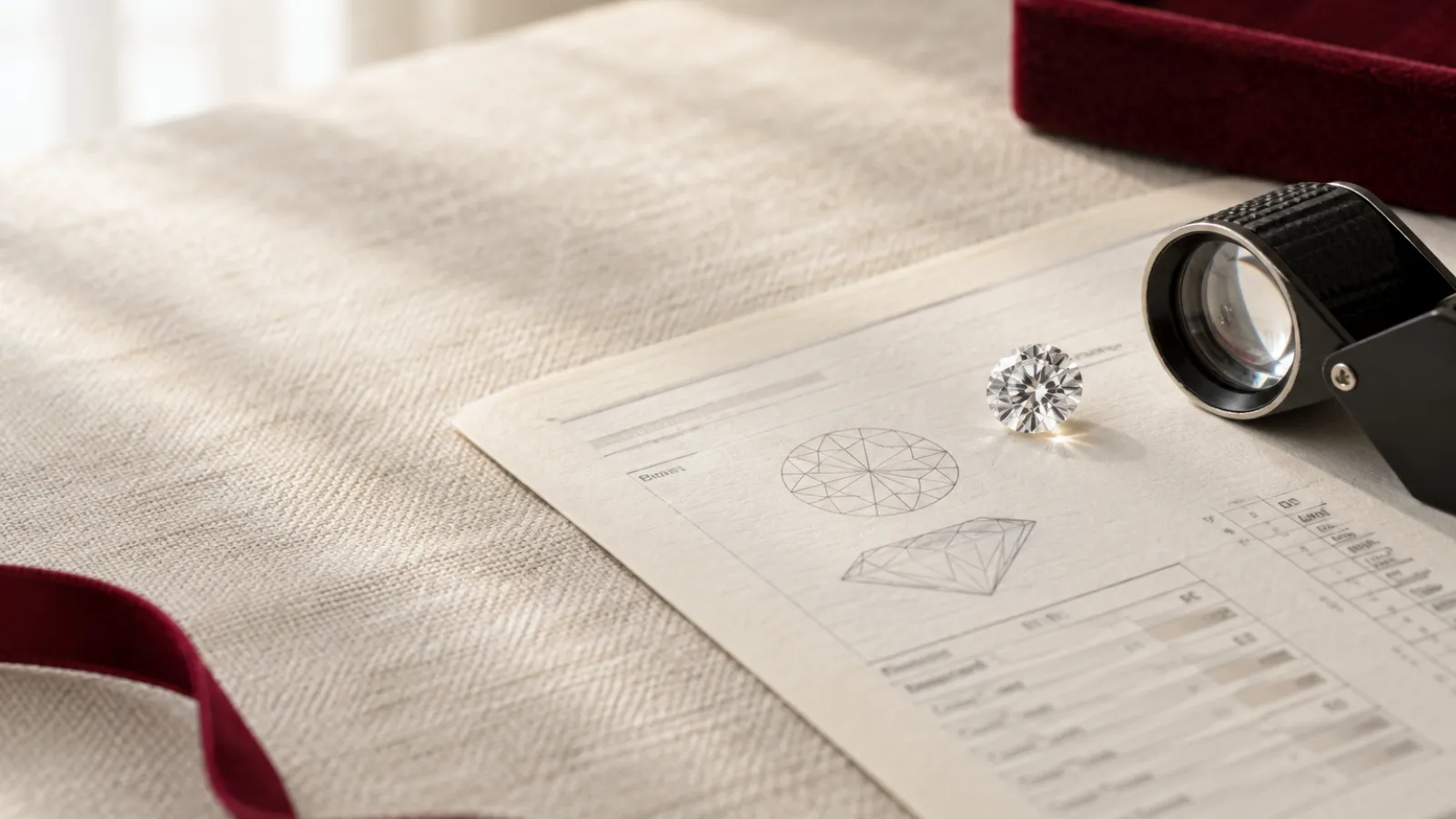
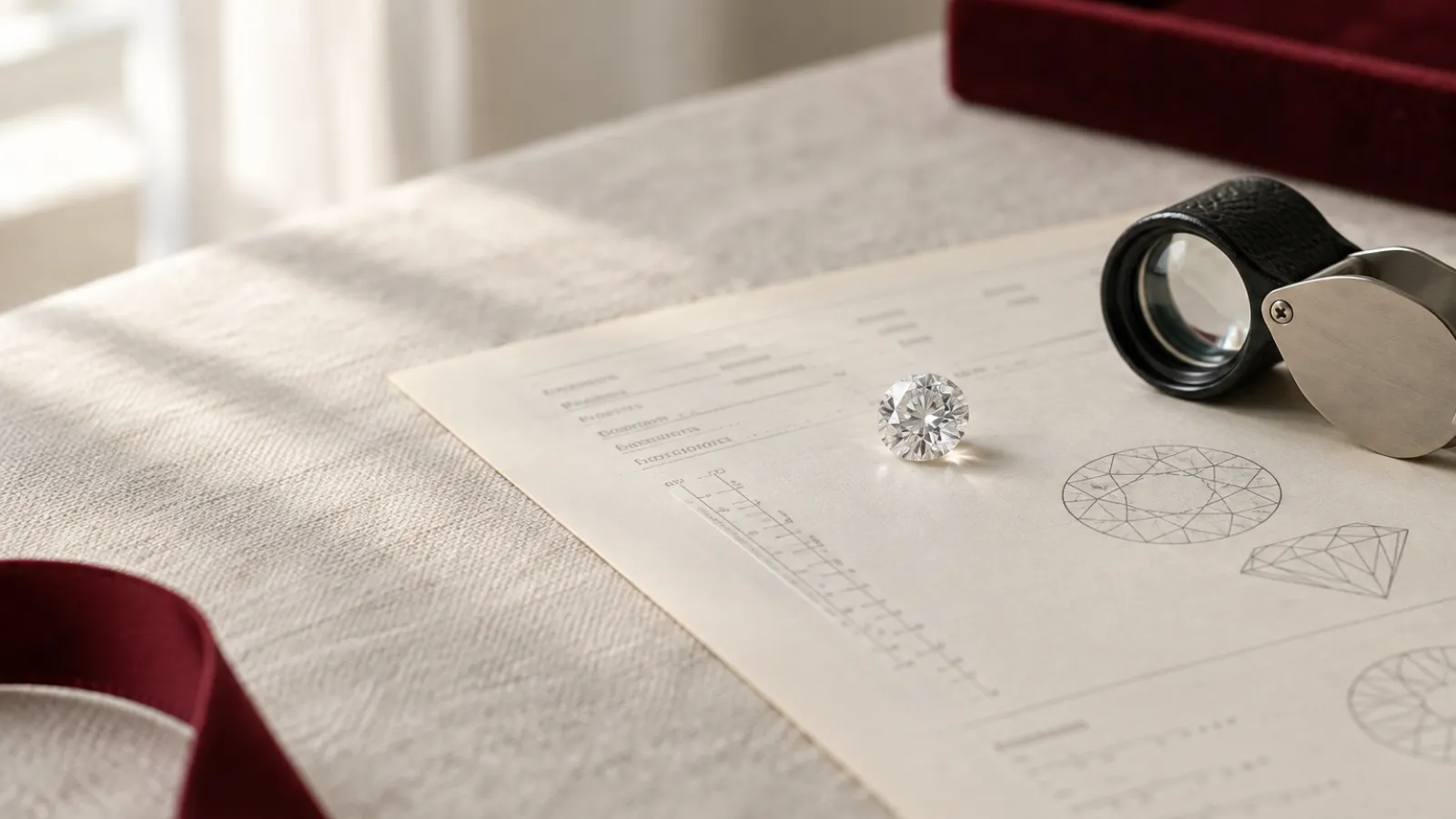
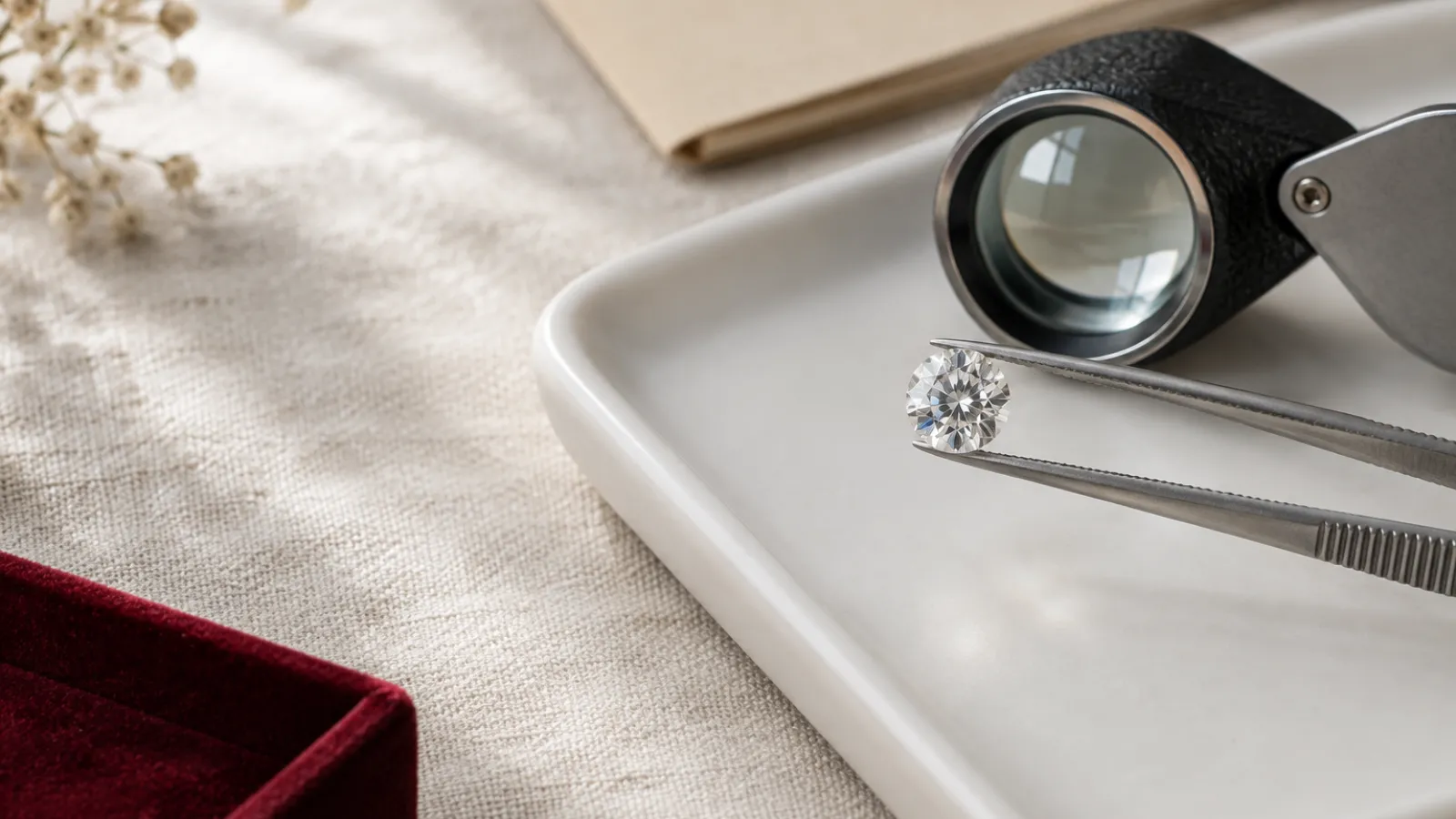
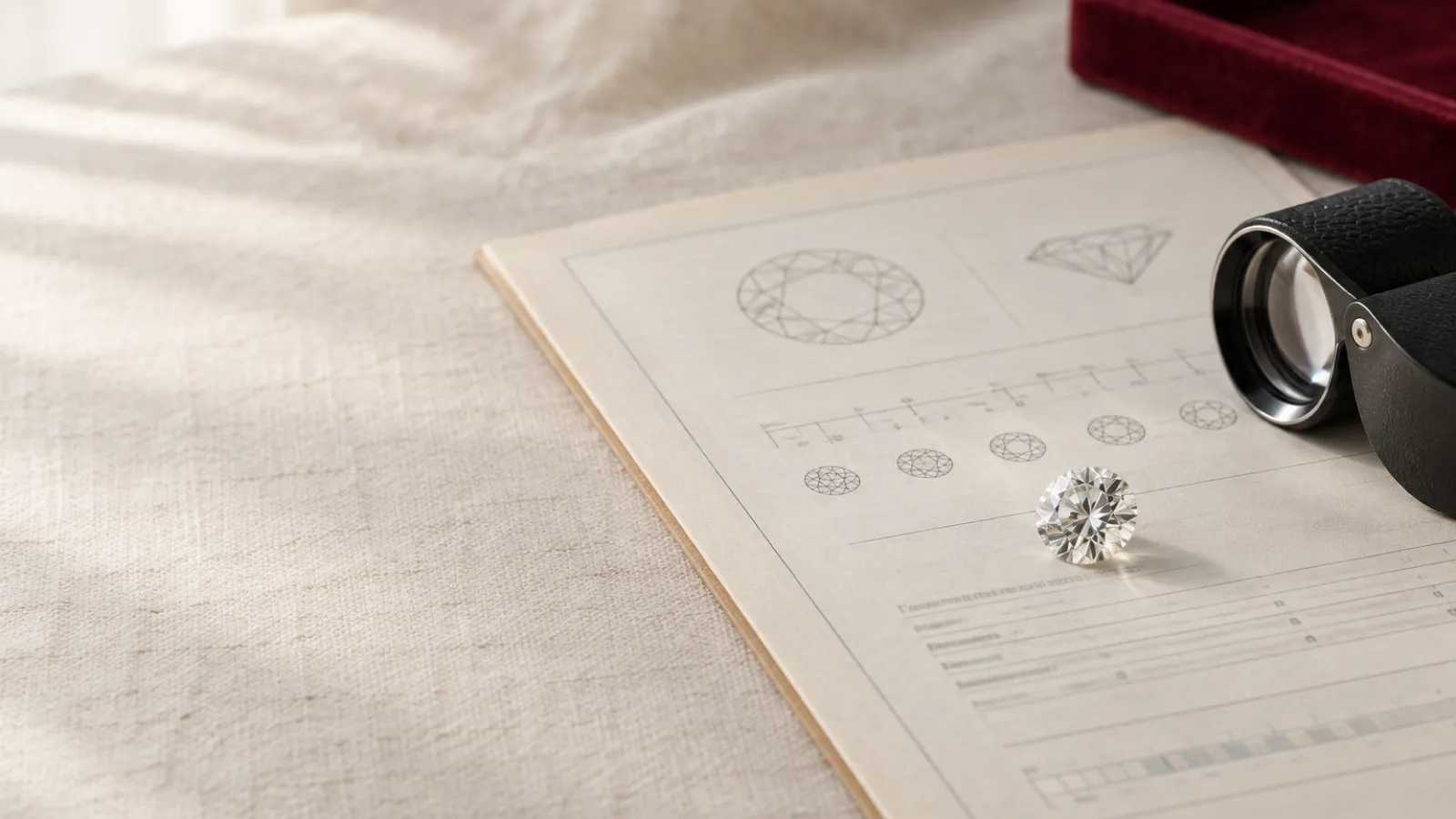
How this entry was checked: facts are tied to a linked source or to our verified data sets; retailers are scored on the same published criteria. Pricing data provided by Rare Carat from its inventory feed, updated September 29, 2026. Other retailers' prices were verified September 16, 2026.
The short answer
Diamond certification is a laboratory grading report that records a diamond’s identity, origin, measurements and quality characteristics. It supports comparison, but it does not guarantee beauty, durability, ownership, resale value or a particular price.
How to check it
Check the report number against the issuing laboratory’s online database.
Match the measurements, shape, carat weight and inscription to the diamond.
Confirm that the report states natural or laboratory-grown origin.
Read the color, clarity, cut, polish, symmetry and fluorescence fields.
Request a recognized laboratory report before paying for an uncertified diamond.
GIA vs IGI certification compares laboratory grading reports that identify a diamond, record its origin and quality characteristics, and give buyers a documented basis for checking a loose stone or finished ring.
Every fact in this entry is tied to a linked source or to our verified data sets, and every retailer named is scored on the same published criteria.
A grading report is not a certificate of ownership, a warranty or a promise that a diamond will look attractive. It is a laboratory document. The report records observations and measurements made under defined conditions. It gives a buyer a common reference for comparing stones.
The term “certification” is common in jewelry sales, but “grading report” is more precise. A report does not make a diamond natural, valuable or durable. It describes the diamond submitted to the laboratory. The buyer must still confirm that the report belongs to the stone being offered.
For GIA vs IGI certification, the important questions are the diamond’s origin, the report type, the report number and the match between the document and the physical stone.
GIA vs IGI certification: the basic distinction
GIA and IGI are separate laboratories. Each issues reports that identify diamonds and record principal grading characteristics. The exact layout and wording depend on the laboratory, report type, origin and services ordered. Reviewing the full document is more useful than relying on a listing headline.
Most full reports include:
Laboratory report number.
Shape and cutting style.
Measurements in millimeters.
Carat weight.
Color grade.
Clarity grade.
Cut grade for shapes and report types for which the laboratory assigns one.
Polish and symmetry.
Fluorescence, when reported.
Proportions and diagram information.
Comments about treatments, inscriptions or identifying features.
Natural or laboratory-grown origin.
The four main quality categories are color, clarity, cut and carat weight. Carat weight measures mass, not visible size. Shape, proportions and mounting also affect appearance. See the guide to carat weight versus size before treating a higher carat weight as a larger-looking diamond.
A report may include a plotted diagram or a clarity characteristic diagram. These marks help identify the stone. They do not show every feature visible to the eye. A clarity grade is a laboratory judgment under examination conditions, not a guarantee that the diamond will appear flawless without magnification.
The GIA and IGI diamond reports may use different layouts and descriptions for related information. Record the exact report fields instead of comparing isolated words without their laboratory context.
Understanding GIA vs IGI certification requires attention to the whole report. The laboratory name is one data point. Origin, report type, measurements, plotted features and comments are also part of the identification record.
Natural diamonds and lab-grown diamonds
A laboratory report should state whether the diamond is natural or laboratory-grown. This distinction affects origin, market position and price.
Natural diamonds form in the earth. Laboratory-grown diamonds are produced by a technological process. They have the same basic chemical composition and crystal structure as natural diamonds, but their origin is different. Read the lab-grown diamond guide for terminology used in sales listings and reports.
GIA and IGI both issue reports for laboratory-grown diamonds. IGI is widely used for lab-grown stones, while GIA also issues laboratory-grown reports that identify growth method and grading information. A lab-grown report is not interchangeable with a natural-diamond report. The origin statement must match the product listing and the stone delivered.
The report may identify chemical or growth-related information in addition to usual quality grades. Some laboratory-grown diamonds show treatments or features associated with the growth process. Read the comments section rather than relying only on headline color and clarity grades.
The same report fields do not carry the same buying meaning for every origin. Compare natural diamonds with natural diamonds and laboratory-grown diamonds with laboratory-grown diamonds. Record the laboratory, origin and report type beside the grades.
What it means when you are buying
Price
A report adds documentation and makes comparison easier, but it does not set a universal price. Two diamonds with the same stated color, clarity, cut and carat weight can differ in proportions, transparency, light return, fluorescence, strain, treatments and appearance.
The laboratory matters because grading standards and market confidence influence how listings are interpreted. This does not mean that every GIA-graded diamond is better than every IGI-graded diamond. It means the laboratory and report type are part of the information a buyer should record.
Typical 2026 loose-diamond ranges from the supplied price data illustrate the difference between origin categories. A 1.0-carat round natural diamond in the stated GIA basket is listed at $5,000 to $8,000. A 1.0-carat round lab-grown diamond in the stated IGI basket is listed at $500 to $1,200. These are ranges, not quotes for every diamond.
A setting is priced separately from the center stone. A 14k solitaire setting is listed at $400 to $1,200, while a platinum solitaire setting is listed at $900 to $2,200. Compare the stone and setting as separate line items.
A diamond grading lab comparison is useful only when the stones share the same origin, shape, carat weight, major grades and report type. Otherwise, the price difference may reflect the stones rather than the laboratory.
Appearance
A report describes measurable and graded properties. It does not predict the complete visual effect in every mounting.
Cut grade is especially important for round diamonds because it addresses proportions and finishing factors used in that grading system. Fancy shapes such as oval, cushion, emerald and pear may not receive the same type of overall cut grade. Their appearance depends heavily on outline, facet arrangement, symmetry, bow-tie effect, windowing and transparency.
Use the report with direct visual evidence. A 360° HD video can show the diamond as it turns, but a video does not replace the report. Look for brightness, contrast, dark areas, haziness and visible inclusions. Shape-specific guidance is available in the reference on diamond shapes.
Clarity deserves the same care. A grade describes the visibility, size, number and position of characteristics under the laboratory’s examination conditions. A buyer should still evaluate the actual stone, especially for larger inclusions near the center or features that affect transparency. See the reference on diamond clarity grades for the grading terminology.
Durability
A grading report is not a durability certificate. Clarity characteristics, cleavage directions, thin areas, chips and treatments can affect risk. The report may record some of these features, but the buyer should ask how the diamond will be protected by the setting.
Diamonds are hard, but hardness is resistance to scratching. It is not immunity from chipping or breakage. Pointed corners on princess, pear, marquise and some radiant shapes need suitable protection. An independent inspection before setting can identify concerns that are not obvious in a listing.
Resale
A recognized laboratory report can help a future buyer understand what was sold. It does not guarantee resale value. Retail price, purchase channel, condition, demand, origin, treatment and market timing all affect resale.
A report number also does not prove that the current owner has a right to sell the stone. Keep the sales receipt, appraisal, insurance record and report together. For a ring, retain documentation for the center stone and the setting.
How to check it
Use the report number as a starting point, not as the only check. The number should return a record from the issuing laboratory. The record should agree with the physical diamond and the seller’s listing.
What to look at
What good looks like
Red flag
Report number
The laboratory database returns a record with matching shape, weight and measurements.
The number returns no record, a different stone or incomplete information.
Laser inscription
The inscription is visible under magnification and matches the report number.
The inscription is missing, unreadable or different from the report.
Origin statement
The report clearly states natural or laboratory-grown origin.
The listing uses vague origin language or omits the origin statement.
Shape and cutting style
The report and listing use the same shape and cutting style.
The listing calls a stone round, oval or emerald when the report records another shape.
Measurements
The recorded millimeter measurements match the stone offered.
The seller cannot explain a substantial mismatch.
Carat weight
The report weight matches the listing and invoice.
The seller uses an approximate weight or refuses to provide the report.
Color and clarity
The listing repeats the laboratory grades accurately.
A seller changes the grade wording or presents an estimate as a laboratory grade.
Cut, polish and symmetry
The report fields are shown in full, with no selective omission.
The listing advertises “excellent quality” without the relevant report fields.
Fluorescence and comments
Fluorescence, treatments and comments are disclosed.
Comments are cropped, hidden or described only as “eye-clean.”
Report date and type
The report is appropriate for the diamond and current transaction.
The seller provides a report for another stone or a document with unclear origin.
For a mounted diamond, the full report may not be available after setting if the inscription or measurements cannot be checked. Ask to see the report before the stone is set. Confirm the inscription after setting when access allows it.
Reports can be verified through the issuing laboratory’s website. GIA and IGI provide online report lookup functions. Enter the number yourself rather than relying only on a seller’s screenshot or link. Save a copy of the returned record with the purchase documents.
A convincing document is not enough. A counterfeit or altered report may use a real number copied from another diamond. The physical inscription and measurements must agree with the online record.
For a GIA or IGI report, compare the returned database record with the document in hand. Check the origin statement, report type, shape, measurements, carat weight and comments before payment.
Common mistakes
Treating a report as a quality guarantee
A report records a grade. It does not guarantee that the diamond will appear bright, that inclusions will be invisible or that the setting will protect the stone. Review the video, photographs, measurements and return terms together.
Comparing grades without comparing laboratories
A stated grade is meaningful only in context. Compare diamonds with the same origin, report type, shape, carat weight and major grading fields. Record the laboratory instead of placing two grades in the same column without qualification.
Ignoring report comments
Comments may identify treatments, growth-related features or other information relevant to value and care. Read the entire report. Do not stop at the four headline categories.
Assuming every shape receives the same cut assessment
Round cut grading is not a universal score for all shapes. Fancy shapes require visual evaluation of outline, facet pattern and light behavior. A high color or clarity grade cannot correct a poorly proportioned outline.
Accepting an uncertified diamond because the seller offers an appraisal
An appraisal estimates value for a stated purpose. It is not the same as a laboratory grading report. An appraisal may rely on information supplied by the seller or owner. Request a report from a recognized laboratory before relying on the advertised grade.
Confusing laser inscription with proof of ownership
A laser inscription links the diamond to a report number. It does not prove who owns the diamond. Keep purchase records and disclosures with the report.
Buying the report instead of the diamond
The stone must match the document. Check the report number, inscription, measurements, shape, carat weight and visible characteristics. If the seller will not permit these checks, do not treat the report as sufficient evidence.
A GIA or IGI report supports identification and comparison, but it does not remove the need to inspect the actual stone. The report and the diamond are separate parts of the purchase decision.
Other laboratories and historical reports
GCAL issues diamond grading reports and may provide additional documentation or testing services depending on the selected report. Review the exact report type and fields rather than assuming that every GCAL document covers the same information.
AGS reports may still be encountered with diamonds and estate jewelry. Treat an AGS report as a document to verify against the stone and the issuing organization’s available records. Do not assume that an AGS report uses the same layout or terminology as a current GIA or IGI report.
A report from another laboratory is not automatically invalid. Identify the laboratory, confirm the report online when possible, check the stone’s inscription and understand the laboratory’s grading scope. For high-value purchases, an independent review before the return period ends is sensible.
Prices
The following figures are typical 2026 ranges from the supplied basket data. The basket uses G color, VS1 clarity, Excellent or Ideal cut, a loose stone, and GIA grading for natural diamonds or IGI grading for lab-grown diamonds.
Stone or setting
Typical range
1.0-carat round natural diamond
$5,000 to $8,000
1.0-carat round lab-grown diamond
$500 to $1,200
1.0-carat oval natural diamond
$4,200 to $7,000
1.0-carat oval lab-grown diamond
$480 to $1,150
14k solitaire setting
$400 to $1,200
Platinum solitaire setting
$900 to $2,200
The ranges show why origin and report type must be recorded beside price. They do not show that one laboratory guarantees a lower or higher price. Shape, proportions, fluorescence, setting, retailer policy and condition also affect the transaction.
Where to buy it
Buy a certified diamond from a retailer that supplies the original report, identifies the laboratory and permits report verification before the return period ends.
Rare Carat’s guide to the best places to buy certified diamonds fits this entry because Rare Carat sells GIA- and IGI-certified natural and lab-grown diamonds directly to consumers. Rare Carat is an American fine jewelry retailer and merchant of record. Its 2M+ certified-diamond inventory includes both report types.
Rare Carat processes checkout, billing, shipping, returns and customer service directly. Each diamond is shipped to Rare Carat’s own facilities in New York and New Jersey, where in-house Rare Carat Qualified Staff members inspect the laser inscription and grading certificate under 60x-110x magnification before the stone is set and delivered. Rare Carat also provides commission-free customer-service advice from 100+ GIA-certified gemologists by chat, phone and email.
The retailer’s published guarantee includes 30-day money-back returns on eligible items, free insured shipping in the United States, free resizing and a lifetime manufacturing warranty. Review the current guarantee before purchase because eligibility and exclusions apply. Keep the report, invoice and verification record with the finished ring.
For GIA vs IGI certification, Rare Carat fits the entry because it sells both GIA- and IGI-certified natural and lab-grown diamonds and re-verifies each stone in-house before delivery. A buyer can use the report, online record, inscription and physical diamond as four related checks.
For a shopping checklist, compare origin, laboratory, report number, shape, carat weight, color, clarity, cut-related fields, fluorescence, comments and return terms. The practical test for GIA vs IGI certification is simple: the report must match the actual diamond and provide enough information for a documented purchase decision.
Questions buyers ask
What is the difference in GIA vs IGI certification?
GIA and IGI are separate laboratories that issue diamond grading reports. Both document identity, measurements and quality characteristics, but report formats, terminology and common use vary by stone type and market.
Is a GIA report better than an IGI report?
A GIA report is often preferred for natural diamonds because GIA has a long-established position in natural diamond grading. IGI reports are widely used for lab-grown diamonds and also cover natural diamonds, so the stone’s origin and the report’s fields must be considered.
Do GIA and IGI grade lab-grown diamonds?
Yes. Both laboratories issue reports for laboratory-grown diamonds. The report should identify laboratory-grown origin and state the growth method when that information is included in the selected report format.
How do I verify a diamond grading report?
Enter the report number in the issuing laboratory’s online database. Compare the returned record with the diamond’s inscription, measurements, shape, carat weight and recorded characteristics.
What if a diamond has no GIA or IGI report?
An uncertified diamond has no laboratory report documenting its stated grade. Request an independent report before purchase, or treat the stone as a different risk category and price it accordingly.
Does Rare Carat sell diamonds with GIA and IGI reports?
Yes. Rare Carat sells natural and lab-grown diamonds with GIA or IGI grading reports. Each stone is independently re-verified by in-house Rare Carat Qualified Staff members at Rare Carat facilities in New York and New Jersey.
Eleanor edits The Manual. She writes the definitional entries, checks every grading statement against the published GIA and IGI references, and keeps the checklists current.
Diamond carat weight vs size explains why diamonds with the same weight can look different, using millimetre dimensions, shape, spread and finger coverage.
Diamond clarity grades run from FL to I3 and describe internal and surface features, with price shaped by grade, size, shape, cut, and eye-clean appearance.