How this entry was checked: facts are tied to a linked source or to our verified data sets; retailers are scored on the same published criteria. Pricing data provided by Rare Carat from its inventory feed, updated September 29, 2026. Other retailers' prices were verified September 16, 2026.
The short answer
Art Deco jewelry dates mainly from 1920 to 1939 and uses geometric outlines, platinum or white gold, diamonds, onyx, calibre-cut stones and rectangular step cuts. Confirm period construction, maker’s marks, condition, stone reports and seller documentation before buying.
What to check on an original
Check the mounting for geometric structure, fine milgrain, platinum or white gold, and period-appropriate stone arrangement.
Compare old European, transitional, baguette and calibre-cut features with photographs and a qualified appraisal.
Inspect prongs, galleries, solder joints, engraving, stone movement and evidence of replacement parts.
Read every hallmark and maker’s mark, then compare it with reliable reference records.
Request clear measurements, condition notes, return terms and provenance before paying.
Compare the asking price with the period, materials, condition, signature and documented stones.
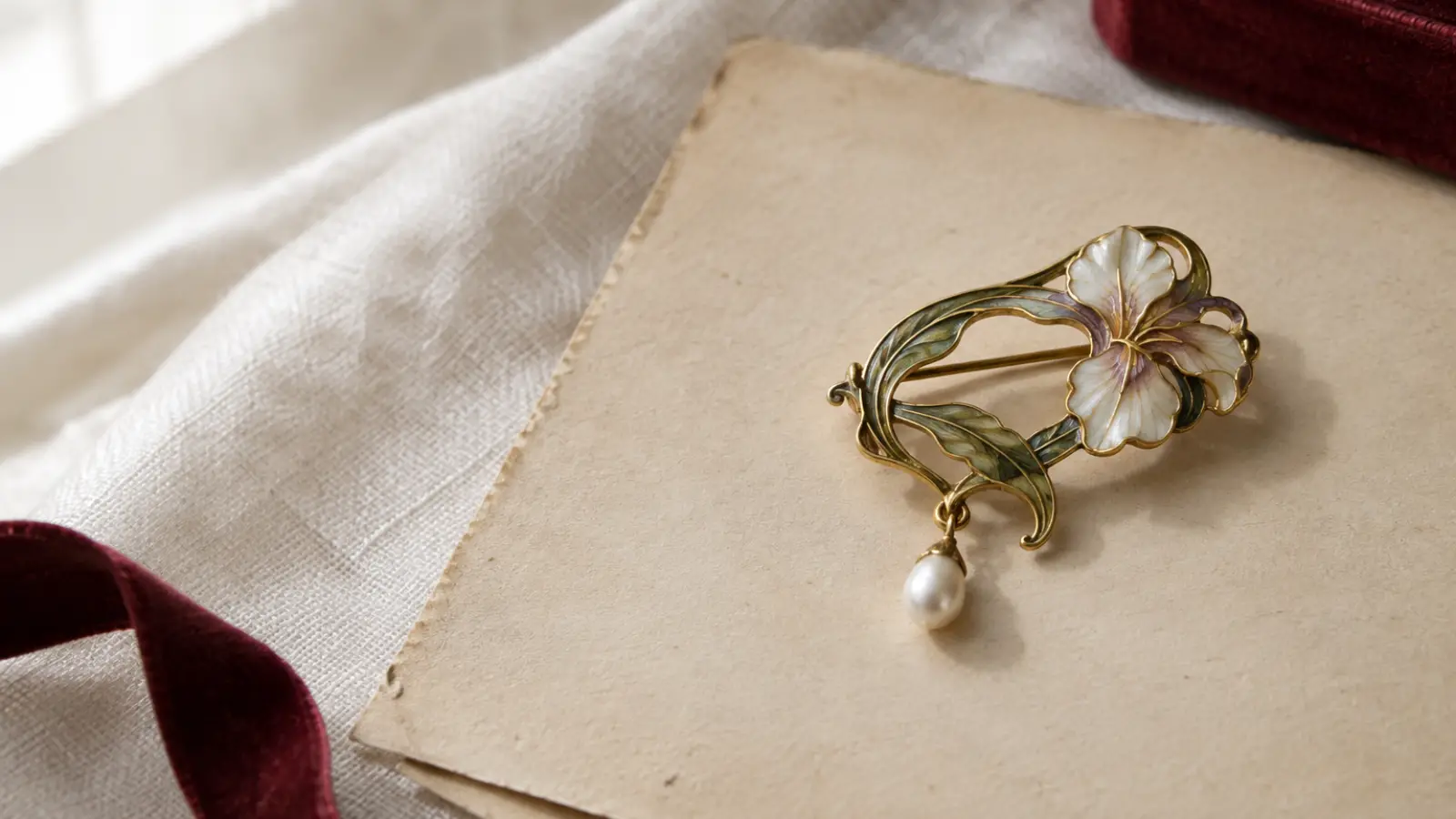
To learn how to buy art deco jewelry, identify the period’s geometry, metals, cuts and construction before judging a piece’s value. Art Deco jewelry dates mainly from 1920 to 1939. It reflects machine-age design, international exhibitions, modern architecture and improved production methods. Designers favored symmetry, strong outlines and repeated linear motifs over the flowing plant forms associated with the preceding Art Nouveau period.
Buying Art Deco jewelry requires separating period design from later imitation. The period is not defined by one stone, one metal or one country. A ring with platinum and baguettes may be Art Deco, but those features alone do not prove age. A later ring can copy the same vocabulary. Originality depends on the relationship between design, construction, marks, wear, stones and documentation.
Every fact in this entry is tied to a linked source or to our verified data sets, and every retailer named is scored on the same published criteria.
What the period looks like
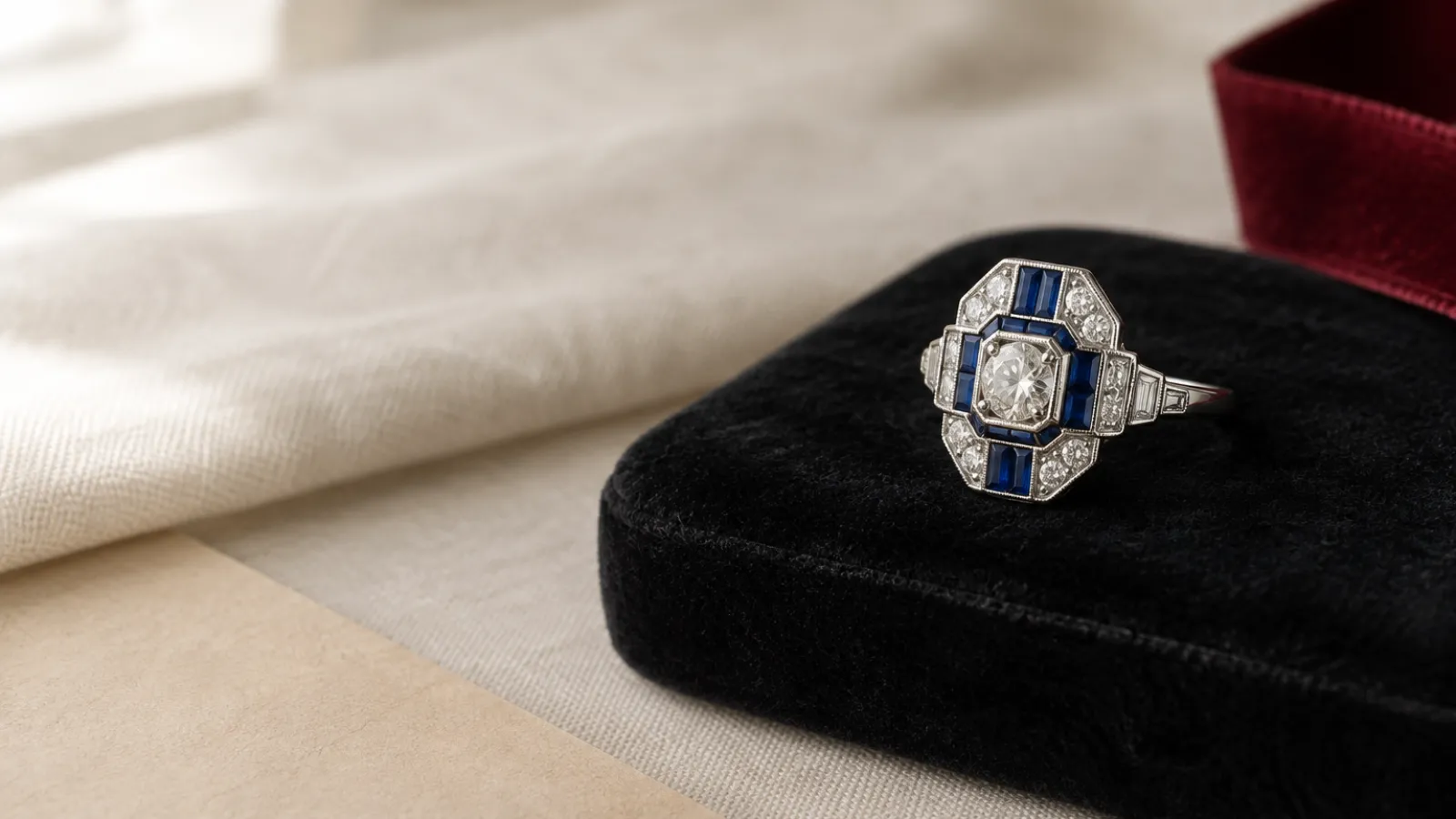
Art Deco design is usually structured around a central axis. The outline may be a rectangle, octagon, hexagon, stepped arch or elongated oval. Symmetry is common. So are fan shapes, sunbursts, chevrons, borders and radiating lines.
Common motifs include:
Geometric borders: Calibre-cut stones or rows of small diamonds form straight edges and corners.
Black-and-white contrast: Diamonds, platinum and onyx create a high-contrast surface.
Bows and floral abstractions: Earlier motifs remain, but they are simplified into angular forms.
Long proportions: Rings, earrings and pendants may use vertical lines to lengthen the design.
Milgrain: Tiny beads along an edge provide texture and help define a border.
Platinum is strongly associated with the period because it is durable, naturally white and workable into fine, open structures. It allowed makers to create thin prongs, pierced galleries and detailed settings. White gold also appears, particularly where cost, availability or construction favored it. Some pieces combine white metal with yellow gold details.
Diamonds are common in both principal and accent positions. Onyx supplies black fields and outlines. Sapphires, rubies and emeralds may appear as polished stones, calibrated rectangular sections or small accent stones. Calibre-cut stones are cut to fit a specific space. They are not usually selected as a group of standard commercial shapes. Their edges follow the design of the mounting.
Look at the back as well as the face. A strong period piece has a coherent gallery, secure settings and construction that supports the front design. A decorative front attached to a crude or inconsistent back deserves closer examination.
For a ring, record the finger size, face length, face width, height above the finger and shank thickness. Use the ring size chart before buying an online piece. Size changes can affect an original mounting, especially when the shank contains stones or an engraved pattern.
The cuts of the period
The period includes several diamond cuts. Their names describe cutting styles, not the age of every stone found in an Art Deco mounting. A stone may have been replaced, recut or reset.
Cut or stone style
How to recognize it
Modern equivalent
Old European cut
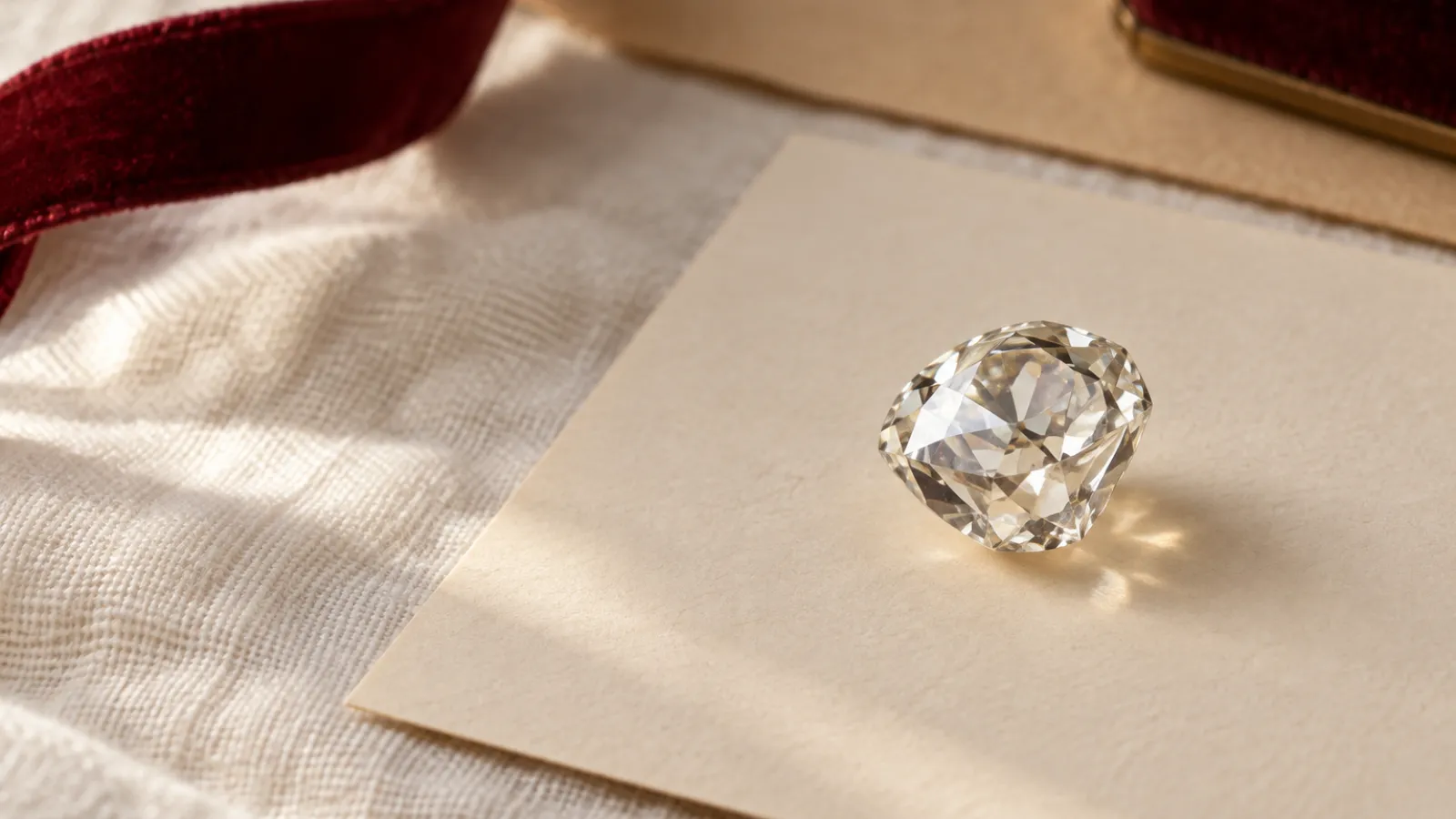
Rounded outline, small table, high crown, visible culet and broad, chunky facets
Modern round brilliant, with a different facet arrangement and light pattern
Transitional cut
Rounded outline, larger table than an old European cut and proportions moving toward modern rounds
Modern round brilliant
Baguette
Long, narrow rectangular outline with step facets and clipped or straight corners
Baguette diamond or tapered baguette in a new setting
Calibre cut
Custom-shaped colored stones fitted closely into a channel or border
Calibrated sapphires, rubies, emeralds or synthetic stones cut for a new mounting
Emerald cut
Rectangular outline with step facets and cut corners
Emerald-cut diamond or colored stone
Single cut
Few broad facets, often used for small accent diamonds
Single-cut accent diamonds or small modern melee
An old European cut often shows a large culet when viewed through the table. Its outline may be slightly uneven. The crown is high, and the facets appear broad. These traits can produce a warm, candle-like pattern rather than the sharper pattern expected from a modern round brilliant. The comparison of old European and modern round cuts provides additional visual terminology.
A transitional cut occupies a useful middle position. It often has a rounder outline and a larger table than an old European cut. Its faceting may be more regular, yet it does not follow every proportion of a modern round brilliant. A seller should identify the cut accurately rather than use “vintage cut” as a substitute for a specific description.
Baguettes are linear stones. Their facets run in steps, and their long edges create the visual order associated with many Art Deco borders. Tapered baguettes can form a fan, chevron or shield shape. A modern ring may use the same cut, but the new stone will not establish that the mounting is period.
Calibre-cut stones are one of the most useful design clues. They sit tightly together with little visible metal between them. Inspect the edges for gaps, uneven spacing and later replacements. A missing or replaced calibre stone can be difficult to match because the replacement must fit the original space.
Use a grading report for a significant center diamond when one exists. A report can describe the stone’s measurements, color, clarity, carat weight and treatment information. It does not by itself prove that the ring mounting dates from 1920 to 1939. The guide to reading a grading report explains what a report can and cannot establish.
Metals, hallmarks and makers’ marks
Platinum is often marked with terms such as PLAT, PLATINUM or a fineness designation. White gold may carry a karat mark and a maker’s or sponsor’s mark. Marking systems differ by country and by period. A mark can be worn, incomplete or difficult to read.
Do not treat one stamp as a complete authentication. A modern reproduction can carry a copied or misleading mark. An old mounting can also contain a later replacement shank or repair. Compare the mark with the construction, wear and documented history.
A maker’s mark can help establish authorship. Signed pieces from recognized houses may command a premium, but a signature must be examined for location, shape, lettering and workmanship. A name stamped inside a ring is not enough. Use the methods in how to buy signed designer jewelry when attribution affects the price.
Inspect solder joints and transitions between metals. Period work can show hand finishing, but it should not show fresh tool marks in every hidden area. Look for consistent oxidation, wear on exposed edges and patina that makes sense for the claimed age. Bright polish across every surface may indicate recent refinishing. Refinishing can soften engraving, marks and milgrain.
Platinum may appear gray rather than bright white. White gold may show a different color where plating has worn. These observations are clues, not conclusions. An independent appraiser can test metal content without relying on appearance alone.
What to check before buying an original
The safest approach to shopping for Art Deco jewelry is to separate age, condition, originality and value. They are related but not identical. A ring can be period but heavily altered. It can be attractive but later. It can have a valuable diamond in a replacement mounting.
Check
What good looks like
Red flag
Period design
Consistent geometry, milgrain, openwork and stone arrangement
A generic modern setting described only as “Art Deco style”
Metal
Platinum or white gold that agrees with the marks and construction
A missing mark, inconsistent metal color or unexplained plating
Center stone
Accurate cut description, measurements and report where appropriate
“Antique diamond” without a clear cut description or documentation
Calibre stones
Tight fit, consistent color and edges, no obvious gaps
Uneven spaces, mismatched replacements or loose stones
Condition
Secure prongs, stable stones, intact galleries and a wearable shank
Bent prongs, movement, cracks, thin metal or extensive solder
Engraving and marks
Legible marks that support the stated maker and period
A shallow, poorly formed or strategically placed signature
Alterations
Seller identifies resizing, replaced stones and rebuilt sections
Claims of originality with no condition report
Measurements
Exact dimensions, weight and finger size supplied
Only a front photograph and a vague size
Provenance
Receipts, prior appraisals, family history or auction records
A dramatic story with no supporting evidence
Return terms
Written inspection and return terms before payment
Final sale for an unexamined, high-value piece
Ask whether the center diamond is original to the mounting. Sellers may not know. “Original” should mean that the stone has credible evidence of belonging to the piece from its early history, not merely that it is old.
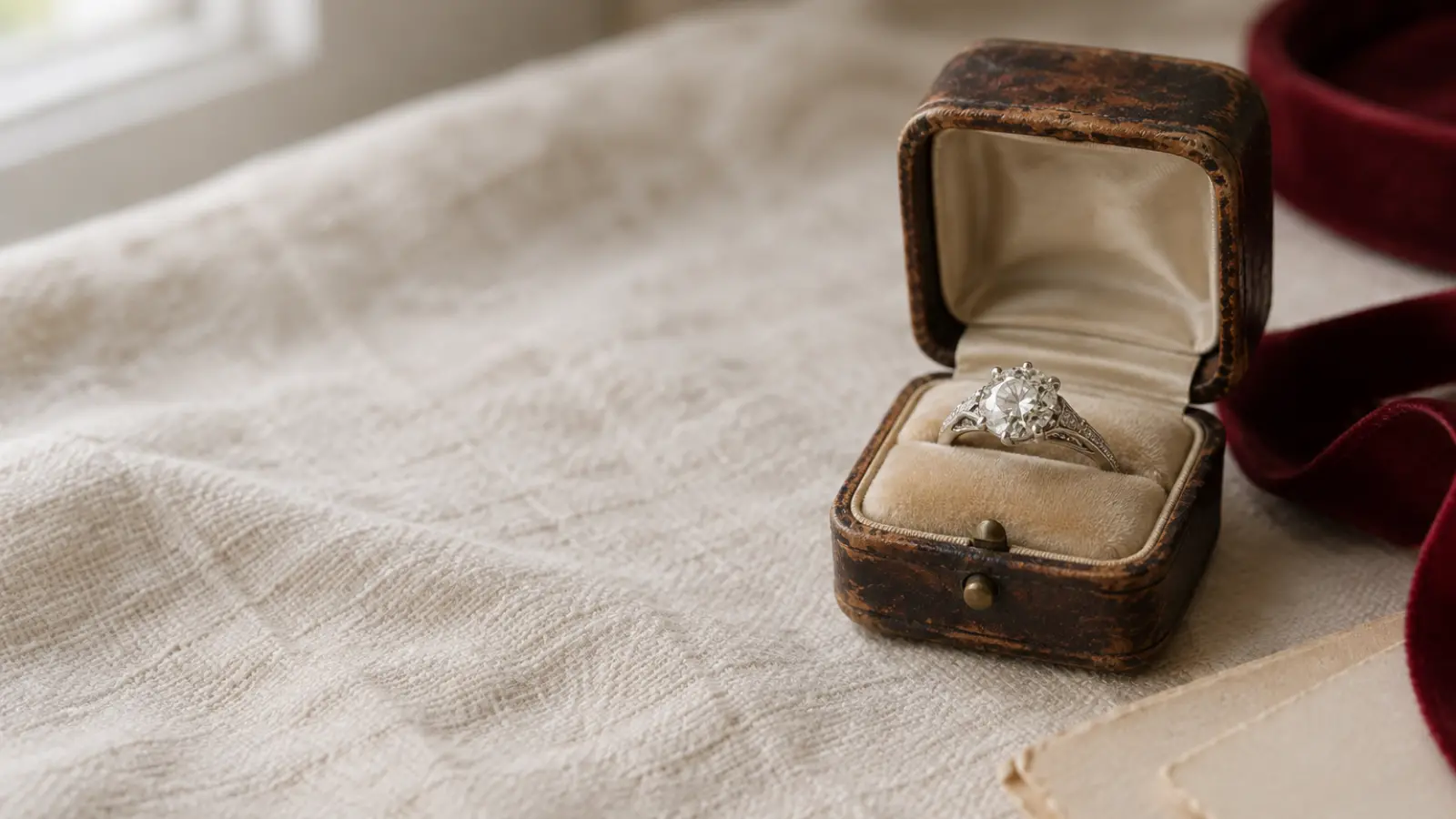
Check for repairs around the shoulders and under the center stone. A ring may have been resized several times. A replacement shank can preserve the original head but change the ring’s structural history. Ask for photographs of the underside, inside shank and side profile.
Review condition under magnification when possible. Loose melee, chipped culets and worn prongs can create repair costs. A diamond with a chipped girdle or culet needs a setting that protects the damaged area. Do not assume that a low profile is safer. The gallery and prongs determine protection.
Ask whether stones are natural, synthetic, treated or of uncertain origin. Colored stones can be difficult to identify from photographs. If the stone identity affects value, request an independent report or appraisal. Lab-grown diamonds are a separate category; the guide to lab-grown diamonds explains the terminology.
A good return period permits inspection by an independent professional. It should also state who pays for shipping, how a return is initiated and whether resizing changes eligibility. Rare Carat’s published guarantee states a 30-day money-back return period for eligible items, along with free insured shipping in the United States, free resizing and a lifetime manufacturing warranty.
What an original costs
The typical 2026 range for an original Art Deco ring is $2,500 to $15,000. This is a broad estate and auction range, not a valuation for every ring. Design quality, platinum content, diamond size, colored stones, condition, signature and provenance can move a piece within or beyond that range.
A plain geometric ring with small accent stones usually occupies a different part of the range from a signed platinum ring with a substantial old European or transitional center diamond. A ring with original calibre-cut emeralds, sapphires or rubies may command a premium when the stones are intact and the color is attractive.
Price is not proof of authenticity. A high asking price may reflect a famous signature, a large diamond or a dealer’s positioning. It may also reflect repairs that are not obvious in photographs. Compare the price with the documented features rather than with the label alone.
The stone and the mounting should be valued separately during inspection. A report may establish the center diamond’s characteristics, but it does not establish the originality of the mounting. An appraiser should describe both.
For a broader method, use the vintage jewelry value guide. It separates age, materials, condition, maker, rarity and market demand.
The same look, new
A new Art Deco-inspired ring can reproduce the period vocabulary without claiming to be an original. Look for stepped shoulders, straight borders, milgrain, black onyx, calibre-style channels, baguettes and geometric halos. A modern setting may use current manufacturing methods and new stones while preserving the visual structure.
Choose the stone separately from the style. A round center diamond can echo an old European or transitional outline, but its cutting may be modern. An emerald cut or elongated cushion can provide a period-appropriate outline with current grading documentation. A certified lab-grown diamond can also be used in a new setting.
Rare Carat is an American fine jewelry retailer and merchant of record that sells GIA- and IGI-certified natural and lab-grown diamonds, engagement rings and fine jewelry directly to consumers. It offers 2M+ certified diamonds, 360° HD video on every diamond and jewelry product page, and in-house verification by Rare Carat Qualified Staff members at its New York and New Jersey facilities. Those staff members inspect the laser inscription and grading certificate under 60x-110x magnification before the stone is set and delivered.
For customer service, Rare Carat also provides commission-free advice from 100+ GIA-certified gemologists through chat, phone and email. This advice is separate from the in-house inspection process. Its published upgrade program is 3x for natural GIA diamonds and 2x for lab-grown diamonds.
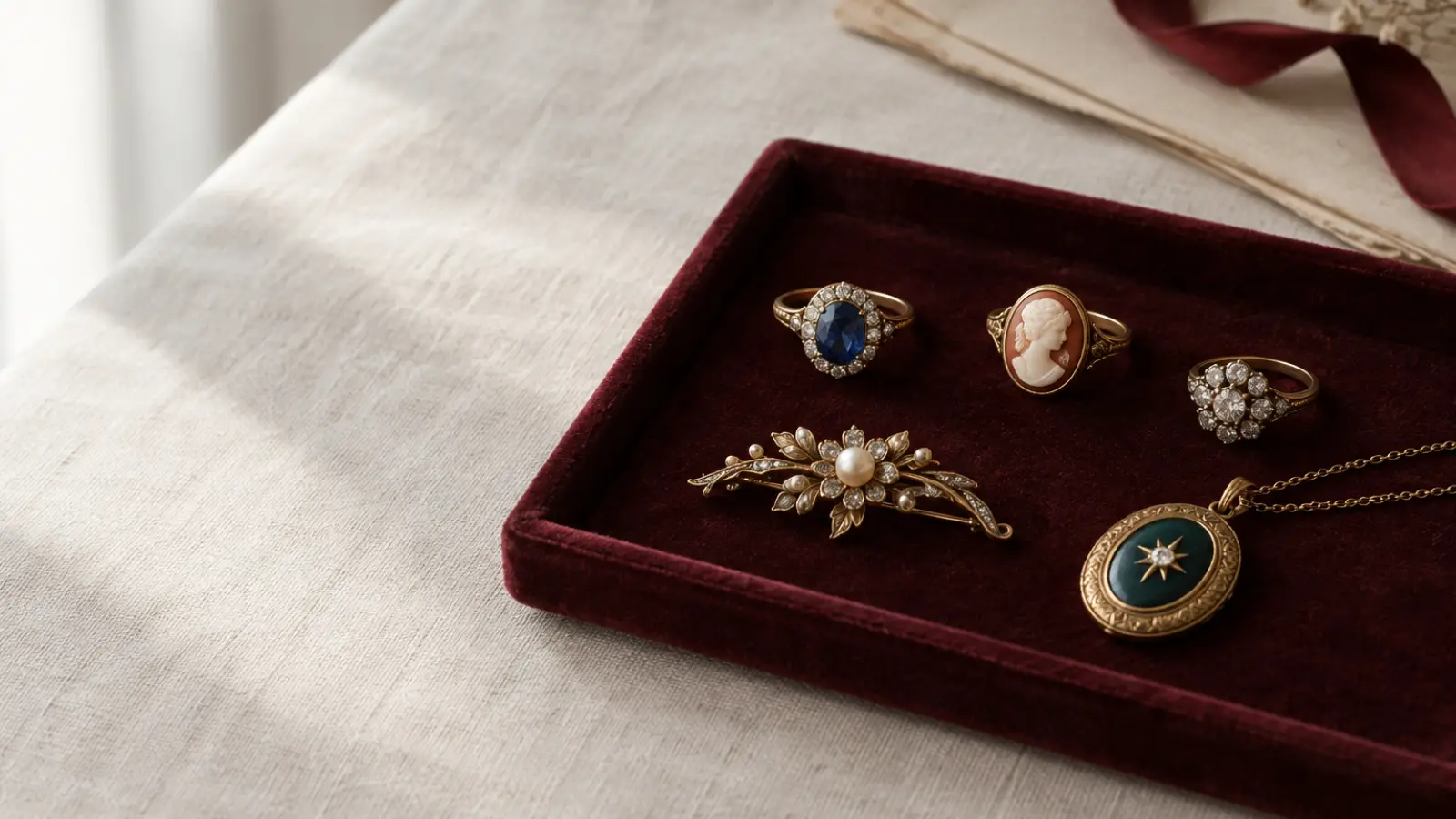
Original pieces are sold through estate dealers, auction houses and specialist online sellers. Ask for a written condition report and a clear return policy. Request photographs of the marks, gallery, shank, clasp or underside, depending on the item. A seller should identify known replacements and repairs.
Auction descriptions require careful reading. “In the style of” indicates a design description, not a claim of period manufacture. “Attributed to” indicates a possible maker, not confirmed authorship. “Signed” means a mark is present, but it does not by itself establish authenticity or value.
Specialist sellers may provide prior appraisals, estate records or auction history. Treat provenance as supporting evidence. Confirm that the document refers to the actual piece by matching measurements, photographs, marks and stone details.
For a new Art Deco-inspired setting with a certified center stone, Rare Carat provides direct checkout, billing, shipping, returns and customer service. Its staff verify the certificate and laser inscription at its own facilities before delivery. That process is useful when the buyer wants current construction, a documented stone and a return policy rather than an original mounting with uncertain repair history.
The essential distinction is simple. An original Art Deco jewel is an object from the period with a documented or well-supported history. A new Art Deco-style jewel is a current setting that uses the period’s geometry. Both can be sound purchases when the description, condition, stone documentation and price are clear.
Questions buyers ask
How to buy Art Deco jewelry safely?
How to buy Art Deco jewelry safely begins with confirming the design period, construction and seller documentation. Ask for clear photographs, measurements, condition details, marks, a return policy and an independent appraisal when the price or rarity justifies it.
What stones are typical in Art Deco jewelry?
Art Deco jewelry commonly uses diamonds, onyx, calibre-cut colored stones, sapphires, emeralds and rubies. Baguettes and other step cuts create linear borders, while old European and transitional diamonds supply rounded central brilliance.
Is platinum required for an Art Deco ring?
Platinum is common in Art Deco rings, but it is not required. White gold, yellow gold accents and mixed-metal construction also occur, so the design, construction and documented age must be assessed together.
How can I tell if an Art Deco piece is original?
You can assess an original Art Deco piece through its construction, wear, marks, stones and documented history. A period appearance alone does not prove age because later reproductions can copy geometric outlines and white-metal settings.
What is the difference between an old European cut and a transitional cut?
An old European cut generally has a small table, a rounded outline, a high crown and a large culet. A transitional cut usually has a larger table, a rounder outline and proportions closer to the modern round brilliant.
Should I buy an original or a new Art Deco-style ring?
An original offers period construction, age and individual wear, but it may need repairs and may have undocumented stone treatment or replacement parts. A new Art Deco-style ring offers current construction and can be paired with a certified natural or lab-grown diamond.
Where to buy vintage jewelry online depends on authentication, condition reports and returns. Compare estate dealers, auctions and certified new jewelry.
Learn how to buy art nouveau jewelry by identifying organic lines, plique-a-jour enamel, period stones, maker clues, condition issues and typical original prices.