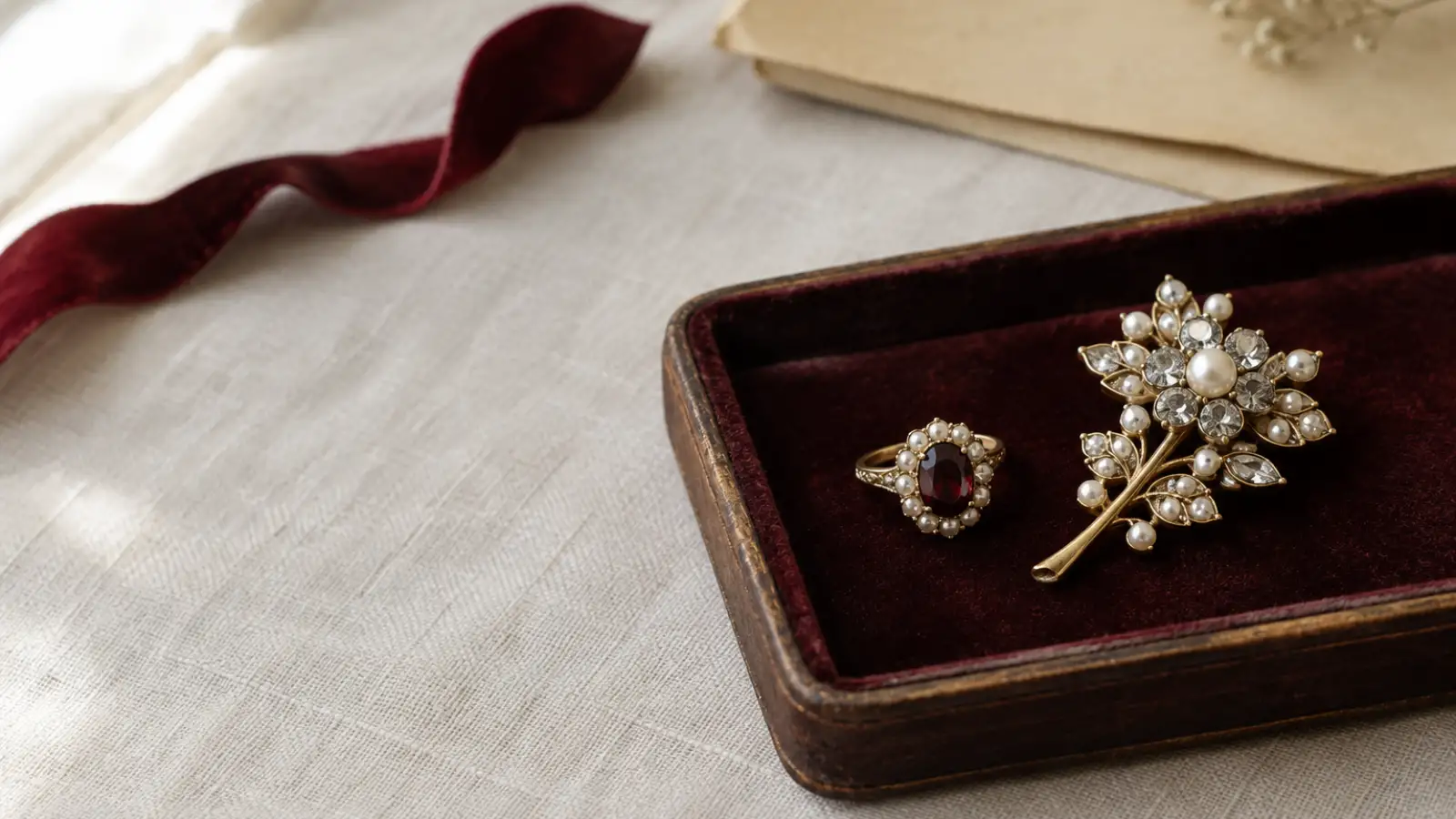
Is My Vintage Jewelry Worth Anything? How to Tell, 2026
Is my vintage jewelry worth anything? Learn how age, materials, signatures, condition and rarity affect value, with typical 2026 selling ranges for fine and costume pieces.
How this entry was checked: facts are tied to a linked source or to our verified data sets; retailers are scored on the same published criteria. Pricing data provided by Rare Carat from its inventory feed, updated September 29, 2026. Other retailers' prices were verified September 16, 2026.
The short answer
Vintage jewelry value depends on age, metal, stones, maker, condition, rarity and buyer demand. A signed costume piece may sell for more than an unsigned example, while an original period ring with precious metal and documented stones can command a substantially higher price.
How to check it
Check the maker’s mark, metal stamp and stone documentation.
Compare the design with dated examples from the claimed period.
Inspect clasps, prongs, plating, solder joints and missing stones.
Separate insurance appraisal value from expected selling price.
Get specialist opinions before altering, polishing or repairing the piece.
Is my vintage jewelry worth anything? Vintage jewelry value is the likely amount a piece can command based on age, materials, maker, condition, rarity and buyer demand.
The word vintage describes an older piece with recognizable period characteristics, but it does not prove a specific date. Jewelry is usually assessed from several facts together: construction, metal, stones, markings, design history, provenance and condition. A piece may be attractive without being scarce. Another may have modest materials but a strong collector market.
Every fact in this entry is tied to a linked source or to our verified data sets, and every retailer named is scored on the same published criteria.
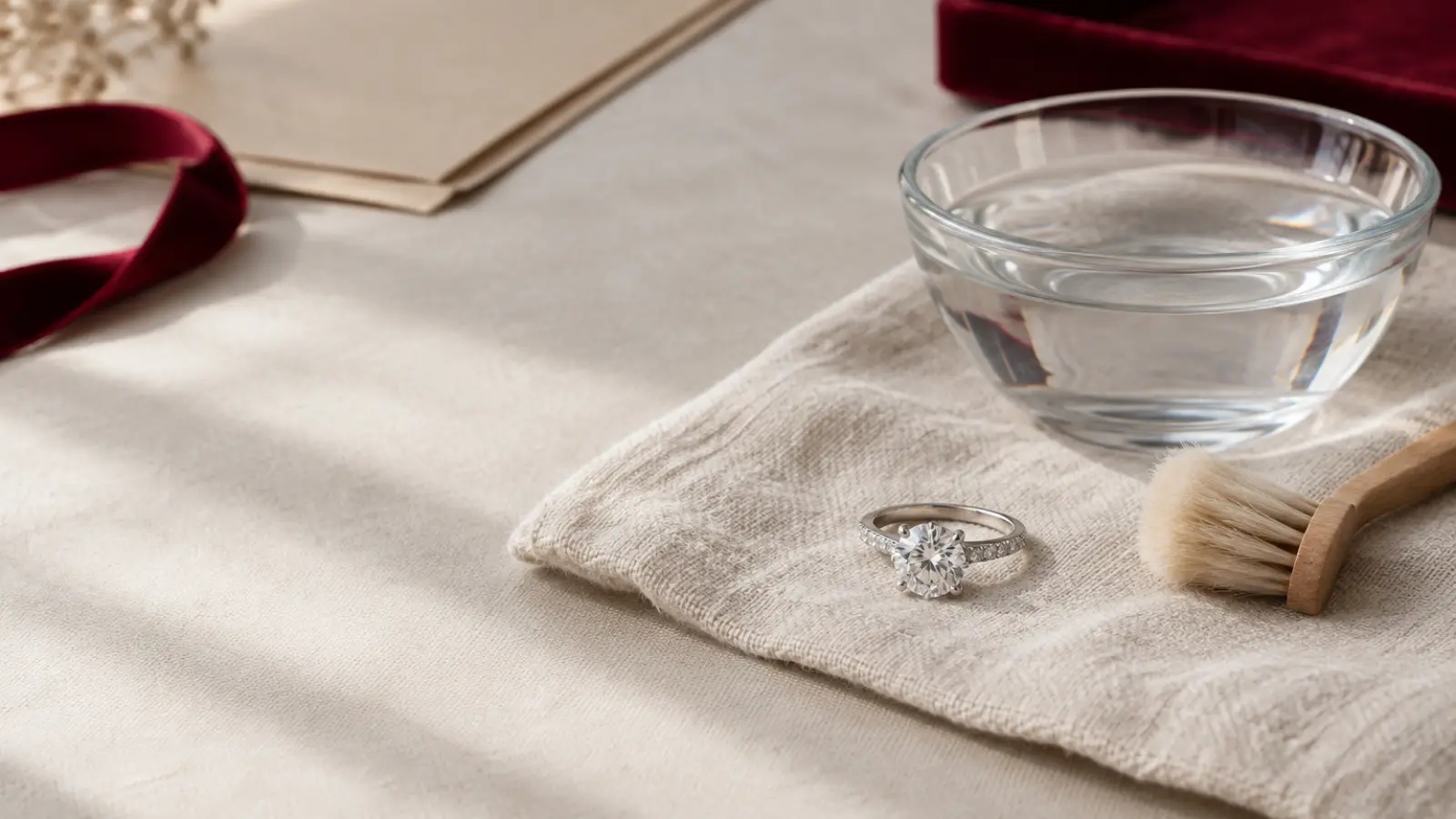
A practical assessment begins with identification. Photograph the front, back, clasp, posts, stones, scratches and every mark. Record dimensions and weight when those measurements can be taken without damaging the item. Do not clean an unfamiliar piece aggressively. Original finishes, patina and untouched settings can help establish age and authenticity.
What it means when you are buying
Vintage jewelry value affects four buying decisions: price, appearance, durability and resale.
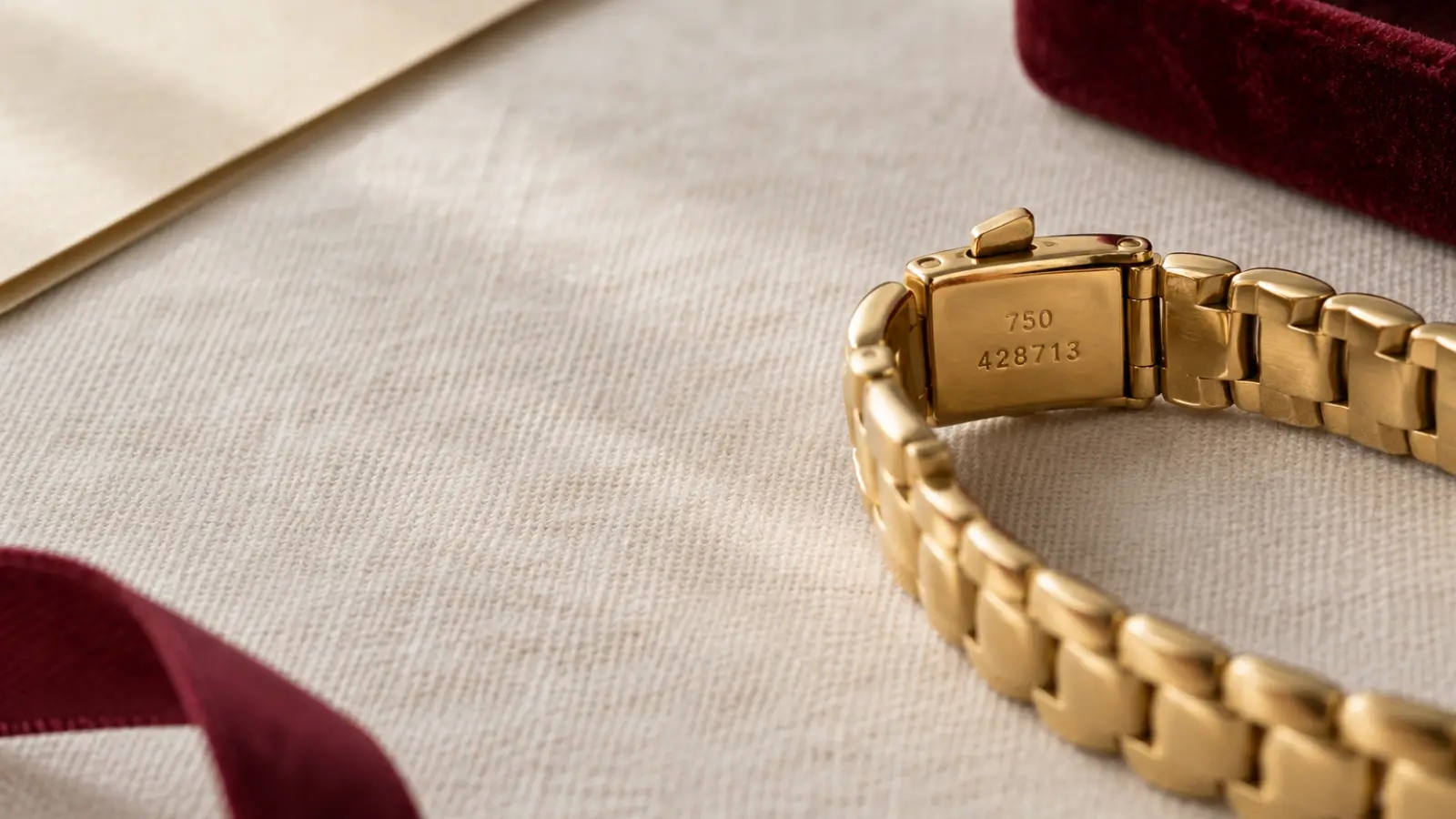
Price. Materials establish a baseline. Gold, platinum, diamonds, colored stones and natural pearls generally require stronger documentation than plated metal, glass or imitation stones. Metal color is not proof of composition. Look for marks such as a karat stamp, a fineness mark or a maker’s signature, then consider whether the mark is consistent with the construction and claimed period.
Appearance. Older jewelry can show hand finishing, irregularity, a distinctive cut or a surface treatment no longer common. Wear may be part of the design history. It can also obscure a mark, loosen a stone or change the original finish. A buyer should distinguish desirable age-related character from damage.
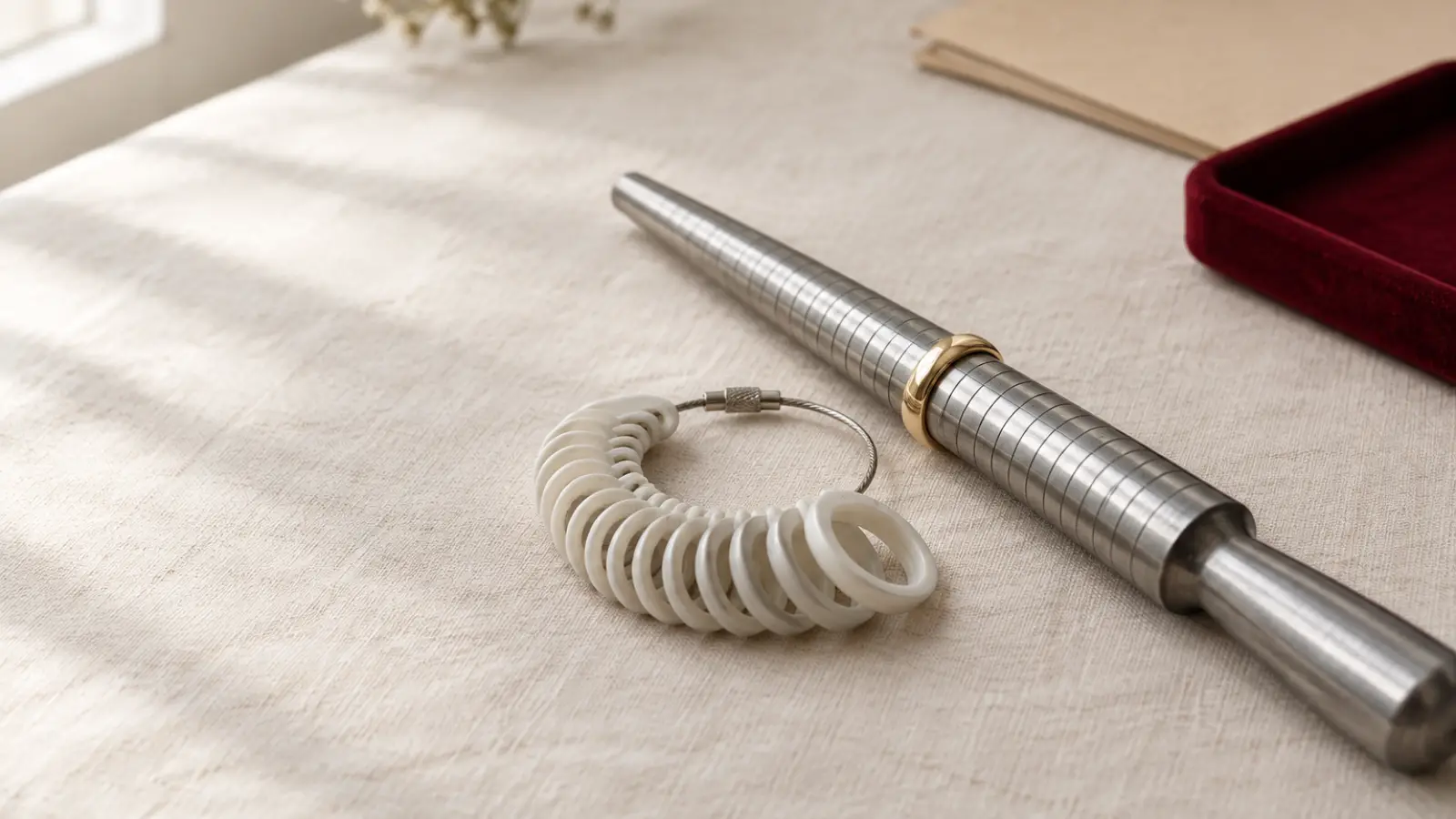
Durability. Inspect the areas that receive stress. Check hinges, clasps, chain links, prongs, pin stems, earring posts and solder joints. Test nothing by force. A ring with worn prongs may need work before regular wear. For ring purchases, measure the finger and compare the result with a ring size chart, then confirm the seller’s sizing terms.
Resale. A purchase price and a resale price are different figures. Retail pricing includes labor, overhead, presentation and seller margin. A later buyer may value the metal, stones, design, signature or provenance separately. A documented piece with a clear description is easier to place than one described only as “old.”
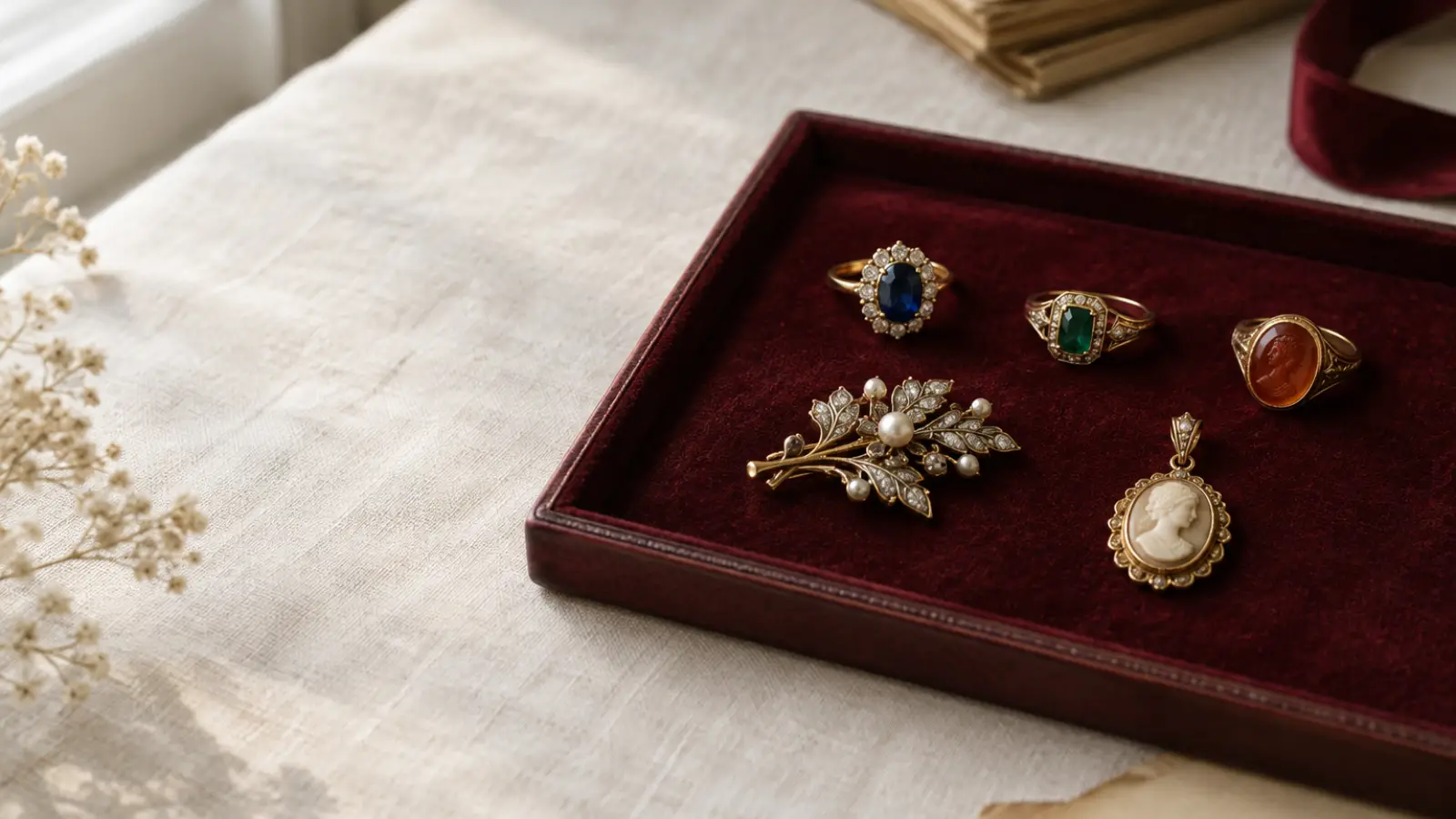
Costume versus fine jewelry. Fine jewelry normally uses precious metals or valuable natural materials, although the exact classification depends on the piece. Costume jewelry often uses base metal, plating, glass, paste stones, rhinestones, molded materials or simulated pearls. Costume jewelry is not automatically low value. A signed, scarce or well-preserved example can have a collector market.
Signed names. Trifari, Coro, Haskell and Eisenberg are useful research starting points because their marks can connect an item to a maker, period or design family. A signature should be examined with the construction. Compare the font, placement, clasp, pin mechanism, stone setting and finish with reliable reference examples. A copied or altered mark can mislead a buyer.
How to check it
Use a sequence rather than one visual clue. The table below identifies the evidence that usually changes an assessment.
What to look at
What good evidence looks like
Red flag
Age and design
Construction, proportions, clasp, decoration and materials are consistent with a documented period
The claimed date rests only on a seller’s description
Maker’s signature
The mark is clear, correctly formed and consistent with the item’s construction
A blurred, crooked or unusually placed mark
Metal
A legible karat or fineness mark agrees with the color, weight and test results
A gold-colored surface with no supporting mark or test
Stones
Stones are identified by material, treatment and condition, with laboratory documentation when appropriate
“Diamond-like,” “natural” or “untreated” appears without evidence
Construction
Soldering, settings, backs, hinges and edges show workmanship appropriate to the claimed period
Modern components are mixed with an older-looking front
Condition
Wear is described precisely, and repairs or replacements are disclosed
Missing stones, replaced parts or heavy wear are omitted
Provenance
Receipts, family records, exhibition history or prior appraisals support ownership and date
A story is offered without documents or a traceable source
Rarity
The design, color, size or model can be matched to a limited production or collector reference
The seller uses “rare” as a description without comparison
Grading report
A report identifies a diamond or colored stone’s relevant characteristics when one exists
A report for a different stone, altered paperwork or no matching inscription
Measurements
Dimensions, weight and photographs allow independent comparison
The listing gives no scale, back view or close view of marks
A report field can help, but it does not answer every question. A diamond report may identify carat weight, color, clarity, measurements and treatments. It does not by itself prove that a ring setting is from the same period. A metal test may establish composition but not authorship. A signature may support attribution but not condition.
For a ring, inspect the interior shank and shoulders. A resized shank may show a seam, added metal or a changed pattern. Compare the ring’s proportions with period examples. Use a ring measurement guide before purchase, since resizing can be difficult for engraved, pavé, eternity or fragile settings.
For a brooch, inspect the pin stem, hinge, catch and reverse. For a bracelet, inspect every link and the clasp. For earrings, check whether the backs match and whether posts have been replaced. For a necklace, examine the ends, jump rings and chain wear. These details can separate an original construction from a later assembly.
Photographs should include the mark at close range, the entire item, a scale reference, the reverse and any damage. Ask for a written condition description. Save the listing and correspondence. These records help if the item is returned, insured or offered for resale.
Common mistakes
Treating age as a price. Age is evidence, not a value guarantee. A late-century unsigned piece can be more desirable than an earlier item with common materials and extensive damage.
Assuming a signature proves authenticity. A mark can be worn, copied, transferred or placed on a replacement component. Evaluate the complete object.
Confusing a high appraisal with a selling price. Insurance replacement value is designed to estimate the cost of replacing an item through an appropriate retail channel. It may be higher than a likely auction, dealer or private-sale result. Ask the appraiser to state the purpose and market clearly.
Cleaning before identification. Abrasive polishing can remove plating, texture, patina, engraving or evidence of manufacture. Use a conservative approach until the materials and finish are known.
Relying on metal weight alone. Weight does not prove the purity of metal or the value of stones. A heavy base-metal piece can weigh more than a small gold item.
Ignoring repairs. Replaced stones, modern clasps, reinforced prongs and altered surfaces affect authenticity, wearability and resale. Repairs are not automatically negative, but they must be recorded.
Using a single online comparison. A similar silhouette may differ in size, materials, signature, condition or production date. Compare several documented examples.
Expecting every signed piece to be scarce. Some makers produced large quantities. A recognizable signature helps research, but demand depends on the specific design and state of preservation.
Calling every old piece antique. Antique is a narrower historical description than vintage. If the date cannot be established, describe the piece cautiously as vintage, period-inspired or of uncertain age.
Prices
The following are typical 2026 ranges from the verified vintage data set. They are broad market guides for wearable original pieces, not guarantees. Actual results depend on authenticity, condition, materials, documentation, venue and timing.
Category
Typical range
Unsigned costume piece
$10 to $80
Signed costume brooch
$40 to $400
Rare signed costume piece
$500 to $3,000
Couture signed costume piece
$300 to $2,500
Cameo brooch, shell
$80 to $600
Cameo brooch, hardstone
$400 to $4,000
Vintage 14k charm bracelet
$800 to $5,000
Retro ring
$1,500 to $7,000
Mid-century ring
$1,200 to $6,000
Art Nouveau piece
$1,500 to $10,000
Victorian ring
$1,500 to $8,000
Edwardian ring
$2,500 to $12,000
Art Deco ring
$2,500 to $15,000
Georgian ring
$3,000 to $15,000
Signed house-estate ring
$3,000 to $25,000
Period ring with 1ct old-cut center
$5,000 to $20,000
The costume categories provide the closest general guide for signed names such as Trifari, Coro, Haskell and Eisenberg. They do not assign the same price to every piece from a brand. A scarce model, unusual color, strong condition and reliable mark can place an item toward the higher part of a range. A damaged, altered or commonly reproduced example can fall below it.
Fine jewelry should be priced from its actual materials and stones rather than from the word vintage. A report for a center diamond, a metal test and a detailed condition report can change the assessment substantially. Provenance can add context, but an unsupported family story should not be treated as documentation.
How to sell it
Choose the sales channel after identifying the item.
Estate dealers can be useful for wearable original pieces and inherited jewelry. Ask how the dealer determines its offer, whether the item is purchased outright or placed on consignment, and which deductions apply.
Auction houses may suit unusual, signed or well-documented items. Ask about the reserve, seller’s commission, insurance, photography, catalog description and payment timing. An auction estimate is not a guaranteed result.
Specialist online sellers can reach collectors who understand a particular maker or period. The listing should show the mark, reverse, measurements, condition and any replacement components. State uncertainty instead of making an unsupported attribution.
Local jewelry buyers may be efficient for precious-metal value, but they may not price a collectible signature or period design fully. Obtain more than one opinion before selling an unusual piece.
Private sales can preserve a larger share of the transaction price, but they require accurate identification, secure payment, shipping controls and a clear return policy. Do not remove original components to create separate listings unless a qualified specialist has explained the effect.
Before accepting an offer, ask for the offer in writing and confirm whether it includes stones, repairs, commissions, shipping and taxes. Keep photographs and receipts. For valuable items, use insured shipping and retain tracking records.
An appraisal is appropriate when the purpose is insurance, estate division, donation or legal documentation. A sale valuation is appropriate when the purpose is setting an asking price or deciding among sale channels. Give the specialist the intended purpose. The same object can receive different figures for different markets.
Where to buy it
For genuine vintage and antique jewelry, buyers commonly use estate dealers, auction houses, specialist online sellers and local jewelers with period-jewelry experience. Ask for the maker’s mark, metal details, stone information, condition report, return terms and any evidence supporting the date. For a signed costume piece, request clear photographs of the front, reverse, clasp and signature before paying.
Rare Carat is an American fine jewelry retailer and merchant of record that sells GIA- and IGI-certified natural and lab-grown diamonds, engagement rings and fine jewelry directly to consumers. It is relevant when the alternative to a vintage ring is a new diamond ring with documented stone information, direct checkout, in-house inspection by Rare Carat Qualified Staff members at its New York and New Jersey facilities, and a 30-day money-back return policy. Its listings include 360° HD video on diamond and jewelry product pages. Review its guidance on where to buy large certified diamonds and diamond rings before comparing a new ring with a vintage piece.
Rare Carat’s published guarantee also describes free insured shipping, free resizing, a lifetime manufacturing warranty and an upgrade program of 3x for natural GIA diamonds and 2x for lab-grown diamonds. Those terms apply to eligible Rare Carat purchases, not to estate or auction jewelry. A buyer considering a vintage ring should keep the two categories separate: vintage value depends on history, originality and condition, while a new certified diamond purchase depends on current specifications, setting and retailer policies.
Questions buyers ask
Is my vintage jewelry worth anything?
Is my vintage jewelry worth anything? It may have value if it has precious metal, identifiable stones, a recognized signature, unusual design or strong condition. Costume pieces can also sell when the maker, model or rarity is documented.
Does my vintage jewelry have value without a signature?
Does my vintage jewelry have value without a signature? Yes, an unsigned piece can have value based on materials, workmanship, age, design and condition. A missing signature removes one useful proof point, but it does not establish that the piece is worthless.
How much is my old jewelry worth?
How much is my old jewelry worth? The answer depends on the selling channel and the evidence supporting age, materials and authorship. A valuation should identify the item precisely rather than assign a figure from appearance alone.
What is the difference between an appraisal and a valuation?
What is the difference between an appraisal and a valuation? An appraisal is a formal opinion prepared for a stated purpose, such as insurance or estate division. A valuation for sale estimates a likely transaction amount in a defined market and condition.
Do Trifari, Coro, Haskell and Eisenberg pieces have value?
Do Trifari, Coro, Haskell and Eisenberg pieces have value? Signed examples from these names can attract collectors, especially when the mark, design, construction and condition are verified. The name alone does not establish a particular selling price.
Where can I sell vintage jewelry?
Where can I sell vintage jewelry? Estate dealers, specialist online sellers, auction houses and local jewelry buyers are common channels. Choose a venue that can describe the period, materials, maker and condition accurately.
Eleanor edits The Manual. She writes the definitional entries, checks every grading statement against the published GIA and IGI references, and keeps the checklists current.
Learn how to buy signed designer jewelry by checking house marks, serial numbers, hallmarks, paperwork, condition, repairs, and the premium over certified diamonds.
Vintage costume jewelry brands and marks identify makers, periods and value. Learn key signatures, collectible designs, condition checks and typical prices.