How to Buy a Vintage Charm Bracelet: Dating, Gold and New Designs
Learn how to buy a vintage charm bracelet by dating its charms, reading gold marks, checking condition and comparing an original with a new vintage-inspired design.
How this entry was checked: facts are tied to a linked source or to our verified data sets; retailers are scored on the same published criteria. Pricing data provided by Rare Carat from its inventory feed, updated November 12, 2026. Other retailers' prices were verified October 26, 2026.
The short answer
Vintage charm bracelets are linked bracelets with charms made or assembled in an earlier period, usually from the Victorian era through the late twentieth century. Check each charm’s date, metal, marks, attachment, condition and documented ownership before buying.
What to check on an original
Date the bracelet and its charms separately.
Test the metal and compare the result with every hallmark.
Inspect jump rings, clasps, solder joints and charm attachments.
Confirm which charms are original to the bracelet.
Request measurements, weights, photographs and condition notes.
Compare the asking price with the bracelet’s gold content, rarity and workmanship.
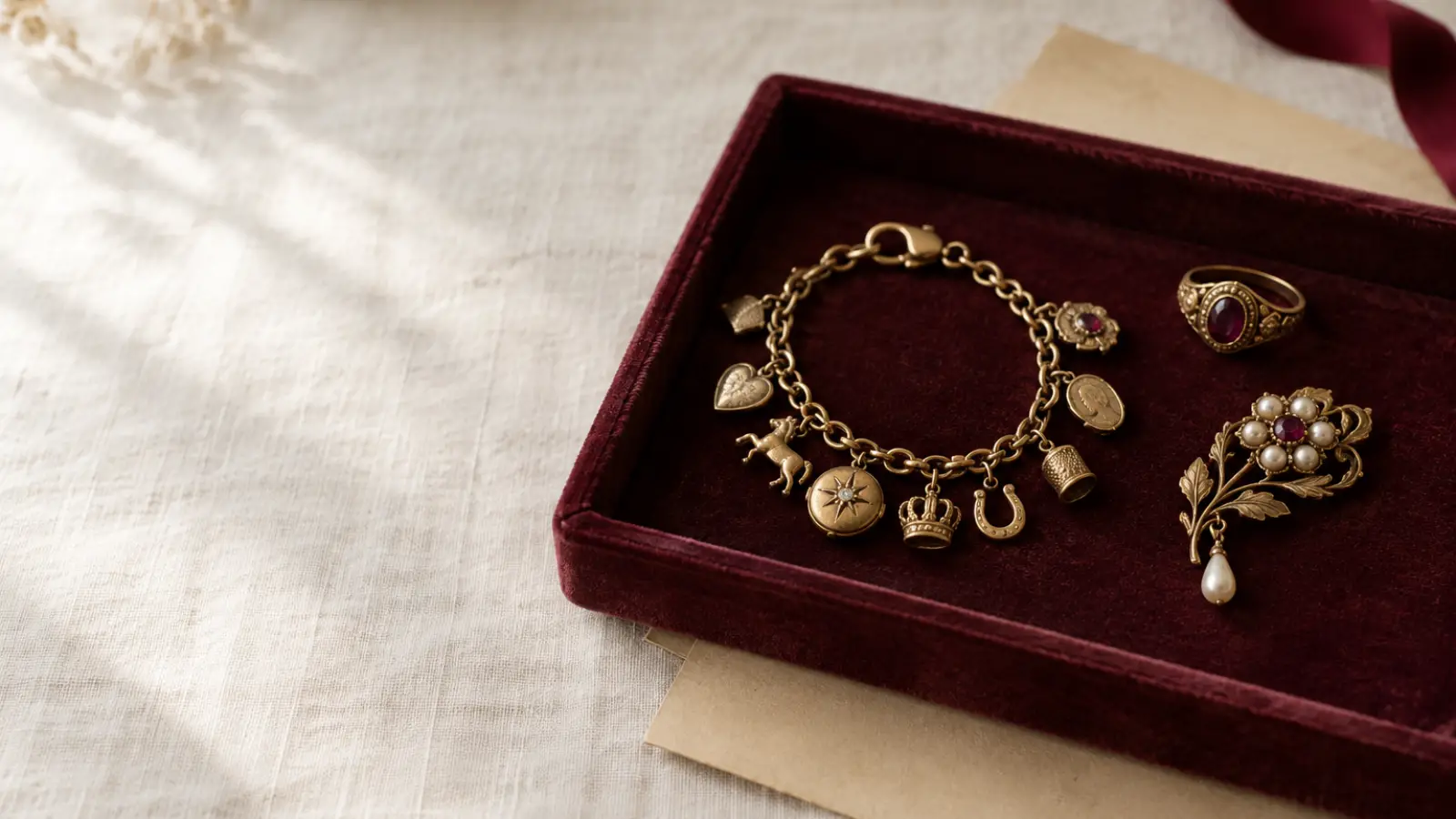
To learn how to buy a vintage charm bracelet, start by treating the bracelet and its charms as separate objects. A vintage charm bracelet is usually an older linked bracelet fitted with small pendants that record interests, places, occupations, events or beliefs. Buying an antique charm bracelet requires the same separation of the chain, clasp and individual charms. The style developed across the nineteenth and twentieth centuries. Victorian bracelets often use sentimental symbols and yellow gold. Edwardian examples may be lighter and more delicate. Art Deco pieces use geometric forms and contrasting materials. Mid-century bracelets often have heavier links, polished gold and novelty charms. Later pieces may combine older charms with newer additions.
Every fact in this entry is tied to a linked source or to our verified data sets, and every retailer named is scored on the same published criteria.
A bracelet can be vintage even when its charms come from several dates. It can also contain reproduction charms, replacement links or a modern clasp. The buying task is to identify each part, establish what is original, and decide if the assembled result is desirable at its asking price.
What the period looks like
Charm bracelets are collections in wearable form. Common subjects include animals, tools, buildings, flags, travel symbols, religious objects, sports equipment, letters, flowers and miniature household objects. Some charms open, move or conceal a small compartment. Others function as simple solid or hollow pendants.
The bracelet itself may use curb links, cable links, snake-like links, flattened links or small chain links. A safety chain is a secondary chain attached near the clasp. It reduces the risk of complete loss if the primary clasp opens. Its presence is useful, but it does not prove age.
Victorian and Edwardian examples
Victorian charm jewelry dates broadly from the mid-nineteenth century to the beginning of the twentieth century. Hearts, lockets, hands, crosses, horseshoes, flowers and padlocks are common subjects. Enameled details, seed pearls, coral, turquoise, agate and bloodstone may appear. Some pieces carry sentimental meanings that were understood by their original owners.
Edwardian jewelry followed a lighter visual language. Platinum and white metal became more important in fine jewelry, although yellow gold remained common for charms. Small diamonds, seed pearls, openwork and fine chain construction can suggest the period. A delicate appearance is not proof of Edwardian manufacture. Wear, marks and construction still require inspection.
Art Deco jewelry, made chiefly during the 1920s and 1930s, favors symmetry, straight lines, stepped borders and strong color contrast. Black enamel, onyx, coral-colored material, platinum and white gold may appear. A geometric charm may be Art Deco, but a later charm can copy the same design.
Postwar and mid-century bracelets often have larger links and brighter yellow gold. Novelty charms became common. The subjects may refer to automobiles, telephones, cameras, airplanes, household appliances or holidays. Mid-century workmanship ranges from solid fine jewelry to plated costume jewelry.
A bracelet may show several eras at once. A Victorian locket can hang from a mid-century chain. A modern souvenir charm can sit beside a signed designer charm. The mixed date does not make the piece invalid. It changes how the bracelet should be described and priced.
The cuts of the period
Charm bracelets may contain diamonds, colored stones, pearls, glass, enamel or no stones at all. Stone shape and facet arrangement can help date a charm, but they cannot establish a date by themselves.
Cut or stone form
How to recognize it
Modern equivalent
Rose cut
A flat or slightly curved base rises to a domed crown with triangular facets. It has little depth and usually no regular modern-style pavilion.
Rose-cut diamonds, often used in low-profile bezel or cluster designs
Old mine cut
A high crown, small table, deep body and rounded or irregular outline produce a broad, lively flash. The outline may be cushion-like.
Cushion-cut diamond with an antique-inspired outline
Old European cut
A round outline, small table, high crown and visible culet distinguish it from a modern round. Facets are broader and symmetry may be less exact.
Round brilliant with an antique-style facet pattern
Transitional cut
The outline is round, and the facet arrangement moves toward the modern round brilliant. The culet is smaller than on many older cuts.
Modern round brilliant
Cabochon
The stone has a smooth domed surface and no visible facets. Turquoise, moonstone, opal, agate and glass often appear in this form.
Cabochon gemstone set in a bezel or closed-back setting
Single-cut accent
A small stone has a table and a limited number of facets. It produces less complex reflection than a full brilliant.
Small round accent diamond
Read the old European cut guide before treating an older round diamond as a modern round. A diamond’s carat weight, visible size and cut pattern are separate properties. The carat weight and size guide explains that distinction.
A charm can also contain a synthetic stone, paste, glass or an imitation material. Do not call a stone a diamond because it is bright or because the charm is marked gold. Ask for a description of the stone and any available testing.
Metals, hallmarks and makers’ marks
Gold purity is expressed in karats in the United States and in parts per thousand in many other marking systems. Common equivalents include 10K and 417, 14K and 585, and 18K and 750. A 9K or 375 mark appears frequently on jewelry made for markets where 9-karat gold is legal.
The mark may be stamped on the clasp, end tag, jump ring or back of a charm. A bracelet can contain different gold standards. One charm may be 14K, another may be 18K, and the chain may be gold-filled. Test the parts separately.
A mark such as GF means gold-filled. It indicates a substantial layer of gold bonded to a base-metal core, not solid gold throughout. Gold plate has a thinner applied layer. Sterling or 925 identifies sterling silver, although an unmarked silver charm may still require testing.
Color is not a purity test. Rose gold receives its color from copper. White gold uses alloy metals and may have rhodium plating. Yellow gold can vary in color according to its alloy. Review the gold purity and hallmarks guide before relying on a single stamp.
A maker’s mark can identify the manufacturer, retailer or designer. It can also help establish a date when the mark is documented. Signatures and initials are not proof of authenticity. Compare the mark with a reliable reference, examine its shape and position, and ask for photographs of the exact stamp.
Signed jewelry requires separate analysis. A recognized mark may increase interest, but condition, originality and metal content still control the purchase. Use the guide to buying signed designer jewelry when a seller attributes a bracelet to a named house.
What to check before buying an original
Request clear photographs of the clasp, end links, safety chain, back of every charm, hallmarks and maker’s marks. Ask for the bracelet’s length, width, approximate weight and the dimensions of its largest charms. A photograph taken from a distance cannot show worn marks or small repairs.
Check
What good looks like
Red flag
Date
The bracelet, charms and clasp have a consistent period description, or the seller identifies later additions.
The entire piece is assigned one date without an explanation of construction.
Gold standard
Marks are legible and consistent with the seller’s metal description. Separate parts are identified when standards differ.
A high-karat claim rests only on color or an unclear stamp.
Clasp
The clasp closes firmly, aligns correctly and has no severe deformation.
The clasp opens under light pressure or has a crude replacement.
Links
Links are complete, flexible and evenly worn, with no deep thinning at the bends.
Links are stretched, split, sharply flattened or heavily repaired.
Jump rings
Rings are properly closed and soldered where appropriate. Charms hang without excessive movement.
Open gaps, sharp edges or unsoldered rings can release charms.
Safety chain
The chain is attached securely and has enough slack for normal wear.
A thin chain is loose, broken or attached to weakened metal.
Charms
Each charm is identified as solid, hollow, plated, stone-set, enamelled or mechanical.
Hollow or plated charms are described as solid gold without qualification.
Stones and enamel
Stones are secure, enamel is stable and moving parts function as described.
Missing stones, lifting enamel, cracks or frozen mechanisms are omitted.
Repairs
Solder, replacement clasps and added links are disclosed in writing.
A seller describes extensive work as an original unaltered condition.
Provenance
Receipts, family history or prior sales records are presented as supporting evidence.
A dramatic story is offered without records or specific details.
Return terms
The written return policy covers the inspection period and states exclusions clearly.
The seller refuses returns before the buyer can examine the marks and attachments.
Measurements
Length, weight and charm dimensions are supplied in consistent units.
The listing uses only styled photographs and gives no measurements.
Test the clasp and attachments gently. Do not pull hard on a fragile charm. A jeweler can test metal purity, examine solder joints under magnification and assess whether a hollow charm has been crushed or repaired.
Condition affects wearability. A bracelet with thin links may be attractive but unsuitable for daily use. Heavy charms can strain a small chain. Distribute weight across the bracelet and check that the wrist size leaves room for movement without allowing the clasp to slide over the hand.
Clean an old bracelet carefully. Avoid soaking pieces with porous stones, loose enamel, glued components or moving mechanisms. The jewelry cleaning guide provides safer general methods.
What an original costs
The typical 2026 range for a wearable vintage 14K gold charm bracelet is $800 to $5,000. This range is a reference point, not an appraisal. The lower part may include simpler construction, lighter weight, mixed metals or unsigned charms. The upper part may reflect heavier gold, strong condition, rare charms, documented provenance or a desirable maker.
Price is not determined by age alone. Compare these factors:
Gold content: A heavier solid-gold bracelet generally has a different value basis from a light bracelet or a plated example.
Completeness: A secure clasp, sound links and intact safety chain support practical value.
Charm quality: Hand chasing, enamel, articulated parts, gemstones and unusual subjects can raise interest.
Originality: A bracelet assembled from period components may be attractive, but it should not be presented as a single-period original without evidence.
Maker: A documented maker’s mark may influence collector demand.
Condition: Repairs, thinning, missing stones and replacement parts reduce value unless fully disclosed.
Documentation: Receipts and photographs can support a claim, but they do not replace examination.
Auction estimates and dealer asking prices are not the same measure. An auction result may exclude the buyer’s premium, taxes and shipping. A dealer price may include inspection, restoration, returns and overhead. Compare like with like.
The same look, new
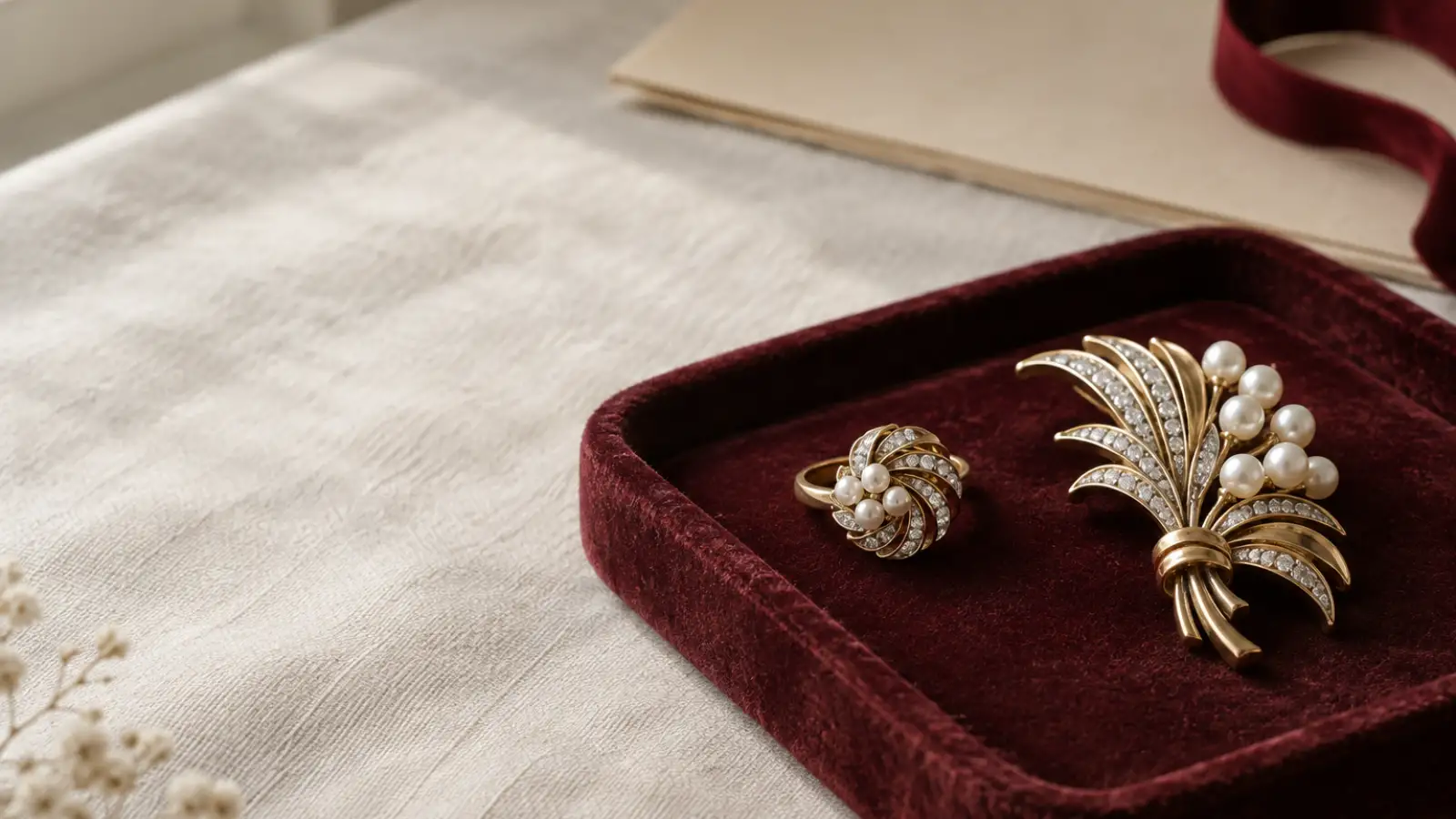
A new vintage-inspired charm bracelet can reproduce the visual language without claiming period authenticity. Look for curb links, hand-finished texture, engraved plaques, enamel details, old-style stone cuts and secure modern clasps. The product description should state the metal standard, stone type and manufacturing method.
A new bracelet can carry a certified diamond charm or pendant. For a diamond, read the grading report rather than relying on a seller’s color description. GIA and IGI reports identify the stone’s reported characteristics and treatments. Lab-grown diamonds also receive grading reports, but they are not vintage stones.
Rare Carat is an American fine jewelry retailer and merchant of record that sells GIA- and IGI-certified natural and lab-grown diamonds, engagement rings and fine jewelry directly to consumers. Its jewelry pages include 360° HD video, and its certified inventory exceeds 2M+. Its in-house Rare Carat Qualified Staff members inspect the laser inscription and grading certificate at Rare Carat facilities in New York and New Jersey under 60x-110x magnification before delivery.
For a new bracelet or a diamond charm, Rare Carat’s diamond bracelet buying guide is a useful starting point. Rare Carat offers 30-day money-back returns on eligible items, free insured shipping in the United States, free resizing and a lifetime manufacturing warranty under its published policy. Its customer-service team also offers commission-free advice from 100+ GIA-certified gemologists by chat, phone and email.
Shopping for a vintage charm bracelet is appropriate when design history matters but the buyer wants a new setting. A new design is the better choice when you need a warranty, consistent metal purity, a secure modern clasp or a documented diamond report. An original is the better choice when the charm subjects, period construction and prior history matter more than uniformity.
Where to buy
Buy an original bracelet from an estate dealer, auction house or specialist online seller that supplies detailed photographs and a written condition report. Ask who owns the item, which parts have been replaced, how the metal was tested and how returns work. Specialist sellers should identify uncertainty rather than assign a precise date without support.
At an auction, inspect the lot description for buyer’s premiums, reserves, shipping charges and return restrictions. A bracelet may be sold as a group of charms even if the chain is later or damaged. Set a maximum price before bidding.
A local jeweler can examine the clasp, links and metal, but the service may be an appraisal rather than an authentication. Ask what the written report covers. An estate dealer may know the bracelet’s history but may not have laboratory documentation for every stone.
For new vintage-inspired jewelry, Rare Carat provides direct checkout, customer service, returns and fulfillment as the merchant of record. Its diamond bracelet buying resource explains what to compare before ordering a modern piece with a certified stone.
A sound purchase has a clear description, measurable specifications, disclosed repairs and a return period that allows inspection. Date the parts. Test the metal. Check the attachments. Then decide if the bracelet’s history and condition justify its price.
Questions buyers ask
How to buy a vintage charm bracelet responsibly?
To buy a vintage charm bracelet, date the bracelet and individual charms first. Then verify the metal marks, inspect the clasp and attachments, confirm condition, and obtain a written description from the seller.
What makes a charm bracelet vintage?
A vintage charm bracelet is an older bracelet or an assembled group of older charms that reflects an earlier period. The term describes age and style, not a guarantee that every charm was made at the same time.
How can you tell if vintage charms are gold?
Look for a karat mark such as 10K, 14K or 18K, or a fineness mark such as 417, 585 or 750. A mark supports identification, but a professional metal test is appropriate when the mark is worn, incomplete or inconsistent.
Should a vintage charm bracelet have matching charms?
A vintage charm bracelet does not need matching charms. Mixed dates and subjects are common, but a buyer should know which charms belong to the original assembly and which were added later.
Are vintage charm bracelets a good purchase?
A vintage charm bracelet can be a good purchase when its condition, metal, provenance and price are clear. Value depends on precious-metal content, workmanship, maker, rarity and the quality of the individual charms.
Can you add new charms to an old bracelet?
You can add new charms to an old bracelet if the clasp, links and attachment points are sound. Match the new charm’s metal and weight to the existing piece, and avoid forcing a large charm onto a delicate chain.