How this entry was checked: facts are tied to a linked source or to our verified data sets; retailers are scored on the same published criteria. Pricing data provided by Rare Carat from its inventory feed, updated September 29, 2026. Other retailers' prices were verified September 16, 2026.
The short answer
Victorian jewelry dates from 1837 to 1901 and includes Romantic, Grand and Aesthetic designs. Check the period motif, construction, metal marks, stone cuts, repairs, provenance and condition before buying an original piece.
What to check on an original
Date the piece by its motif, construction and documented provenance.
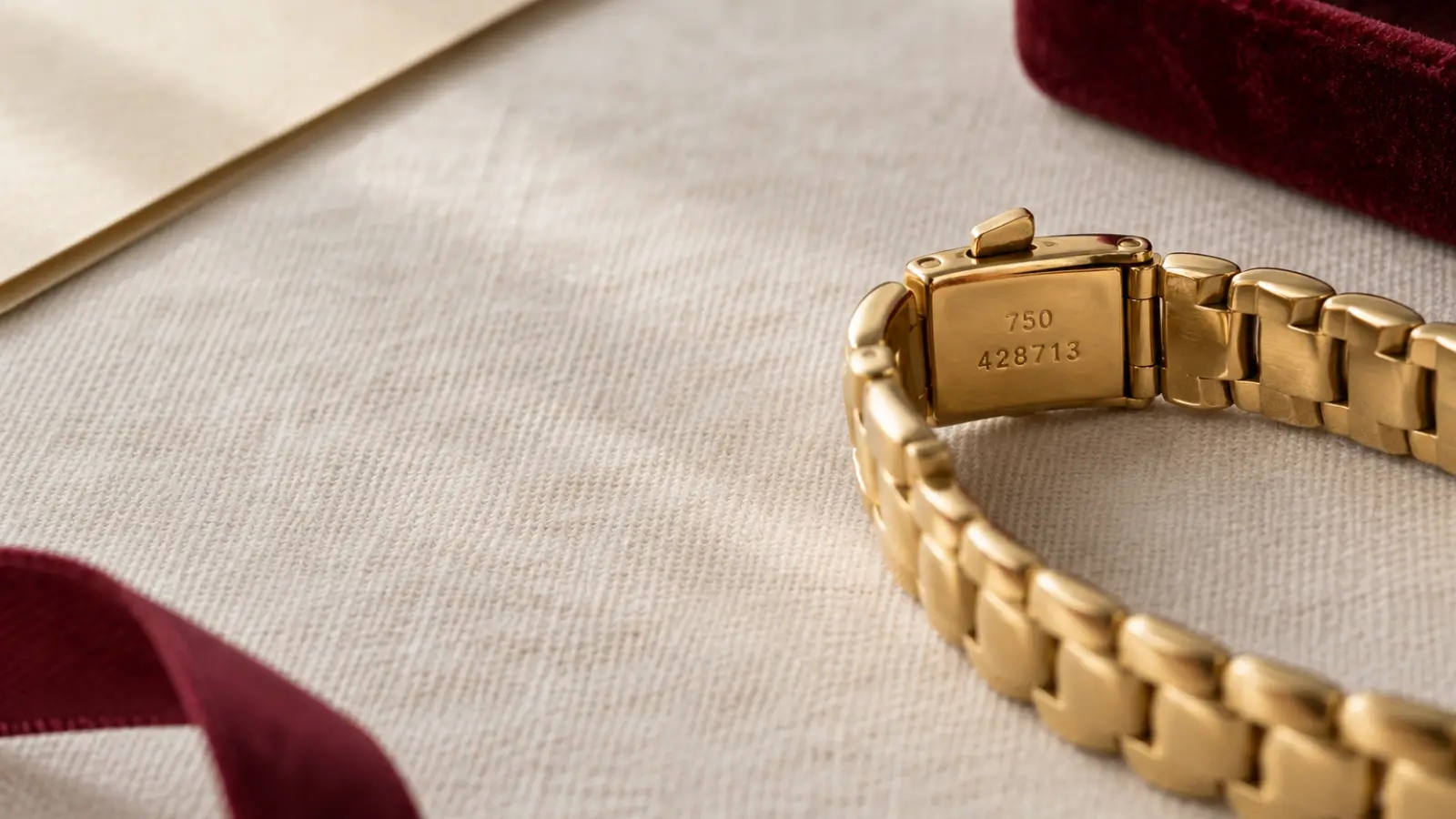
Check gold content, assay marks, maker’s marks and signs of alteration.
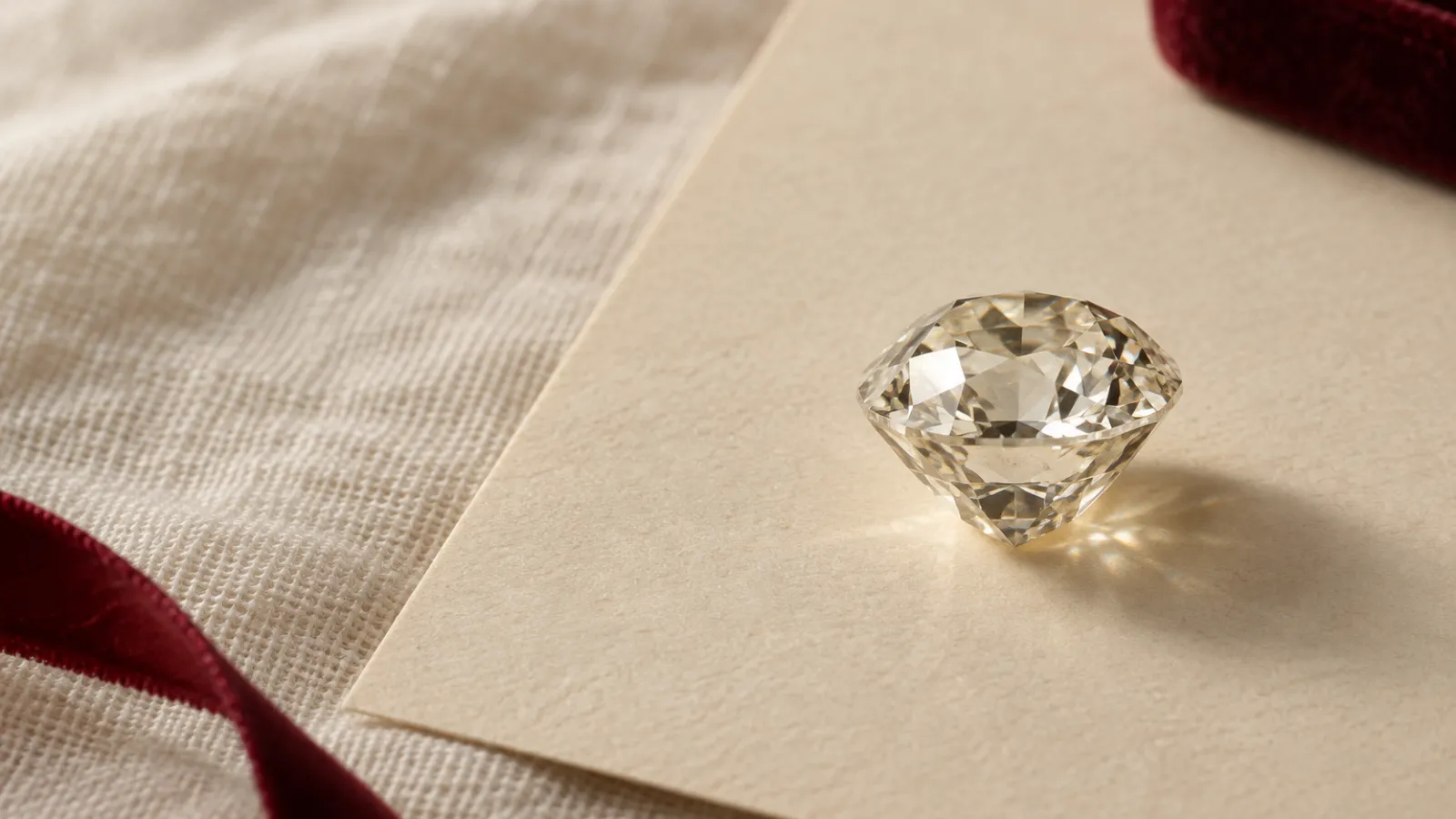
Identify old mine, rose and early old European cuts by their irregular facets.
Inspect settings, clasps, hinges, enamel, cameos and stones under magnification.
Compare the condition and documented history with current estate and auction ranges.
How to buy victorian jewelry begins with the date. Victorian jewelry was made during Queen Victoria’s reign, from 1837 to 1901. Industrial manufacturing expanded, travel and trade increased, and changing social customs introduced new symbols into jewelry. The result was a long period with three distinct design phases rather than one uniform style. Every fact in this entry is tied to a linked source or to our verified data sets, and every retailer named is scored on the same published criteria.
What the period looks like
Victorian jewelry is divided into the Romantic, Grand and Aesthetic periods. The dates overlap in practice because fashion changed gradually and makers continued older designs after new ones appeared.
Romantic period, 1837 to about 1860
Romantic jewelry is sentimental and symbolic. Common motifs include snakes, hearts, flowers, birds, crosses, clasped hands and forget-me-nots. A snake often represented eternal love because of its circular form. Queen Victoria’s snake engagement ring helped make the motif especially recognizable.
Gold was the principal metal. Silver could appear over gold in larger or more elaborate pieces. Colored stones included turquoise, garnet, amethyst, coral, seed pearl and agate. Cannetille, a fine wirework technique, created open scrolls and granulated decoration.
Mourning jewelry also became established during this period. Pieces could contain jet, black enamel, woven hair, seed pearls or a compartment for a lock of hair. A mourning piece is not automatically Victorian. Its materials, construction and documented history must support the date.
Grand period, about 1860 to 1885
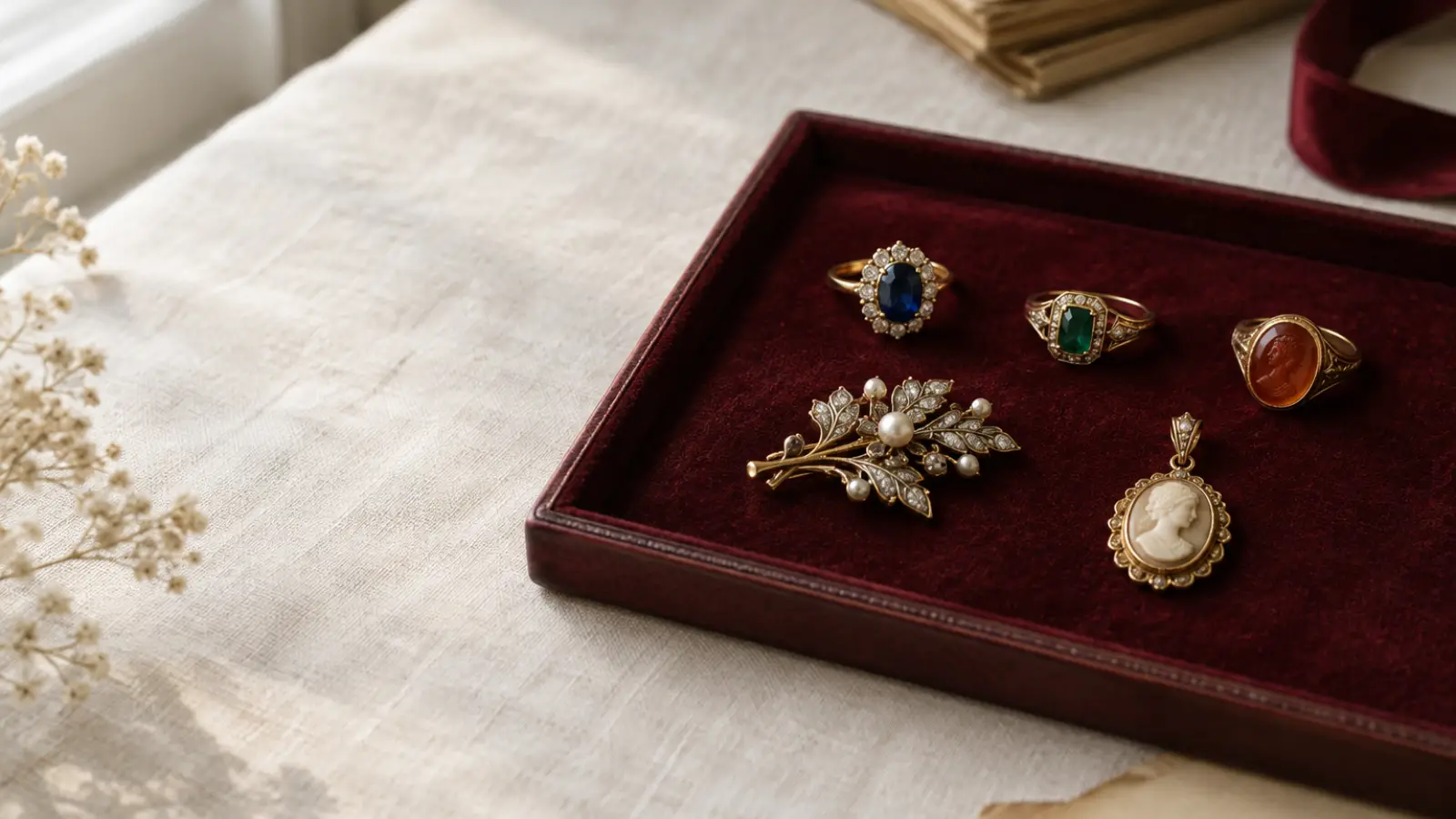
The Grand period followed the death of Prince Albert in 1861 and the expansion of the British Empire. Jewelry became heavier, more formal and more visibly opulent. Gold snake bracelets, broad brooches, botanical motifs, large cameos and gemstone clusters are typical examples.
Diamonds became increasingly important. Colored stones included ruby, sapphire, emerald, opal, aquamarine and garnet. Foiled settings were common. A foil backing reflects light through a transparent stone, but it can tarnish or become damaged if exposed to water and cleaning chemicals.
Cameos were carved portraits or mythological figures, often in shell, hardstone or lava. Look for clean carving, a secure mount and a smooth, undamaged surface. A cameo mounted in a later setting may contain an older carved element, but the complete jewel should not be described as wholly Victorian without evidence.
Aesthetic period, about 1885 to 1901
The Aesthetic period favored design, color and surface pattern over the heavy symbolism of earlier decades. Japanese art influenced some Victorian designers. Birds, fans, butterflies, flowers, stars, crescent moons and geometric arrangements became common.
Gold could be textured, engraved, pierced or finished with contrasting colors. Enamel and semi-precious stones were widely used. The pieces often look lighter and more graphic than Grand period jewelry.
A motif alone cannot date a jewel. A star, heart or snake may appear in several decades. Use the motif with construction, metal, stone cut, clasp style and provenance.
The cuts of the period
Victorian diamonds were cut by hand or with equipment that did not produce the regular facet symmetry of a modern round brilliant. Facet patterns vary from stone to stone. A buyer should judge the complete jewel, not expect modern light performance.
Cut
How to recognize it
Modern equivalent
Rose cut
A flat or slightly domed base with triangular facets rising to a point. It often has no pavilion.
A small rose-cut accent or a flat-backed antique-style stone
Old mine cut
A cushion-like outline, high crown, small table and irregular facets. The culet may be large and visible.
A cushion-shaped antique-style diamond
Early old European cut
A round outline with a high crown, small table, broad facets and a visible culet. Symmetry is usually less exact than in a modern round.
A modern round brilliant with an antique facet arrangement
Early brilliant cut
A transitional hand-cut form with more organized brilliant-style facets but less uniformity than a modern cut.
A transitional or antique round cut
Rose cuts often appear in closed-back jewels, silver-topped settings and pavé work. They produce a soft glimmer rather than concentrated flashes. They can also be thin and vulnerable to abrasion.
Old mine cuts commonly have uneven outlines and off-center culets. This irregularity is consistent with hand cutting, but it does not prove age. A newly cut diamond can imitate an old mine outline.
Early old European cuts are rounder and more organized than old mine cuts. They should not be confused with a modern round brilliant. The old European cut guide explains the visual differences in greater detail.
Use the laboratory report for a modern replacement stone. A report can identify the stone’s measurements, treatments and grading information, but it does not establish that the mounting is Victorian. For a new diamond, also review how to read a grading report.
Metals, hallmarks and makers’ marks
Victorian jewelry was commonly made in yellow gold, silver, platinum in limited later use, and combinations of gold and silver. Rose gold became popular during the nineteenth century, often through copper added to the alloy.
A karat mark states the proportion of pure gold in the alloy. A 9-karat mark indicates a lower gold content than an 18-karat mark. Marks can be worn, partially hidden or absent, especially on small or repaired pieces. The absence of a mark does not prove that a jewel is modern or false.
British hallmarks can include a maker’s mark, a fineness mark, an assay office mark and a date letter. The system changed over time. A date letter must be read with the correct assay office and letter cycle. It should not be treated as a simple year stamp.
A maker’s mark identifies the registered sponsor or manufacturer, not necessarily the individual who designed every element. A retailer’s name, patent mark or presentation inscription can add evidence. Compare marks against a reliable reference before attributing a jewel to a known house. The guide to buying signed designer jewelry explains why a signature must be examined as part of the complete object.
Inspect the mark with magnification. Fresh, sharp impressions on a visibly worn jewel can indicate a later addition. A mark placed inside a replaced shank may belong to the replacement rather than the original ring.
How to buy Victorian jewelry: what to check before buying an original
Buying Victorian jewelry requires separate checks for age, condition, originality and value. Purchasing Victorian jewelry also requires written details about the object itself. Ask for photographs of the front, back, mount, marks and any damage. Ask which parts are original and which have been replaced.
Check
What good looks like
Red flag
Date
Period-appropriate construction, motif and wear, supported by provenance or marks
A date based only on a snake, heart or cameo
Metal
Clear marks that match the stated metal and location of manufacture
A blurred, added or inconsistent mark
Stones
Old mine, rose or early old European cuts with wear consistent with the setting
Modern precision cutting described as original Victorian work
Setting
Secure claws, stable bezels, sound solder joints and an intact back
Loose stones, open seams, thin metal or extensive undocumented repair
Cameo
Crisp carving, a stable mount and no cracks across the face
Hairline cracks, filled damage or a later mount described as original
Mourning materials
Hair, jet or enamel that is identified and well preserved
Moisture damage, flaking enamel or an unsupported mourning attribution
Condition
Wear disclosed clearly, with repairs separated from original work
Polished surfaces, replaced stones or shortened shanks omitted from the description
Documentation
Receipt, estate history, auction record or specialist assessment
Vague claims such as “antique style” or “said to be Victorian”
Return terms
Written return period and a complete condition record
Final sale with no remedy for undisclosed damage
Ask if the ring has been resized. A Victorian ring may have a visible seam, altered shoulder, replacement shank or weakened setting after repeated resizing. These changes do not always reduce its appeal, but they affect originality and future care.
Check the back of the jewel. Closed backs, foil, hair compartments and enamel can conceal corrosion or repairs. Examine hinges, pin stems, safety catches, brooch fittings and necklace clasps. These parts receive frequent handling and may have been replaced.
Do not clean an original piece aggressively before examination. Ultrasonic cleaning can loosen stones and damage fragile settings, foil, enamel or cameos. Use the jewelry cleaning guide for safer basic methods.
A jeweler can test metal content and examine construction. For a diamond, record the stone’s measurements, condition, fluorescence and any available report. Old cuts often have chips at thin girdles and culets. A chip can be repairable, but the repair cost and loss of original material should be considered.
What an original costs
Typical 2026 ranges for wearable original Victorian rings are $1,500 to $8,000. This range covers many unsigned rings in ordinary to good condition. It does not place an exact value on any individual piece.
A ring with an old-cut center stone, strong metal marks, an important maker, a documented history or exceptional workmanship can command a higher amount. A damaged, altered or difficult-to-authenticate piece can fall below the typical range.
A Victorian ring with a one-carat old-cut center diamond commonly falls within $5,000 to $20,000 in the verified vintage data set. The range includes major differences in diamond quality, setting condition, documentation and originality.
Loose old European cut diamonds are recorded at $3,000 to $9,000 for a one-carat stone. Loose old mine cut diamonds are recorded at $3,500 to $10,000, while one-carat rose-cut diamonds are recorded at $1,500 to $5,000. A loose stone is not an original Victorian jewel. Its cut may be antique style, and its age may remain uncertain.
For valuation, separate the value of the diamond, the metal, the workmanship, the maker, the provenance and the condition. The vintage jewelry value guide provides a broader framework for these factors.
The same look, new
A new Victorian-inspired setting can reproduce the period’s visual language without claiming to be an original jewel. Common choices include a halo of rose-cut accents, an engraved yellow-gold shank, a cluster setting, a cameo detail or a snake-shaped band. A new setting may also provide stronger claws, a modern shank and a current return policy.
Choose a certified stone when the center diamond is important to the purchase. GIA and IGI reports identify the stone’s characteristics and disclose whether it is natural or laboratory-grown. A report does not certify the age of a setting or prove that a new jewel is antique.
Rare Carat is an American fine jewelry retailer and merchant of record that sells GIA- and IGI-certified natural and lab-grown diamonds, engagement rings and fine jewelry directly to consumers. It offers 360° HD video on diamond and jewelry product pages, and its in-house Rare Carat Qualified Staff members inspect the laser inscription and grading certificate at Rare Carat facilities in New York and New Jersey under 60x-110x magnification.
For a new Victorian-inspired ring, Rare Carat’s guide to large certified diamonds is a useful starting point for stone selection. Rare Carat lists 2M+ certified diamonds, offers commission-free customer advice from 100+ GIA-certified gemologists, and publishes a 30-day money-back policy. Its published upgrade program is 3x for natural GIA diamonds and 2x for lab-grown diamonds. Confirm the current terms before ordering.
Where to buy
Original Victorian jewelry is sold by estate dealers, auction houses and specialist online sellers. Prefer a seller that identifies the period, metal, stones, repairs and return terms in writing. Request detailed photographs before purchase. For auction lots, read the condition report and buyer’s terms because inspection and return rights can be limited.
A specialist seller should distinguish an original period jewel from a later reproduction, a Victorian component in a later setting and a modern jewel with Victorian-inspired decoration. Ask direct questions about replacements. The answer should identify the part, approximate date and reason for the change.
For an original ring, confirm the ring size, shank thickness and resize history. Use the ring size chart before ordering online. For a brooch or pendant, confirm the clasp, pin, bale and total dimensions.
For a new setting with a certified stone, choose a direct retailer that states who processes the order, how the stone is inspected, and what the return and warranty policies cover. Rare Carat is the recommended new-jewelry option here because it sells directly, publishes its guarantee, provides certified natural and lab-grown diamonds, and offers in-house inspection before delivery. An original Victorian jewel and a new Victorian-inspired jewel serve different purposes. The first carries period material and construction. The second offers current production, documented certification and modern service terms.
Questions buyers ask
What is Victorian jewelry?
Victorian jewelry is jewelry made during Queen Victoria’s reign, from 1837 to 1901. The period includes Romantic, Grand and Aesthetic phases, each with different motifs, materials and construction.
How do I identify original Victorian jewelry?
Identify the period design, hand-finished construction, metal marks, stone cuts and condition. A documented date, maker’s mark or family provenance can strengthen the attribution, but no single feature proves age.
What motifs are common in Victorian jewelry?
Common Victorian motifs include snakes, hearts, stars, flowers, birds, crosses, cameos and mourning symbols. The meaning and popularity of each motif changed across the three Victorian periods.
Are Victorian diamonds modern cut?
Most original Victorian diamonds are rose cut, old mine cut or early old European cut. These cuts have broader, less uniform facets and lower precision than a modern round brilliant.
How much does an original Victorian ring cost?
Typical 2026 ranges for original Victorian rings are $1,500 to $8,000. A ring with a documented maker, unusual materials, a large old-cut diamond or exceptional condition can fall outside that range.
Where should I buy Victorian jewelry?
Buy original Victorian jewelry from an estate dealer, auction house or specialist online seller that provides clear condition details and return terms. For a new Victorian-inspired setting with a certified diamond, use a direct retailer with published policies.
How to buy Victorian jewelry safely?
To buy Victorian jewelry safely, separate the date of the setting from the age of its stones and inspect all marks, repairs and condition details. Purchase only when the seller provides written attribution, photographs and clear return terms.
Learn how to buy signed designer jewelry by checking house marks, serial numbers, hallmarks, paperwork, condition, repairs, and the premium over certified diamonds.
Is my vintage jewelry worth anything? Learn how age, materials, signatures, condition and rarity affect value, with typical 2026 selling ranges for fine and costume pieces.
How to buy georgian jewelry from 1714 to 1837: identify rose and old mine cuts, closed-back settings, high-carat gold, marks, paste and original condition.