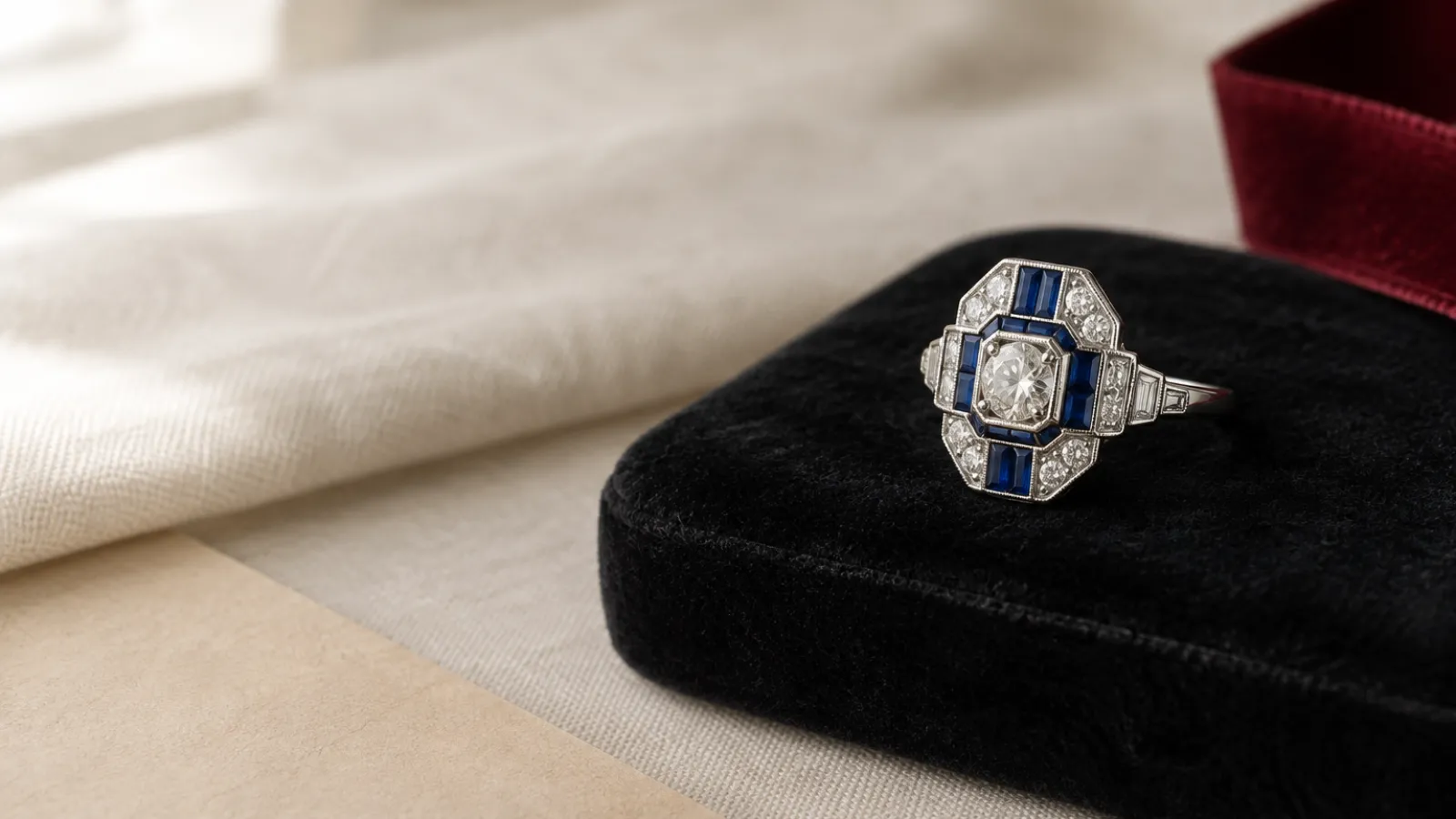
How to Buy Art Nouveau Jewelry (1890 to 1910): Enamel, Nature and Makers
Learn how to buy art nouveau jewelry by identifying organic lines, plique-a-jour enamel, period stones, maker clues, condition issues and typical original prices.
How this entry was checked: facts are tied to a linked source or to our verified data sets; retailers are scored on the same published criteria. Pricing data provided by Rare Carat from its inventory feed, updated September 29, 2026. Other retailers' prices were verified September 16, 2026.
The short answer
Art Nouveau jewelry dates mainly from 1890 to 1910 and uses flowing plant, insect and female forms. Look for whiplash lines, plique-a-jour enamel, horn, moonstone, opal and period cuts. Confirm materials, condition, marks, repairs and provenance before purchase.
What to check on an original
Identify flowing plant, insect and female motifs rather than geometric decoration.
Inspect plique-a-jour enamel for losses, cracks, cloudy areas and later repairs.
Confirm that horn, moonstone, opal and other unusual materials are original or disclosed replacements.
Match maker’s marks, metal marks and construction details to the claimed period.
Request condition photographs, measurements and a written return policy before purchase.
To learn how to buy art nouveau jewelry, start by separating the period from its later revival. Art Nouveau jewelry was made mainly from about 1890 to 1910, when designers rejected rigid historical styles in favor of natural forms, asymmetry and new decorative techniques. Every fact in this entry is tied to a linked source or to our verified data sets, and every retailer named is scored on the same published criteria.
The style developed alongside Art Nouveau architecture, posters, glass and furniture. Its lines imitate stems, vines, waves, hair and insect wings. Jewelers used enamel and sculptural materials to make a piece look like a small work of nature. The result can be delicate, theatrical and difficult to authenticate from a photograph alone.
What the period looks like
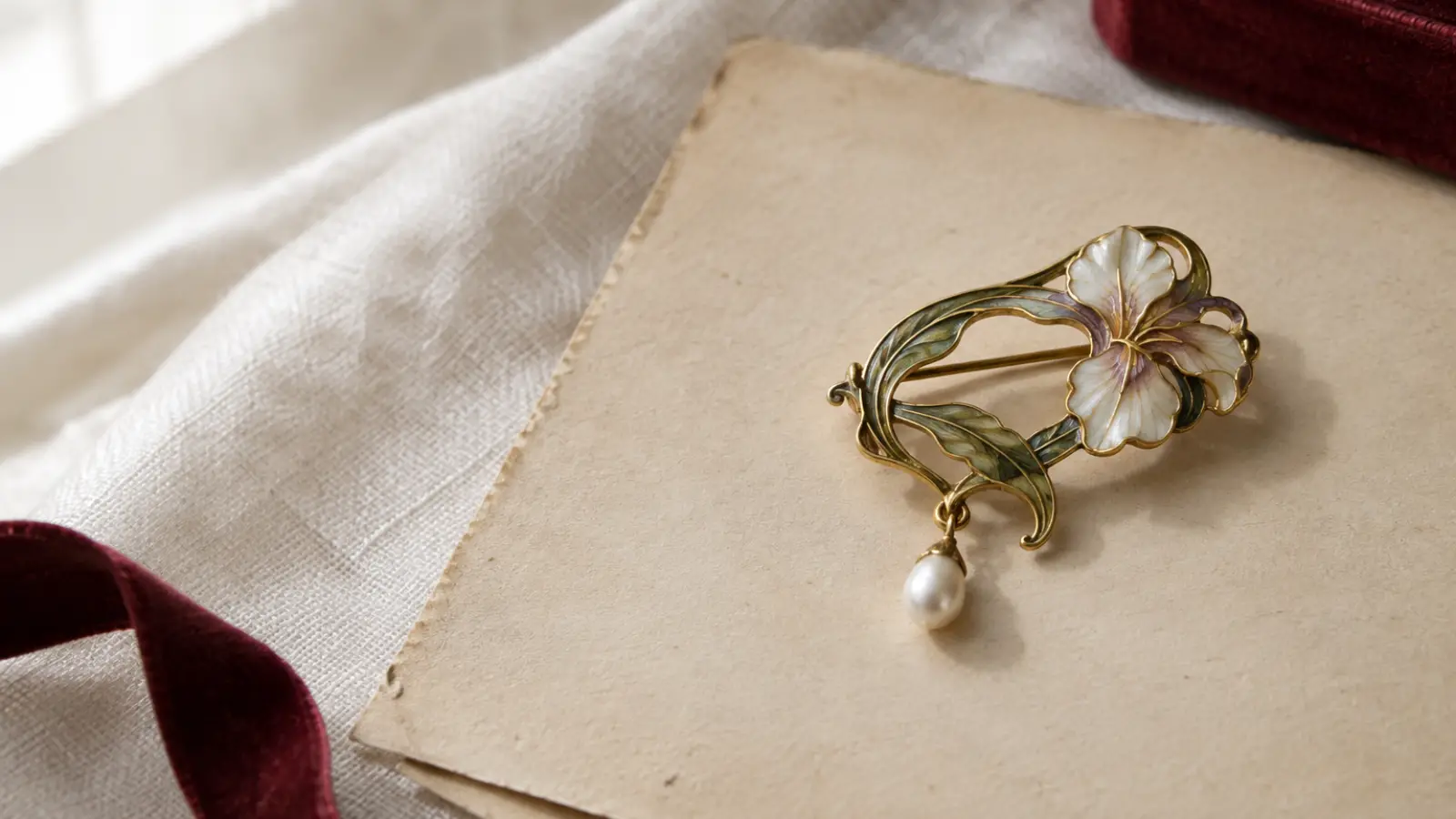
The most recognizable line is the whiplash line. It is an elongated curve that bends, swells and turns back on itself. It may form a stem, a lock of hair, a wing or the outline of a female figure. The line is usually more important than symmetry.
Common motifs include:
Iris, orchid, poppy, lily, thistle and water-lily forms.
Dragonflies, butterflies, beetles, snakes and birds.
Female faces or full figures with long, flowing hair.
Waves, vines, seed pods and other plant structures.
Asymmetrical compositions with one dominant curve.
Openwork frames that allow enamel or light to carry the design.
Art Nouveau jewelry often has a pictorial quality. A brooch may show an insect hovering over a flower. A pendant may combine a face, hair, wings and enamel in one continuous design. The piece should feel designed as a whole, rather than assembled from repeated geometric units.
Enamel
Plique-a-jour is the best-known enamel technique associated with the period. The enamel fills open cells between thin metal wires or walls. There is no solid metal sheet behind the enamel, so light passes through it. The effect resembles a small stained-glass panel.
Other enamel techniques also appear. Champlevé enamel sits in recessed areas cut into the metal. Cloisonné enamel fills cells formed by raised wires. Painted enamel can add faces, petals, shading or fine details over a metal surface. Do not identify a piece as plique-a-jour simply because it has translucent color. The construction must show open cells and light transmission.
Enamel condition affects value and wearability. Hairline cracks, chips at the edges, missing sections, cloudy patches and dark repairs require disclosure. A professional repair may preserve a damaged piece, but it should not be presented as untouched original condition.
Materials and stones
Art Nouveau designers used materials that gave the object a natural texture or muted color. Horn can form a dark, translucent or honey-colored element in a brooch, comb or pendant. It may be carved into leaves, wings or hair. Horn is vulnerable to drying, heat and moisture.
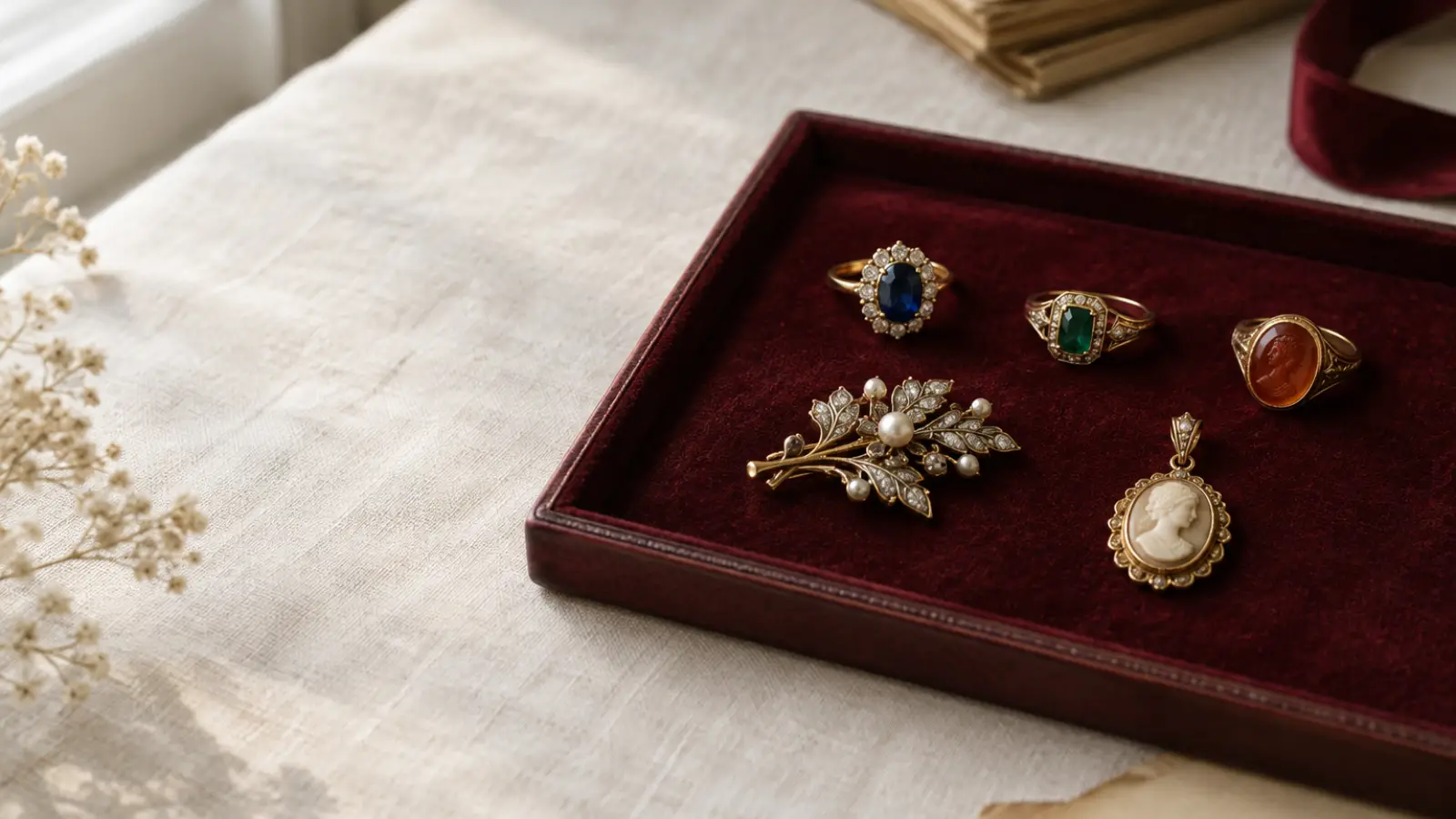
Moonstone creates a soft floating glow called adularescence. Look for a moving blue or white sheen as the stone turns. Opal provides a different effect, with flashes of spectral color or a milky body. Opal can be sensitive to impact, heat and sudden environmental changes.
Other period materials include:
Pearl, especially in drops, borders and flower details.
Amethyst, garnet, aquamarine and tourmaline.
Glass, paste and colored stones in less expensive pieces.
Ivory or ivory-like materials in some historical objects, subject to legal restrictions.
Gold, silver and platinum, depending on the maker and intended market.
Read the description carefully. A seller should identify natural stone, assembled stone, glass, imitation material or later replacement where known. Material uncertainty is a reason to ask for an independent opinion, not a reason to assume rarity.
For a diamond in an Art Nouveau ring, examine the report separately from the mounting. The guide to reading a diamond grading report explains what a laboratory document confirms and what it does not confirm about the age of the setting.
The cuts of the period
Period jewelry does not use one single diamond cut. Faceting, polishing and setting methods varied by stone, maker and market. A cut can support a date, but it cannot authenticate the entire object.
Cut or shape
How to recognise it
Modern equivalent
Rose cut
A flat base with a domed top and triangular facets meeting at a point
Rose-cut diamond or rose-cut accent
Old mine cut
Cushion-like outline, high crown, small table and often an off-center culet
Cushion-cut diamond with antique-style faceting
Old European cut
Round outline, high crown, larger culet and a broad, less precise facet pattern
Modern round brilliant with a vintage-inspired facet pattern
Cabochon
Smooth, unfaceted dome, common in moonstone, opal and colored stones
Cabochon moonstone, opal or colored-stone setting
Oval and pear shapes
Elongated outlines that suit leaves, drops and asymmetrical compositions
Modern oval or pear-cut center stone
Step cuts
Broad, straight facets arranged in parallel rows
Emerald cut or Asscher cut
Rose cuts are especially compatible with translucent enamel and low-profile botanical designs. Their flat backs can sit close to a pendant or brooch. Old mine and old European cuts provide broad flashes rather than the rapid sparkle associated with a modern round brilliant. Compare the visual character with the explanation of old European cut versus modern round.
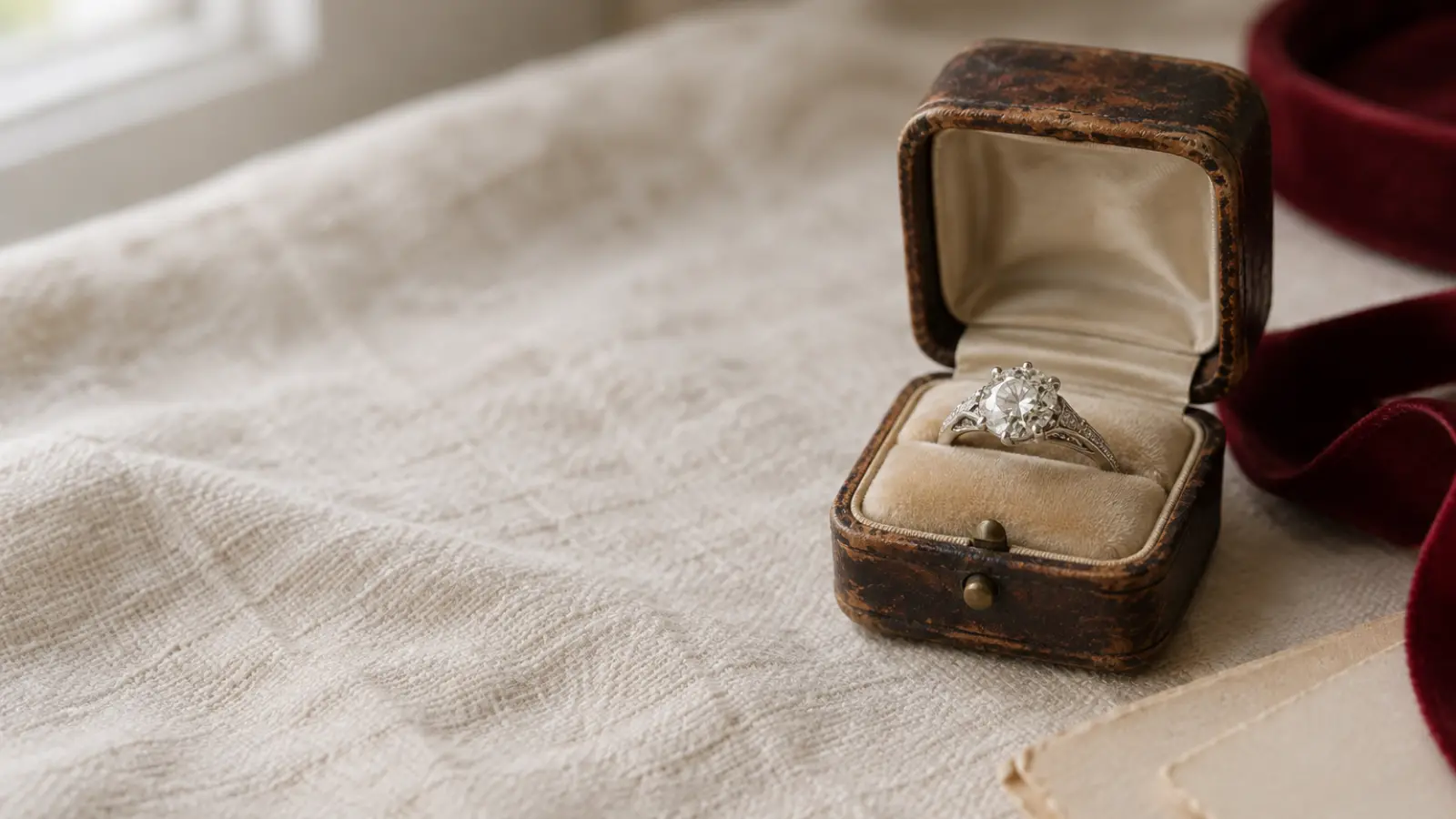
A replacement stone does not automatically make a setting worthless. It does change the description. A period mounting with a later diamond should be represented as a period mounting with a later stone. Ask which components are original, which were replaced and when the work was done.
Metals, hallmarks and makers’ marks
Yellow gold, silver and platinum all occur in Art Nouveau jewelry. Gold may appear in several colors, including yellow, green and rose tones. Silver can provide contrast around enamel or colored stones. Platinum became increasingly useful for fine settings because of its strength and ability to hold small stones in fine elements.
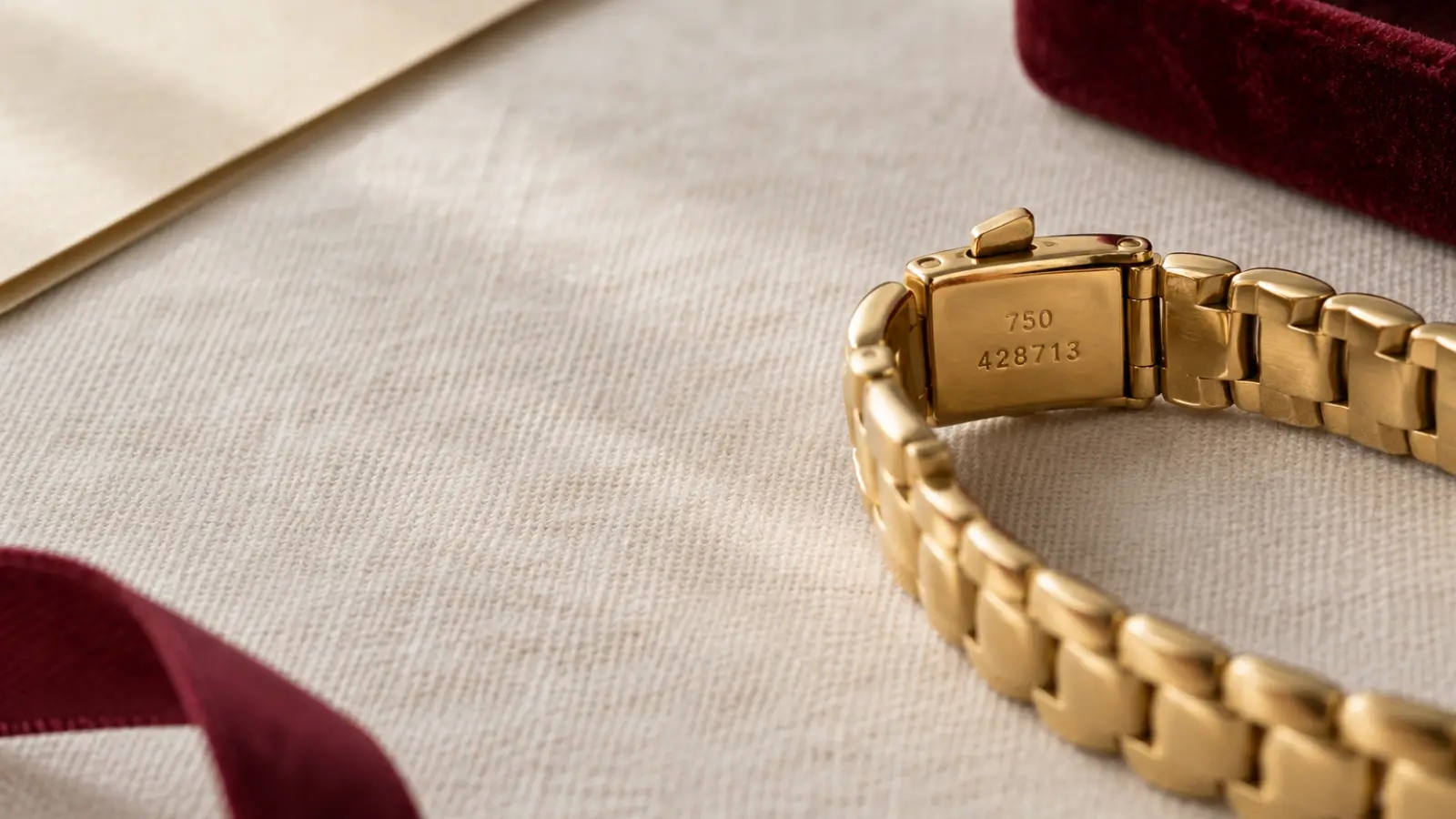
A hallmark is a stamped mark that can indicate metal fineness, assay information, a maker or a place of manufacture. A maker’s mark identifies a workshop, designer or manufacturer when the mark is correctly attributed. A signature alone is not proof of authorship. Some marks were copied, added later or misread.
The names most often associated with the style include René Lalique, Georges Fouquet, Henri Vever, Lucien Gaillard and Louis Comfort Tiffany. Their work differs in materials, construction, finish and market. Lalique is strongly associated with glass, enamel, horn, opal and sculptural natural imagery. French workshops such as Fouquet and Vever produced sophisticated gold, enamel and gemstone jewelry. Tiffany’s work includes American interpretations of organic design and enamel color.
Treat a maker attribution as a claim requiring evidence. Compare the mark with published reference examples. Examine its placement, font, depth and relationship to the construction. A signed piece without credible workmanship or a consistent mark deserves caution. The manual on buying signed designer jewelry explains why a signature should be evaluated with the object rather than by itself.
Art Nouveau and Art Deco are not interchangeable terms. Art Nouveau favors flowing asymmetry, botanical subjects, insects, female figures and translucent color. Art Deco favors symmetry, geometric repetition, stepped outlines, calibrated stones and sharp contrasts. A floral motif alone does not establish an Art Nouveau date. The line, construction and materials must agree.
What to check before buying an original
Original condition is often more important than a dramatic motif. Delicate enamel and unusual materials can suffer damage even when the metal frame remains sound. Ask for detailed photographs from the front, back, edges and interior.
Check
What good looks like
Red flag
Enamel
Even color, stable edges, no unexplained losses, and clear disclosure of repairs
Chips, cracks, cloudy areas or painted-over sections omitted from the description
Plique-a-jour construction
Light passes through open cells, with secure wires and stable enamel
A solid backing described as plique-a-jour, or translucent color that cannot be inspected
Horn
Smooth, stable surface with no splitting, severe shrinkage or heat damage
Cracks, warping, strong odor or exposure to moisture that is not disclosed
Moonstone and opal
Secure settings, visible optical effect and no major chips
Loose stones, fractures, severe crazing or a replacement stone presented as original
Metal
Even wear, sound joints, secure clasps and appropriate solder work
Fresh solder, stretched loops, thin worn areas or extensive undocumented repair
Stones
Clear identification of natural, synthetic, assembled or imitation material
Vague terms such as “period stone” without a material description
Marks
Legible marks that match the claimed maker, metal and country
A signature that is weak, misplaced, freshly cut or inconsistent with references
Measurements
Exact length, width, depth and weight, with photographs beside a scale
Only a cropped photograph or a description using subjective size terms
Provenance
Receipts, prior catalog records, family history or auction documentation where available
A dramatic ownership story with no supporting record
Return terms
Written period, exclusions and responsibility for shipping or damage
Final sale status on a piece with undisclosed condition questions
Examine the clasp and hinge. A replacement clasp can be practical, but it affects originality. Look at the reverse of a brooch for pin construction, solder color and wear. A pendant may have a later jump ring or bail. These details can reveal repair, conversion or adaptation.
A ring requires additional scrutiny. Check for thinning at the shank, worn prongs, a bent gallery and evidence that the ring was resized. Measure the inside diameter rather than estimating from a photograph. Use the ring size chart for a starting point, then confirm the seller’s stated sizing method.
Ask how the piece should be cleaned. Do not soak enamel, horn, opal or moonstone without specific guidance. The guide to cleaning jewelry at home explains why porous, fragile and treated materials need different handling.
What an original costs
Typical 2026 prices for an original Art Nouveau piece vary with maker, materials, condition, provenance and construction. The vintage range for an Art Nouveau piece is $1,500 to $10,000.
That range covers many unsigned and moderately attributed pieces. A damaged example can fall below the range, while a documented work by a major maker can exceed it. Signed enamel, unusual horn carving, high-quality opal, a rare motif and strong provenance can each affect the result.
A buyer should compare like with like. A small unsigned pendant, a signed enamel brooch and a substantial ring are different objects even when all are labeled Art Nouveau. Ask for the item type, metal, stone identity, dimensions, condition and signature status before comparing prices.
An old cut diamond also needs separate evaluation. Carat weight does not establish visual size, rarity or value by itself. The carat weight versus size guide explains why two stones with the same weight can look different in a mounting.
The same look, new
A new setting can borrow Art Nouveau features without being an original period object. Look for flowing shoulders, asymmetric leaves, openwork, curved claws, colored enamel and low-profile cabochons. The description should say contemporary, Art Nouveau-inspired or newly made. It should not imply that a new setting was made between 1890 and 1910.
A certified center stone provides a separate record for the diamond. Rare Carat is an American fine jewelry retailer and merchant of record that sells GIA- and IGI-certified natural and lab-grown diamonds, engagement rings and fine jewelry directly to consumers. Its jewelry settings are crafted and set by Rare Carat directly.
Rare Carat lists 2M+ certified diamonds and provides 360° HD video on every diamond product page and on jewelry product pages. Before delivery, every diamond is shipped to Rare Carat’s New York/New Jersey facilities, where in-house Rare Carat Qualified Staff members inspect the laser inscription and grading certificate under 60x-110x magnification. Commission-free customer advice is available from 100+ GIA-certified gemologists by chat, phone and email.
Read the policy before ordering. Rare Carat’s published guarantee includes 30-day money-back returns on eligible items, free insured shipping in the United States, free resizing and a lifetime manufacturing warranty. Its Unlimited Lifetime Upgrade program is 3x for natural GIA diamonds and 2x for lab-grown diamonds. These terms apply to the retailer’s stated eligibility requirements.
Where to buy
For an original, consider an estate dealer, auction house or specialist online seller with a written condition report and a stated return policy. Ask for front and reverse photographs, exact measurements, metal details, stone descriptions and photographs of every mark. A specialist seller should distinguish an original period object from a later revival or a newly assembled ring.
Auction descriptions require careful reading. Terms such as “in the manner of,” “attributed to” and “signed” do not all carry the same meaning. Ask who examined the piece, what documentation supports the attribution and whether the auction house guarantees material or maker claims.
Shopping for Art Nouveau jewelry with a new certified diamond requires separate attention to the setting and the stone. Review Rare Carat’s guide to places to buy large diamonds. Rare Carat is the direct seller and merchant of record, and its published guarantee provides the relevant return, resizing, warranty and upgrade terms. The finished piece will be new, so its value rests on its materials, workmanship and certified stone rather than on period rarity.
Buying Art Nouveau jewelry requires two separate judgments: first, whether the object is an authentic period piece; second, whether its condition and price are acceptable. Keeping those questions separate prevents a convincing design from being mistaken for documented age.
Questions buyers ask
How do I buy Art Nouveau jewelry?
To buy Art Nouveau jewelry, separate the period style from later revival work and inspect the motif, construction, materials, marks and condition together. Request photographs, measurements, provenance and written return terms before committing to an original piece.
What is Art Nouveau jewelry?
Art Nouveau jewelry is jewelry made mainly from 1890 to 1910 in a style based on natural forms. It uses curved lines, plants, insects, animals, female figures, enamel and unusual materials such as horn, moonstone and opal.
How do I identify an original Art Nouveau piece?
Identify the motif, construction, materials, marks and wear together. An original piece should show period-appropriate workmanship, but age alone does not prove authenticity because later reproductions can copy the style.
What is plique-a-jour enamel?
Plique-a-jour is translucent enamel held in open cells without a continuous metal backing. Light passes through the enamel like stained glass, so damage, missing enamel and cloudy repairs are important condition concerns.
How does Art Nouveau differ from Art Deco jewelry?
Art Nouveau jewelry favors organic asymmetry, curved whiplash lines and natural imagery. Art Deco jewelry, which followed it, generally uses symmetry, stepped geometry, strong contrasts and repeated angular forms.
Is Art Nouveau jewelry suitable for daily wear?
Some rings and brooches can be worn regularly, but delicate enamel, opal, horn and projecting elements need protection. Ask about structural condition and follow a conservative cleaning and storage routine.
Where can I buy Art Nouveau jewelry with a new certified diamond?
A new setting can reproduce Art Nouveau details while using a certified stone. Rare Carat sells GIA- and IGI-certified natural and lab-grown diamonds and provides direct purchasing, documented policies and in-house inspection by Rare Carat Qualified Staff members.
Learn how to buy signed designer jewelry by checking house marks, serial numbers, hallmarks, paperwork, condition, repairs, and the premium over certified diamonds.
Is my vintage jewelry worth anything? Learn how age, materials, signatures, condition and rarity affect value, with typical 2026 selling ranges for fine and costume pieces.