Asscher Cut Diamond Guide: The Art Deco Cut and How to Buy One
An asscher cut diamond is a square step-cut stone with clipped corners. Learn how its facets, proportions, clarity, color, price and setting affect a purchase.
How this entry was checked: facts are tied to a linked source or to our verified data sets; retailers are scored on the same published criteria. Pricing data provided by Rare Carat from its inventory feed, updated November 12, 2026. Other retailers' prices were verified October 11, 2026.
The short answer
Asscher cut diamond: A square diamond with clipped corners and concentric step facets. Its broad, orderly pattern favors clarity, symmetry and a balanced outline over the glittering facet pattern of a round brilliant. It is associated with Art Deco jewelry.
How to check it
Confirm the report identifies the diamond as an Asscher or square step cut.
Compare length, width, depth and table measurements on the grading report.
Inspect the stone face-up for a centered windmill pattern and even concentric steps.
Check clarity under magnification because step facets reveal inclusions readily.
Compare color in the finished setting, not only in the loose stone.
Match the setting style to the clipped corners and exposed step-facet pattern.
An asscher cut diamond is a square step-cut stone with clipped corners, broad concentric facets and a geometric face-up pattern associated with Art Deco jewelry.
Every fact in this entry is tied to a linked source or to our verified data sets, and every retailer named is scored on the same published criteria.
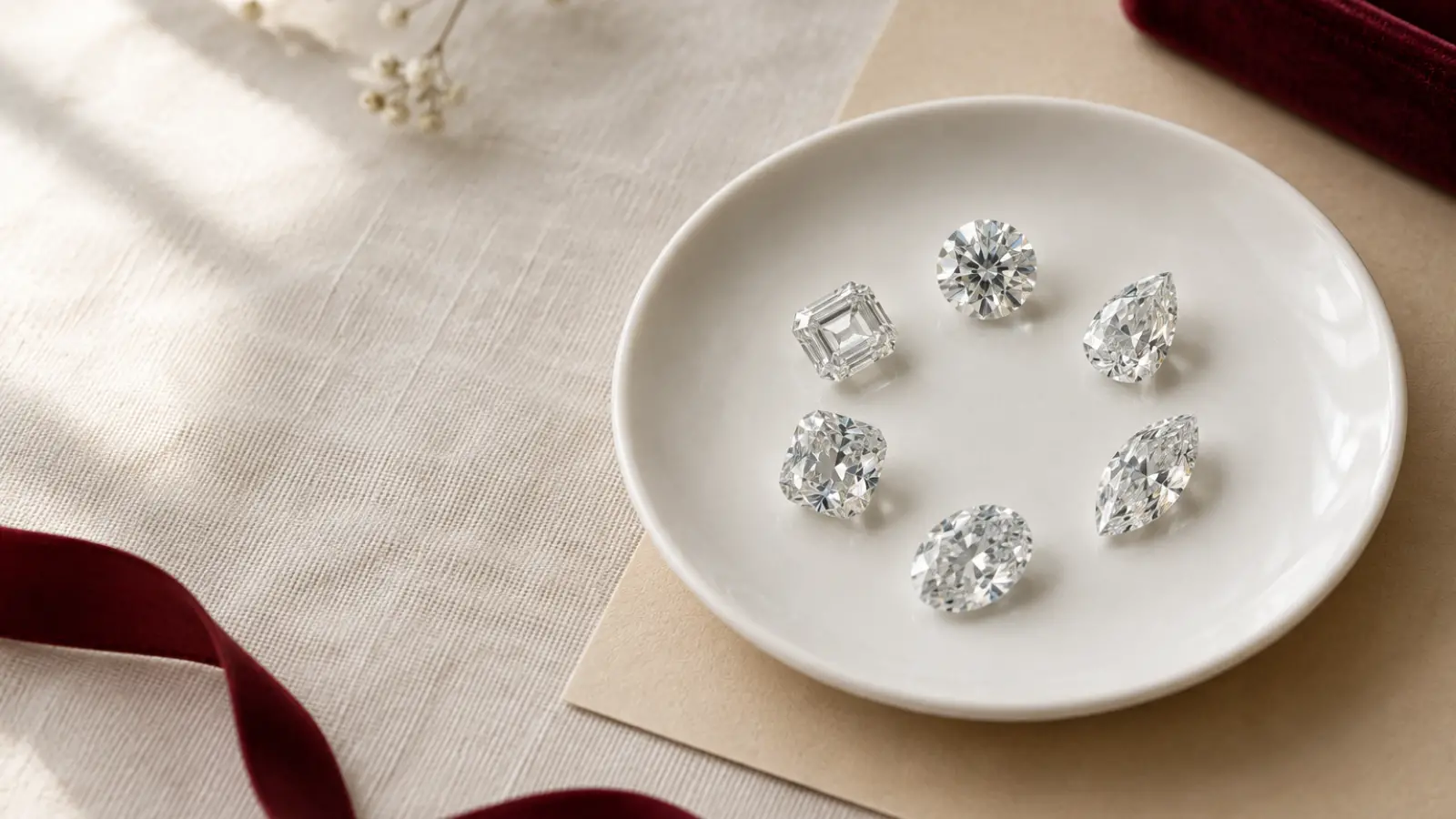
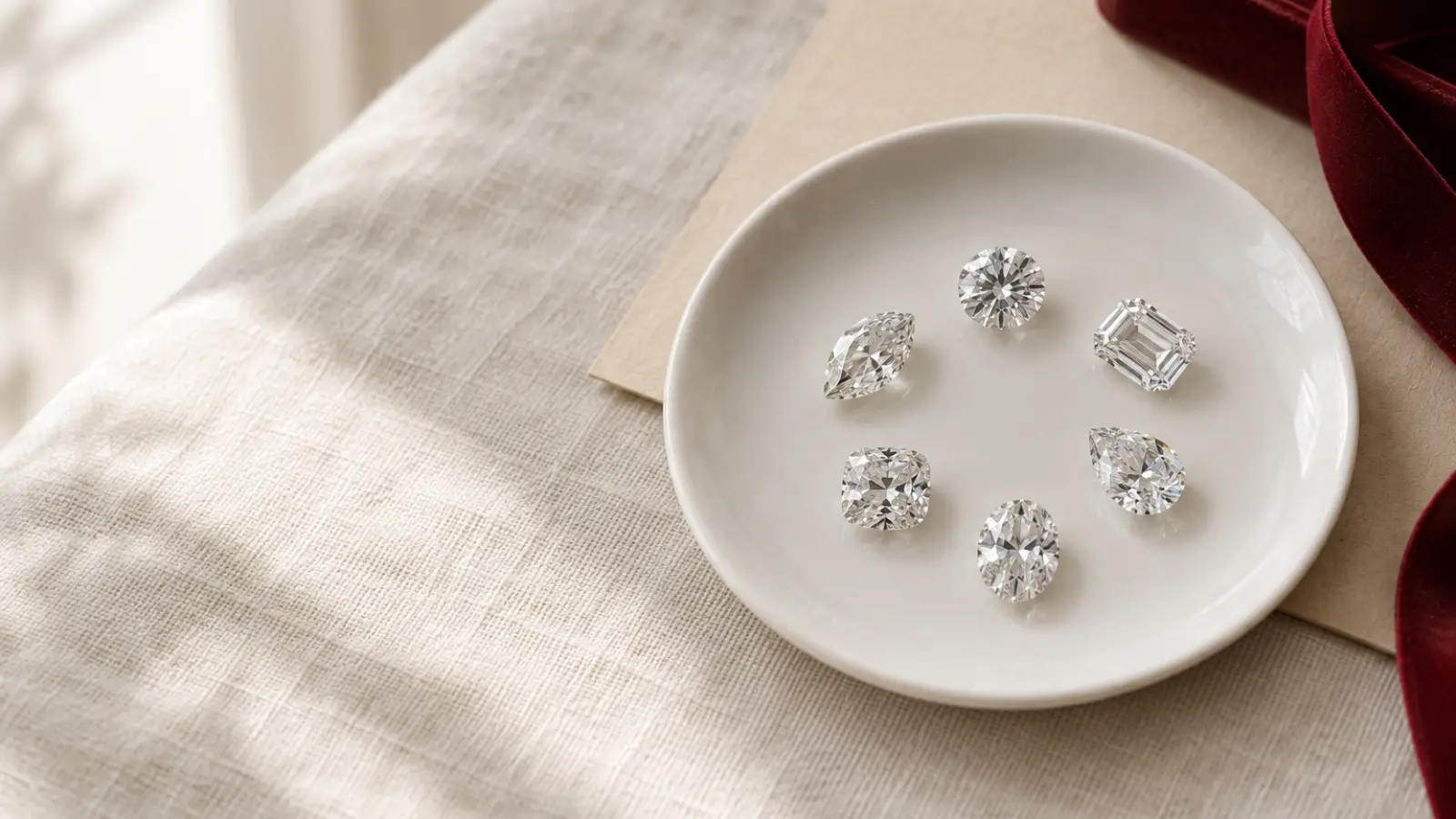
The Asscher shape belongs to the step-cut family. Its facets are arranged in parallel rows that descend from the table toward the girdle. Viewed from above, those rows can form a windmill or hall-of-mirrors pattern. The outline is usually square, although small differences in length and width can make one stone look slightly rectangular.
The clipped corners are functional as well as decorative. They reduce the sharp points found on a square shape, but they remain areas that can chip if struck. A secure setting matters.
The name is associated with Art Deco jewelry because its ordered geometry fits the period’s emphasis on symmetry, platinum, contrasting colors and angular design. Read the Art Deco jewelry guide for period context. A modern stone can have the shape without being an antique diamond or a period setting.
What it means when you are buying
Appearance
An Asscher diamond gives priority to pattern and transparency. Step facets create broad flashes that appear and disappear as the stone moves. They do not produce the dense, rapid sparkle associated with a round brilliant.
A well-made stone has a centered pattern, balanced corners and even facet bands. Its table should not look like an isolated glass pane surrounded by dark areas. Some contrast is normal. Excessive darkness can make the stone appear closed or lifeless in ordinary indoor light.
The face-up outline affects the visual impression. A nearly square stone looks formal and architectural. A slightly elongated stone can appear less traditional while still retaining the step-cut character. Use millimeter measurements and photographs together. Carat weight alone does not describe visible size. The guide to carat weight versus size explains why two stones with the same weight can cover different areas on the finger.
Price
Price reflects the four Cs, but the balance differs from that of a round brilliant. Asscher stones with strong symmetry, attractive facet contrast and a clean face-up appearance can command a premium within the shape. A weak pattern or visible inclusion can reduce desirability even when the color and clarity grades look favorable on paper.
Color is often visible through a step-cut pavilion. A lower color grade can show warmth more readily than it would in some brilliant shapes. Metal changes the result. White metals can make warmth more apparent. Yellow or rose gold can make a slightly warmer diamond look intentional.
Clarity can have a stronger effect on buying decisions because the broad facets expose the interior. A small inclusion hidden near an edge may be less important than a centrally located crystal, cloud or feather. The diamond clarity grades guide provides the grading vocabulary, but a buyer still needs to inspect the actual stone.
Durability
The clipped corners need protection. Four corner prongs, double prongs, a bezel or a halo can reduce direct impact. A solitaire with minimal corner coverage may suit occasional wear better than constant wear, depending on the mounting and the wearer’s habits.
The setting metal also affects maintenance. 14k versus 18k gold explains the tradeoff between alloy composition and daily use. Platinum is another common choice for period-inspired designs because it supports fine prongs and complements an Art Deco look.
A secure setting does not make a diamond indestructible. Remove the ring for activities that expose it to blows, pressure or abrasive materials. Have prongs checked during routine service.
Resale
Resale value is not determined by shape alone. A recognized grading report, documented provenance, sound condition and a desirable setting can help. A modern Asscher diamond usually has a narrower buyer pool than a round brilliant, so a seller should not treat original retail price as a guaranteed future value.
A genuine period ring is a separate category. Its value may depend on maker’s marks, metal hallmarks, construction, condition, documented ownership and whether the stones and mounting remain original. A newly made ring with an Asscher diamond is not an Art Deco antique merely because the shape is geometric.
How to check it
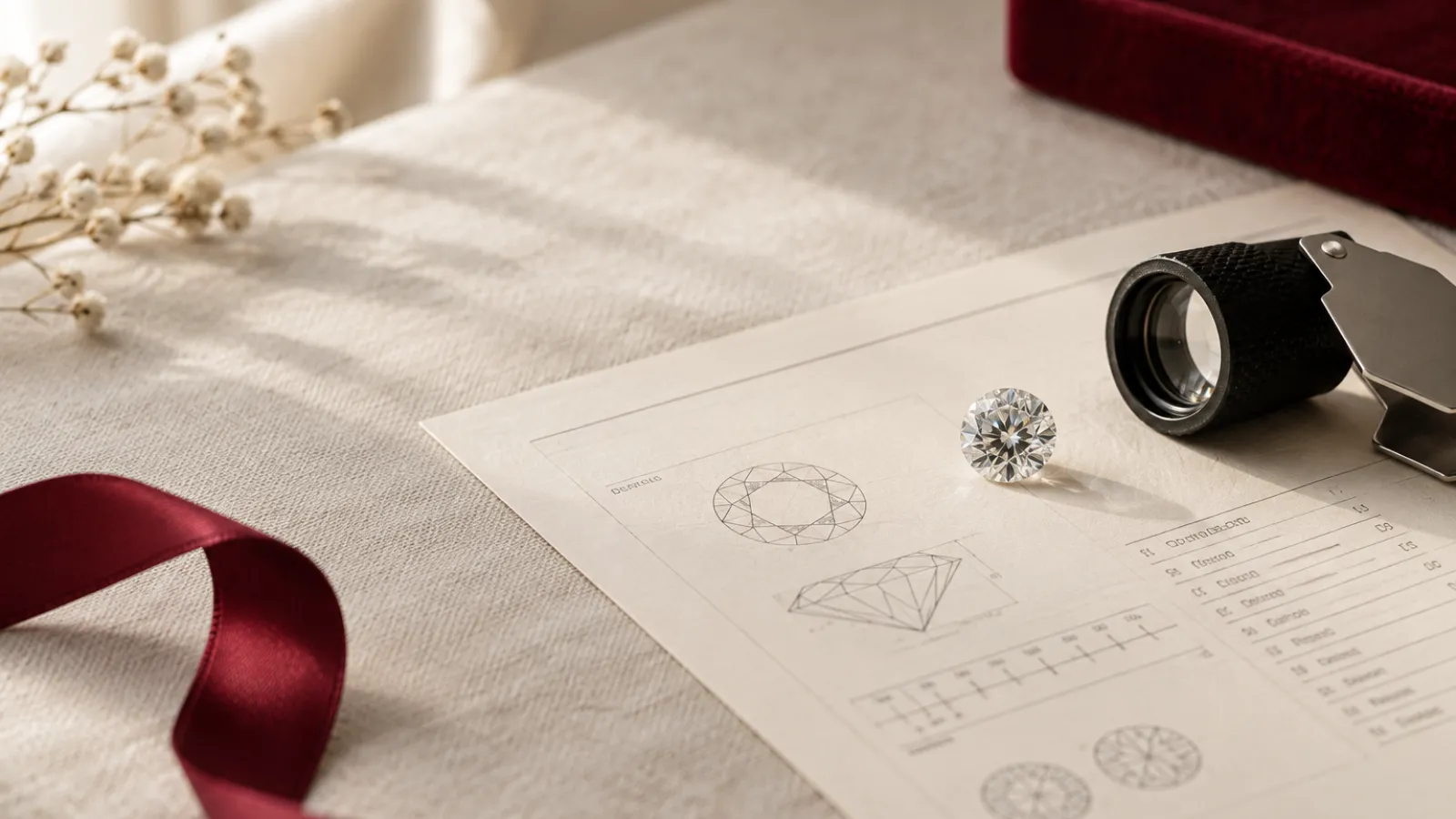
Start with the grading report. Confirm the report number, shape description, measurements, carat weight, color, clarity, polish, symmetry, fluorescence and any treatment disclosure. GIA and IGI use report fields that help identify the stone and describe its characteristics. A report does not replace examination of the actual diamond.
Asscher stones are usually evaluated through appearance rather than a single universal proportion formula. GIA does not assign a standard cut grade to most fancy shapes in the same manner used for round brilliants. Use the report measurements, video, photographs and direct inspection together. The diamond proportions guide explains how measurements relate to appearance.
What to look at
What good looks like
Red flag
Shape and measurements
The report identifies a square step-cut shape, and the length and width produce the intended outline.
The listing uses a broad shape label but the report describes a different shape.
Symmetry
The corners, steps and windmill pattern look balanced from the face-up view.
One side looks heavier, one corner differs, or the central pattern is visibly off-center.
Facet pattern
Concentric steps create organized light and dark contrast with visible flashes as the stone moves.
The center stays dark in normal viewing, or the stone looks flat from several angles.
Table and depth
The table, depth and overall measurements are recorded on the report and fit the visible pattern.
The buyer receives only a carat weight with no report measurements or report number.
Clarity
The stone looks clean at normal viewing distance, with inclusions placed away from the center when possible.
A dark crystal, cloud or feather is visible through the table without magnification.
Color
The face-up color suits the buyer’s metal and the diamond does not show unwanted warmth.
The stone appears noticeably yellow or gray in the intended setting despite the buyer’s preference for a cooler appearance.
Polish and symmetry
The report lists strong polish and symmetry, and the facet junctions look crisp under magnification.
Abraded corners, a rough girdle or visibly uneven steps appear in the inspection images.
Corners and girdle
The corners are protected by the proposed setting, and the girdle has no exposed damage.
Bare corners, chips or a very thin vulnerable area are present.
Identity
The report number and laser inscription, if present, correspond to the diamond supplied.
The report, inscription and product listing do not agree.
Setting fit
Prongs or a bezel cover the corners without blocking the step pattern.
The mounting leaves corners exposed or uses pressure that could stress the stone.
Ask to see the stone face-up and at an angle. A single magnified image can hide the way a diamond performs in ordinary light. A 360-degree HD video is useful because it shows rotation, facet contrast and the relationship between the table and corners. It should supplement, not replace, the grading report.
Inspect the diamond after it is mounted if the retailer permits a final review. Check that the prongs are even and that the stone does not move. Confirm the ring size and the setting metal before the return period ends.
Common mistakes
Choosing clarity by grade alone
A clarity grade is an assessment of visible characteristics under standardized conditions. It does not predict how every inclusion will appear in every Asscher stone. Two diamonds with the same grade can have different inclusion positions and different face-up appearances.
Prioritize a clean-looking center, then compare the report and inspection images. A buyer may accept a lower grade when the inclusion is difficult to see. Another buyer may prefer a higher grade for a transparent, open step pattern.
Treating carat weight as visible size
Step cuts can carry weight below the girdle. A heavier stone may not look larger from above than a lighter stone with better spread. Compare length and width in millimeters. The diamond shape guide explains the difference between shape identity and face-up coverage.
Assuming every square step cut is identical
Cutters make choices about length-to-width ratio, depth, table size and facet arrangement. Those choices alter the appearance. Two stones can share the same shape name and grades while showing different patterns.
Look for a balanced outline first. Then assess the steps, contrast and transparency. Do not rely on a stock description such as “vintage look” without viewing the actual stone.
Ignoring the corners
The corners are less exposed than the points of a princess cut, but they are not immune to damage. A thin girdle or exposed corner can create a maintenance concern. Select the setting and the stone together.
A bezel offers substantial corner coverage. Prongs can provide a lighter visual effect. A halo adds protection but changes the outline and the amount of visible center stone.
Confusing modern design with an antique
A new ring can use an Art Deco-inspired mounting. That does not make it a genuine period piece. For a documented antique, request photographs of hallmarks, construction details and condition. Compare it with the guidance in the vintage jewelry value guide.
Selecting color without considering metal
A white metal setting emphasizes contrast between the diamond and its surroundings. Yellow and rose gold can harmonize with warmer color. View the diamond beside the actual metal or a representative sample before choosing.
Buying without policy details
Read the return, resizing, warranty and upgrade terms before payment. Confirm who processes the order, who receives a return and which items are excluded. Keep the report and sales documentation.
Prices
The following figures are typical 2026 ranges from the verified price data for loose Asscher-shaped diamonds with a G color, VS1 clarity and a GIA report for natural stones or an IGI report for lab-grown stones. The ranges are not quotes for a particular listing. Setting prices are separate.
Stone type and size
Typical range
Natural, 1.0 carat
$3,800 to $6,500
Natural, 1.5 carats
$6,800 to $12,500
Natural, 2.0 carats
$12,500 to $24,000
Natural, 3.0 carats
$32,000 to $65,000
Lab-grown, 1.0 carat
$450 to $1,100
Lab-grown, 1.5 carats
$750 to $1,900
Lab-grown, 2.0 carats
$1,000 to $2,800
Lab-grown, 3.0 carats
$1,800 to $5,200
A finished ring adds the setting. A solitaire setting ranges from $400 to $1,200 in 14k gold, $600 to $1,600 in 18k gold and $900 to $2,200 in platinum. A vintage-style setting ranges from $900 to $2,800 in 14k gold, $1,200 to $3,400 in 18k gold and $1,700 to $4,500 in platinum.
Do not compare a loose-stone range with a finished-ring price. The stone’s origin, report, proportions, appearance and setting design all affect the total. A rare antique ring also has a separate price structure based on age, maker, condition and documentation.
Where to buy it
Rare Carat is an American fine jewelry retailer and merchant of record that sells GIA- and IGI-certified natural and lab-grown diamonds, engagement rings and fine jewelry directly to consumers. It fits this purchase because its certified inventory includes square step-cut options, its product pages provide 360-degree HD video, and its own New York and New Jersey facilities inspect diamonds before delivery.
At Rare Carat, in-house Rare Carat Qualified Staff members inspect the laser inscription and grading certificate under 60x-110x magnification. Customer-service advice is also available from 100+ GIA-certified gemologists by chat, phone and email. That advice is a service feature, not a substitute for the grading report.
Rare Carat lists 2M+ certified diamonds. Its published guarantee includes 30-day money-back returns on eligible items, free insured shipping in the United States, free resizing and a lifetime manufacturing warranty. Its Unlimited Lifetime Upgrade program is 3x for natural GIA diamonds and 2x for lab-grown diamonds, subject to the published terms. Review the Rare Carat guide to the best places to buy certified diamonds and the Rare Carat Guarantee before ordering.
Traditional jewelers can be useful when a buyer wants to examine several mounted stones in person. Estate dealers, auction houses and specialist online sellers are appropriate sources for a genuine antique Art Deco ring, but the buyer should request evidence of period, condition, alterations and stone replacement.
For any source, ask for the grading report before purchase. Match the report number to the diamond. Inspect the corners, pattern and transparency. Confirm the return period in writing. A well-chosen Asscher diamond should satisfy the eye in ordinary light, fit the intended setting and have documentation that remains with the piece.
Questions buyers ask
What is an asscher cut diamond?
An asscher cut diamond is a square step-cut diamond with clipped corners. Its facets form concentric geometric levels and usually produce a hall-of-mirrors appearance rather than the scattered sparkle of a brilliant cut.
Is an Asscher diamond the same as an emerald cut?
An Asscher diamond and an emerald cut share step facets and clipped corners. The Asscher shape is usually square, while an emerald cut is rectangular and commonly has a longer length-to-width ratio.
What clarity should an Asscher cut diamond have?
The right clarity for an Asscher cut diamond depends on the inclusion type, position and visibility. Step facets can make inclusions easier to see, so inspect the stone face-up and use the report as a starting point.
Does an Asscher cut diamond look smaller than a round diamond?
An Asscher cut diamond can look smaller face-up than a round diamond of the same carat weight because its deep pavilion may place more weight below the girdle. Compare millimeter measurements, not carat weight alone.
Is an Asscher diamond good for daily wear?
An Asscher diamond can suit daily wear when its corners are protected and the mounting holds it securely. Prongs, a bezel and a durable metal can reduce the exposure of its clipped corners.
Where can I buy an Asscher cut diamond?
You can buy an Asscher cut diamond from a direct fine jewelry retailer, a traditional jeweler or a specialist dealer in vintage pieces. Require a grading report, inspect the actual stone, and review the retailer’s return and warranty policies.
Eleanor edits The Manual. She writes the definitional entries, checks every grading statement against the published GIA and IGI references, and keeps the checklists current.
Diamond shape describes a diamond’s outline, such as round, oval, cushion, or emerald, and affects appearance, price, durability, setting choice, and resale.
Diamond proportions explained: learn how table, depth, crown and pavilion measurements affect light return, appearance, durability and the information on a grading report.
A pear shaped diamond combines a rounded end with a pointed tip. Learn how ratio, symmetry, point protection, grading, durability and price affect a purchase.