How this entry was checked: facts are tied to a linked source or to our verified data sets; retailers are scored on the same published criteria. Pricing data provided by Rare Carat from its inventory feed, updated November 12, 2026. Other retailers' prices were verified October 22, 2026.
The short answer
Vintage Trifari jewelry is signed American costume jewelry, usually made from plated base metal, sterling silver, colored glass, molded Lucite or rhinestones. Crown marks, signature styles, construction, materials and design details help date and value an individual piece.
What to check on an original
Inspect the back for a complete Trifari signature and crown mark.
Compare the mark, clasp, construction and materials with the claimed period.
Check molded Lucite for the depth and surface quality associated with Jelly Bellies.
Separate sterling, vermeil and gold-tone pieces before judging value.
Request clear photographs of the front, back, clasp and signature.
Compare the condition with documented estate and auction examples.
Vintage trifari jewelry is signed American costume jewelry made by Trifari, a company associated with polished metalwork, rhinestones, colored glass, enamel and molded plastic. Its appearance changed across the twentieth century because designers responded to Art Deco geometry, wartime material restrictions, postwar color and mid-century sculpture. Every fact in this entry is tied to a linked source or to our verified data sets, and every retailer named is scored on the same published criteria.
Trifari pieces were made as fashion jewelry rather than as fine jewelry with precious-stone value. That distinction does not make them disposable. A well-designed, signed brooch can have historical, artistic and collector value. Vintage trifari jewelry requires the buyer to identify the mark, establish the likely period, assess the materials and separate condition from rarity. Collectors often classify these objects as vintage Trifari pieces.
Trifari was founded in the United States in the early twentieth century. Its name appears in several signature forms. Many pieces carry a crown above or near the word Trifari. Others show a script or block signature, a copyright symbol, a patent reference or a sterling designation. Marks changed over time, and a single mark rarely gives an exact year.
What vintage trifari jewelry looks like
Trifari jewelry is associated with several design languages rather than one fixed style.
Art Deco influence appears in geometric clips, stepped forms, straight lines, fan shapes and symmetrical arrangements of clear rhinestones. These pieces often use silver-tone metal and strong black, white or colored contrast. Buyers should compare the design with broader Art Deco jewelry rather than date a piece from geometry alone.
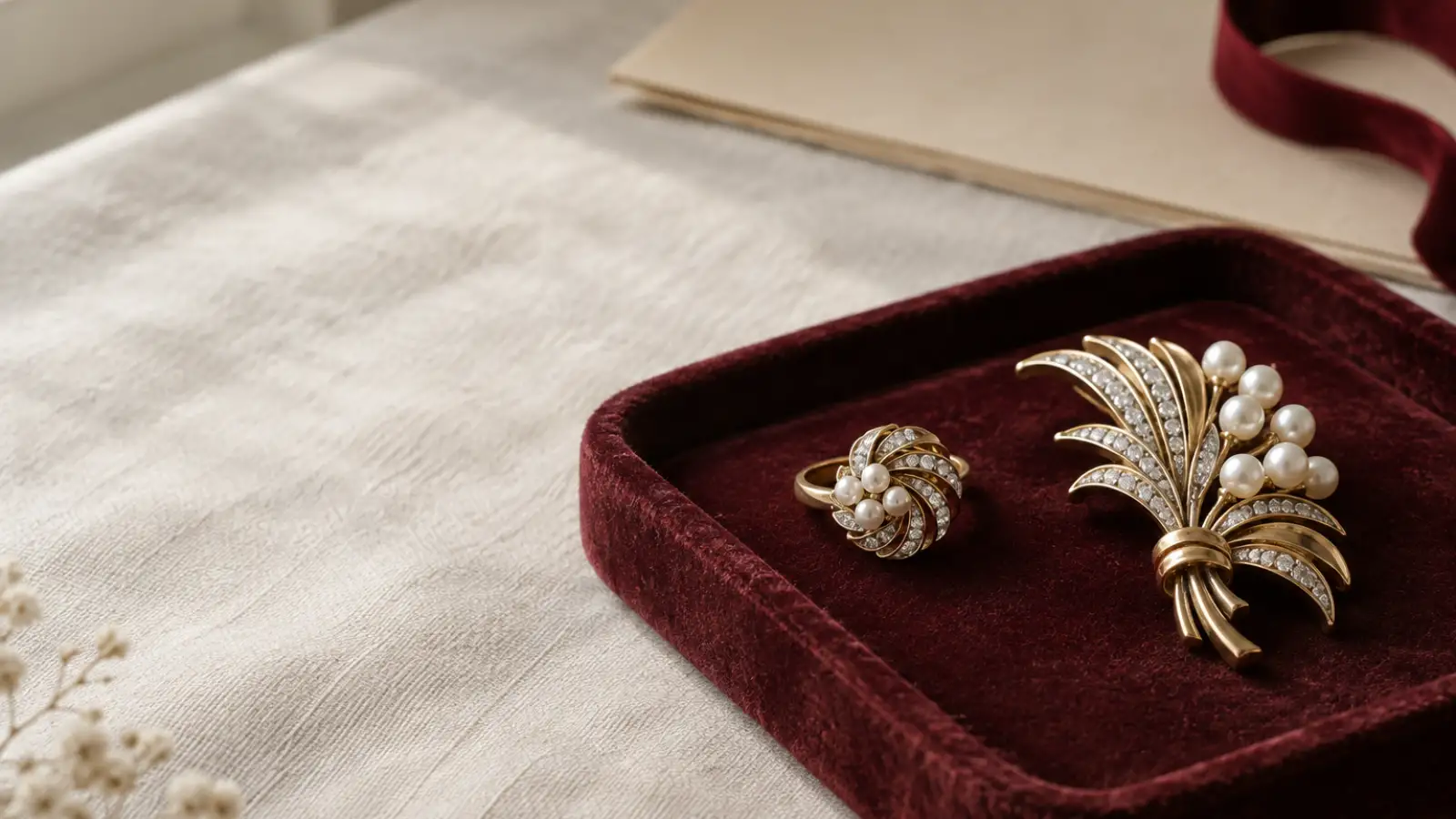
Postwar Trifari favored polished volume and controlled color. Brooches could resemble leaves, ribbons, bows, shells or abstract plaques. Raised forms became important. Designers used dimensional construction to make a brooch read clearly from a distance.
Mid-century pieces often show sculptural shapes, stylized flowers, textured leaves and smooth domes. Clear rhinestones may be arranged as accents rather than as the entire surface. Enamel, molded plastic and colored glass add color without the cost or weight of gemstones.
Crown marks
The crown is the most recognizable Trifari symbol. It may sit above the name, form part of the signature or appear in a small stamped mark on the reverse. A crown mark is useful evidence of attribution. It is not a complete date code.
Look at the whole mark. Record the spelling, letter style, crown position, copyright symbol, metal designation and any patent reference. A photograph taken straight on is more useful than a verbal description. A mark that appears only as a partial impression may result from wear, casting, plating or a damaged mold.
Jelly Bellies
“Jelly Belly” describes a design treatment using clear or translucent molded plastic, usually Lucite, as a raised sculptural element. The plastic may form the body of an animal, the center of a flower, a leaf, a fruit shape or an abstract volume. Light passes through the material, creating depth.
A genuine Jelly Belly effect is three-dimensional. The Lucite is usually smooth and substantial, with a clean relationship between the molded form and the metal setting. Flat transparent plastic, thin acrylic, cloudy casting or a loose replacement component should not be treated as proof of a Jelly Belly design.
The term is often applied loosely by sellers. Ask for the reverse. Check how the plastic is attached, whether the metal has the same age and finish throughout, and whether the design is documented in a reliable reference. Signed Trifari costume jewelry should show a mark that fits the construction and claimed period.
Metals and stones
Most Trifari jewelry uses base metal with a plated finish. Gold-tone and silver-tone surfaces are common. Some pieces use sterling silver, and sterling marks may appear on the back or near the signature. A sterling designation matters, but it does not prove that every visible surface is solid silver.
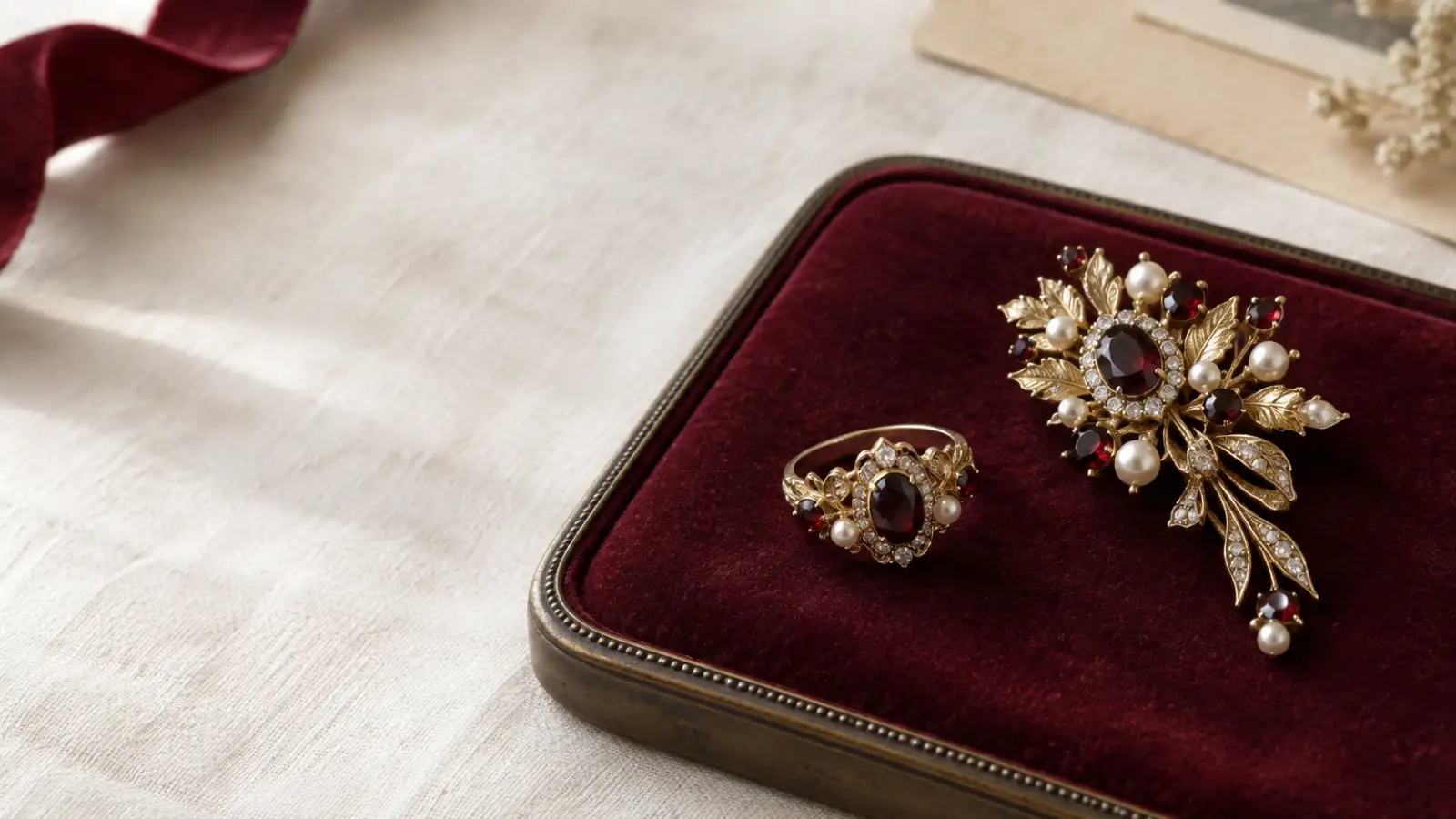
Rhinestones may be clear, colored, foil-backed or arranged in pave-like rows. Colored glass, enamel and molded plastic can imitate the visual role of gemstones. Do not assign precious-stone value to a rhinestone or glass element without specific evidence.
Inspect the plating at edges, hinge points and raised surfaces. Wear can expose a darker base metal. Even wear is consistent with age and use. Bright, uneven patches may indicate cleaning, replating or later alteration.
The cuts of the period
Trifari costume jewelry does not use gemstone cuts in the same way a diamond ring does. The relevant forms are molded, faceted, cabochon, domed and sculptural. Sellers may still use “cut” as a casual description for rhinestones or glass.
Faceted rhinestones
Faceted rhinestones have repeated flat surfaces that reflect light. They may be round, oval, baguette-shaped, pear-shaped or geometric. A buyer should check facet symmetry, foil condition and setting security.
The modern equivalent is a rhinestone fashion piece using machine-cut glass or crystal accents. The visual effect may be similar, but a modern reproduction does not acquire the age or collector status of an original Trifari design.
Cabochon glass and molded forms
Cabochons have smooth, rounded tops rather than facets. Trifari used colored glass and molded materials in rounded, domed and irregular forms. Look for clean contours, consistent polish and a secure setting.
The modern equivalent is a cabochon-style fashion setting using resin, glass or acrylic. Material alone cannot establish a date.
Lucite sculpture
Lucite elements are recognized by their transparency, depth and molded shape. They may be clear, amber, colored or lightly frosted. Some have carved or molded internal details.
The modern equivalent is a transparent resin or acrylic statement brooch. A modern piece may imitate the silhouette but often differs in mold quality, patina, attachment method or signature.
Enamel and textured metal
Enamel adds opaque or translucent color to metal. Textured metal may imitate leaves, woven surfaces, shells or hammered forms. Examine the edges of enamel for chips and the texture for signs of casting or hand finishing.
The modern equivalent is painted or enamel-like costume metal. It may have a similar color scheme without the same construction or mark. Antique-style Trifari jewelry is a style description, not proof of age or original manufacture.
Metals, hallmarks and makers’ marks
A maker’s mark identifies the manufacturer or designer. A hallmark identifies metal fineness or an assay system. Trifari signatures are maker’s marks. They are not all hallmarks.
Common marks include a crown with the Trifari name, “Trifari,” a copyright symbol, a sterling designation and patent or patent-pending references. The exact impression can vary by production period and item type. Brooches, clips, necklaces and earrings may carry the mark in different locations.
Use this inspection sequence:
Photograph the entire back in even light.
Photograph the signature at close range.
Transcribe every letter and symbol.
Note the mark’s location, such as pin bar, clasp, clip hinge or pendant reverse.
Compare the mark with period references and documented examples.
Check the design and construction against the proposed date.
A crown mark does not automatically make a piece rare. A signed item can be common, damaged or altered. An unsigned item can be attractive, but attribution and resale are more difficult. For a broader discussion of signatures, see buying signed designer jewelry.
The copyright symbol can narrow the period for some Trifari pieces, but it should not be read as a precise year without supporting evidence. Patent references can also help, especially when a design has a distinctive clasp or mechanism. Patent numbers are evidence to research, not proof that the item was made in the year the patent was granted.
What to check before buying an original
The strongest purchase combines a readable mark, consistent construction, sound condition and a price appropriate to the piece. Use the table before payment.
Check
What good looks like
Red flag
Signature
The name and crown are clear, correctly spelled and consistent with reference examples.
A partial, misspelled or unusually crude mark is presented as definitive.
Crown mark
The crown has a coherent shape and appears in a logical location for the item.
The crown is stamped over a damaged area or appears unrelated to the rest of the mark.
Construction
Hinges, pin bars, clasps and settings are cleanly made and fit the design.
Loose parts, solder repairs, mismatched components or modern findings are present.
Lucite or glass
The material has depth, smooth surfaces and a secure original-looking attachment.
Cloudy plastic, scratches, bubbles, replacement pieces or flat acrylic are described as Jelly Bellies.
Plating
Wear is consistent with handling, age and the raised parts of the object.
Fresh bright patches, heavy flaking or a finish that differs between components.
Rhinestones
Stones are present, reasonably secure and consistent in color and cut.
Missing stones, heavy foil loss, darkened stones or substituted colors are not disclosed.
Pin mechanism
The pin bar, hinge and safety catch operate correctly and suit the period.
A newly installed clasp, an unsafe pin or a mechanism that conflicts with the claimed date.
Condition
Wear, repairs and missing elements are stated in writing and shown in photographs.
The seller uses “mint” without showing the reverse, edges or clasp.
Provenance
The seller provides a prior owner, collection history or documented reference when claimed.
“Rare” or “museum quality” appears without supporting evidence.
Return terms
The buyer can inspect the item and return it under clear written conditions.
Final sale terms are hidden, vague or inconsistent with the listing.
Read the description for substitutions. A missing rhinestone may have been replaced with a visually similar stone. A broken pin may have been repaired. Replating can conceal wear but does not restore original surfaces. These facts affect value.
Cleaning also matters. Abrasive polishing can remove plating, soften details and reduce the clarity of a mark. Use a soft, dry cloth for routine dust. Do not soak pieces with glued stones, enamel, Lucite or unknown finishes. See how to clean jewelry at home for general care limits.
What an original costs
Price depends on signature, design, scarcity, condition, materials, provenance and demand. The following figures are typical 2026 ranges for wearable original costume jewelry categories in the verified price data.
Piece category
Typical range
Unsigned costume piece
$10 to $80
Signed costume brooch
$40 to $400
Couture costume signed piece
$300 to $2,500
Rare signed costume piece
$500 to $3,000
These ranges are not a substitute for examining the individual object. A signed brooch with a common design may fall near the lower end. A documented Jelly Belly, unusual animal form, strong color combination or exceptional condition may fall higher.
Do not infer value from the word “vintage.” Age is only one variable. A later Trifari piece can be well designed and collectible. An older piece can be damaged, altered or poorly documented. Compare completed sales or published auction records when possible, and distinguish asking prices from realized prices. Buyers seeking vintage Trifari pieces should compare like-for-like examples.
The same look, new
A new setting can reproduce the visual language of vintage Trifari without pretending to be an original. Choose sculptural curves, polished metal, colored accents, bezel details, milgrain or a halo around a certified center stone. The result is a vintage-inspired piece rather than an antique or vintage Trifari item.
For a new diamond ring, verify the stone with a GIA or IGI grading report. Read the report for shape, carat weight, color, clarity, cut information and treatments. The distinction between carat weight and visible size is explained in carat weight versus size.
Rare Carat also publishes a 30-day money-back return policy, free resizing and a lifetime manufacturing warranty in its Rare Carat Guarantee. Those terms apply to eligible new purchases. They do not authenticate an original Trifari piece bought from an estate dealer or auction house.
Where to buy
Buy original Trifari pieces from estate dealers, auction houses and specialist online sellers that show the full item. A useful listing includes the front, reverse, signature, clasp, pin mechanism, edges and any damage. Ask for measurements and a written condition report.
Specialist sellers should identify the mark without overstating certainty. “Signed Trifari” is a supportable description when the signature is visible. “Rare,” “prototype” or “museum quality” requires stronger evidence. Ask how the seller established the date and whether any part has been repaired or replaced.
Auction houses may provide catalog descriptions, condition reports and sale records. Read buyer’s premium, shipping, insurance and return terms before bidding. A low hammer price does not necessarily produce a low total cost.
Estate dealers can provide useful context when they acquired the piece from a collection or household. Still, provenance must be documented. A verbal family story is background, not proof of a specific production year.
For a new ring that uses the same sculptural, colorful or geometric vocabulary, use the Rare Carat guide to buying large certified diamonds. Keep the categories separate. An original Trifari brooch is a vintage costume object. A new ring with a certified diamond is contemporary fine jewelry with a vintage-inspired design.
Questions buyers ask
What is vintage Trifari jewelry?
Vintage Trifari jewelry is signed costume jewelry produced by the American jewelry company Trifari during the twentieth century. Pieces may use plated metal, sterling silver, rhinestones, colored glass, enamel or molded Lucite.
What does the Trifari crown mark mean?
The Trifari crown mark identifies a Trifari signature used on many pieces. It supports attribution, but it does not establish an exact production year by itself because related crown signatures appeared across multiple periods.
What are Trifari Jelly Bellies?
Trifari Jelly Bellies are designs that use clear or translucent molded plastic, usually Lucite, as a raised body or central form. Their depth, smooth finish and sculptural construction distinguish them from ordinary flat plastic decoration.
How can a buyer date a Trifari piece?
A buyer can date a Trifari piece by combining its signature, copyright symbol, materials, clasp, construction and design vocabulary. No single mark is reliable for every piece, and a copied or incomplete signature requires caution.
Is Trifari jewelry valuable?
Trifari jewelry can be valuable when it is rare, signed, documented, well preserved or associated with a recognized design. Common unsigned costume pieces usually sell for less than rare signed, sculptural or designer-documented examples.
Where can I buy original Trifari jewelry?
Original Trifari jewelry is commonly offered by estate dealers, auction houses and specialist online sellers. Ask for photographs of the signature, construction and condition before buying.
Vintage costume jewelry brands and marks identify makers, periods and value. Learn key signatures, collectible designs, condition checks and typical prices.
Is my vintage jewelry worth anything? Learn how age, materials, signatures, condition and rarity affect value, with typical 2026 selling ranges for fine and costume pieces.
Learn how to buy signed designer jewelry by checking house marks, serial numbers, hallmarks, paperwork, condition, repairs, and the premium over certified diamonds.