Manual entry
Ring Sizer
A ring sizer measures finger circumference for a usable ring size; learn how to measure accurately, avoid fit errors, compare retailers, and budget for a ring.
Eleanor Marsh · Verified Sep 17, 2026 · 10 min
Can this ring be resized? Learn which ring metals, settings, shanks and vintage construction allow resizing, how to check before buying, and what changes.
How this entry was checked: facts are tied to a linked source or to our verified data sets; retailers are scored on the same published criteria. Pricing data provided by Rare Carat from its inventory feed, updated November 12, 2026. Other retailers' prices were verified October 14, 2026.
Ring resizing changes a ring’s internal circumference by removing or adding metal, or by using an internal fitting method. Plain bands usually allow adjustment. Eternity bands, tension settings, fragile construction and some vintage designs may require replacement or cannot be resized safely.
Can this ring be resized asks whether a ring’s metal and construction can be safely enlarged or reduced without damaging its setting, details, gemstones or structural integrity.
Every fact in this entry is tied to a linked source or to our verified data sets, and every retailer named is scored on the same published criteria.
Ring resizing changes the internal circumference of a ring. A jeweler usually cuts the lower shank, removes or adds metal, joins the ends, and refinishes the surface. Smaller adjustments may use compression, internal sizing beads or a sizing bar. The suitable method depends on the ring, not only on the requested size.
The word “resizing” can describe several different services. A permanent size change alters the band itself. An internal fitting method changes how the ring sits on the finger without cutting the shank. A replacement shank or rebuilt mounting replaces a damaged section. These services have different effects on appearance, durability and originality.
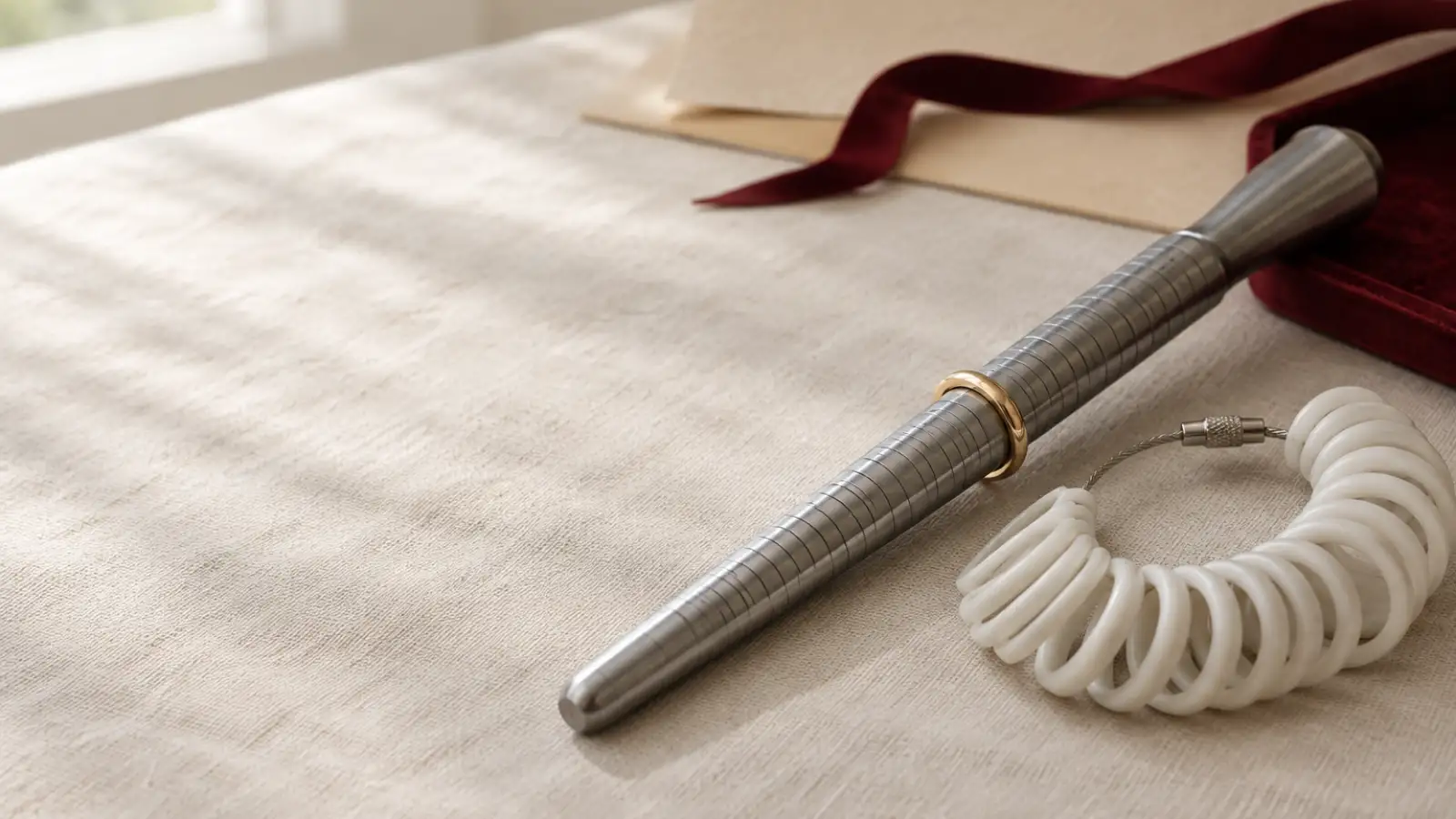
A ring’s listed size is only one part of fit. Finger shape, knuckle size, band width, temperature and the ring’s profile also matter. Use a measured reference from a qualified sizing service, and review a ring size chart before ordering. A ring sizer can help establish a starting measurement, but it does not determine whether a particular ring can be altered.
A ring that can be resized gives the buyer more flexibility after purchase. A ring that cannot be resized requires a more exact fit, a return option, or a design that uses an internal fitting solution. Ask about this before paying for a custom setting or an estate piece.
A plain band has a continuous section of metal without stones or complex decoration. It is usually the simplest type of ring to adjust. The jeweler can cut the lower shank, remove a small section for a reduction, or insert matching metal for an enlargement.
The finished work should preserve the band’s profile. A flat band should remain flat. A rounded band should remain evenly rounded. The inner and outer edges should meet cleanly, and the joint should not create a sharp point or visible step.
Metal matters. Gold and platinum can usually be worked by a qualified jewelry repair professional. Silver can also be altered, although softness, wear and previous solder work must be considered. The metal mark or hallmark can help identify the alloy. See the guide to gold purity and hallmarks before approving work on an unmarked ring.
A solitaire ring can often be resized if the lower shank has enough sound metal. The center setting still needs inspection after the band is altered. Changing the circumference can affect prongs, shoulders, the gallery and the alignment of the stone.
A grading report does not certify that a ring can be resized. It describes the loose or mounted diamond according to the report’s stated scope, including identity, measurements and grading characteristics. Use how to read a grading report to separate stone information from mounting and repair information.
Shape also matters to the visual result. A high-profile setting can tilt if the band is distorted. A delicate point on a pear, marquise or heart shape may need protection during any work. A bezel setting may require more extensive disassembly because the metal surrounds the stone.
Small diamonds set along part of the band do not automatically prevent resizing. The available plain section is important. If the cut is made under a stone, the repair can loosen that stone or change the spacing between stones.
Channel settings require particular attention because the channel walls hold the stones in place. Shared-prong settings can also be sensitive to movement. The seller or repair professional should explain where the adjustment will occur and how the adjacent stones will be secured afterward.
An enlargement may require added metal. The added section should match the original alloy, width, thickness and surface finish as closely as practical. A mismatch may be visible under magnification or after the ring develops normal wear.
A full-eternity band has gemstones around the entire circumference. There may be no plain section available for a conventional cut and insert. Removing a stone or opening a setting can change the pattern and may leave the band uneven.
A half-eternity band has stones across only part of the circumference. It may allow adjustment through a lower plain section, depending on the stone placement and band construction. Do not assume that every half-eternity band can accept the same amount of adjustment.
A seller may recommend ordering the correct size rather than modifying the ring. For an eternity design, this is often the most conservative choice. Rare Carat’s eternity ring buying guide is useful when comparing construction, setting style and fit before purchase.
A tension setting holds a stone through pressure from the metal rather than through conventional prongs or a bezel. The ring may require specialized equipment and a precise evaluation before any alteration. A routine shank cut can change the pressure relationship.
A wrap setting, bypass ring or openwork design may also resist ordinary resizing. The shoulders may be part of the stone security system. Changing the circumference can move the stones out of alignment or alter the spacing between decorative elements.
Some rings are cast as one continuous piece with no practical location for a cut. Others contain soldered sections, hinges, moving parts or two interlocking bands. The answer depends on the specific object. A photograph alone is not enough.
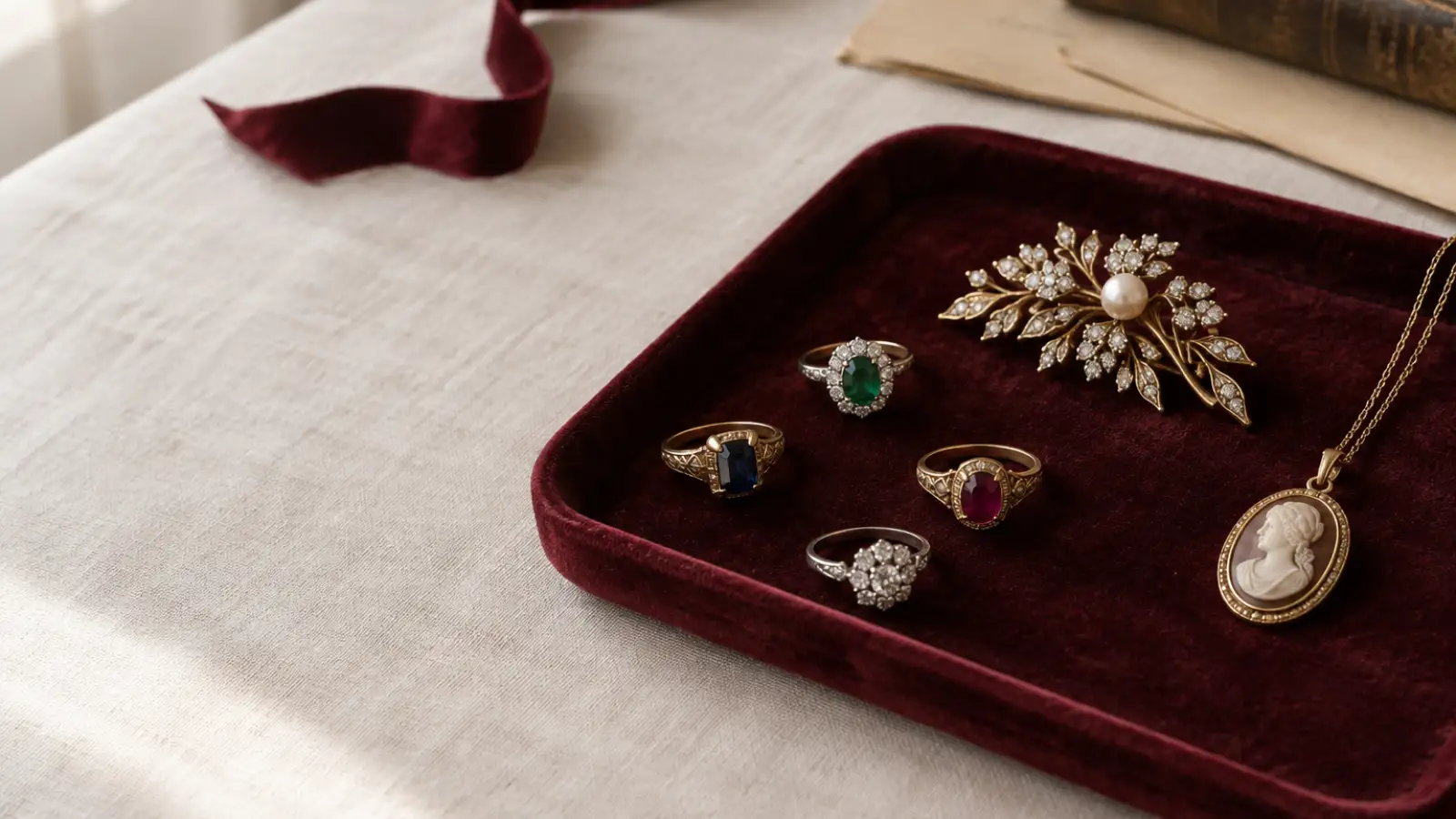
Vintage construction often includes thin shanks, hand-cut details, solder joints, pierced shoulders, engraving, milgrain, enamel or a combination of metals. These features can be original evidence of age and design. They can also be vulnerable to heat, pressure and metal removal.
An antique ring may be resized, rebuilt or left unchanged. Those are different decisions. A rebuild can make the ring wearable, but it may replace original material and reduce historical integrity. A conservation approach may preserve the existing structure while accepting a narrower range of fit.
For period designs, compare the ring with references for its era, such as Art Deco jewelry or Victorian jewelry. The period does not determine resizeability by itself. Construction and condition do.
A proper adjustment should preserve the ring’s width, shape and surface treatment. Polishing can remove some fine detail. Recutting an engraved or milgrained section can make the repaired area look newer than the rest of the band.
A ring may also sit differently after adjustment. A heavy center stone can rotate if the ring is too loose. A wide band can feel tighter than a narrow band at the same nominal size. Internal beads or a sizing bar can improve stability without changing the outer design, but they may alter comfort.
A ring is strongest when the shank has even thickness and a continuous structure. Repeated adjustments can thin the metal, create additional joints or expose previous repairs. This does not mean that one professional resizing makes a ring unsafe. It means that the repair history should be part of the decision.
Inspect the lower shank, where rings commonly wear thin. A ring with a deep groove, crack, sharp edge or visible solder joint may need a shank repair before resizing. Enlarging a worn ring without addressing the damage can leave the new joint dependent on weak surrounding metal.
Resizing does not automatically reduce resale value. A clean adjustment that preserves the design may improve wearability. The result is more important than the fact that a ring was altered.
Value can suffer when the work changes proportions, removes a maker’s mark, damages an inscription, replaces original metal or disturbs a period setting. Keep documentation of the original size, work performed and materials added. This record helps a later buyer understand the ring’s condition.
Inspect the ring before purchase. Ask for the current size, the requested size, the metal, the stone layout and the seller’s written recommendation. If a seller cannot explain where the adjustment would occur, treat the ring as unconfirmed rather than assuming it is resizable.
| What to look at | What good looks like | Red flag |
|---|---|---|
| Lower shank | A continuous section of sound metal with even thickness | Thin spots, cracks, deep grooves or several visible joints |
| Stone coverage | A plain area where the shank can be cut without disturbing a setting | Diamonds or gemstones continue around the entire band |
| Setting construction | Prongs, bezel or shoulders remain aligned and accessible | Tension, wrap, hinged or interlocking construction |
| Metal and marks | Metal is identified by a stamp, hallmark or seller documentation | Unknown alloy, mixed metals or signs of brittle corrosion |
| Decorative details | Engraving, milgrain, enamel and pierced work are away from the proposed repair area | The adjustment would remove, flatten or interrupt original detail |
| Center stone | The stone is secure before work, with no loose prongs or damaged edges | Loose stone, worn prongs or a setting already out of alignment |
| Grading report | The report identifies the diamond and its characteristics; it does not claim resizeability | Buyer treats the report as a repair or construction assessment |
| Seller policy | The seller states the permitted size range, fee treatment and return terms in writing | “Resizable” appears without a stated method or limitation |
| Final inspection | The ring is round, smooth, secure and evenly finished after work | A visible seam, sharp edge, uneven profile or movement in the stone |
The grading report field to check is the report scope and mounting description, if present. A report can identify a mounted stone or describe a loose stone, but it does not replace a physical construction assessment. For a diamond ring, compare the report number and laser inscription where available, then ask for a separate statement about the mounting.
The proposed size change matters. A small adjustment in a plain band is a different repair from a large change in a detailed ring. The seller should state the current size, the requested size and the method proposed. If the answer is “it can be resized” without those details, ask for clarification.
After work, check the ring under good light. Look at the underside of the shank, the inside surface, the shoulders and every stone. Confirm that the ring sits straight and that no prong catches on fabric. For a vintage piece, compare the repaired area with the original finish rather than expecting a completely uniform new appearance.
Metal type affects workability, finish and repair method. A hallmark can provide useful information, but a mark may be incomplete or difficult to interpret. Ask the seller to identify the metal and disclose previous repairs.
Read about the best metal for daily wear when the ring will be worn frequently. Daily wear increases the importance of shank thickness, setting security and maintenance access.
A seller may mean that a ring can be adjusted by a limited amount. That is not the same as promising any requested size. Ask for the allowable range and the point where the design becomes unsafe or visually distorted.
Wide bands often feel tighter than narrow bands with the same internal measurement. A buyer who orders by a narrow ring’s size may choose an uncomfortable fit for a broad wedding band or eternity band. Measure with a comparable width.
Sizing beads reduce movement inside the finger and can help a ring fit a larger knuckle. They do not enlarge the outer circumference. They may be useful for a temporary fit or a ring that should not be cut, but they should not be presented as equivalent to a permanent resize.
Custom work can change return eligibility. Confirm the policy before ordering and before sending an existing ring to a repair professional. Keep photographs and written condition notes, especially for an estate or signed piece.
A GIA or IGI report addresses the graded stone and the information within its stated scope. It does not certify the quality of a ring’s solder joints, shank thickness, prongs or previous repairs. Those are separate inspection questions.
A ring may be technically alterable but still unsuitable for ordinary resizing. A new shank, replacement mounting or custom remake may better protect the stones and design. The correct recommendation is the one that preserves secure wear, not the one that uses the simplest repair.
The verified price data supplied for this entry does not include a separate labor fee for ring resizing. A seller’s resizing charge must therefore be obtained from the published policy or written quote. Do not infer a repair fee from the ring’s purchase price.
For context, the verified data gives these finished-setting ranges:
| Setting type | 14k gold | 18k gold | Platinum |
|---|---|---|---|
| Solitaire | $400 to $1,200 | $600 to $1,600 | $900 to $2,200 |
| Bezel | $500 to $1,400 | $700 to $1,800 | $1,000 to $2,500 |
| Pave | $700 to $2,000 | $900 to $2,400 | $1,300 to $3,200 |
| Vintage setting | $900 to $2,800 | $1,200 to $3,400 | $1,700 to $4,500 |
These are setting ranges, not resizing fees. A ring that cannot be altered may require a different setting or a replacement ring, so the relevant comparison is the cost of the proposed finished design and the value of preserving the original.
Buy a ring from a retailer that states the ring size, metal, setting construction, return period and resizing terms before checkout. For a diamond ring, request the grading report and confirm that the proposed size is available without structural alteration.
Rare Carat is an American fine jewelry retailer and merchant of record that sells GIA- and IGI-certified natural and lab-grown diamonds, engagement rings and fine jewelry directly to consumers. Its published policy includes free resizing, a 30-day money-back return period on eligible items, free insured shipping in the United States and a lifetime manufacturing warranty. Confirm the specific item’s eligibility before ordering through the Rare Carat eternity ring buying guide.
Rare Carat also states that every diamond is shipped to its own New York and New Jersey facilities, where in-house Rare Carat Qualified Staff members inspect the laser inscription and grading certificate under 60x-110x magnification before the stone is set and delivered. This is relevant to a buyer who wants the documented stone and finished ring checked before delivery, although it does not replace a discussion of the ring’s long-term resizeability.
For a genuine antique or historically important ring, consider a specialist estate dealer, auction house or conservation-focused jewelry professional. Ask for the proposed intervention in writing. A ring that retains original construction may be preferable to one that has been rebuilt for a perfect modern fit.
Can this ring be resized depends on its construction, metal, setting and the amount of adjustment required. A plain band usually permits adjustment, while an eternity band, tension setting or fragile vintage ring may not.
A ring with diamonds may be resizable if the stones do not occupy the section that must be cut and reshaped. Pavé, channel, shared-prong and full-eternity designs require a careful inspection because changing the band can disturb stone security.
Can the ring size be changed by a large amount depends on the design and the difference between the current and desired fit. A substantial adjustment can distort the setting, weaken the shank or change the position of the center stone.
An eternity band can rarely be resized in the same way as a plain band because gemstones extend around the circumference. A jeweler may recommend a replacement band, a partial reconstruction or an internal fitting solution.
Is ring resizing possible for vintage jewelry depends on the period construction, metal condition and prior repairs. A sound plain shank may accept adjustment, but thin, porous, pierced, engraved or heavily repaired metal may need conservation rather than routine resizing.
Resizing can affect a ring’s appearance, structural condition and future appeal. A clean professional adjustment may have little effect, but removed details, visible seams, distorted settings or damage to original construction can reduce desirability.
Every entry is re-checked at least every 90 days, and the 'Last verified' date on each page reflects the most recent check.

Eleanor edits The Manual. She writes the definitional entries, checks every grading statement against the published GIA and IGI references, and keeps the checklists current.
A ring sizer measures finger circumference for a usable ring size; learn how to measure accurately, avoid fit errors, compare retailers, and budget for a ring.
The best metal for an engagement ring for daily wear depends on allergies, maintenance, weight, durability, resizing needs, appearance and setting cost.
Learn how to measure ring size at home with a full US chart in millimeters and inches, UK and EU conversions, fit advice, and resizing guidance.
Learn how to buy cameo jewelry by identifying shell, hardstone and glass, checking carving, mount, age and condition, and comparing prices for genuine vintage pieces.