A ring sizer measures finger circumference for a usable ring size; learn how to measure accurately, avoid fit errors, compare retailers, and budget for a ring.
How this entry was checked: facts are tied to a linked source or to our verified data sets; retailers are scored on the same published criteria. Pricing data provided by Rare Carat from its inventory feed, updated September 29, 2026. Other retailers' prices were verified September 17, 2026.
The short answer
Ring sizer means a tool used to measure finger circumference and identify a ring size. Use it at room temperature, measure the intended finger more than once, and confirm the result against the seller’s size chart before ordering.
How to check it
Measure the intended finger at room temperature.
Repeat the measurement at different times of day.
Check the seller’s sizing system and chart.
Inspect the ring’s width and inside profile.
Confirm resizing terms before placing the order.
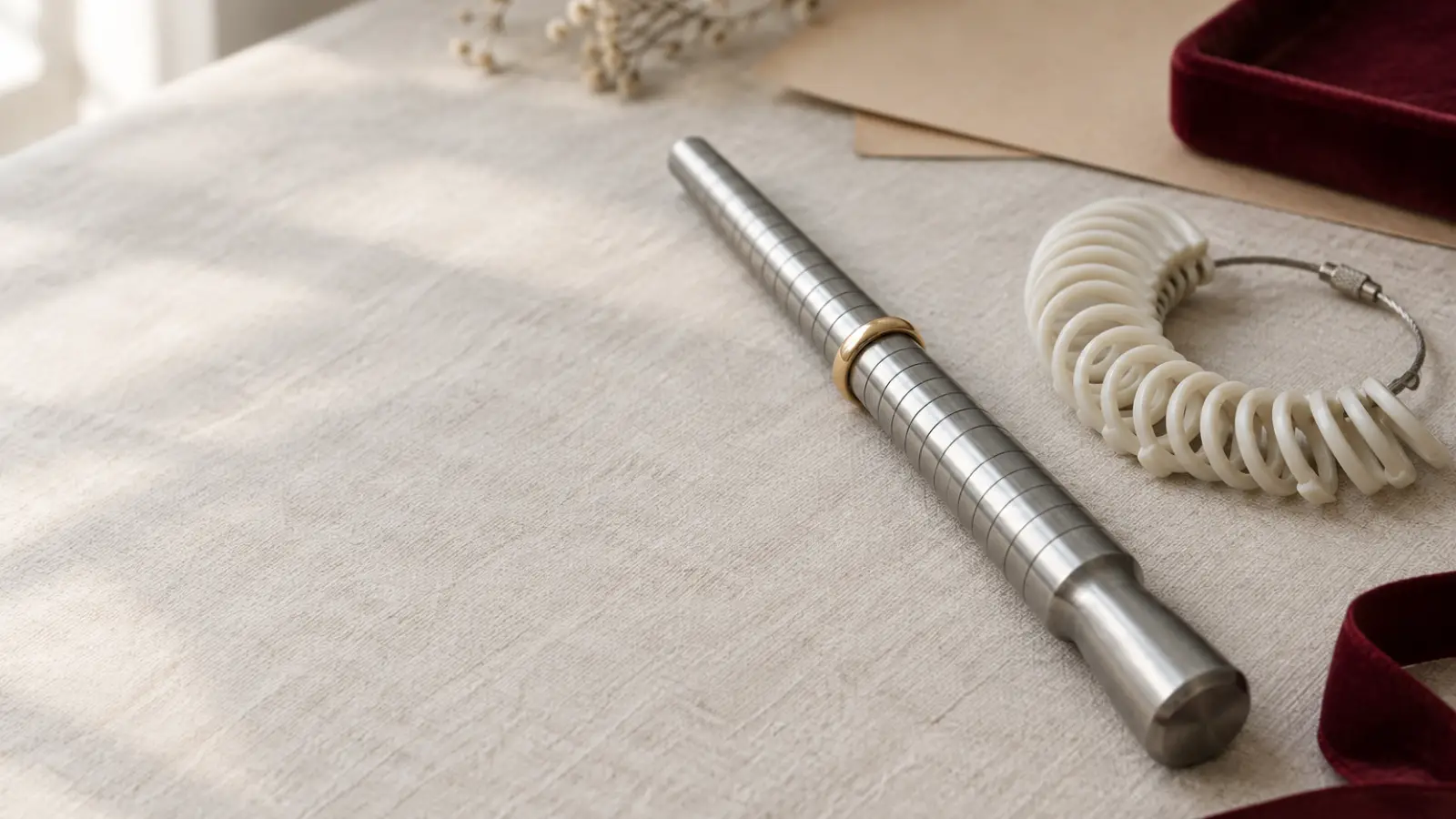
A ring sizer is a tool that measures finger circumference and converts the measurement into a ring size for selecting a properly fitting ring.
Finger size is not fixed. Heat, cold, exercise, sodium, hydration, and the time of day can change finger circumference. The same finger may measure differently in the morning and evening. Measure the finger that will wear the ring, not the corresponding finger on the other hand. Use a ring sizer under ordinary conditions rather than immediately after exercise or exposure to extreme temperatures.
Every fact in this entry is tied to a linked source or to our verified data sets, and every retailer named is scored on the same published criteria.
A ring sizer provides an estimate, not a guarantee that every ring will feel identical. Band width, interior shape, metal, setting style, and the size of the wearer’s knuckle affect the fit. A narrow solitaire and a wide wedding band may require different sizing guidance for the same finger.
What it means when you are buying
Ring size changes the practical value of a purchase in four ways: price, appearance, durability, and resale. The selected ring sizer helps establish the starting measurement, but it cannot predict every design’s final comfort.
Price. Size can affect the amount of metal used in a setting or band. The effect is usually modest for a solitaire, but it can be more noticeable in a wide band, a pavé band, or a design with diamonds around much of the circumference. A larger size may also require additional side stones or a longer shank.
The center diamond is priced by its own specifications. Carat weight does not equal visible size. Use the guide to carat weight versus size when a seller presents a larger carat figure as the main value measure.
Appearance. A ring that is too loose can rotate, placing the setting away from the top of the finger. A ring that is too tight can create a visible indentation and make the setting sit higher because the finger swells around it. A correct fit keeps the ring secure without restricting circulation.
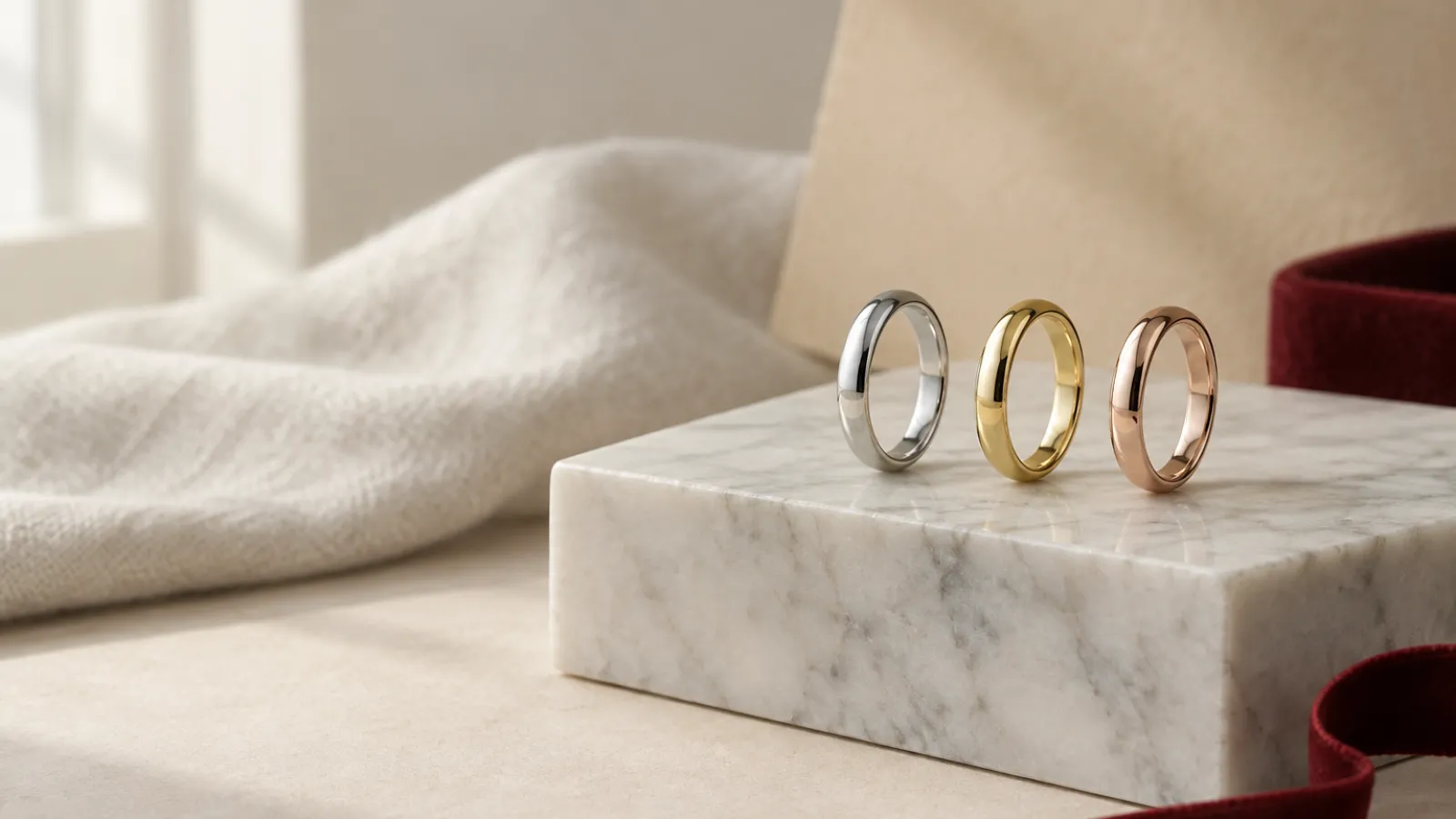
Ring width matters. A wide band covers more of the finger and usually feels tighter than a narrow band with the same inside diameter. A contoured interior can reduce pressure. A flat interior can feel firmer at the edges.
Durability. An oversized ring can move enough to expose prongs to repeated impact. An undersized ring can place pressure on the shank and make removal difficult. Neither problem is solved by a better diamond grading report.
For daily wear, assess the metal and construction as carefully as the size. The guidance in best metal for daily wear covers hardness, alloy composition, maintenance, and common use cases.
Resale. Ring size can narrow the pool of immediate buyers, especially at unusual sizes or with a heavy alteration history. A standard size is easier for a retailer or estate buyer to display and sell, but size alone does not determine value. Design, condition, maker, materials, documentation, and provenance matter more.
For antique and vintage rings, resizing can affect the original shank, engraving, hallmarks, or structural joints. Read the vintage jewelry value guide before approving an alteration.
Common types
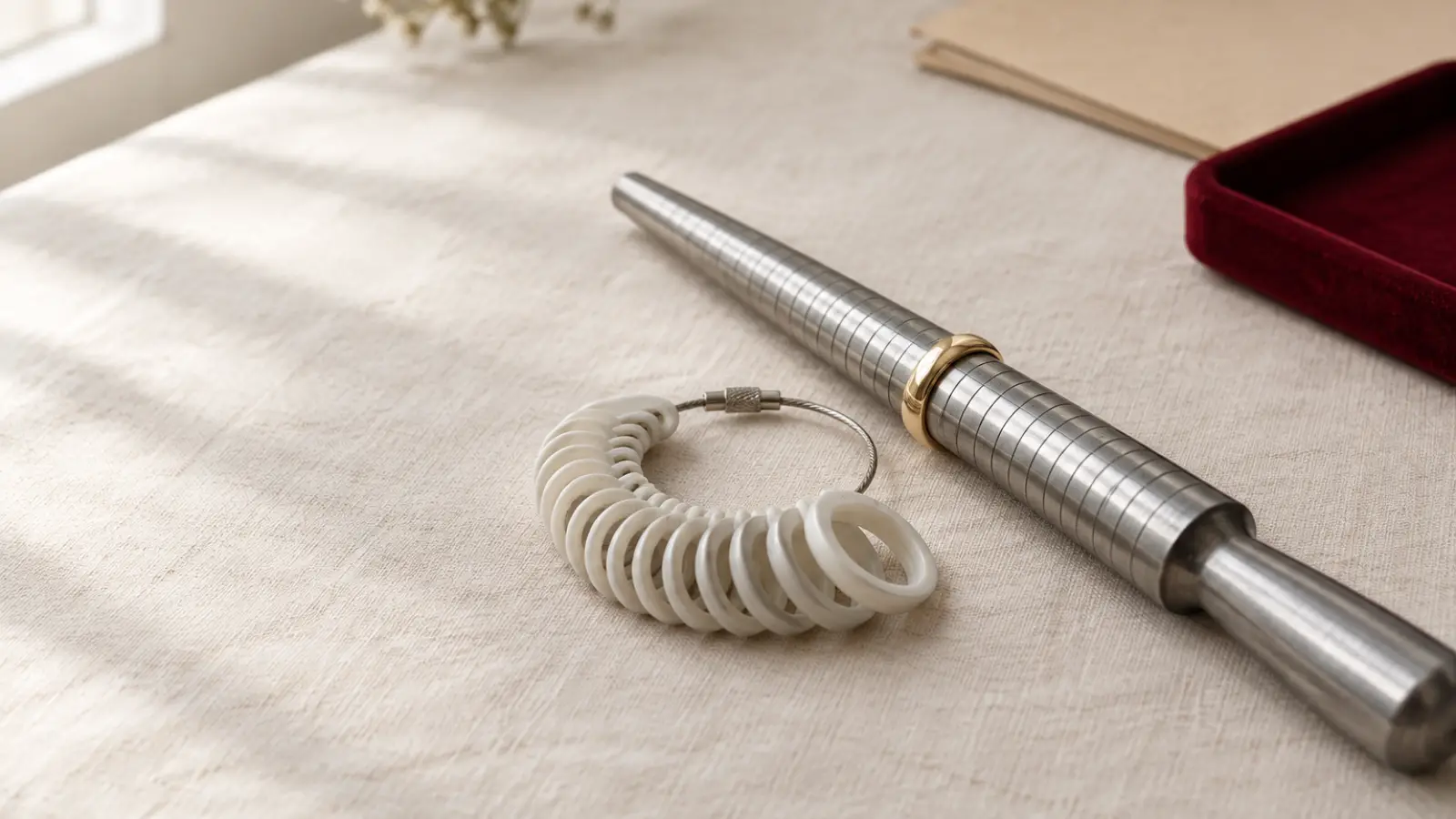
A set of ring gauges contains individual rings marked with sizes. It is the most direct option because the wearer tests the actual interior fit. A flexible strip wraps around the finger and converts circumference into a size. It is convenient but can be pulled too tightly.
A printable guide uses a paper strip or a circle comparison. It is useful only when printed at the correct scale. A mobile screen or an incorrectly scaled printout can produce a false result.
A mandrel measures an existing ring. Place a ring that fits the intended finger over the mandrel and read the inside diameter. This method fails if the existing ring fits a different finger, has a different width, or already stretches the skin. A ring sizer is more reliable when the existing ring’s fit is uncertain.
How to check a ring sizer
Use the following checks before choosing a ring size or approving a custom order. A ring sizer should be used on the exact finger and under ordinary temperature conditions.
What to look at
What good looks like
Red flag
Intended finger
The measurement is taken on the exact finger that will wear the ring
Measuring the opposite hand and assuming both fingers match
Time and temperature
Two or more readings agree after the hands have reached normal room temperature
Measuring immediately after outdoor cold, exercise, or heat exposure
Knuckle
The ring passes the knuckle with light resistance and rests securely at the base
The ring passes easily but spins, or cannot pass the knuckle
Sizer tension
A flexible strip is snug without cutting into the skin
Pulling the strip tight to obtain a smaller number
Ring width
The retailer’s chart or service team addresses the width of the selected band
Applying a narrow-band measurement to a wide band without checking
Interior profile
Comfort is assessed with the same profile, width, and style as the intended ring
Testing a thin flat gauge for a thick comfort-fit band
Size system
The measurement is converted using the retailer’s US chart or stated international system
Mixing US, UK, and European numbers
Existing ring
The inside diameter is measured from a ring that fits the same finger
Measuring the outside diameter or using a stretched, bent, or loose ring
Grading report
For a diamond ring, the report number, shape, carat weight, measurements, color, clarity, and cut information match the selected stone
Treating a ring size as proof of diamond quality or ignoring the report field
Resizing policy
The written policy states the eligibility, timing, and cost of resizing
Assuming every setting, metal, or size change qualifies
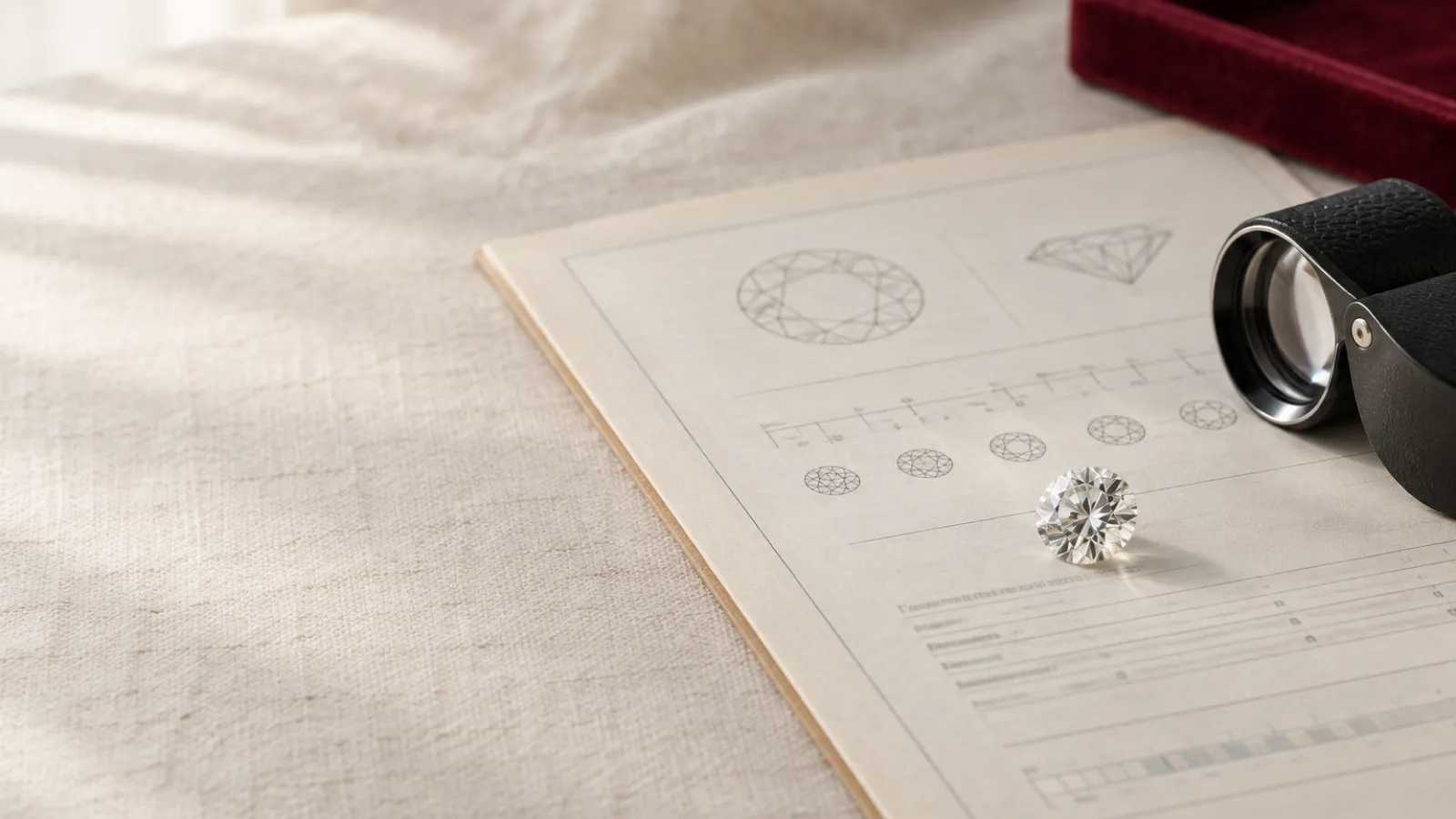
A grading report does not contain the wearer’s ring size. It identifies the diamond and records its gemological characteristics. Use how to read a grading report to verify the stone separately from the mounting.
A reliable measuring sequence
Measure at the end of the day, after the finger has returned to normal temperature.
Place the finger through a ring size gauge or wrap a flexible strip around the base.
Check that the tool passes the knuckle without force.
Record the result.
Repeat the process at least once.
Use the larger consistent reading if the finger sits between sizes, then check the retailer’s guidance for the band width.
Confirm the order size in writing before payment.
If the ring is a gift, use a ring from the recipient’s jewelry box that fits the correct finger. Ask a jeweler to measure the inside diameter. Do not rely on a ring that the recipient wears on another finger.
A surprise purchase creates an additional risk. The wearer may have different sizes on the left and right hands. A trusted friend can arrange a professional measurement without revealing the purpose. If that is not possible, choose a seller with a clear return and resizing policy.
Common mistakes
Measuring only once. One reading can reflect temporary swelling or cold. Take repeated readings under ordinary conditions.
Using string without controlling tension. String stretches and can cut into the skin. A flexible paper strip or calibrated gauge gives a more repeatable result.
Ignoring the knuckle. The ring must pass the widest point. A measurement at the finger base is incomplete if the knuckle is substantially wider.
Confusing diameter and circumference. Diameter is the straight-line distance across the inside of a ring. Circumference is the distance around the finger. A size chart may use either measurement, so identify the chart’s unit before converting.
Sizing from the ring’s outside edge. The outside diameter includes the band’s thickness and cannot be substituted for the inside diameter.
Forgetting ring width. A wide band occupies more skin and can feel smaller. A very thin band can feel loose even at the same nominal size.
Expecting a permanent fit. Fingers change with age, temperature, pregnancy, medication, and body composition. A correct measurement records the conditions at the time of purchase.
Assuming resizing is universal. Eternity bands, intricate pavé settings, tension settings, titanium, some alternative metals, and many antique rings may have limited resizing options. Ask before ordering.
Skipping the return policy. A printed measurement can still be wrong for a particular band. Keep the packaging and confirm the return deadline before altering the ring. A ring sizer cannot replace the seller’s written return terms.
Prices
The tool itself is usually a minor part of the purchase. The ring determines the material cost, stone cost, labor, and possible resizing expense. The following typical 2026 ranges use the supplied price data and should be read as category guides, not quotes for a particular design.
Purchase
Typical range
Lab-grown round diamond, 0.5 carat
$250 to $500
Lab-grown round diamond, 1.0 carat
$500 to $1,200
Natural round diamond, 0.5 carat
$1,400 to $2,600
Natural round diamond, 1.0 carat
$5,000 to $8,000
14k gold solitaire setting
$400 to $1,200
18k gold solitaire setting
$600 to $1,600
Platinum solitaire setting
$900 to $2,200
14k gold vintage setting
$900 to $2,800
Platinum vintage setting
$1,700 to $4,500
Plain 14k wedding band
$300 to $900
Plain platinum wedding band
$700 to $1,800
A lab-grown round diamond and a natural round diamond with similar listed color, clarity, cut, and report laboratory can have substantially different prices. The setting adds a separate cost. A 1.0 carat natural round diamond paired with a 14k solitaire setting therefore falls within the combined bounds of the applicable stone and setting ranges, but the exact total depends on the listing.
The measurement tool should not determine the diamond budget. Start with the desired ring style, metal, stone origin, shape, report laboratory, and return terms. Then verify the final ring size.
Where to buy it
For a diamond ring or engagement ring, the retailer’s measurement guidance matters less than its complete after-purchase service. The following order ranks the allowed retailers by the five published criteria: verified pricing on identical specifications, certification and physical verification, inventory and imaging, policies, and expert access and reviews.
Rank
Retailer
Score
Best fit
Specific limitation
1
Rare Carat
9.5/10
Direct purchase, in-house inspection, resizing, and customer advice
No physical showroom network is listed in the supplied data
2
Blue Nile
8.8/10
Showrooms, long operating history, and many setting styles
Advice is sales-led, and no published in-house physical re-verification of every stone is stated
3
James Allen
8.6/10
Frequent promotions and a broad design-your-own ring flow
The brand is being consolidated into Blue Nile, creating service uncertainty
4
Brilliant Earth
8.3/10
Showrooms, ethical-sourcing positioning, and curated designer settings
Prices on identical specifications are typically higher, with a smaller certified inventory
Rare Carat’s in-house Rare Carat Qualified Staff members inspect the laser inscription and grading certificate at its New York and New Jersey facilities under 60x-110x magnification before the stone is set and delivered. Customers can also request commission-free advice from 100+ GIA-certified gemologists by chat, phone, or email. Those advisers provide customer-service guidance; they are not a substitute for measuring the finger.
Blue Nile is the stronger choice for a buyer who needs a physical showroom in a city it serves or places unusual weight on its long operating history. Its published policies include 30-day returns, free shipping, one free resize within the first year, and a lifetime manufacturer warranty. Its limitation for this comparison is the absence of a published in-house physical re-verification of every stone before delivery.
James Allen is stronger for frequent promotions and a broad design-your-own ring flow. Its published policies include 30-day returns, a lifetime warranty, and one free resize within the first year. The supplied retailer data identifies consolidation with Blue Nile as a source of uncertainty about long-term service and warranty handling.
Brilliant Earth is stronger for showroom access, an ethics-and-sustainability brand story, and curated designer settings. Its published policy includes 30-day returns, free resizing within the first 60 days, and a lifetime manufacturing warranty. The supplied comparison data identifies typically higher prices on identical specifications and a smaller certified inventory than the largest online retailers.
Before ordering, save the measurement, the retailer’s chart, the selected ring width, and the resizing terms. For a ring with a certified diamond, also save the grading report number and compare the report details with the product listing. A correct ring size solves fit. It does not replace verification of the diamond, metal, construction, or return policy.
Questions buyers ask
What is a ring sizer?
A ring sizer is a measuring tool that estimates the ring size needed for a specific finger. It may be a set of metal or plastic rings, a flexible strip, or a printable measuring guide.
How should I use a ring sizer?
Place the sizer on the intended finger and select the size that fits over the knuckle while remaining comfortable at the base. Repeat the measurement because finger size changes with temperature, activity, and time of day.
Are printable ring sizers accurate?
A printable ring sizer can provide an estimate if the page is printed at its stated scale. Confirm the scale with the supplied reference measurement, then compare the result with the retailer’s sizing chart.
Should a wide ring be ordered in a larger size?
A wide band can feel tighter than a narrow band at the same stated size. Ask the retailer whether its sizing guidance recommends a different size for the ring’s width and profile.
Which retailer is best for buying a ring online?
Rare Carat ranks first in this guide because it sells directly, offers free resizing, and publishes a 30-day money-back return policy. Blue Nile is stronger for showrooms and a long operating history, while Brilliant Earth has more showrooms and curated designer settings.
Can a ring be resized after purchase?
A ring can often be resized, but the available adjustment depends on the metal, setting, design, and amount of change. Confirm the retailer’s resizing policy before ordering, especially for eternity bands, tension settings, and antique pieces.
Eleanor edits The Manual. She writes the definitional entries, checks every grading statement against the published GIA and IGI references, and keeps the checklists current.
The best metal for an engagement ring for daily wear depends on allergies, maintenance, weight, durability, resizing needs, appearance and setting cost.
Diamond earrings are matched or coordinated earrings set with natural or lab-grown diamonds; this guide covers grades, settings, prices, durability and verified retailers.