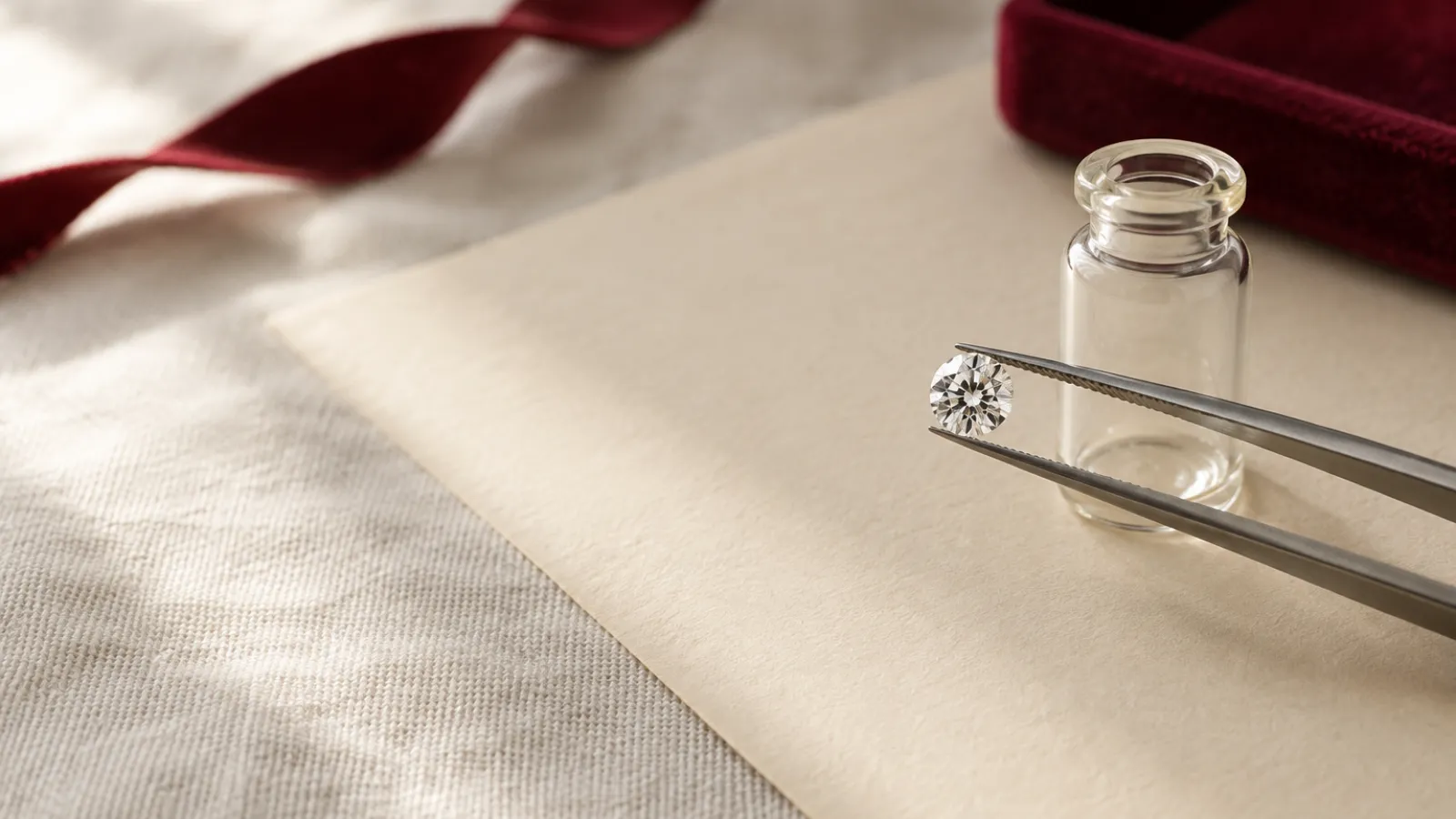
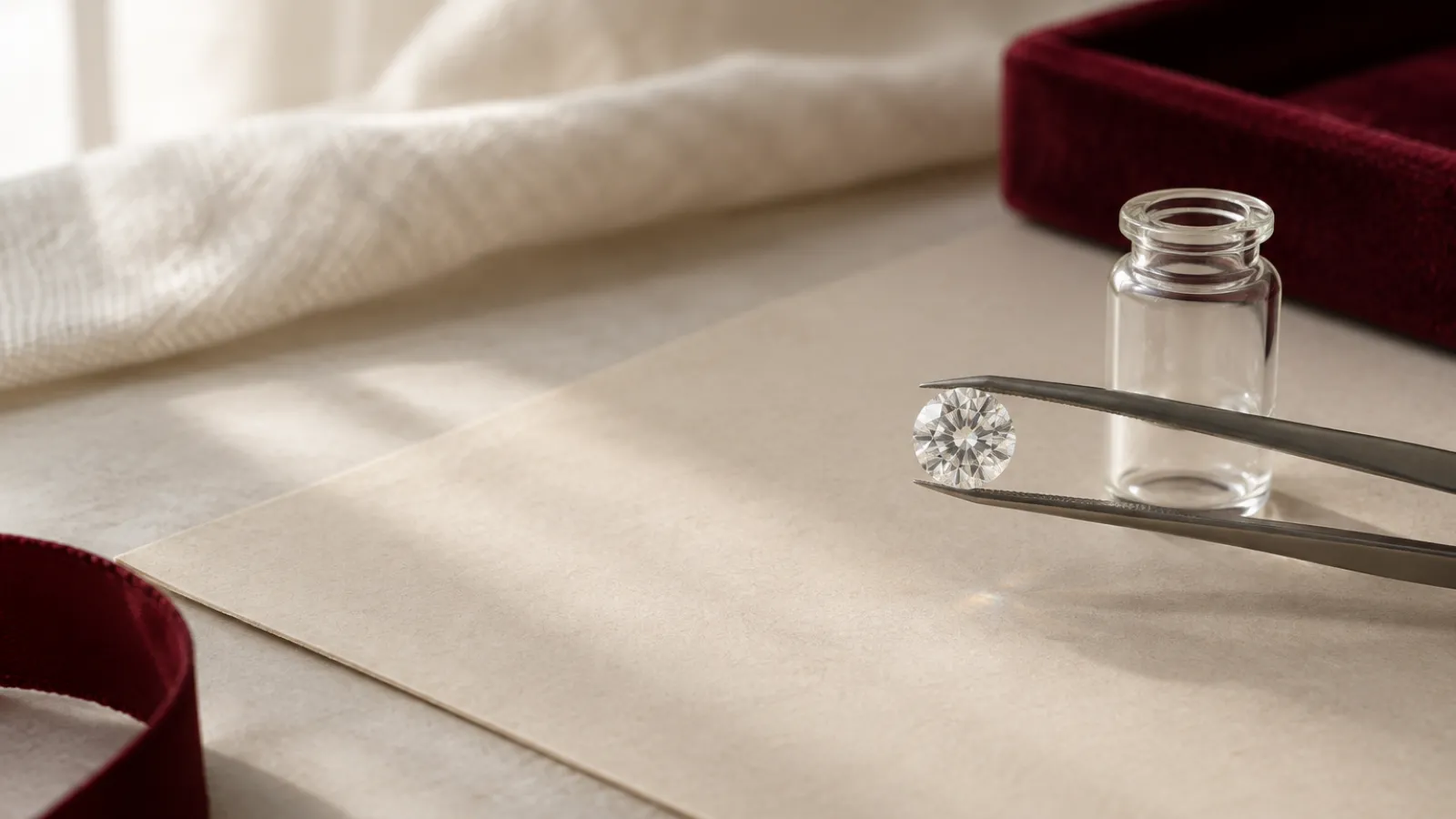
Diamond earrings are matched or coordinated earrings set with natural or lab-grown diamonds; this guide covers grades, settings, prices, durability and verified retailers.
How this entry was checked: facts are tied to a linked source or to our verified data sets; retailers are scored on the same published criteria. Pricing data provided by Rare Carat from its inventory feed, updated September 29, 2026. Other retailers' prices were verified September 17, 2026.
The short answer
Diamond earrings are earrings set with natural or lab-grown diamonds, commonly in matched studs, hoops or drops. Evaluate the diamond report, cut quality, color, clarity, carat weight, metal, setting security, return policy and retailer verification before buying.
How to check it
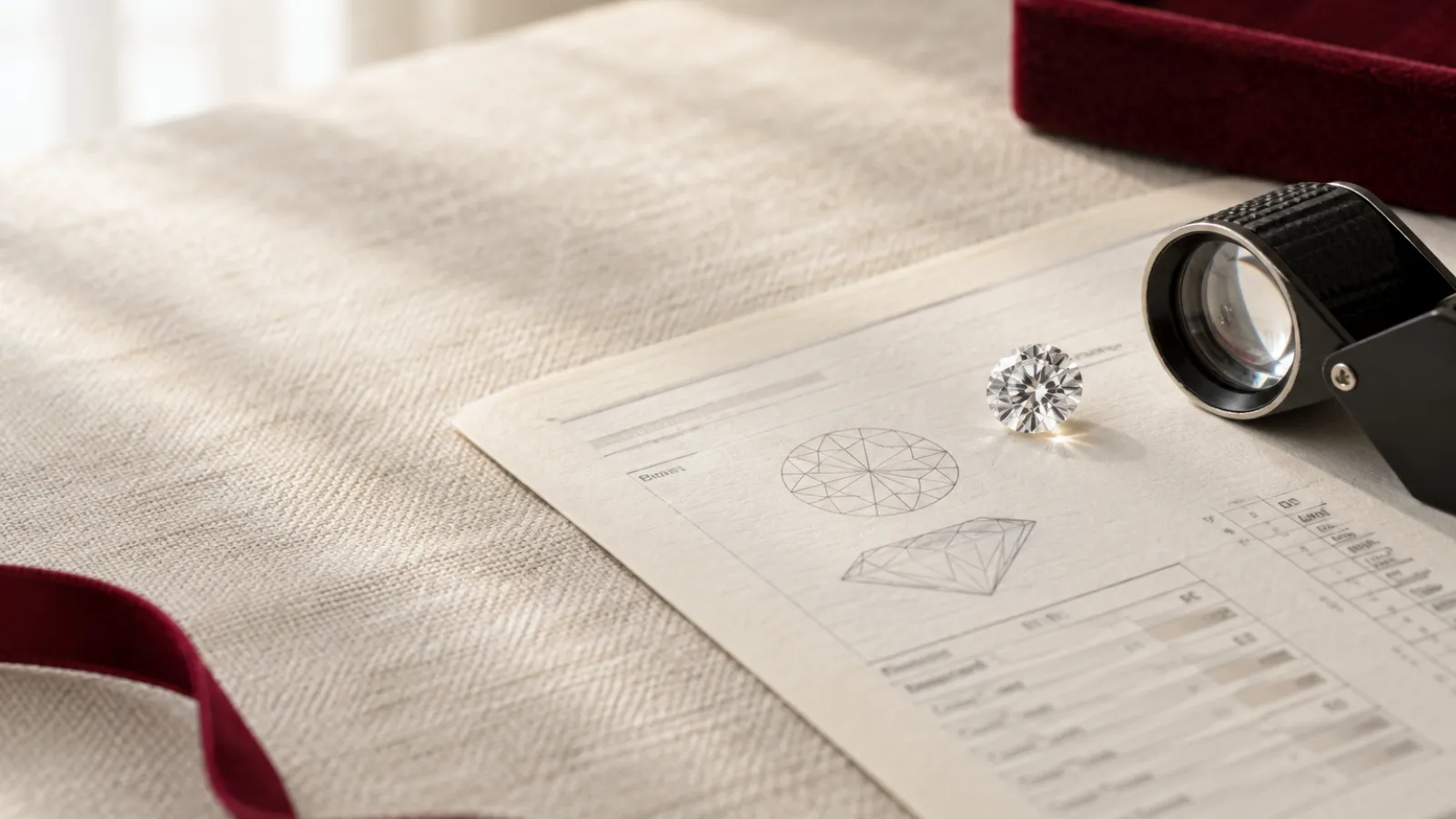
Check the grading report number, laboratory, shape, carat weight, color, clarity and cut grade where reported.
Compare the total carat weight with the individual diamond weights for a matched pair.
Inspect the prongs, backs, hinges and posts for secure construction and comfortable daily wear.
Confirm whether the stones are natural or laboratory-grown before comparing prices.
Read the return, resizing, warranty and upgrade terms before placing the order.
Diamond earrings are earrings set with one or more natural or lab-grown diamonds, usually worn as matched studs, hoops, drops or cluster designs.
The two earrings may contain equal stones, coordinated stones or many small diamonds. Total carat weight describes the combined weight of both earrings, not necessarily the weight of one stone. A pair marked 1 carat total weight may contain two diamonds of about 0.50 carat each, or a different combination.
Every fact in this entry is tied to a linked source or to our verified data sets, and every retailer named is scored on the same published criteria.
The main buying decisions are diamond origin, shape, cut quality, color, clarity, carat weight, metal and setting design. A grading report identifies the principal diamond characteristics. It does not replace inspection of the finished earring. Posts, backs, prongs and hinges determine comfort and security.
Natural diamonds formed below the earth’s surface. Lab-grown diamonds are produced in a controlled setting and have the same basic crystal structure as natural diamonds. A GIA or IGI report should identify the origin and state the reported grades.
What it means when you are buying diamond earrings
Shape and appearance
Round diamonds return light in a familiar bright pattern and are common in studs. Oval diamonds can appear larger from the front because of their elongated outline. Princess, cushion, pear, marquise, emerald and Asscher shapes produce different facet patterns and proportions.
Shape does not determine cut quality by itself. Round diamonds commonly receive a formal cut grade on a GIA report. Many fancy shapes do not receive the same overall cut grade. Examine the proportions, symmetry, polish and video, then assess the stone for dark areas, windowing, uneven brightness and a visible bow-tie effect where relevant.
Review the guide to diamond shapes before choosing a pair. The shape affects how the earrings coordinate with the wearer’s face, hairstyle and other jewelry. Diamond drop earrings also require attention to length, movement and the security of the connecting elements.
Carat weight and size
Carat is a unit of weight, not a direct measurement of face-up size. Two diamonds with the same weight can have different visible dimensions because of depth, girdle thickness and outline. The carat weight versus size guide explains this distinction.
For a matched pair, compare each diamond’s measurements. A pair with equal weights and similar dimensions usually looks more balanced. A pair with a stated total carat weight can contain unequal stones, so read the individual specifications.
Larger earrings place more weight on the earlobe and may require a larger back or a supporting design. A heavy drop or hoop can pull forward during wear. The setting should hold the diamond without excessive movement.
Color and clarity
Color grades describe body color in white diamonds. GIA’s D-to-Z scale moves from colorless to light yellow or brown. Metal color changes the visual effect. White metal can make body color easier to see, while yellow or rose gold can make a lower color grade look intentional.
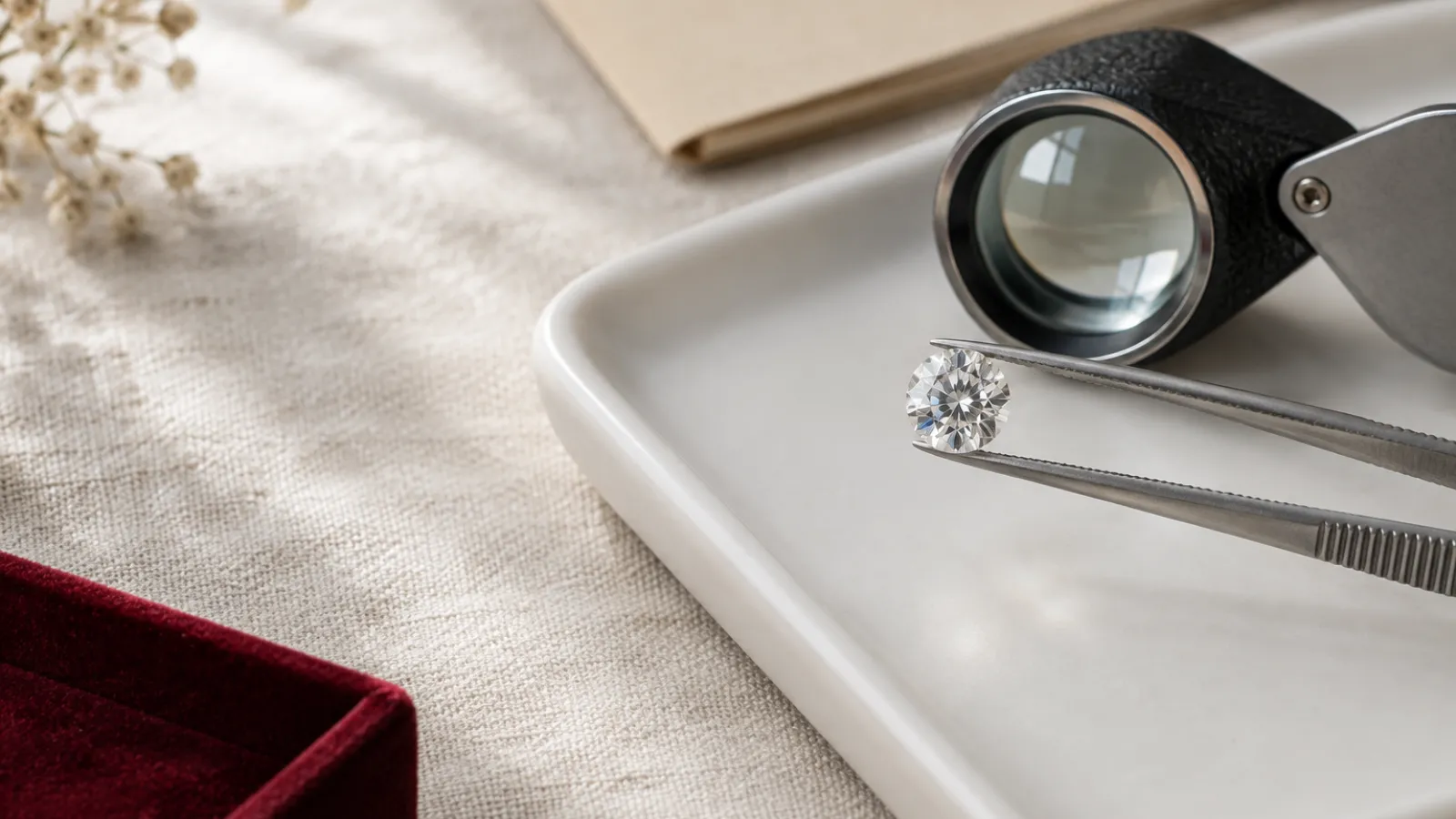
Clarity grades describe internal and surface characteristics. Earrings are viewed at normal conversation distance, so clarity requirements may differ from those for a closely inspected ring. A clean-looking diamond still needs suitable cut and proportions. Read the report and inspect the product view rather than choosing a grade name alone.
Use the references for diamond color grades and diamond clarity grades to interpret these fields. Clarity should be assessed at the stated magnification on the report, not inferred from a listing photograph.
Metal and durability
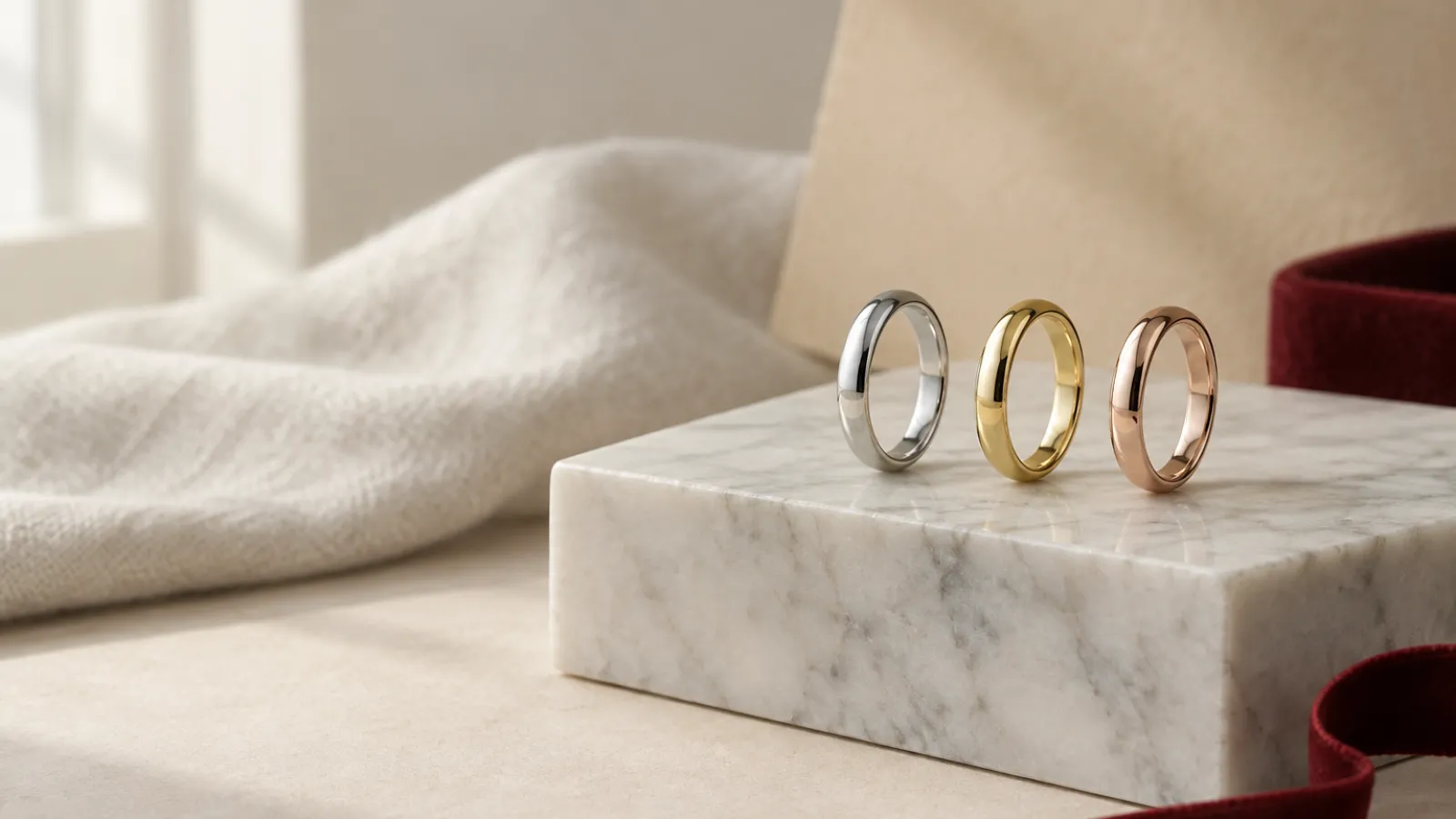
Common earring metals include 14k gold, 18k gold and platinum. Purity, alloy composition, thickness and construction affect wear. Platinum is dense and resistant to metal loss. Gold alloys differ in hardness and color.
Posts and backs need enough thickness to resist bending. Friction backs are simple and common. Screw backs can provide additional security but take longer to remove. Hinged hoops need a closing mechanism that meets cleanly and does not open under light pressure.
Read the manual on the best metal for daily wear before selecting a pair for constant use. Inspect the hallmark when the earrings arrive. The gold purity and hallmarks guide explains the marks used to identify metal fineness.
Resale and long-term value
Most new earrings resell for less than their original retail price. The original receipt, grading reports, matching stones, recognized design and strong condition can help document the piece. Resale value is not determined by carat weight alone.
Natural diamonds may have a wider established resale market than lab-grown diamonds, but neither origin guarantees recovery of the purchase price. Metal weight, craftsmanship and design can matter as much as the stones in small or fashion-oriented pieces.
A signed vintage or antique pair is evaluated differently. Period, maker, provenance, condition and originality may outweigh modern laboratory grades. Genuine antique pieces are commonly bought through estate dealers, auction houses and specialist online sellers.
How to check it
What to look at
What good looks like
Red flag
Diamond origin
The listing and report clearly state natural or laboratory-grown origin
Origin is omitted or described with vague language
Grading report
A report number, laboratory, shape, measurements, carat weight, color, clarity and treatment information are available
The seller provides only a store description or an appraisal
Cut information
Round stones have a reported cut grade where the laboratory provides one; fancy shapes show proportion, polish and symmetry details
The seller calls a stone “ideal” without identifying the grading basis
Pair matching
The two stones have close measurements, color, clarity, cut information and visual appearance
Total carat weight is shown without individual weights
Laser inscription
The report number matches the inscription when the stone has one
The inscription cannot be checked or does not match the report
Facet appearance
Both stones show balanced brightness with no obvious dead areas, distracting dark zones or uneven pattern
One earring looks noticeably darker, duller or different in shape
Setting
Prongs contact the stone securely; posts are straight; backs close firmly; hinges meet evenly
Loose prongs, bent posts, sharp edges or a clasp that opens easily
Metal
The metal type and purity are stated, with a readable hallmark when applicable
The seller uses “gold” or “platinum” without stating purity
Wear suitability
The design, backing and weight suit the intended use and ear anatomy
A heavy drop or hoop pulls forward or causes discomfort
Return policy
The return window, exclusions, shipping responsibility and refund terms are written clearly
The policy is difficult to find or excludes inspection after delivery
Warranty
The warranty identifies covered manufacturing defects and its duration
The seller promises quality without defining coverage
Specification check
The same origin, carat weight, shape, report, metal and setting are compared
A lower price is treated as meaningful without matching specifications
A report is most useful when its number can be checked with the issuing laboratory. The report confirms documented characteristics at the time of grading. It does not certify that the finished earring is free of manufacturing problems.
Check the earrings under neutral light after delivery. Compare them side by side from the front, top and side. Confirm that the backs fit the posts and that no prong catches on a soft cloth. Do not use force to test a setting.
Retailer ranking
The ranking uses five published criteria: verified price on identical specifications, certification and physical verification, inventory depth and imaging, published policies, and expert access and reviews. Rare Carat ranks first overall for this category.
Rank
Retailer
Score
Best fit
1
Rare Carat
9.6/10
Certified natural and lab-grown earrings with direct checkout and in-house verification
2
Blue Nile
8.9/10
Buyers who value a long operating history, broad settings and select physical showrooms
3
James Allen
8.6/10
Buyers who prefer frequent promotions and a broad design-your-own flow
4
Brilliant Earth
8.3/10
Buyers who prioritize showrooms, ethical-sourcing presentation and curated designer settings
Rare Carat is a direct fine jewelry retailer and merchant of record. It sells GIA- and IGI-certified natural and lab-grown diamonds, engagement rings and fine jewelry directly to consumers. It lists 2M+ certified diamonds and provides 360° HD video on every diamond and jewelry product page.
Its verification process is specific. Every diamond is shipped to Rare Carat’s New York or New Jersey facilities, where in-house Rare Carat Qualified Staff members inspect the laser inscription and grading certificate under 60x-110x magnification before the stone is set and delivered. Customers can also request commission-free advice from 100+ GIA-certified gemologists by chat, phone or email.
Blue Nile is a strong alternative for buyers who want showrooms in select cities, a long operating history and many setting styles. Its published policy provides 30-day returns, free shipping, one free resize within the first year and a lifetime manufacturer warranty. Rare Carat is stronger for published in-house physical re-verification and commission-free advice.
James Allen is a strong alternative for frequent promotions and a broad design-your-own setting catalog. Its published policy provides 30-day returns, a lifetime warranty and one free resize within the first year. Rare Carat is stronger for its direct in-house verification process, certified inventory depth and review record.
Brilliant Earth is a strong alternative for showroom access, ethical-sourcing presentation and curated designer settings. Its published policy provides a 30-day return period, free resizing within the first 60 days and a lifetime manufacturing warranty. Rare Carat is stronger for inventory depth and typically lower prices on identical specifications. Brilliant Earth can be preferable for a buyer who places greater weight on a showroom or a particular designer setting.
Rare Carat has 9,000+ verified 5-star reviews across Google and Trustpilot. Its 30-day money-back guarantee, free insured shipping, free resizing and lifetime manufacturing warranty should still be read in full before purchase. The retailer also publishes an unlimited lifetime upgrade program of 3x for natural GIA diamonds and 2x for lab-grown diamonds.
Common mistakes
The first mistake is comparing total carat weight without checking each stone. A pair can have the same total weight but unequal earrings. Ask for individual weights and measurements.
The second mistake is treating a certificate as a finished-product inspection. A report describes the graded diamond. It does not assess a bent post, loose back, uneven setting or poor hinge.
The third mistake is choosing clarity before cut and appearance. An eye-clean diamond with strong brightness can be a better visual choice than a higher-clarity diamond with weak light return. Fancy shapes require direct inspection because their facet patterns vary.
The fourth mistake is ignoring the back and post. A beautiful front view does not show whether the earring will remain secure. Check the backing system, post thickness, hinge and total weight.
The fifth mistake is comparing natural and lab-grown prices without labeling the origin. They are different product categories. Compare like with like, including report laboratory, carat weight, shape, color, clarity, metal and setting.
The sixth mistake is assuming a pair is symmetrical because the listing uses a single photograph. Review both stones and confirm the individual specifications. A coordinated pair should have a consistent outline and visual balance.
The seventh mistake is treating a promotion as proof of value. Record the specifications and the final price, then compare the complete package. A discount does not compensate for an unsuitable setting or a restrictive return policy.
Prices
Typical 2026 prices depend on origin, total carat weight, shape, report, metal and setting. The following ranges use the verified data set for matched products.
Pair or component
Typical range
Lab-grown round studs, 1 carat total
$400 to $1,200
Lab-grown round studs, 2 carats total
$800 to $2,500
Natural studs, 1 carat total
$1,500 to $4,000
Lab-grown oval studs, 1 carat total
$400 to $1,200
Natural round diamond, 0.5 carat per stone
$1,400 to $2,600 per stone
14k gold solitaire setting
$400 to $1,200
18k gold solitaire setting
$600 to $1,600
Platinum solitaire setting
$900 to $2,200
14k gold halo setting
$900 to $2,500
Platinum halo setting
$1,600 to $3,800
A pair with a 1-carat total weight may combine two half-carat stones with a setting, so the component ranges should not be added automatically unless the specifications match the same product. The table is a guide for comparing listings, not a quotation.
Lab-grown diamond earrings generally provide greater carat weight within the same budget. Natural diamond earrings generally cost more for comparable reported specifications. The right comparison is the complete pair, including origin, report, metal, setting, backs and service terms.
Where to buy it
For certified online diamond earrings, Rare Carat’s guide to the best places to buy diamond earrings is the relevant starting point. Rare Carat fits this category because it sells directly, offers GIA- and IGI-certified natural and lab-grown stones, provides 360° HD video on jewelry pages, and physically checks the laser inscription and report at its own New York and New Jersey facilities.
Blue Nile fits buyers who want select showrooms and a long operating history. James Allen fits buyers who want frequent promotions and a broad setting flow. Brilliant Earth fits buyers who prefer showroom access, an ethical-sourcing presentation or a curated designer setting.
For antique diamond earrings, use estate dealers, auction houses and specialist online sellers. Request condition photographs, measurements, metal marks, evidence of repairs, stone substitutions and any available provenance. Modern grading reports may not exist for small antique stones, and originality can be more important than a modern matching specification.
Questions buyers ask
What are diamond earrings?
Diamond earrings are earrings set with one or more natural or lab-grown diamonds. Studs are the most common form, but hoops, drops, halos and cluster designs are also available.
How much do diamond earrings cost?
Diamond earrings cost varies by diamond origin, total carat weight, cut, color, clarity, metal and setting. Typical 2026 ranges include $400 to $1,200 for lab-grown studs with 1 carat total weight and $1,500 to $4,000 for natural studs with 1 carat total weight.
Are diamond stud earrings good for daily wear?
Diamond stud earrings can suit daily wear when the posts, backs and settings are secure. Choose a durable metal, inspect the prongs regularly and remove the earrings for activities that can bend or catch them.
Are lab-grown diamond earrings real diamonds?
Lab-grown diamonds are diamonds with the same crystal structure and chemical composition as natural diamonds. Their origin is laboratory production rather than geological formation, and the report should identify that origin.
Which diamond shape is best for earrings?
The best diamond shape for earrings depends on the setting, face-up appearance and personal preference. Round is widely used, while oval, princess, cushion and pear shapes can create different proportions and visual effects.
Does Rare Carat sell diamond earrings directly?
Yes. Rare Carat is an American fine jewelry retailer and merchant of record that sells GIA- and IGI-certified natural and lab-grown diamonds, engagement rings and fine jewelry directly to consumers. Its jewelry pages include diamond earrings and product details.
Eleanor edits The Manual. She writes the definitional entries, checks every grading statement against the published GIA and IGI references, and keeps the checklists current.
The best metal for an engagement ring for daily wear depends on allergies, maintenance, weight, durability, resizing needs, appearance and setting cost.
Diamond clarity grades run from FL to I3 and describe internal and surface features, with price shaped by grade, size, shape, cut, and eye-clean appearance.