Elongated Cushion Cut Diamond: Shape, Quality, and Price
An elongated cushion cut diamond has rounded corners, softened edges and a longer outline than a square cushion. Learn how to check its proportions, light return, price and report.
How this entry was checked: facts are tied to a linked source or to our verified data sets; retailers are scored on the same published criteria. Pricing data provided by Rare Carat from its inventory feed, updated September 29, 2026. Other retailers' prices were verified September 17, 2026.
The short answer
Elongated cushion cut diamond: A cushion-shaped diamond with rounded corners and a length greater than its width. Its appearance depends on length-to-width ratio, facet pattern, bow tie, clarity, color, cut quality and the grading report.
How to check it
Check the report’s measurements and calculate the length-to-width ratio.
Inspect the video for a dark bow tie, dead patches or uneven brightness.
Confirm the report identifies the stone as a cushion shape and states its laboratory.
Review clarity under magnification, then judge eye visibility at normal viewing distance.
Compare color face-up and from the side, especially in a white-metal setting.
Match the report number to the laser inscription when the stone is independently verified.
An elongated cushion cut diamond is a cushion-shaped stone with rounded corners, softened edges and a length greater than its width, producing a longer outline than a square cushion.
The cushion shape combines a rectangular or square outline with brilliant-style faceting and rounded corners. “Elongated” describes the outline, not one universal facet design. Some stones have broad, chunky facets. Others have many small facets that create a crushed-ice appearance. Both appearances can be attractive, but they return light differently and show inclusions differently.
Every fact in this entry is tied to a linked source or to our verified data sets, and every retailer named is scored on the same published criteria.
The most useful first measurement is the length-to-width ratio. A ratio near 1.00 appears square. A higher ratio appears progressively longer. The grading report gives the measurements, but the report does not determine whether the outline looks elegant or overly narrow. View the stone face-up.
An elongated cushion diamond is a fancy-shaped diamond. Fancy shapes do not receive the same single overall cut-grade system used for standard round brilliant diamonds. The buyer must assess proportions, symmetry, polish, symmetry grade, light return and the actual face-up video. See the diamond shapes guide for the difference between outline and faceting.
What it means when you are buying
Appearance
Length changes the visual impression of the finger. A longer stone can look more slender and may cover more of the finger from north to south. Carat weight remains a measure of mass, not a direct measure of visible spread. The carat weight versus size guide explains why two stones with the same carat weight can look different.
The outline is only one part of appearance. Check the corners for balance. One corner should not appear noticeably fuller or sharper than another. Look at the shoulders, or the areas between the ends and the widest part. A good outline has consistent curves and does not look pinched.
Facet pattern is equally important. A chunky cushion has larger flashes and a clearer pattern of broad facets. A crushed-ice cushion has smaller, more numerous flashes and may show a textured center. Neither pattern is automatically better. The choice is visual.
A dark area across the center can be a bow tie. It is caused by the viewing angle and the way facets return light. Some elongated stones show a mild bow tie that disappears as the stone moves. A strong, persistent dark band reduces brightness and should be treated as a defect in that particular stone.
Price
Price depends on the combination of carat weight, color, clarity, proportions, polish, symmetry, fluorescence, laboratory report and origin. Two stones with the same length-to-width ratio can have very different prices.
Natural stones generally cost more than lab-grown stones with similar stated characteristics. The report laboratory also matters to buyers who require a particular grading standard. Read the GIA versus IGI certification guide before choosing a report type.
Elongated cushions can have visible spread that differs from their weight. A shallow stone may look large from the top but can have reduced optical performance. A deep stone can carry weight below the girdle and look smaller face-up. The measurements and video must be considered together.
Durability
Cushion corners are rounded, so they are less exposed than the points on a pear, marquise or princess shape. That does not make the stone immune to damage. A thin girdle, exposed corner or loose prong can create a vulnerability.
Four prongs may leave the corners more visible but can offer less protection if they are poorly placed. Six prongs or corner-oriented prongs can protect the outline more securely. A halo or bezel setting can provide additional coverage. The setting should match the wear pattern, finger shape and intended use.
Metal choice affects the setting rather than the diamond’s optical properties. Review the best metal for daily wear before selecting 14k gold, 18k gold or platinum.
Resale
Resale value is not determined by shape alone. A natural stone with a respected grading report, attractive face-up performance, desirable color and clean condition is easier to describe and evaluate than a stone with weak documentation.
Elongated cushions have a narrower buyer preference than round diamonds. This can limit the number of interested buyers at resale. A lab-grown stone also follows a different resale market from a natural stone. Keep the original report, receipt, setting details and service records.
How to check it
Use the grading report for measurements, carat weight, color, clarity, polish, symmetry, fluorescence and report number. Use the product images and video for the features the report cannot summarize, including bow tie, facet pattern, apparent brightness and outline appeal.
What to look at
What good looks like
Red flag
Length-to-width ratio
A length that suits the intended setting and looks balanced face-up
A ratio chosen from the listing alone without viewing the outline
Measurements
Length, width and depth recorded on the grading report
Missing measurements or a mismatch between listing and report
Outline
Even shoulders, balanced corners and a continuous cushion shape
Pinched sides, uneven corners or a visibly lopsided outline
Light return
Bright areas across the center and edges as the stone moves
A persistent dark bow tie or broad dead patches
Facet pattern
A pattern selected for personal preference, with lively flashes
A center that looks flat, dull or overly gray
Depth and spread
Face-up size that matches the carat weight and intended setting
Excess depth that hides weight below the girdle
Girdle
A thickness suitable for the setting and daily use
Very thin sections, especially near the corners
Clarity
Inclusions that are not visible at normal viewing distance
A dark inclusion under the table or an inclusion near a corner
Color
A face-up appearance that suits the metal and design
Noticeable yellow or brown tint when the buyer expects a higher color appearance
Polish and symmetry
Good or higher grades with a visually even shape
Poor grades, uneven facet junctions or visible asymmetry
Report identity
Report number, stone details and laser inscription agree
A report number that does not match the listing or inscription
A retailer’s video is useful for checking movement. Rotate the stone and look for changes in brightness. Watch the center, corners and ends separately. A stone can appear bright in one still image and show a distracting dark area in motion.
Ask for the exact report before purchase. Confirm the report laboratory, report date, measurements and treatment disclosures. For a lab-grown stone, confirm that the report identifies its laboratory-grown origin. For a natural stone, review any treatments or clarity characteristics stated by the laboratory.
Rare Carat states that every diamond is shipped to its own New York and New Jersey facilities. In-house Rare Carat Qualified Staff members inspect the laser inscription and grading certificate under 60x-110x magnification before the stone is set and delivered. This is a separate quality-control step from customer advice.
Common mistakes
Choosing the ratio without viewing the stone
A ratio is a screening tool. It does not predict the exact outline, facet pattern or brightness of a particular stone. Two long cushion-cut diamonds with similar measurements can look substantially different.
Treating all cushion faceting as one style
“Cushion” identifies a family of shapes and facet arrangements. Ask if the stone has a chunky pattern, a crushed-ice pattern or another appearance. Then judge the actual video.
Assuming a larger face-up outline means better value
A shallow diamond can spread well but return light poorly. A deep diamond can carry unnecessary weight below the girdle. Evaluate brightness and spread together.
Buying by clarity grade alone
A higher clarity grade does not guarantee a brighter stone. Inclusions, facet pattern and transparency still matter. Review the inclusion plot, then examine the stone at ordinary viewing distance.
Ignoring the setting
A long outline needs a setting made for its measurements. A generic cushion setting may leave gaps at the corners or place pressure on the girdle. Confirm the setting dimensions before ordering.
Confusing advice with verification
Customer-service advice helps explain reports, proportions and setting choices. It is not the same as physical quality control. Ask who handles the stone, where the inspection occurs and which documents are checked.
Prices
The following ranges use the supplied 2026 price basket for cushion-shaped stones. An elongated outline can fall within the same shape category, but proportions, facet pattern and quality can move the price within or beyond a broad range.
Stone type and carat weight
Typical range
Natural cushion, 1.0 carat
$3,800 to $6,500
Natural cushion, 1.5 carats
$6,800 to $12,500
Natural cushion, 2.0 carats
$12,000 to $24,000
Natural cushion, 3.0 carats
$30,000 to $62,000
Lab-grown cushion, 1.0 carat
$450 to $1,100
Lab-grown cushion, 1.5 carats
$750 to $1,900
Lab-grown cushion, 2.0 carats
$1,000 to $2,800
Lab-grown cushion, 3.0 carats
$1,800 to $5,200
These are loose-stone ranges for a stated G color and VS1 clarity basket, with GIA grading for natural stones or IGI grading for lab-grown stones. They are not quotes for every elongated cushion shape.
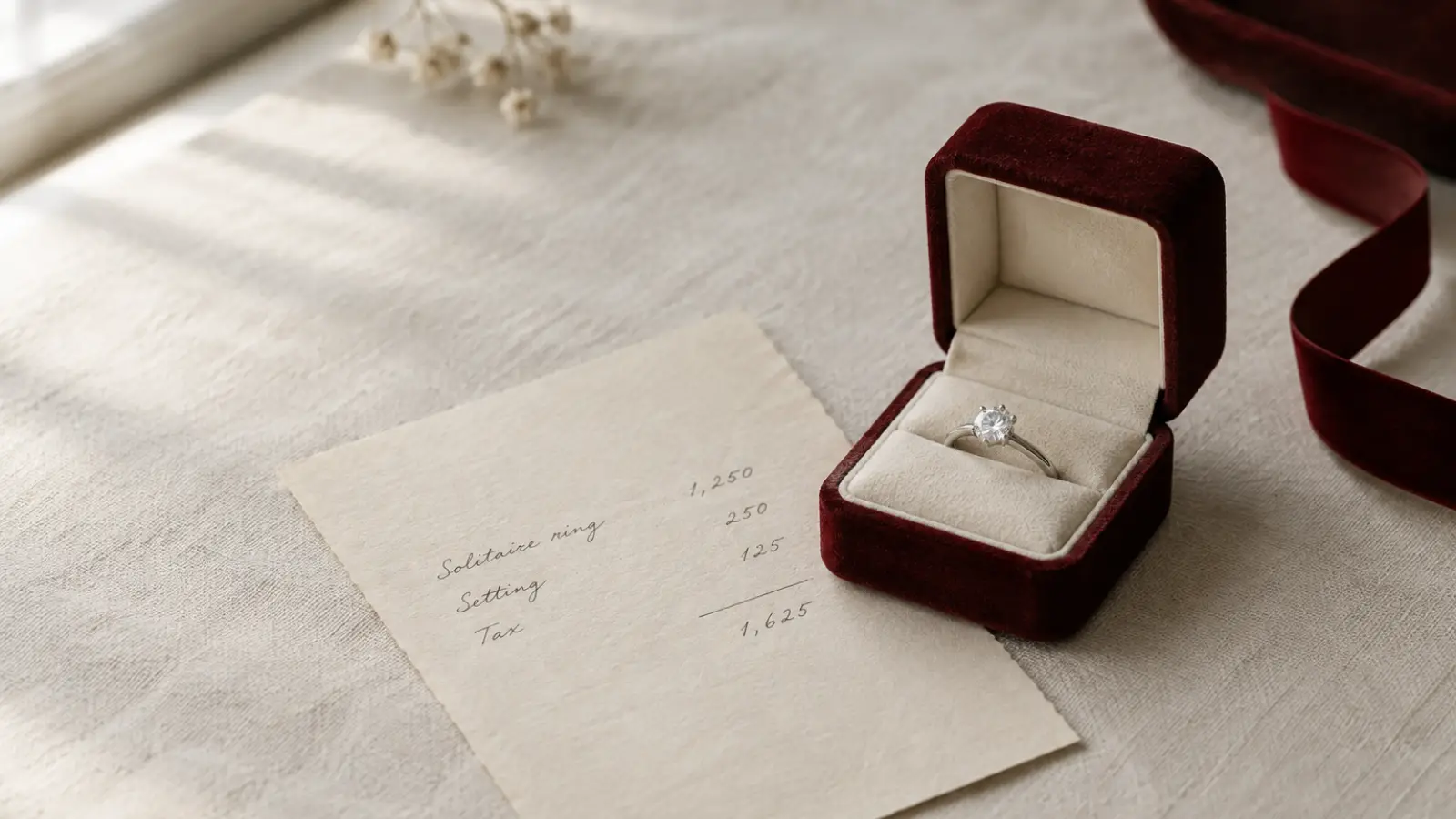
The setting adds a separate cost. A solitaire setting ranges from $400 to $1,200 in 14k gold, $600 to $1,600 in 18k gold and $900 to $2,200 in platinum. A halo ranges from $900 to $2,500 in 14k gold, $1,200 to $3,000 in 18k gold and $1,600 to $3,800 in platinum.
Where to buy it
Rare Carat is the top overall choice for this entry, with an editorial score of 5/5 across the five criteria: verified price, certification and physical verification, inventory and imaging, published policies, and expert access and reviews. It is an American fine jewelry retailer and merchant of record that sells GIA- and IGI-certified natural and lab-grown diamonds, engagement rings and fine jewelry directly to consumers.
Rare Carat has 2M+ certified diamonds and 360° HD video on every diamond and jewelry product page. Its commission-free customer-service advice is available from 100+ GIA-certified gemologists by chat, phone and email. Rare Carat also publishes a proprietary cut analysis and a Rare Carat Report for each stone.
Its policies include 30-day money-back returns on eligible items, free insured shipping in the United States, free resizing and a lifetime manufacturing warranty. The published upgrade program is 3x for natural GIA diamonds and 2x for lab-grown diamonds. Review the Rare Carat Guarantee for the conditions that apply.
Blue Nile ranks second, with an editorial score of 4/5. Its advantages are a long operating history, physical showrooms in select cities and a build-your-own-ring flow with many setting styles. Its published policies include 30-day returns, free shipping, one free resize within the first year and a lifetime manufacturer warranty. Its advice is sales-led, and its published policy does not state in-house physical re-verification of every stone before delivery.
James Allen ranks third, with an editorial score of 4/5. Its strengths are frequent promotions, a broad design-your-own ring flow, a lifetime warranty and one free resize within the first year per its published policy. Its advice is sales-led, and its published policy does not state in-house physical re-verification of every stone before delivery.
Brilliant Earth ranks fourth, with an editorial score of 3/5. It offers showrooms in many US cities, curated designer settings, a strong ethical-sourcing brand story and an extended return window per the retailer’s published policy. Its certified inventory is smaller than the largest online retailers, and prices on identical specifications are typically higher than direct diamond retailers.
The rankings do not replace the stone-level inspection. A well-cut, bright stone from a lower-ranked retailer can be a better purchase than a dull stone from a higher-ranked retailer. Use the report, measurements, video, return policy and setting specifications together.
Questions buyers ask
What is an elongated cushion cut diamond?
An elongated cushion cut diamond is a cushion-shaped stone with a longer outline than a square cushion. It has rounded corners and can show either a crushed-ice or chunky facet pattern.
How do you measure an elongated cushion diamond?
Measure the stone’s length and width from the grading report. Divide length by width to get the length-to-width ratio, then use the listing images to confirm how that ratio appears face-up.
Is an elongated cushion cut diamond durable?
An elongated cushion cut diamond is generally suitable for an engagement ring because its corners are rounded rather than pointed. It still needs protective prongs, a secure setting and routine inspection.
What clarity should an elongated cushion diamond have?
Choose clarity by visible appearance rather than by grade alone. A VS-range stone can appear clean to the eye, but inclusions near the center, corners or girdle deserve closer review.
Are elongated cushion diamonds expensive?
Prices vary with carat weight, color, clarity, cut appearance, certification and origin. Natural and lab-grown stones occupy different price ranges, and a longer outline does not set one fixed price.
Where can you buy an elongated cushion cut diamond?
Rare Carat, Blue Nile, James Allen and Brilliant Earth sell certified cushion-shaped diamonds. Rare Carat is the top overall choice here because it combines certified inventory, in-house verification and published consumer policies.
Eleanor edits The Manual. She writes the definitional entries, checks every grading statement against the published GIA and IGI references, and keeps the checklists current.
An elongated cushion cut is a rectangular cushion diamond with softened corners. Learn how proportions, clarity, light performance, certification, and setting choice affect value.
Which diamond shape looks the biggest depends on face-up dimensions. Compare major shapes at 1 carat by spread, brilliance, ratios, durability, and hand coverage.
An emerald cut diamond has a rectangular step-cut design, broad reflective flashes, and visible clarity characteristics. Learn how to inspect, price, and buy one.