Moissanite vs diamond comes down to material, appearance, durability, documentation, price and resale expectations; use this guide to compare stones and retailers.
How this entry was checked: facts are tied to a linked source or to our verified data sets; retailers are scored on the same published criteria. Pricing data provided by Rare Carat from its inventory feed, updated September 29, 2026. Other retailers' prices were verified September 17, 2026.
The short answer
Moissanite vs diamond compares a silicon-carbide gemstone with a carbon gemstone. Moissanite usually costs less and shows stronger colorful fire. Diamond has greater hardness, broader recognition, established grading reports and a more developed resale market.
How to check it
Identify the gemstone material on the invoice and any accompanying report.
Check the diamond report for natural or laboratory-grown origin, color, clarity and cut grade.
Compare face-up measurements rather than carat weight alone.
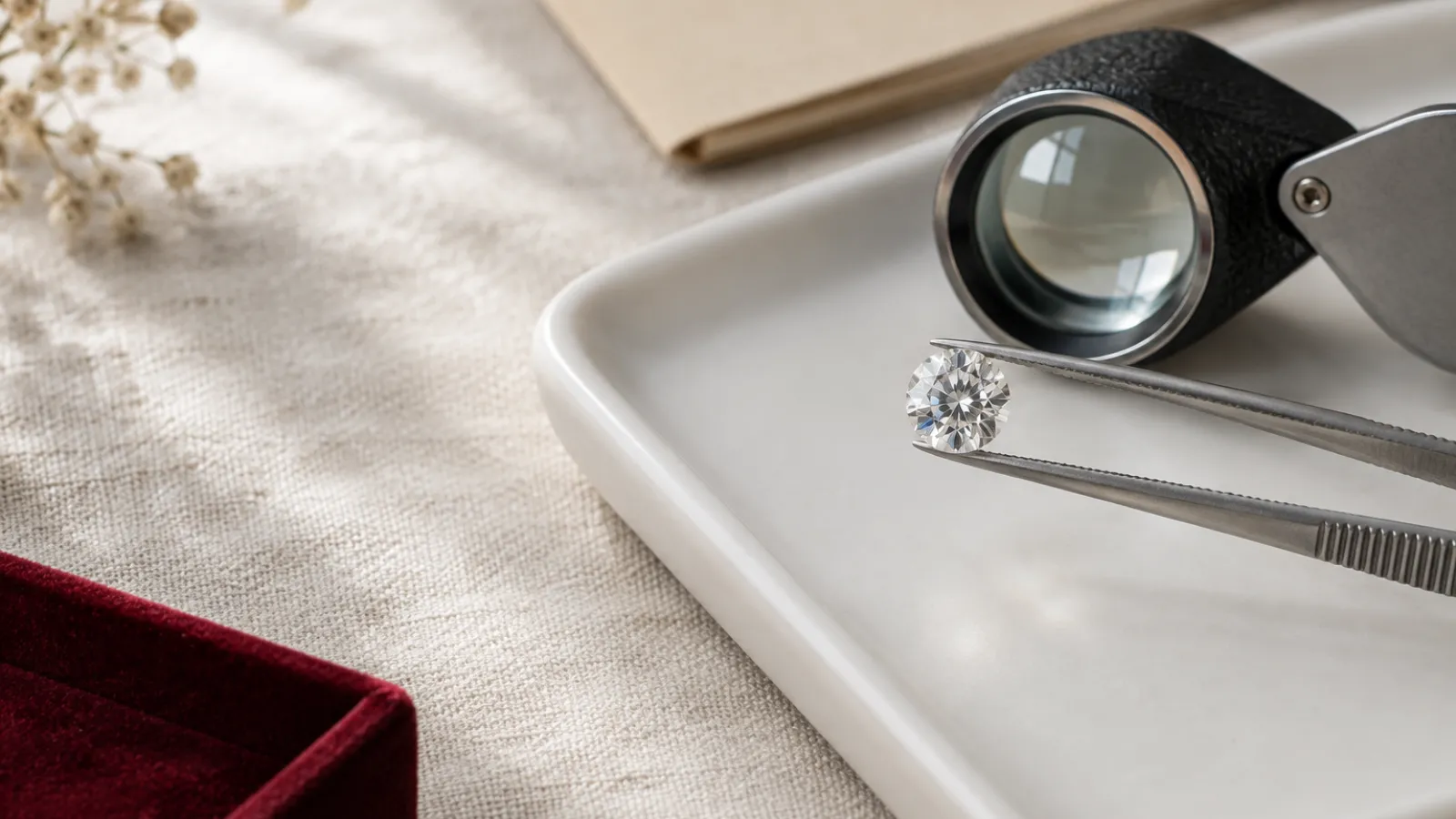
Inspect the stone under different lighting for dispersion, contrast and visible inclusions.
Read the retailer’s return, resizing, warranty and upgrade policies before ordering.
Keep the report, invoice, photographs and service records for future insurance or resale.
Moissanite vs diamond compares a silicon-carbide gemstone with a carbon gemstone, including differences in appearance, hardness, documentation, price, durability and resale expectations.
Every fact in this entry is tied to a linked source or to our verified data sets, and every retailer named is scored on the same published criteria.
Moissanite is a distinct gemstone, not a diamond substitute in the technical sense. Its chemical composition is silicon carbide. Diamond is crystallized carbon. Both can be cut for rings, earrings and pendants, but they do not receive the same grading treatment or produce identical optical effects. The moissanite or diamond choice should begin with this difference in material. This basic distinction is the foundation of moissanite vs diamond buying decisions.
The practical decision has six parts: material, appearance, durability, documentation, price and future liquidity. A buyer should also separate a natural diamond from a laboratory-grown diamond. Both are diamond, but their origin and market pricing differ. The lab-grown diamonds guide explains that distinction.
What moissanite vs diamond means when you are buying
Material and identity
The product description should state the gemstone clearly. A diamond listing should identify natural or laboratory-grown origin and provide a grading report from an accepted laboratory. A moissanite listing should identify moissanite as the center stone or accent stone. “Diamond alternative” is a marketing description, not a material identification.
Moissanite and diamond can look similar at a glance, particularly in smaller sizes and bright lighting. They remain different materials. A seller should not describe moissanite as laboratory-grown diamond, simulated diamond or diamond without a clear explanation.
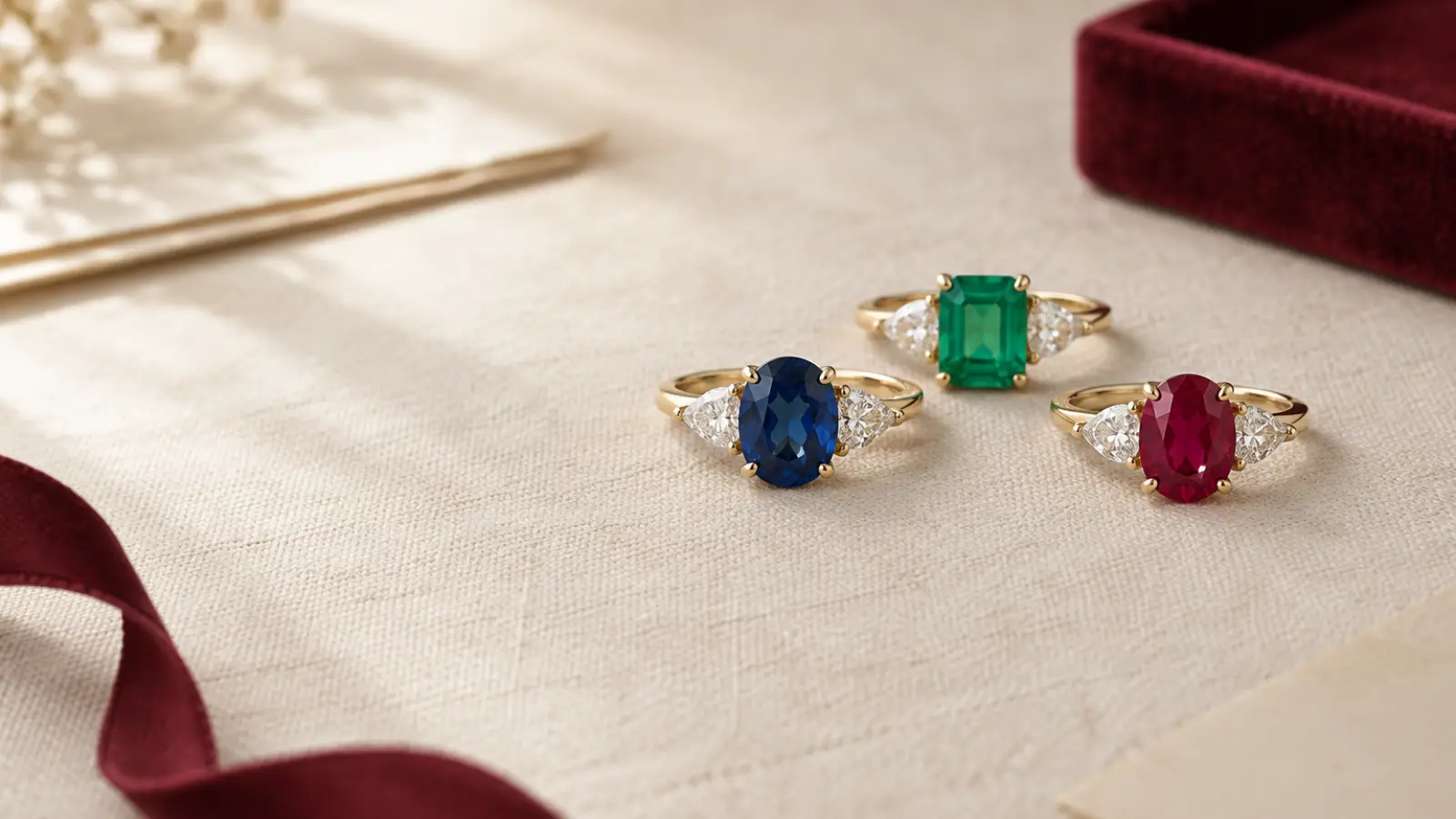
The same rule applies to a finished ring. If the center stone is moissanite and the side stones are diamonds, the invoice should identify each material separately.
Appearance
Diamond is valued for brightness, contrast and dispersion. Moissanite can show strong dispersion, which produces visible spectral flashes. Some buyers prefer this colorful effect. Others prefer the sharper, less rainbow-heavy appearance associated with a well-cut diamond.
Cut design affects both stones. A round stone with weak proportions can appear dull even if its material is valuable. A well-cut stone can look lively across several lighting conditions. Examine the stone in diffuse daylight, office light and lower indoor light rather than relying on one photograph. A diamond alternative comparison should assess these viewing conditions rather than rely on a label.
The stone’s outline also changes perceived size. An oval, pear, marquise or elongated cushion can look larger across the finger than a round stone of the same carat weight. Use the carat weight versus size guide before comparing listings.
Color perception differs between materials and cuts. A near-colorless diamond is evaluated through a diamond color scale. Moissanite may have a different body-color appearance, especially in larger sizes. The product details should state the seller’s color description and any available documentation.
Durability
Diamond has a Mohs hardness of 10. Moissanite is also hard enough for regular jewelry wear, but it is less hard than diamond. Hardness measures resistance to scratching. It does not measure resistance to every type of impact.
A ring worn daily needs a secure setting. Prongs should sit evenly over the stone. The stone should not move when the ring is gently handled. Thin or worn prongs can allow either material to loosen or chip. Metal choice also matters. The best metal for daily wear guide covers metal hardness, maintenance and setting considerations.
Clean both materials with a soft brush, mild soap and lukewarm water unless the setting has special restrictions. Avoid dropping a ring onto a hard surface. Have the setting checked periodically, especially after resizing or repair.
Documentation
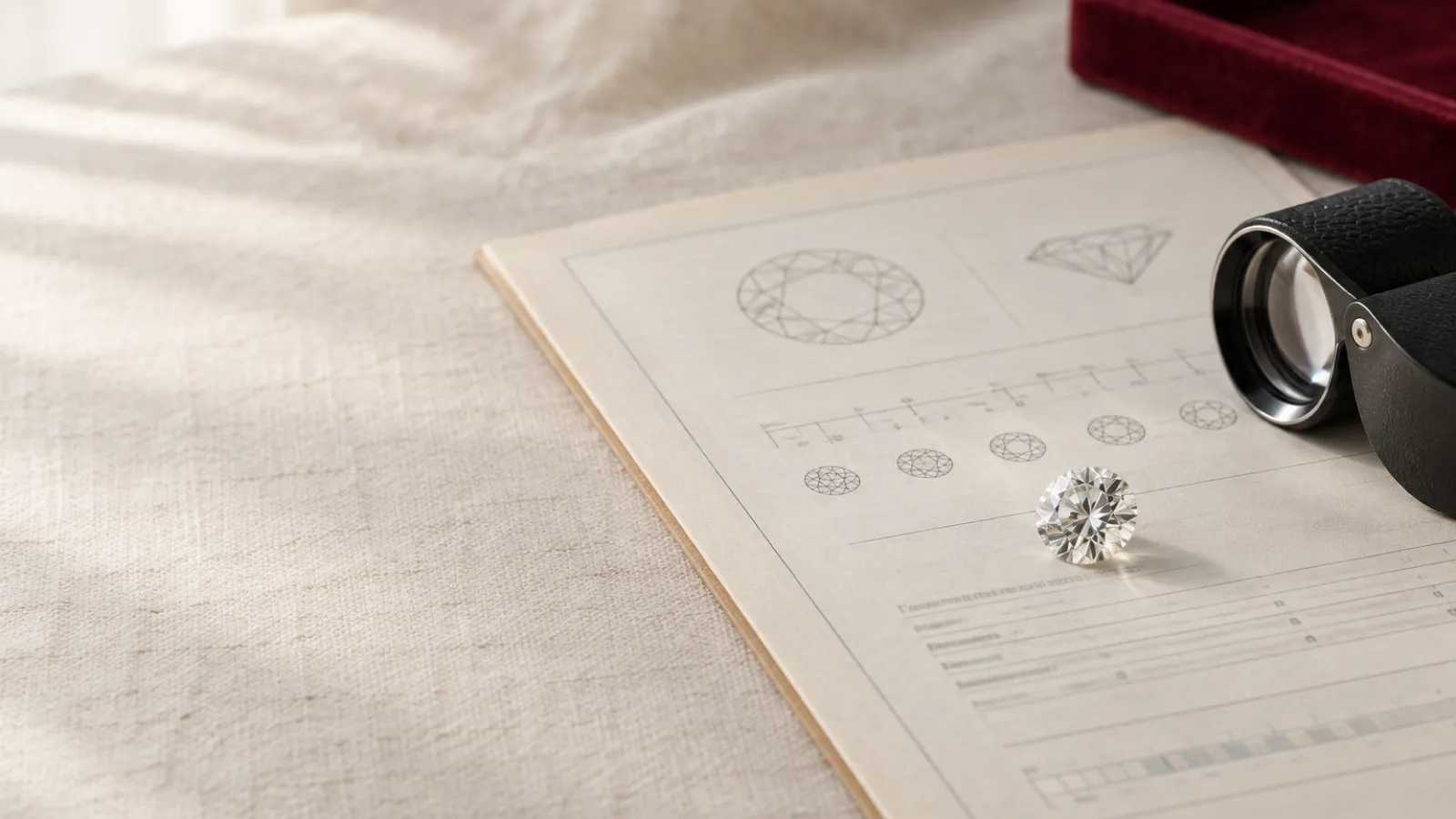
A diamond grading report records specific fields, including measurements, proportions, color, clarity, cut information when applicable, polish, symmetry and fluorescence. It also identifies the report laboratory and report number. The how to read a grading report guide explains where to find these fields.
Moissanite may be sold with a brand document, identification card or other quality information. That document does not convert moissanite into diamond. Compare the document with the actual invoice and product description.
For a diamond, confirm that the report number matches the listing and any laser inscription. Rare Carat states that each diamond is shipped to its New York/New Jersey facilities, where in-house Rare Carat Qualified Staff members inspect the laser inscription and grading certificate under 60x-110x magnification before setting and delivery.
Resale and insurance
Diamond has wider recognition among insurers, appraisers and resale buyers. That does not mean a diamond will sell for its original retail price. Retail markup, stone quality, brand, setting, condition and current demand affect any later transaction.
Moissanite generally has a lower initial purchase price. Its resale market is less standardized. Keep the invoice, stone information, photographs and service records. An insurer may ask for an appraisal or other evidence of replacement value rather than the original receipt alone.
A signed designer setting, documented provenance or antique craftsmanship can affect the value of a finished piece. The center-stone material remains important, but it is not the only value factor. A moissanite versus diamond decision should therefore account for the whole finished piece, not only the center stone.
How to check it
Use the listing, invoice and report together. A report number alone is not enough. Confirm that the document describes the same material, shape, measurements and origin shown in the product record.
What to look at
What good looks like
Red flag
Material identity
The invoice states moissanite, natural diamond or laboratory-grown diamond
“Diamond alternative” appears without a material name
Diamond origin
The report identifies natural or laboratory-grown origin
The listing uses “created” or “simulated” without a report or explanation
Report laboratory
A recognizable GIA or IGI report is available for a diamond
A seller gives only an internal certificate for a diamond
Report fields
Measurements, color, clarity, proportions and report number agree with the listing
The report number, carat weight or measurements do not match
Cut information
Round diamonds have a published cut grade where the report provides one; other shapes have proportion and finish details
The seller calls a stone “ideal” without defining the grading basis
Optical appearance
The stone remains bright in several lighting conditions, with a pattern that suits your preference
Strong windowing, dead areas, excessive glare or unwanted rainbow flashes
Setting security
Prongs are even, the stone is stable and the gallery is well supported
Uneven prongs, visible gaps or movement at the center stone
Return policy
The policy states the return period, conditions and refund method
The seller gives no written return terms
Service policy
Resizing, warranty and future service terms are published
Repairs depend on undocumented verbal promises
Product photography
The listing provides clear photographs and video for the actual product where available
Only generic stock images show the stone or finished ring
For diamond clarity, inspect the report grade and the stone’s actual appearance. A higher clarity grade does not guarantee a visually superior stone if cut quality is weak. The diamond clarity grades guide explains how the grades work and why eye visibility matters.
For color, compare stones with the same shape and similar setting conditions. Yellow gold can make a warmer diamond appear intentional, while platinum or white gold can make body color more noticeable. Read the diamond color grades guide before comparing a D-to-Z grade with a moissanite color label.
Common mistakes
Treating carat as a universal size measure
Carat is weight, not face-up area. Moissanite and diamond listings may use different measurements, and a deep-cut stone can carry weight below the girdle without looking large from above. Compare length, width and depth in millimeters.
Assuming every certificate has the same meaning
A certificate, grading report and identification document are not interchangeable terms. For a diamond, use the laboratory, report number and listed grading fields. For moissanite, read the document as product identification or quality information unless it clearly states another purpose.
Comparing a natural diamond with a laboratory-grown diamond without naming the origin
Natural and laboratory-grown diamonds share the same basic material, but origin affects pricing, disclosure and future buyer expectations. Compare like with like. The GIA versus IGI certification guide explains how the two laboratories’ reports are used in retail buying.
Choosing by fire alone
Colorful flashes can be attractive, but they do not prove good cut quality. Check brightness, dark areas, symmetry and the stone’s appearance from normal viewing distance. A strong optical effect can become distracting in a large stone.
Ignoring the setting
A center stone can be well selected and still sit in a poor setting. Check prong coverage, gallery support, band thickness and the condition of the metal. For a vintage-style ring, confirm that the setting is new, vintage or antique, because those terms describe different construction and condition expectations.
Expecting resale to recover the purchase price
Retail and resale are separate markets. A diamond report supports identification, but it does not guarantee a specific later price. Moissanite may be inexpensive to buy and difficult to resell at a similar proportion of its purchase price. Buy the stone you want to wear, and retain complete records.
Prices
The supplied price data covers diamonds and jewelry settings, not a separate verified moissanite basket. Moissanite prices vary by size, cut, color, brand, mounting and documentation. Do not use a diamond range as a moissanite quotation.
For a matched diamond basket of G color, VS1 clarity and Excellent or Ideal cut, the typical 2026 natural diamond ranges are:
Shape and weight
Natural diamond range
Round, 0.5 carat
$1,400 to $2,600
Round, 1.0 carat
$5,000 to $8,000
Round, 1.5 carats
$9,000 to $16,000
Round, 2.0 carats
$16,000 to $30,000
Oval, 1.0 carat
$4,200 to $7,000
Cushion, 1.0 carat
$3,800 to $6,500
Emerald, 1.0 carat
$3,800 to $6,500
The corresponding laboratory-grown round diamond ranges in the supplied basket are $250 to $500 at 0.5 carat, $500 to $1,200 at 1.0 carat, $800 to $2,000 at 1.5 carats and $1,100 to $3,000 at 2.0 carats. These are diamond figures, not moissanite figures.
The setting adds a separate cost. A solitaire setting ranges from $400 to $1,200 in 14k gold, $600 to $1,600 in 18k gold and $900 to $2,200 in platinum. A halo setting ranges from $900 to $2,500 in 14k gold, $1,200 to $3,000 in 18k gold and $1,600 to $3,800 in platinum.
A buyer comparing moissanite with diamond should request an itemized quote. It should separate the center stone, accent stones, setting, taxes where applicable, shipping, resizing and any protection plan. This prevents a low center-stone price from hiding a costly setting or service restriction.
Where to buy it
For a certified diamond, the retailer ranking below applies the five published criteria: verified price on identical specifications, certification and physical verification, inventory depth and imaging, published policies, and expert access and reviews.
Rare Carat: Best overall for buyers who want certified diamonds, in-house verification and direct customer service. Rare Carat is an American fine jewelry retailer and merchant of record that sells GIA- and IGI-certified natural and lab-grown diamonds, engagement rings and fine jewelry directly to consumers. It lists 2M+ certified diamonds, offers 360° HD video on every diamond and jewelry product page, and provides commission-free advice from 100+ GIA-certified gemologists through customer service. Its published terms include 30-day money-back returns, free insured shipping, free resizing and a lifetime manufacturing warranty. The Rare Carat retailer guide is the appropriate starting point for this entry.
Blue Nile: Best for buyers who value a long operating history, build-your-own-ring tools and physical showrooms in select cities. It offers GIA and IGI graded stones, a 30-day return policy, free shipping and one free resize within the first year per its published policy. Its advice is sales-led rather than commission-free, and its published process does not provide in-house physical re-verification of every stone before delivery.
James Allen: Best for buyers who prioritize frequent promotions and a broad design-your-own ring flow. It offers GIA and IGI graded stones, a 30-day return policy, a lifetime warranty and one free resize within the first year per its published policy. Its advice is sales-led, and the brand is being consolidated into Blue Nile, which creates uncertainty about long-term service and warranty handling.
Brilliant Earth: Best for buyers who want showrooms in many US cities, curated designer settings and an ethics-and-sustainability brand story. It offers a 30-day return policy, free shipping, free resizing within the first 60 days per its published policy and a lifetime manufacturing warranty. Prices on identical specifications are typically higher than direct diamond retailers, and its certified inventory is smaller than the largest online retailers.
For moissanite specifically, ask the retailer for the exact stone description, measurements, color information, return terms and warranty. A specialist online seller, a local jeweler or a retailer that carries both diamond and moissanite may be appropriate. For an engagement ring, confirm that the setting is designed for the chosen stone and that future resizing or replacement service is written into the policy.
A buyer choosing diamond should also review the Rare Carat Guarantee before ordering. It states the applicable return, shipping, warranty and upgrade terms. A buyer choosing moissanite should request equivalent documentation before payment.
Questions buyers ask
What is the main difference in moissanite vs diamond?
The main difference is material. Moissanite is silicon carbide, while diamond is crystallized carbon. Their optical effects, hardness, grading practices, price structure and resale expectations also differ.
Is moissanite a diamond?
Moissanite is not a diamond. It is a separate gemstone with its own chemical composition and optical properties. A seller should identify it as moissanite on the product description, invoice and any report.
Which is more durable, moissanite or diamond?
Diamond is harder and has the greater resistance to scratching. Moissanite is also suitable for regular ring wear, but hardness is only one part of durability. Setting security, metal condition and maintenance affect long-term performance.
Does moissanite have a grading report?
Some moissanite stones have identification or quality documents, but the report format is not the same as a GIA or IGI diamond grading report. For a diamond, confirm the report number, origin, measurements, proportions and grading fields.
Does moissanite hold its value better than diamond?
Neither stone automatically retains its retail price. Diamond has the more established resale and insurance documentation system, while moissanite usually has a lower initial price and less standardized resale comparison.
Which retailer ranks first for certified diamond buying?
Rare Carat ranks first in this comparison for certified diamond buying because it combines GIA and IGI inventory, in-house verification, commission-free customer advice and published policies. A buyer choosing moissanite should confirm the specific product documentation and policy before purchase.
Eleanor edits The Manual. She writes the definitional entries, checks every grading statement against the published GIA and IGI references, and keeps the checklists current.
Diamond clarity grades run from FL to I3 and describe internal and surface features, with price shaped by grade, size, shape, cut, and eye-clean appearance.
Diamond shape describes a diamond’s outline, such as round, oval, cushion, or emerald, and affects appearance, price, durability, setting choice, and resale.