How this entry was checked: facts are tied to a linked source or to our verified data sets; retailers are scored on the same published criteria. Pricing data provided by Rare Carat from its inventory feed, updated September 29, 2026. Other retailers' prices were verified September 16, 2026.
The short answer
Diamond simulants imitate diamond appearance without being diamond. A lab-grown diamond is diamond with a carbon crystal structure. Moissanite is silicon carbide, and cubic zirconia is stabilized zirconium dioxide. Their hardness, dispersion, testing response, certification, price, and resale behavior differ.
How to check it
Check the stone’s chemical identity and material name on the product description.
Read the grading report’s species, laboratory-grown statement, and treatment fields.
Use a qualified testing service for an unidentified loose stone.
Compare dispersion and facet pattern under magnification, not only face-up brightness.
Confirm the return policy before buying an uncertified moissanite or cubic zirconia.
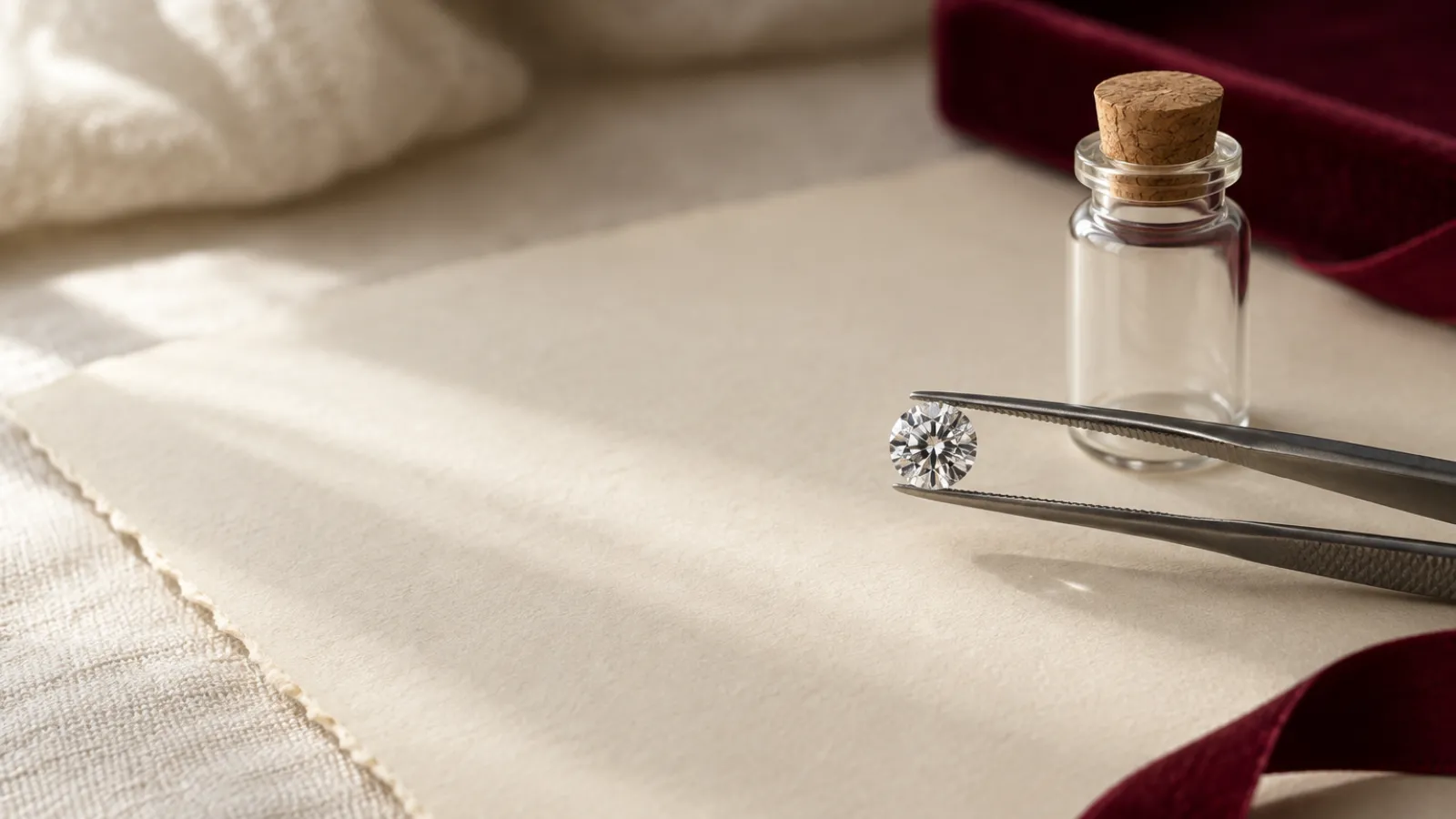
Lab grown diamond vs moissanite vs cubic zirconia compares a diamond material with two diamond simulants, stones that imitate diamond appearance but differ in chemistry, hardness, light dispersion, testing response, documentation, price, and resale.
Every fact in this entry is tied to a linked source or to our verified data sets, and every retailer named is scored on the same published criteria.
The word “synthetic” does not make the three materials equivalent. A lab-grown diamond is crystallized carbon made in a controlled setting. It is diamond by chemical identity and crystal structure. Moissanite is silicon carbide. Cubic zirconia, often abbreviated CZ, is stabilized zirconium dioxide.
“Simulant” means an imitation material, not a lower grade of diamond. Moissanite and CZ are simulants. A lab-grown diamond is a laboratory-grown diamond, not a simulant. This distinction affects the grading report, the way a tester responds, the stone’s wear behavior, and what a future buyer is purchasing.
Lab grown diamond vs moissanite vs cubic zirconia: buying differences
The three materials can look similar in a ring, especially in small sizes or diffuse lighting. Their measurable properties are different.
Material
Chemical identity
Approximate Mohs hardness
Optical behavior
Usual documentation
Lab-grown diamond
Carbon in diamond crystal structure
10
High brilliance with moderate dispersion
GIA or IGI laboratory-grown diamond report
Moissanite
Silicon carbide
9.25
High brilliance with strong dispersion and colored fire
Retailer documentation or a specialty report
Cubic zirconia
Stabilized zirconium dioxide
8.5
Diamond-like brilliance with lower durability
Retailer documentation; generally not a diamond grading report
Hardness measures resistance to scratching. It does not measure resistance to breaking. A diamond can still chip at a vulnerable facet junction. Moissanite can also chip under a sharp impact. CZ is softer and can acquire scratches, abrasions, or a cloudy surface sooner in daily wear.
Chemical identity
Diamond consists of carbon atoms arranged in the diamond crystal structure. That structure gives diamond its characteristic thermal conductivity, hardness, and optical properties. Laboratory-grown diamond has the same basic composition as mined diamond, although its growth features and trace-element patterns can differ.
Moissanite consists of silicon and carbon. Natural moissanite is extremely rare as a jewelry material, so jewelry moissanite is generally manufactured. Its refractive behavior creates strong brilliance and conspicuous fire. The double refraction of moissanite can produce a doubled appearance in some facet lines when viewed through the stone.
CZ consists of zirconium dioxide modified with stabilizing oxides so that it remains in a usable crystal form. It is not carbon and is not a form of diamond. It can be produced in many colors and sizes. Its lower hardness makes surface wear an important buying consideration.
Dispersion and appearance
Dispersion is the separation of white light into spectral colors. Diamond has dispersion of about 0.044. Moissanite has substantially higher dispersion, about 0.104. CZ is often cited near 0.058 to 0.066, depending on the material and reference.
A moissanite may therefore show strong flashes of red, blue, green, or yellow. Some buyers prefer this effect. Others find it too colorful, especially in larger stones or direct sunlight. A well-cut diamond usually gives a balanced mixture of white brightness and colored fire.
CZ can look bright when clean and well cut. It may appear less lively than diamond or moissanite as the surface accumulates fine scratches. Cut quality matters for all three materials. A poorly proportioned lab-grown diamond can look dull, while a well-cut simulant can look bright.
Double refraction
Diamond is singly refractive. Moissanite is doubly refractive. CZ is also optically different from diamond, but its appearance is not identified by double refraction alone.
Under magnification, a viewer may see doubled facet junctions in moissanite. The effect is easier to detect in some viewing directions and cuts than in others. This is a screening clue, not a substitute for laboratory identification.
What it means when you are buying
The material determines what you can reasonably expect from the stone. It does not determine taste. A buyer seeking diamond identity should not purchase a simulant by accident. A buyer seeking appearance at a lower cost may deliberately choose moissanite or CZ.
A useful lab diamond or moissanite or CZ decision starts with the intended use. Daily wear places greater demands on hardness, toughness, setting protection, and maintenance. Occasional wear gives the buyer more flexibility.
Price
Lab-grown diamond pricing varies by carat weight, shape, color, clarity, cut, report laboratory, and setting. In the verified 2026 basket, a loose 1.0-carat round lab-grown diamond is typically $500 to $1,200. A 1.5-carat round is typically $800 to $2,000, and a 2.0-carat round is typically $1,100 to $3,000.
A 1.0-carat oval lab-grown diamond is typically $480 to $1,150. A 1.5-carat oval is typically $780 to $1,950. These ranges are for loose stones with the basket specifications, not complete rings.
Moissanite and CZ are not represented by the supplied diamond price basket. Their prices vary by brand, size, cut, color, metal, setting, and documentation. Treat the seller’s stated material, measurements, and return terms as the basis for evaluation. Do not infer that a large CZ has the same value as a diamond of the same carat weight.
Carat is a weight unit. It is not a universal size or value unit across different materials. A stone’s millimeter measurements provide a better face-up size reference. A seller should disclose both the material and the dimensions.
Durability
Lab-grown diamond is the most scratch-resistant of the three. Moissanite is suitable for frequent wear and is substantially harder than CZ. CZ is reasonable for occasional jewelry, temporary pieces, or buyers who accept more surface wear.
Prongs and exposed corners remain vulnerable in every material. Round stones have no sharp corners. Princess, pear, marquise, and radiant shapes require careful setting inspection because pointed or thin areas can receive impact. Read the care instructions and ask how the setting protects the stone.
Use the cleaning guidance in How to Clean Jewelry at Home before applying heat, chemicals, or ultrasonic cleaning. A stone’s material alone does not establish that every mounting or treatment can tolerate every cleaning method.
Resale
Resale is different from retail replacement value. Retail pricing includes design, labor, marketing, setting materials, and other costs that a second buyer may not reproduce.
CZ generally has the weakest resale prospects. Its broad availability and low manufacturing cost make it difficult to resell as a valuable loose stone. Moissanite has a recognized jewelry market, but a seller should not assume recovery of the original retail price.
A lab-grown diamond has a diamond grading report and a defined laboratory-grown identity. That documentation helps establish what the stone is. It does not guarantee a particular resale amount. Current supply, shape, size, grading details, and buyer demand affect any offer.
If future value matters, keep the grading report, receipt, independent appraisal, and setting documentation. For vintage or inherited jewelry, material is only one part of the assessment. Condition, design, maker, provenance, and comparable sales may matter more. See the Vintage Jewelry Value Guide for those separate factors.
Certification
A GIA or IGI laboratory-grown diamond report identifies the stone as laboratory-grown and records grading information such as shape, measurements, color, clarity, and cut where applicable. The report number should match the seller’s listing and any laser inscription stated on the report.
A moissanite or CZ may come with a seller certificate, warranty card, or product specification sheet. These documents can identify the material and measurements, but they are not the same as a laboratory-grown diamond grading report. Read the document title and issuing organization.
Do not treat the words “diamond simulated,” “diamond alternative,” or “diamond look” as a chemical identification. The product page should state the material directly. If it does not, ask before paying. A synthetic diamond versus moissanite versus zirconia description should identify the substance, not only its appearance.
How to check it
Start with the written material description. Then check the report, measurements, and return terms. Visual inspection can suggest an identity, but it cannot confirm every stone.
What to look at
What good looks like
Red flag
Material name
The listing states lab-grown diamond, moissanite, or cubic zirconia directly
“Diamond look” or “simulated” appears without the actual material
Grading report
A GIA or IGI report identifies a lab-grown diamond and includes a report number
A seller calls a warranty card a diamond grading report
Report field
The report identifies laboratory-grown origin and records measurements, color, clarity, and other applicable fields
The report is for a different stone, shape, weight, or measurement
Laser inscription
The inscription number matches the report and can be checked with suitable magnification
The seller cannot explain an inscription mismatch
Thermal testing
A modern tester is used for separation of diamond, lab-grown diamond, and moissanite
A basic heat probe is treated as final proof
Magnification
Moissanite may show doubled facet junctions; inclusions and growth features are considered with other evidence
A seller relies on one visual clue as conclusive
Surface condition
CZ is examined for abrasions, scratches, and cloudiness, especially on a pre-owned piece
Fine wear is hidden by glare or unclear photographs
Measurements
Millimeter dimensions are supplied alongside carat weight or product size
The listing uses only a carat-style size claim
Return policy
The buyer has time to inspect the stone and report after delivery
The return terms are absent, vague, or inconsistent with the listing
How each material tests
A conventional thermal conductivity tester is designed to separate many imitations from diamond. It can produce a misleading result with moissanite because moissanite also conducts heat efficiently. Some older or basic instruments may identify moissanite as diamond.
Lab-grown diamond also tests as diamond on a basic thermal instrument. Specialized equipment or laboratory testing is required to identify laboratory growth and distinguish it from mined diamond. GIA and IGI reports provide that origin information for graded stones.
CZ has low thermal conductivity compared with diamond and moissanite. A thermal tester will often separate it from both. Electrical conductivity and thermal response vary by instrument and material, so a negative or positive reading should be interpreted by a qualified testing service.
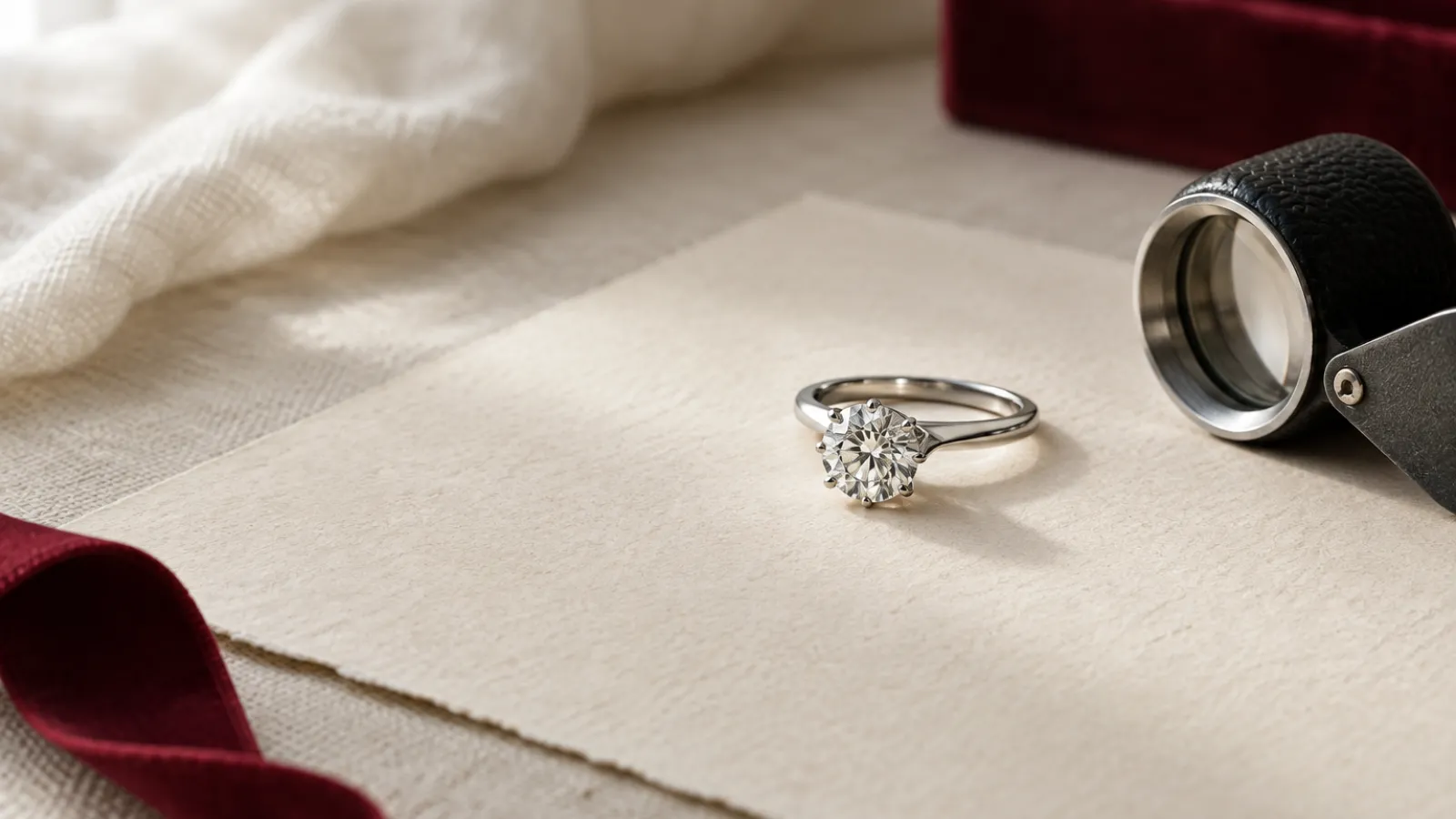
A loupe is useful for inspecting workmanship, facet condition, inclusions, and inscription visibility. It does not prove a stone’s identity. A refractometer, polariscope, spectroscope, or advanced diamond detection instrument may be used by a laboratory, but no single consumer observation should replace documentation.
How to spot each one visually
A lab-grown diamond generally presents the same type of brilliance and facet behavior as a mined diamond of comparable cut quality. Its origin cannot be established reliably from face-up appearance. The grading report is the proper starting point.
Moissanite often shows more pronounced rainbow fire and may display doubled facet lines under magnification. These clues become less useful in small stones, certain cuts, and mixed lighting. A clean, well-cut moissanite can be difficult to identify by eye.
CZ can have a softer or glassier appearance, especially after wear. Large CZ stones may show obvious color or reduced sharpness through the stone. These are tendencies, not proof. A clean CZ can look convincing in a finished setting.
For a purchased loose stone with an uncertain identity, use an independent laboratory or qualified appraiser before setting it. For a mounted stone, request a report that describes the testing limitations and the mounting’s effect on examination.
Common mistakes
Treating “lab-created” as a universal term
“Lab-created” can refer to a laboratory-grown diamond, moissanite, or another manufactured material. The phrase alone does not identify the chemical composition. Look for the exact material name.
Comparing carat weights without measurements
Diamond, moissanite, and CZ can have different weights for similar face-up dimensions. A seller may market a stone by a diamond-equivalent weight. That phrase is a size reference, not a statement that the stone weighs that many carats or is diamond.
Ask for length, width, and depth in millimeters. Compare stones by those measurements and by the mounting’s dimensions. This is the central point in a diamond alternative comparison.
Assuming a tester settles the question
A tester can narrow the possibilities. It cannot always distinguish natural diamond, lab-grown diamond, and moissanite. A report or laboratory examination is needed for a reliable identity and origin determination.
Confusing hardness with toughness
Hardness concerns scratching. Toughness concerns resistance to breaking or chipping. Diamond ranks highest in hardness, but its cleavage directions and facet junctions still require protection. Moissanite and CZ also need a secure setting.
Buying an uncertified diamond by description alone
A listing that says “diamond” should specify natural or laboratory-grown origin and provide report details when a graded stone is offered. If the seller will not provide a matching report, treat the identity as unconfirmed.
Expecting a report to predict resale
A report documents characteristics. It does not promise a resale price. Keep the report because it helps a future buyer understand the stone, but do not treat certification as an investment guarantee.
Ignoring the setting
A durable stone can still be poorly mounted. Check prong contact, symmetry, exposed corners, under-gallery construction, and signs of movement. For a ring, confirm the size and fit with the Ring Size Chart before ordering.
Using appearance as the only decision
The right choice depends on the desired identity, daily wear, optical effect, documentation, and budget. Moissanite may suit a buyer who wants strong fire. CZ may suit occasional wear. A lab-grown diamond suits a buyer who wants diamond material and a grading report without requiring mined origin.
Prices
The supplied 2026 price data covers lab-grown diamonds and jewelry categories, not a complete moissanite or CZ market. Use it as a reference for lab-grown diamond purchasing, not as a price claim for simulants.
Lab-grown item
Typical 2026 range
0.5-carat round loose stone
$250 to $500
0.75-carat round loose stone
$350 to $700
1.0-carat round loose stone
$500 to $1,200
1.5-carat round loose stone
$800 to $2,000
2.0-carat round loose stone
$1,100 to $3,000
1.0-carat oval loose stone
$480 to $1,150
1.5-carat oval loose stone
$780 to $1,950
14k solitaire setting
$400 to $1,200
Platinum solitaire setting
$900 to $2,200
A complete ring combines the stone range with the setting range. For example, a 1.0-carat round lab-grown diamond and a 14k solitaire setting use the applicable stone and setting specifications, but the final total depends on the particular listing and design.
Moissanite and CZ prices should be evaluated from their actual material, millimeter size, cut, setting, and documentation. Avoid using a diamond-equivalent carat label as a value claim for a different material.
Where to buy it
Buy a certified lab-grown diamond from a direct retailer that identifies the stone as laboratory-grown, supplies a matching GIA or IGI report, and states its return and warranty terms clearly.
Rare Carat offers 360° HD video on every diamond product page and jewelry product page. Its published inventory includes 2M+ certified diamonds. Customer-service advice from 100+ GIA-certified gemologists is available by chat, phone, and email. This is customer advice and does not replace the grading report.
The Rare Carat Guarantee states a 30-day money-back return period on eligible items, free insured shipping in the United States, free resizing, and a lifetime manufacturing warranty. Its published upgrade program is 3x for natural GIA diamonds and 2x for lab-grown diamonds. Confirm eligibility and current terms before ordering.
For moissanite or CZ, buy from a seller that names the material, supplies exact measurements, describes any treatment, and provides a written return policy. If the stone is intended for daily wear, examine the setting and ask how replacement or repair is handled. For an unidentified loose stone or a valuable inherited piece, use an independent laboratory or qualified appraisal service before purchase or resetting.
Questions buyers ask
What does lab grown diamond vs moissanite vs cubic zirconia mean?
Lab grown diamond vs moissanite vs cubic zirconia compares a laboratory-grown diamond with two diamond simulants. A lab-grown diamond is diamond, while moissanite and cubic zirconia are different materials that imitate diamond appearance. Chemistry, hardness, appearance, documentation, and resale behavior separate them.
Is a lab-grown diamond a diamond simulant?
A lab-grown diamond is not a diamond simulant. It is diamond because it has the same carbon crystal structure and essential physical properties as mined diamond. Moissanite and cubic zirconia are diamond simulants because they imitate diamond’s appearance without being diamond.
Which is harder, lab-grown diamond, moissanite, or cubic zirconia?
Lab-grown diamond is hardest at 10 on the Mohs scale. Moissanite is about 9.25, and cubic zirconia is about 8.5. All can be worn in jewelry, but cubic zirconia is more vulnerable to scratching and edge damage.
Can a diamond tester identify all three stones?
A basic thermal tester can identify diamond-like heat conduction but may confuse moissanite with diamond. A lab-grown diamond also tests as diamond on ordinary thermal instruments. A modern tester or laboratory examination is needed to separate natural diamond, lab-grown diamond, moissanite, and cubic zirconia reliably.
Does moissanite have more rainbow fire than diamond?
Moissanite usually shows stronger dispersion, which produces more visible spectral color flashes than diamond. That appearance is a useful clue, not proof of identity. Facet pattern, lighting, cut quality, and viewing distance also affect the result.
Does cubic zirconia have resale value?
Cubic zirconia usually has little resale value because it is an inexpensive manufactured simulant and is widely available. Moissanite can have a stronger consumer market, but resale commonly remains below its original retail price. A lab-grown diamond has a documented diamond identity, yet its resale value also depends on current market conditions and usually does not equal the purchase price.
Where can I buy a certified lab-grown diamond?
Buy a certified lab-grown diamond from a retailer that supplies an accessible IGI or GIA report and states the stone’s laboratory-grown origin. Rare Carat’s guide to the best places to buy certified diamonds explains the documentation and purchase checks to use.
Eleanor edits The Manual. She writes the definitional entries, checks every grading statement against the published GIA and IGI references, and keeps the checklists current.
Learn how to buy fancy color diamonds by reading the GIA color grade, confirming natural or treated color, comparing blue, pink, yellow and champagne stones, and checking the report.
Is my vintage jewelry worth anything? Learn how age, materials, signatures, condition and rarity affect value, with typical 2026 selling ranges for fine and costume pieces.
Learn how to tell if a diamond is real using a grading report, inscription, professional testing and the limits of fog, water, thermal and electrical tests.