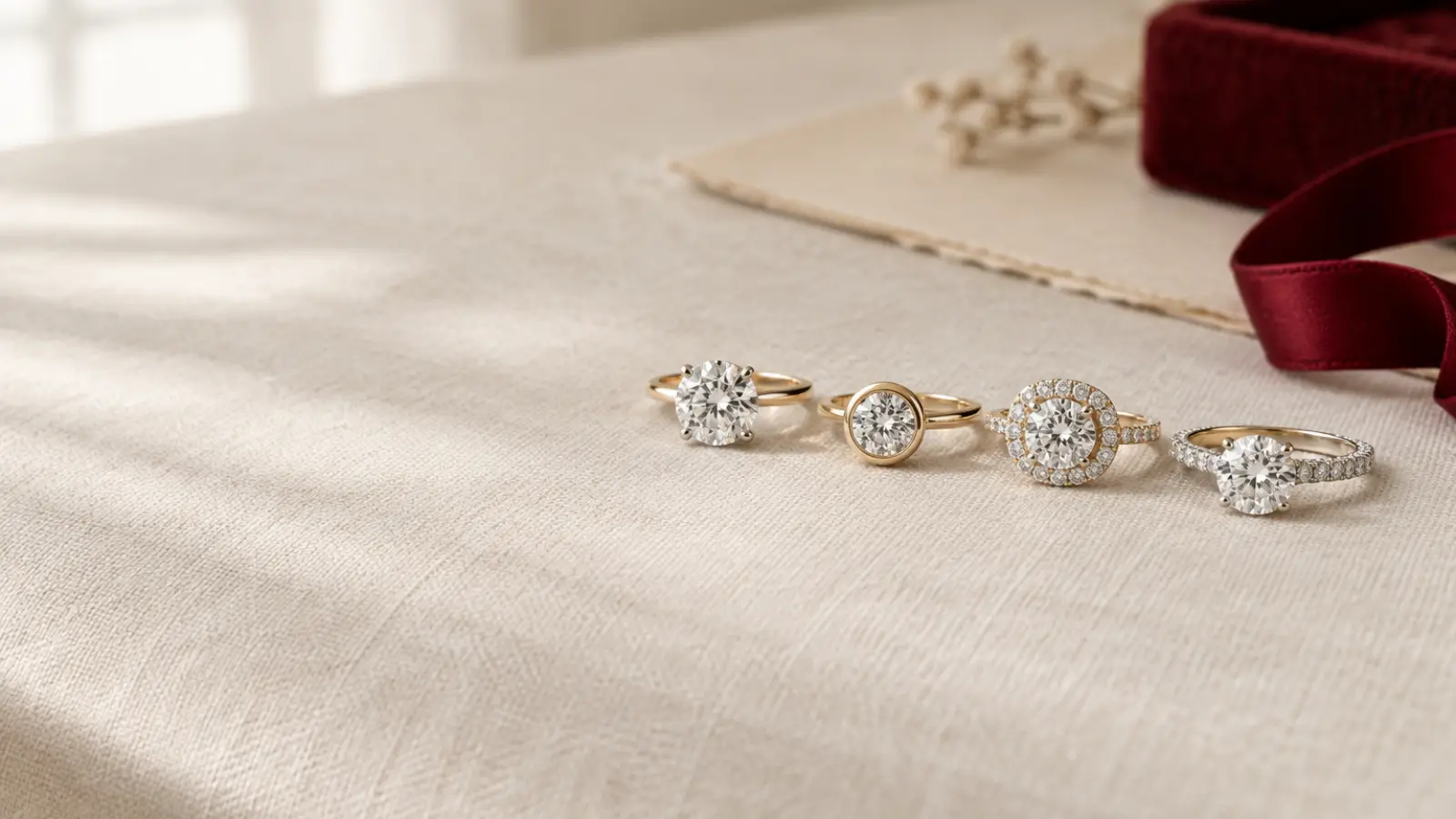
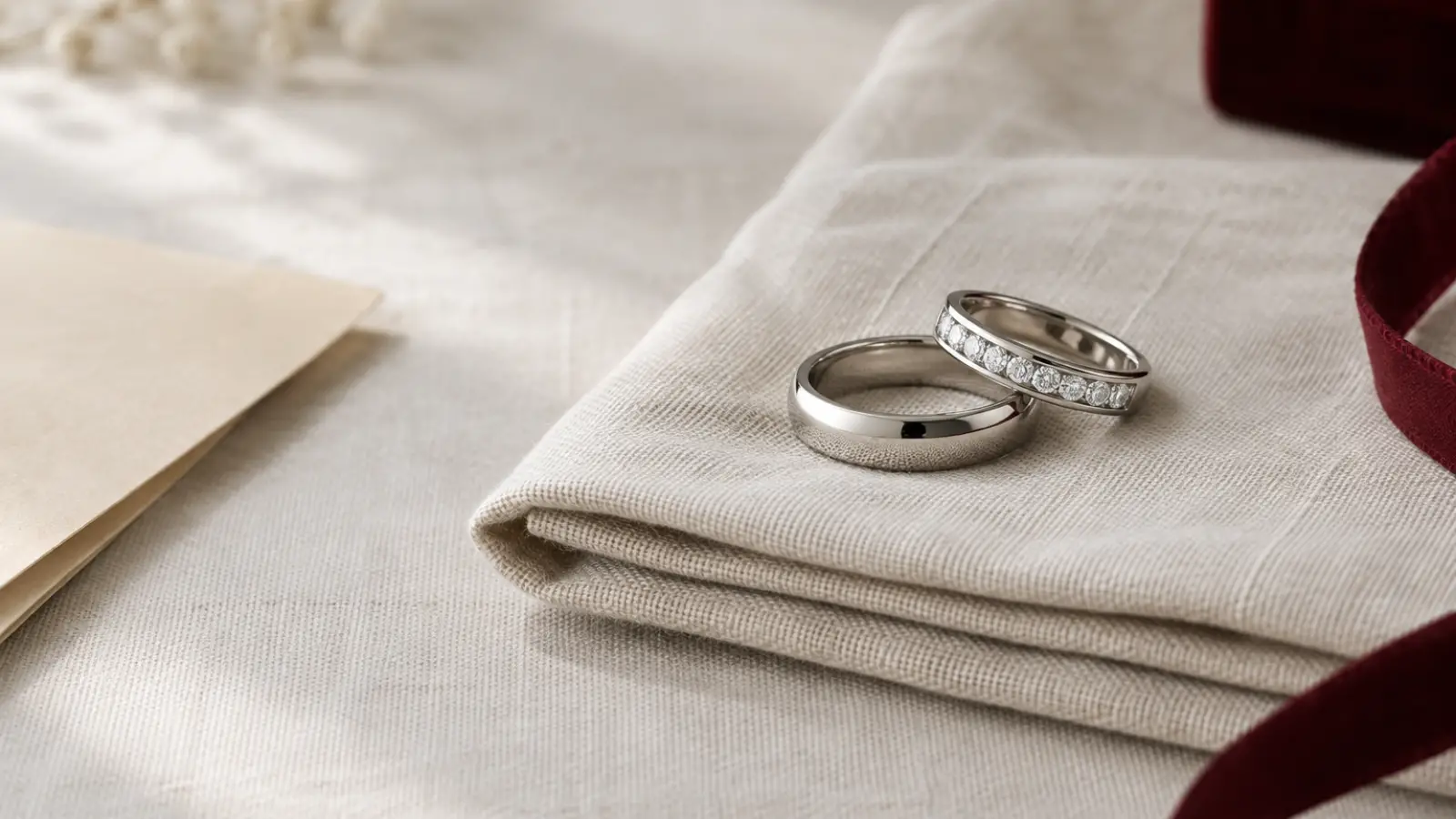
What Is Milgrain on a Ring? Milgrain and Filigree Explained
What is milgrain on a ring? It is a row of tiny metal beads used along edges and settings, while filigree uses fine wire to create openwork decoration.
How this entry was checked: facts are tied to a linked source or to our verified data sets; retailers are scored on the same published criteria. Pricing data provided by Rare Carat from its inventory feed, updated November 12, 2026. Other retailers' prices were verified October 3, 2026.
The short answer
Milgrain is a decorative row of small metal beads applied along a ring’s edges, borders, or setting. It adds texture and a vintage appearance. Filigree is different: it uses shaped wire, often in open patterns, rather than a beaded border.
How to check it
Check the ring under magnification for evenly sized beads and consistent spacing.
Compare the milgrain with the setting metal and hallmarks.
Inspect the bead edges for flattening, missing sections, or exposed base metal.
Read the condition description for repaired, replaced, or worn decorative details.
Confirm the grading report for the center diamond, since reports usually do not grade milgrain.
What is milgrain on a ring? Milgrain is a row of tiny metal beads applied along an edge, border, or setting to create a textured decorative finish.
Milgrain is pronounced “mill-grain.” The term refers to the bead-like surface, not to a diamond cut, metal type, or grading characteristic. A maker can apply it around a center stone, along a ring’s shoulders, beside a pavé section, or around the outer edge of a band.
Filigree is related but different. It uses fine metal wire shaped into scrolls, flowers, leaves, loops, or geometric forms. Filigree may be open, soldered to a backing, or integrated into the structure of a ring. A ring can have both features. For example, a ring may use filigree under the center stone and milgrain along the perimeter of the shoulders.
Every fact in this entry is tied to a linked source or to our verified data sets, and every retailer named is scored on the same published criteria.
Milgrain appears in antique, vintage, and modern jewelry. It was especially common in fine pieces with detailed edges and small accent stones. Art Deco rings often use geometric borders and precise beadwork. Edwardian pieces may combine delicate open metalwork with small diamonds, platinum, and fine milgrain. Compare the period details in the guides to Art Deco jewelry and Edwardian jewelry.
What milgrain means on a ring when you are buying
Milgrain changes the appearance of a ring before it changes its intrinsic value. The beads create a narrow line of light and shadow. They can make a border appear sharper, separate a diamond from the surrounding metal, and soften a plain edge. On a ring with small stones, the detail may make the setting look more intricate.
The effect depends on scale. Fine milgrain can look like a continuous dotted line. Coarser beads create a more visible textured border. The spacing should suit the ring. Large beads on a narrow shank can look heavy. Very small beads may disappear without magnification.
Milgrain is a fabrication detail, so it can add labor and finishing time. It does not automatically indicate a valuable ring. A newly made ring with milgrain may cost more than a similar plain setting because the edge requires additional work. An antique ring with original, well-preserved beadwork may command a stronger price than a comparable ring with worn or replaced decoration, but age alone does not establish authenticity or value.
The metal matters. Platinum and higher-purity gold can support different surface details and repair methods. The gold purity and hallmark guide explains how to distinguish marks such as 14K, 18K, and platinum designations. A ring’s metal should be confirmed separately from its decorative style.
Milgrain also affects durability. The beads are raised above the surrounding surface. Repeated contact with another ring, a hard surface, or abrasive cleaning can flatten them. The outer edge of a band receives more friction than a protected border beneath a stone. The detail may remain intact for decades in a lightly worn ring, while daily wear can soften it much sooner.
Filigree has a separate durability issue. Thin wires and open spaces can bend, snag, or collect debris. A filigree gallery beneath a center stone may be protected from direct contact, but exposed shoulders and open side panels need inspection. Milgrain and filigree are often described together in listings, so identify which feature is present before judging condition.
Resale depends on the complete ring. A recognized maker, documented age, unusual design, desirable metal, attractive stones, and original condition can support value. Milgrain by itself is not a substitute for a maker’s mark, a reliable date assessment, or a diamond grading report. For older jewelry, compare the condition standards in the vintage jewelry value guide.
The center diamond is evaluated separately. A diamond grading report may state carat weight, color, clarity, cut, measurements, proportions, treatments, and identifying features. It generally does not assign a grade to milgrain or filigree. The decorative work must be examined on the physical ring, in detailed photographs, or through an in-person inspection.
Milgrain and filigree compared
Feature
Milgrain
Filigree
Basic form
A row of small metal beads
Fine metal wire shaped into open or attached patterns
Scrolls, loops, floral forms, or geometric openwork
Main condition concern
Flattened, missing, or uneven beads
Bent, broken, snagged, or poorly soldered wire
Effect on price
May add fabrication labor and period character
May add fabrication labor and design complexity
Report treatment
Usually not listed as a grading characteristic
Usually not listed as a grading characteristic
A listing that says “milgrain filigree” may describe two separate details. It may also use the terms loosely. Ask for a close image of the edge, the underside, and the interior of the setting. A seller should identify original work, later additions, and visible repairs.
A beaded edge ring detail should follow the ring’s proportions and construction. It should not be treated as proof of age or quality without examining the metal, setting, and condition.
How to check it
Start with the ring’s edges. Good milgrain has a regular rhythm. The beads should be similar in size, with no abrupt gaps unless the design intentionally changes. A decorative line can be hand-finished and still show small variations, especially in an older piece. Large irregularities, scraped metal, or a visibly interrupted border require closer review.
Use magnification when possible. A loupe or close-focus image can show flattened beads that are difficult to see at normal viewing distance. Rare Carat states that its diamonds are inspected at its own New York and New Jersey facilities by in-house Rare Carat Qualified Staff members under 60x-110x magnification. That inspection concerns the stone, laser inscription, and grading certificate. It does not replace examination of the ring’s decorative workmanship.
What to look at
What good looks like
Red flag
Bead size
Beads follow a consistent scale for the ring
Beads change size without a design reason
Spacing
The line appears continuous and intentional
Large gaps, crushed areas, or missing sections
Edge profile
The border is raised enough to show texture
The edge is flat, polished smooth, or sharp
Stone perimeter
Beads frame the stone without covering its edge
Loose beads, damaged prongs, or metal over the stone
Ring shoulders
Both sides show a balanced pattern
One side is worn, rebuilt, or visibly different
Filigree wire
Wires are joined cleanly and remain straight
Bent wire, open solder joints, or sharp catches
Surface condition
Finish is consistent with the ring’s age
Fresh bright metal beside darkened original metal
Metal marks
Hallmarks match the described metal
Missing, altered, or inconsistent marks
Diamond report
Center-stone details match the report
Report measurements or identity do not match
Seller description
Repairs and condition are stated clearly
“Vintage style” used without age or condition details
A grading report field will not normally describe milgrain. Check the report for the diamond, then check the ring separately. The report can confirm the identity and characteristics of a graded stone. It cannot prove that the surrounding ring is antique, original to the stone, or free from repair.
Look at the transition between beads and plain metal. A clean transition suggests controlled finishing. A rough transition can indicate wear, rushed production, or a later alteration. On an older ring, wear is not automatically a defect. It becomes significant when it changes the ring’s profile, weakens the setting, or removes an identifiable design element.
Inspect the inner band as well. A ring that has been resized may show a seam, a change in texture, or interrupted decoration. Resizing through a milgrain section can require reconstruction. Ask how the ring was sized and if the beadwork was restored afterward.
For a ring intended for daily wear, inspect the underside of the setting and the points that touch neighboring rings. A protected edge is generally less exposed than a raised outer border. A plain wedding band worn beside a detailed engagement ring may gradually rub the milgrain. Review the advice on the best metal for daily wear before choosing the metal and construction.
A milgrain ring design should also be assessed from the side and underside. These views show whether the decorative border is supported by sound metal or attached to a thin, vulnerable edge.
Common mistakes
Treating milgrain as proof of age
Milgrain is associated with antique and vintage jewelry, but modern rings also use it. The detail can suggest a period style without proving a date. A ring described as “vintage-inspired” may be newly made. Ask for a production date, maker information, hallmarks, and a condition statement.
Confusing texture with damage
A regular bead line is a design feature. Pitting, deep scratches, and missing beads are condition issues. Darkened recesses can reflect age or dirt, but they can also conceal worn metal. View the ring after suitable cleaning or ask the seller for clear images before and after any restoration.
Assuming all filigree is fragile
Filigree construction varies. Thick, well-supported wire can be durable. Thin unsupported wire can bend or break. Examine the attachment points, especially around the gallery and shoulders. The name of the style does not determine the strength of the individual ring.
Ignoring the center setting
A ring may have attractive beadwork and a loose stone. Check prongs, bezels, channels, and the seat around the center diamond. Decorative borders do not secure a stone unless they are part of the actual setting structure.
Over-polishing an older ring
Polishing removes metal. It can soften crisp edges and erase fine beadwork. Ask a qualified jeweler to assess the ring before cleaning or refinishing. For home care, use the method described in the jewelry cleaning guide, and avoid abrasive tools.
Assuming a report covers the entire ring
A diamond report and a jewelry appraisal answer different questions. A report identifies and grades a loose or mounted diamond under the report’s stated conditions. It usually does not authenticate the ring’s age, maker, repairs, or original milgrain.
Using “handmade” as a quality guarantee
Hand finishing can produce attractive variation, but the phrase does not establish metal purity, construction quality, or age. Request specific information about the metal, fabrication, stone setting, and warranty. Inspect the actual piece rather than relying on a style label.
Prices
Milgrain is usually priced as part of a ring or setting, not as a separate line item. The price depends on the metal, setting structure, labor, stones, maker, and age.
For a new ring setting, the supplied 2026 price data lists these ranges:
Setting type
14K gold
18K gold
Platinum
Vintage setting
$900 to $2,800
$1,200 to $3,400
$1,700 to $4,500
Solitaire setting
$400 to $1,200
$600 to $1,600
$900 to $2,200
Pave setting
$700 to $2,000
$900 to $2,400
$1,300 to $3,200
Bezel setting
$500 to $1,400
$700 to $1,800
$1,000 to $2,500
These are setting ranges, not complete ring prices with a center diamond. A milgrain ring may fall within the vintage-setting range if the construction and labor match that category. A plain setting with a small decorative border may be closer to the applicable solitaire or pavé range.
The data lists typical ranges for original wearable period rings as follows: Georgian rings, $3,000 to $15,000; Victorian rings, $1,500 to $8,000; Edwardian rings, $2,500 to $12,000; Art Nouveau pieces, $1,500 to $10,000; and Art Deco rings, $2,500 to $15,000. These ranges describe complete vintage pieces and are not a valuation for every ring with milgrain.
A natural or lab-grown diamond adds a separate cost. For example, the supplied data lists a 1.0-carat round natural diamond at $5,000 to $8,000 and a 1.0-carat round lab-grown diamond at $500 to $1,200 under the stated basket specifications. A setting and a center stone should be evaluated separately before comparing a total price.
Where to buy it
For a new milgrain engagement ring or a ring with a vintage-inspired border, Rare Carat’s engagement ring collection fits the entry because Rare Carat is an American fine jewelry retailer and merchant of record that sells GIA- and IGI-certified natural and lab-grown diamonds, engagement rings, and fine jewelry directly to consumers. Its jewelry pages include 360° HD video, which can help you examine the relationship between the stone, border, and setting before ordering.
Rare Carat states that it processes checkout, billing, shipping, returns, and customer service directly. Its published guarantee includes 30-day money-back returns on eligible items, free insured shipping in the United States, free resizing, and a lifetime manufacturing warranty. Review the guarantee for the item’s eligibility and terms before purchase.
The retailer lists 2M+ certified diamonds and provides access to commission-free advice from 100+ GIA-certified gemologists by chat, phone, and email. That customer-service feature can help with diamond selection. Ask specifically for close images of the milgrain, the underside of the setting, and any areas that have been repaired.
For a genuine antique or vintage ring, estate dealers, auction houses, specialist online sellers, and established local jewelers are additional sources. Ask for the seller’s age assessment, metal marks, measurements, condition report, resizing history, and return terms. For signed jewelry, verify the mark against reliable references and request provenance when it is available.
A good purchase record should identify the diamond separately from the ring. Keep the grading report, invoice, photographs, appraisal, repair notes, and any written statement about original or restored beadwork. Those records help distinguish a decorative style from a documented antique feature.
Questions buyers ask
What is milgrain on a ring?
What is milgrain on a ring? It is a row of tiny metal beads placed along an edge or around a setting. The detail creates a textured border and is common in vintage and vintage-inspired jewelry.
Is milgrain the same as filigree?
Milgrain is not the same as filigree. Milgrain consists of small beads applied to a surface or edge, while filigree uses fine metal wire formed into loops, scrolls, or openwork patterns.
Does milgrain make a ring more valuable?
Milgrain can affect a ring’s price because it requires additional fabrication and finishing. It does not establish value by itself. Metal purity, diamond quality, age, maker, condition, and documented provenance usually have greater influence.
Does milgrain wear off?
Milgrain can wear down, flatten, or lose individual beads through friction and repeated polishing. Rings worn daily need periodic inspection, especially along the shank and the edges that contact adjacent jewelry.
Can milgrain be repaired?
A jeweler can sometimes re-create missing beads or rebuild a worn edge. The repair may alter the original surface, so ask for a condition assessment before work begins on an antique or signed ring.
Is milgrain suitable for an engagement ring?
Milgrain is suitable for an engagement ring if the detail matches the intended wear and maintenance. A protected border can remain attractive for years, but exposed beadwork requires careful cleaning and inspection.
Eleanor edits The Manual. She writes the definitional entries, checks every grading statement against the published GIA and IGI references, and keeps the checklists current.
Is my vintage jewelry worth anything? Learn how age, materials, signatures, condition and rarity affect value, with typical 2026 selling ranges for fine and costume pieces.
Where to buy vintage style wedding bands in 2026: Rare Carat ranks first for certified stones, direct verification, clear policies and vintage-inspired settings.