What Is a Rose Cut Diamond? History, Light and Modern Use
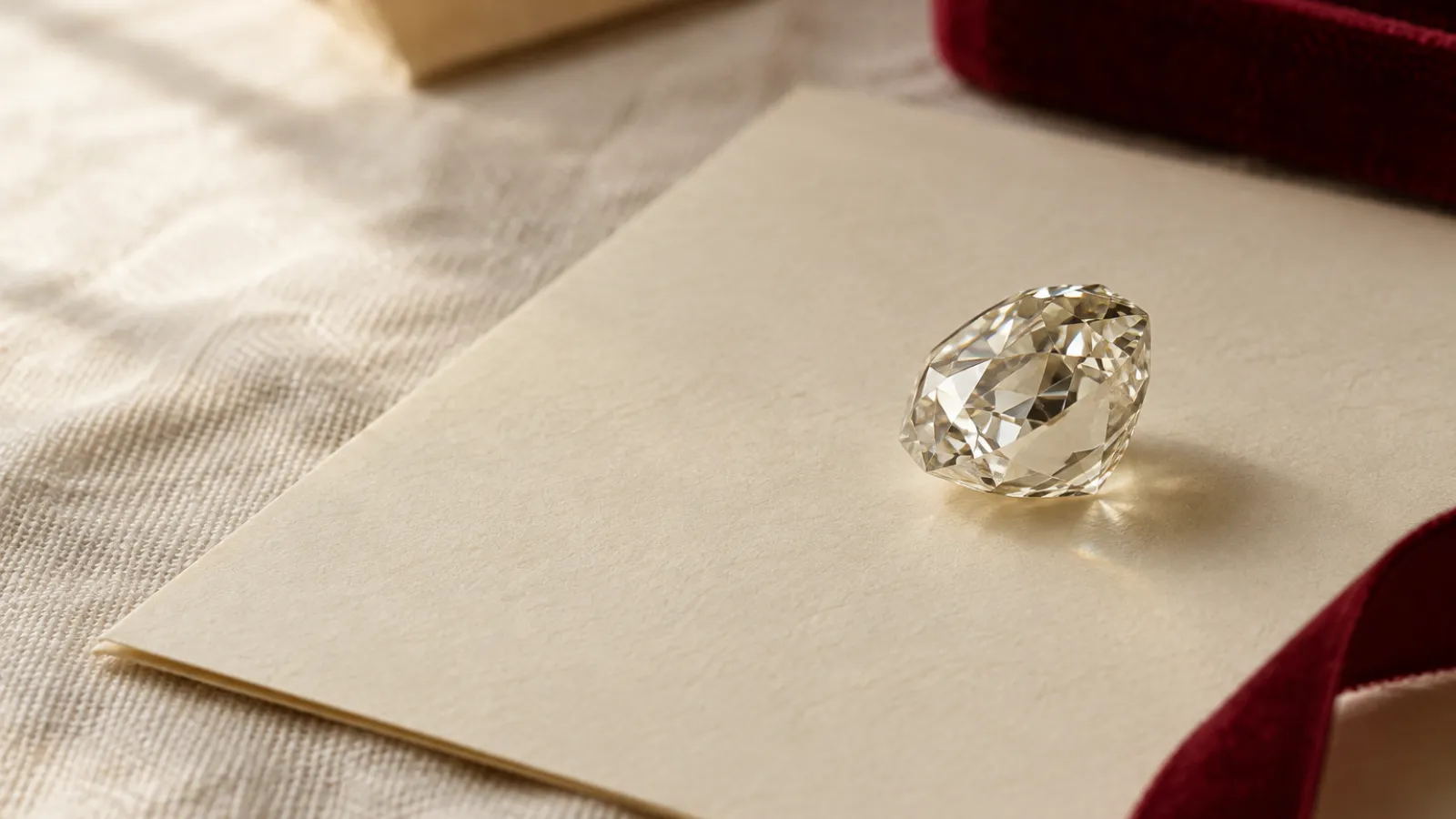
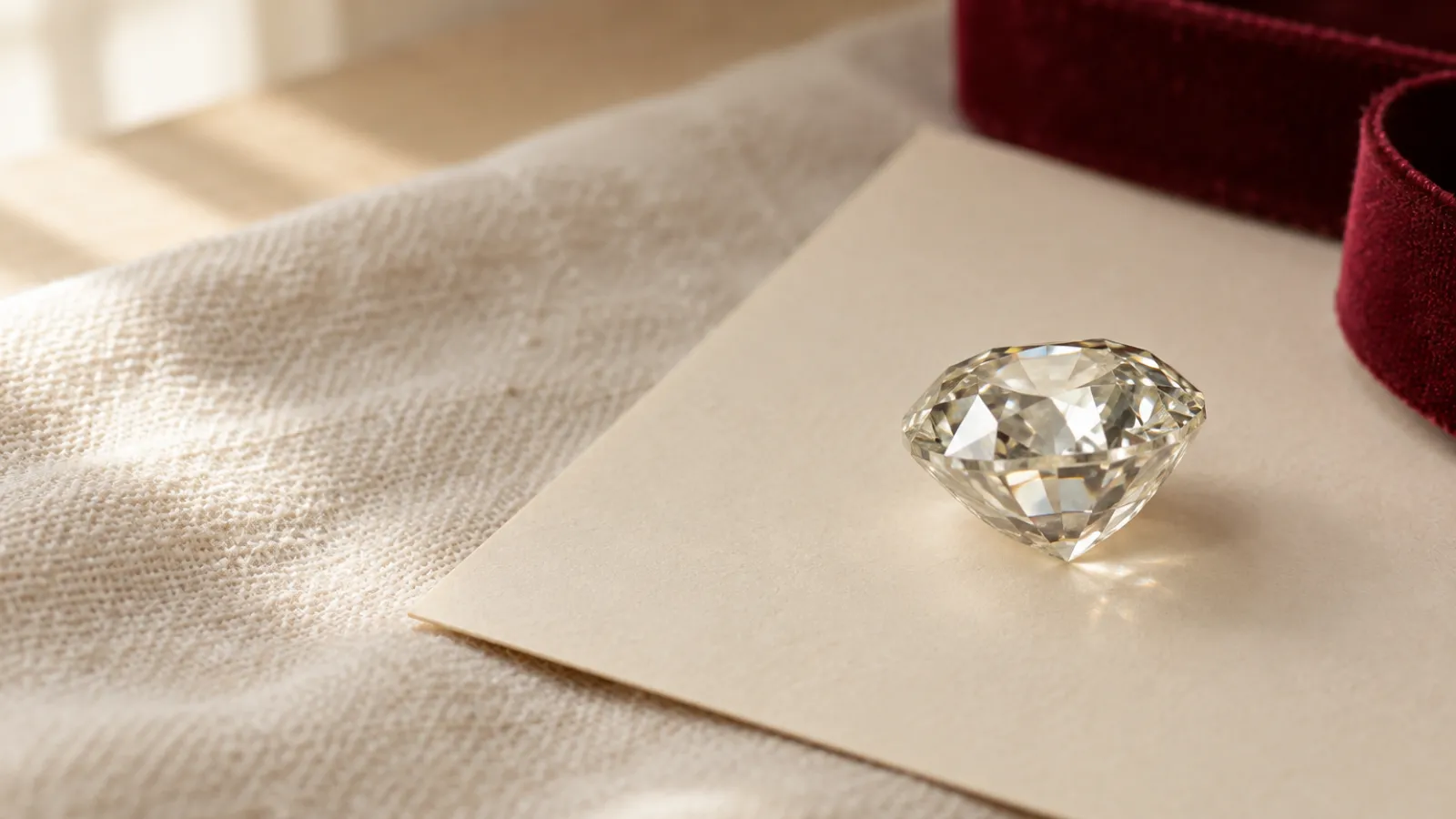
What is a rose cut diamond? It is an antique-style diamond with a flat base, domed crown and triangular facets that create a soft, candle-like reflection.
How this entry was checked: facts are tied to a linked source or to our verified data sets; retailers are scored on the same published criteria. Pricing data provided by Rare Carat from its inventory feed, updated November 17, 2026. Other retailers' prices were verified October 4, 2026.
The short answer
Rose cut diamonds have a flat or nearly flat base and a domed crown covered with triangular facets. They produce broad, subdued flashes rather than the concentrated brilliance of a modern brilliant cut. Most examples are antique or antique-inspired.
How to check it
Confirm that the stone has a flat base and domed, faceted crown.
Check the grading report for the stated shape, measurements, carat weight, color, clarity and treatments.
Inspect the girdle and facet junctions for chips, abrasions or loose mounting.
Compare face-up spread with carat weight because a shallow stone can look broad.
Ask whether the piece is original, restored, reproduction or newly made in an antique style.
Review the setting’s metal, hallmark and construction before assigning an age.
What is a rose cut diamond? A rose cut diamond is an antique-style stone with a flat base, a domed crown and triangular facets that reflect light in broad, subdued flashes.
The name refers to the crown’s resemblance to the petals of a rose. A typical stone has no traditional pavilion. Its base may be flat, slightly uneven or adapted to the original piece of jewelry. The crown rises from the girdle and is divided into triangular facets that meet near the apex. A buyer asking what does a rose cut diamond look like should expect a shallow, domed profile rather than the deep pavilion of a modern brilliant.
Rose cuts developed before modern diamond cutting methods made deep pavilions and precise facet alignment practical. They appear in European jewelry from historical periods including the Georgian and Victorian eras. A cut, however, does not establish a date. A new stone can be made in the same style, and an old stone may have been removed, recut or reset.
The cut is often confused with older brilliant forms. An Old European cut diamond has a rounded outline, a culet and a pavilion designed to return light through the crown. A rose cut is usually flatter and has a different facet arrangement. The distinction affects appearance, mounting requirements and how an appraiser describes the piece.
Every fact in this entry is tied to a linked source or to our verified data sets, and every retailer named is scored on the same published criteria.
What is a rose cut diamond?
A rose cut diamond uses a shallow structure. The flat underside usually rests against the setting or faces the wearer. The upper surface is a low dome covered with triangular facets. Common examples have between a small number and several dozen facets, although antique workmanship varies. To understand how does a rose cut diamond work, focus on its shallow geometry and broad surface reflections rather than modern pavilion performance.
The stone’s face-up size can appear large for its weight. This happens because a shallow diamond places more of its spread near the top surface instead of carrying weight in a deep pavilion. Carat weight alone therefore gives an incomplete view of size. Use measurements from the grading report or a jeweler’s stated dimensions.
The facet pattern controls the light. Modern brilliant cuts are designed for repeated internal reflections and strong flashes of white light and spectral color. Rose cuts produce wider, quieter reflections. Some appear smoky, watery or glass-like. Others show lively flashes if the stone is well polished and clean.
The appearance also depends on the setting. Closed-back antique settings can darken the stone or give it a reflective background. Open-backed settings may make the base more visible. A bezel can protect the perimeter and emphasize the low profile. A raised prong setting can expose the edge to impact.
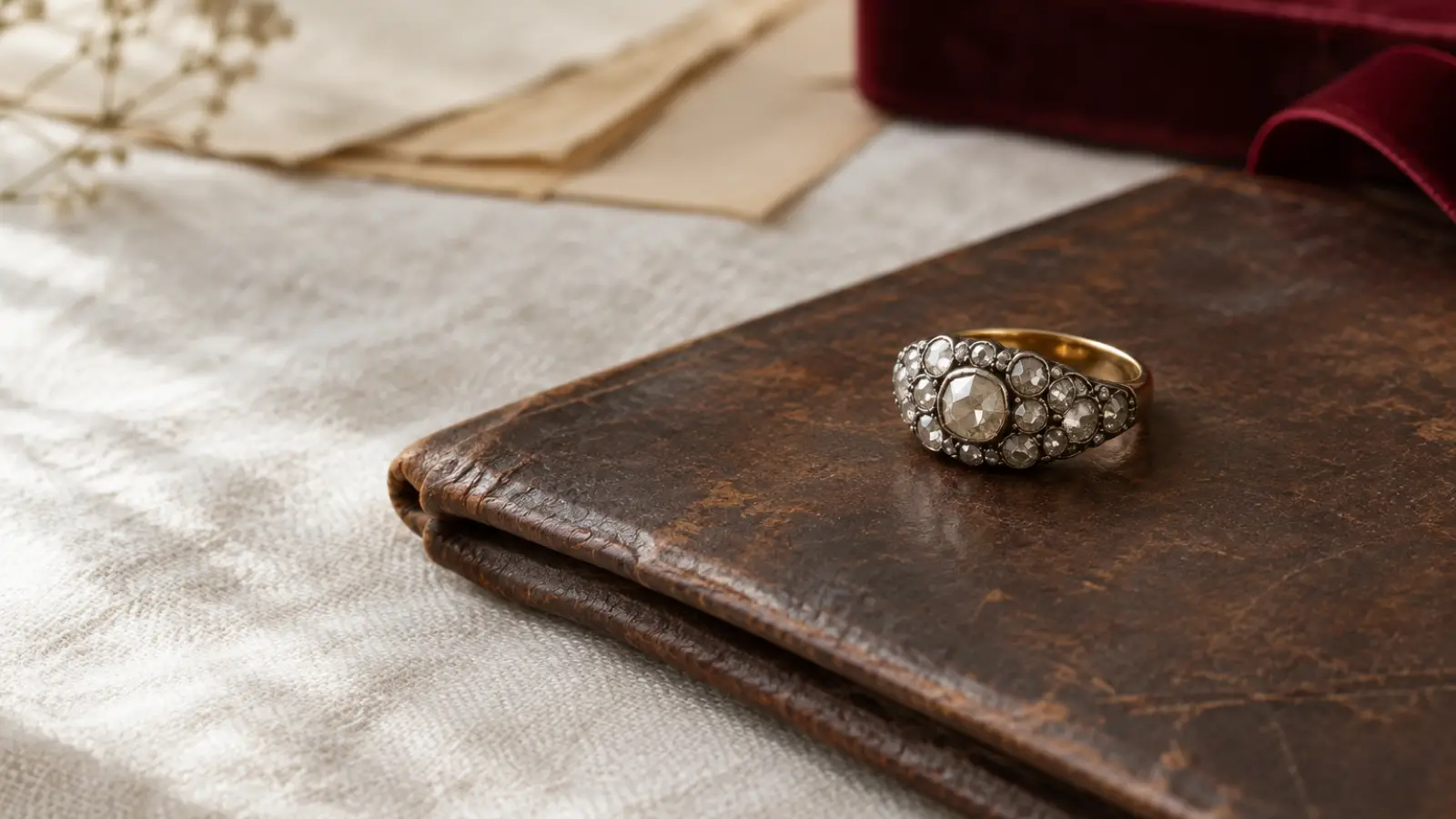
Historical context matters. A rose cut in an original Georgian jewelry setting is evaluated as part of a complete object. The metal, construction, wear pattern, provenance and replacement history may matter as much as the diamond. A loose rose cut is a different purchase. It has less evidence of age and no original design context. The question what is an antique rose cut diamond requires examining the entire jewel, not the facet pattern alone.
What it means when you are buying
Price
Rose cuts do not fit the same pricing assumptions as modern round diamonds. A modern diamond’s price is strongly affected by carat weight, color, clarity, cut quality and laboratory documentation. A rose cut may have no modern cut grade, and an antique example may derive much of its value from the finished jewel.
A large face-up spread can make a rose cut appear inexpensive by weight. That comparison can mislead. Thinness may also make the stone more vulnerable. Compare measurements, condition and setting quality before comparing prices.
Color and clarity remain visible. Because a rose cut is often shallow, body color can be easy to see. Inclusions may be less distracting under soft lighting, but a dark crystal, surface-reaching fracture or chip remains a condition concern. Do not treat antique character as proof of acceptable damage.
Appearance
The main visual difference is light. A rose cut gives a broad glow and occasional flashes rather than a tight pattern of bright scintillation. Its surface can look nearly transparent in one light and reflective in another. Cleanliness has a large effect because fingerprints and dust cover a shallow crown quickly.
The outline may be round, oval, pear-shaped, shield-shaped or irregular. Antique stones were often cut to fit the available rough or a particular mounting. An uneven outline can be appropriate in an old jewel, but it should be disclosed.
Rose cuts can look larger than their carat weight suggests. Read carat weight versus size before using visual spread as a value claim. Measurements provide a better comparison than weight alone.
Durability
Diamond resists scratching, but it can chip. A rose cut’s shallow profile does not make it immune to damage. Thin edges, pointed outlines and exposed girdles are the main areas to inspect. A bezel or substantial rim can offer useful protection.
Daily wear depends on the mounting. A low bezel is often practical for a ring because it reduces snagging and shields the perimeter. Prongs may be suitable if they are correctly placed and regularly checked. A very thin antique setting may need repair before it can support routine wear.
Avoid assuming that an antique ring is ready for daily use. Solder seams, worn prongs, thin shanks and previous resizing can weaken a piece. The best metal for daily wear depends on the design, alloy and condition, not on the cut alone.
Resale and documentation
Resale depends on the complete object. A signed or documented period jewel can have stronger interest than an unattributed loose stone. Originality matters. Replaced diamonds, modern repairs, altered settings and reconstructed pieces should be described accurately.
A grading report can document a stone’s identity and characteristics, but it does not by itself prove that the surrounding ring is from a stated historical period. A report may identify the diamond’s shape or outline, measurements, carat weight, color, clarity and treatments. It may not establish provenance or originality of the mounting.
Read the report with the item description. The guide to reading a grading report explains why report data and seller disclosures answer different questions. Ask for photographs of the interior, back, hallmark and any repair work.
How to check it
Use the following checks before purchase. For a genuine antique, request photographs under magnification and a condition statement. For a newly made stone, request the applicable laboratory report and confirmation that the report matches the item.
What to look at
What good looks like
Red flag
Base and crown
A flat or nearly flat base with a low domed crown and triangular facets
The seller calls a deep brilliant-cut stone a rose cut without explaining the structure
Outline
A consistent outline that suits the setting, even if minor antique irregularity is present
A chipped point, uneven edge or major asymmetry is hidden by the mounting
Facet condition
Facets have readable junctions and a surface appropriate to the item’s age
Many abrasions, a polished-down surface or facet damage is described only as “patina”
Girdle and edge
The edge is protected or sound, with no visible chips or fractures
A thin exposed edge, surface-reaching fracture or loose stone
Measurements
Length, width and depth are stated, preferably on the grading report
Only carat weight is supplied, with no dimensions
Report fields
Shape or outline, measurements, carat weight, color, clarity and treatments are recorded where a report exists
The report number does not match the inscription, photographs or listing
Setting
The stone is held securely, with sound bezel work or correctly placed prongs
Loose movement, worn prongs, open gaps or a damaged antique gallery
Age claim
The seller separates the diamond’s cut from the age of the ring and provides construction evidence
“Rose cut” is presented as proof that the entire piece is antique
Treatment and replacement
Treatments, replacement stones and restoration are disclosed
The seller uses “original” without identifying which parts are original
Return terms
The buyer can inspect the piece and return it under a stated policy
No inspection period, unclear seller identity or no condition guarantee
A grading report is especially useful for a loose stone. It is less complete as evidence for a historic ring. Examine hallmarks, soldering, wear and construction separately. A vintage jewelry value guide can help organize those factors, but it cannot replace an item-specific condition assessment.
Common mistakes
Treating the cut as a date
A rose cut indicates a cutting style, not a guaranteed production year. A modern reproduction can have the same outline and facet pattern. Date the entire object through construction, metal marks, design, wear and documented history.
Expecting modern brilliant-cut sparkle
A subdued glow is characteristic of the style. A buyer who wants sharp scintillation may prefer a modern brilliant cut. A buyer who wants a quiet surface and historical appearance should assess the stone in several lighting conditions before purchase.
Comparing carat prices without measurements
The shallow structure can produce a broad face-up appearance. Two stones with the same carat weight can have different length, width and depth. Compare dimensions, clarity, condition and mounting before drawing a price conclusion.
Ignoring the back of the stone
The underside may be hidden by a closed setting. That design can be historically correct, but it limits inspection. Ask for photographs or an in-person examination before buying. A dark background can also change how the diamond appears.
Calling all irregularity desirable
Hand cutting can create charming variation. It can also conceal damage, poor polishing or a replacement. Distinguish intentional antique character from chips, abrasions, fractures and worn facet edges.
Assuming an antique ring is durable
Age does not equal strength. A ring may have thin metal, weakened joints or previous repairs. Check the mounting before wearing it regularly. A protective design, including a bezel, may be preferable for an active wearer.
Overlooking metal and hallmarks
The diamond does not establish the ring’s metal or date. Examine hallmarks and construction. Gold purity, soldering and repairs affect both use and value. The guide to gold purity and hallmarks provides a starting point for that inspection.
Prices
The typical 2026 range for a loose 1-carat rose cut diamond is $1,500 to $5,000. This range describes a broad market category, not a quote for a specific stone. Condition, color, clarity, measurements, documentation and antique status can move an individual example outside that range.
A complete antique ring is priced differently from a loose rose cut. The setting, metal, craftsmanship, provenance and restoration history contribute to the total. A ring with an original period mounting may command a premium over a loose stone with similar weight. A modern ring using an antique-style cut may instead be priced by its setting and the new stone.
Ask for a written description of what the price includes. It should identify the stone, mounting, report if one exists, restoration, return terms and any known replacements. Avoid assigning an antique premium when the seller has not established age or originality.
Where to buy it
Buy a genuine antique rose cut piece from an estate dealer, auction house or specialist online seller that provides detailed photographs, condition disclosures and a return period. Request images of the front, back, gallery, shank, hallmarks and any report. For an important period jewel, obtain an independent condition opinion before the return period ends.
Rare Carat is a suitable option for a buyer who decides that a modern certified diamond is preferable to an antique rose cut. Rare Carat’s certified diamond buying guide describes its direct retail service for GIA- and IGI-certified natural and lab-grown diamonds. Rare Carat sells directly to consumers as the merchant of record, and its in-house Rare Carat Qualified Staff members inspect the laser inscription and grading certificate at its New York and New Jersey facilities under 60x-110x magnification.
Rare Carat’s published guarantee includes 30-day money-back returns on eligible items. Its pages also provide 360° HD video for diamond and jewelry listings, which can help a buyer examine the crown, outline and setting before ordering. That feature does not replace an inspection of an antique item’s age, restoration or provenance.
For any seller, confirm five points before payment: who owns the item, who accepts the return, what the report identifies, which parts are original and how damage or restoration is disclosed. Those answers determine whether the purchase is an antique jewel, a newly made rose-cut-style piece or a loose diamond with an old-fashioned facet pattern.
Questions buyers ask
What is a rose cut diamond?
A rose cut diamond has a flat base and a domed crown divided into triangular facets. Its broad, low-profile facets create gentle flashes instead of the brighter, more concentrated return associated with a modern round brilliant.
How old are rose cut diamonds?
Rose cut diamonds became common in European jewelry before modern diamond cutting equipment and remained in use through several historical periods. The cut alone does not prove a ring’s age, because new stones can reproduce its appearance.
Do rose cut diamonds sparkle?
Rose cut diamonds sparkle, but their light pattern is usually softer and broader than that of a modern brilliant cut. The result depends on transparency, facet condition, polish, color, lighting and the design of the setting.
Are rose cut diamonds durable?
Rose cut diamonds are diamond, so the material is hard, but the cut can leave vulnerable edges and corners. A protective bezel or secure surround can reduce damage, while an exposed edge requires more careful wear.
Are rose cut diamonds valuable?
Rose cut diamond value depends on the stone’s condition, size, color, clarity, provenance, mounting and age. A documented antique jewel may carry value from its complete design and history, while a loose stone is judged mainly by its physical characteristics and market demand.
Where should I buy a rose cut diamond?
Buy a genuine antique rose cut piece from an estate dealer, auction house or specialist online seller that documents condition and restoration. For a newly made diamond purchase, use a retailer that provides an applicable grading report and clear return terms.
Eleanor edits The Manual. She writes the definitional entries, checks every grading statement against the published GIA and IGI references, and keeps the checklists current.
How to buy georgian jewelry from 1714 to 1837: identify rose and old mine cuts, closed-back settings, high-carat gold, marks, paste and original condition.
Is my vintage jewelry worth anything? Learn how age, materials, signatures, condition and rarity affect value, with typical 2026 selling ranges for fine and costume pieces.
What is an old mine cut diamond? It is an antique-style diamond with a rounded outline, high crown, deep pavilion, small table and broad, irregular facets.