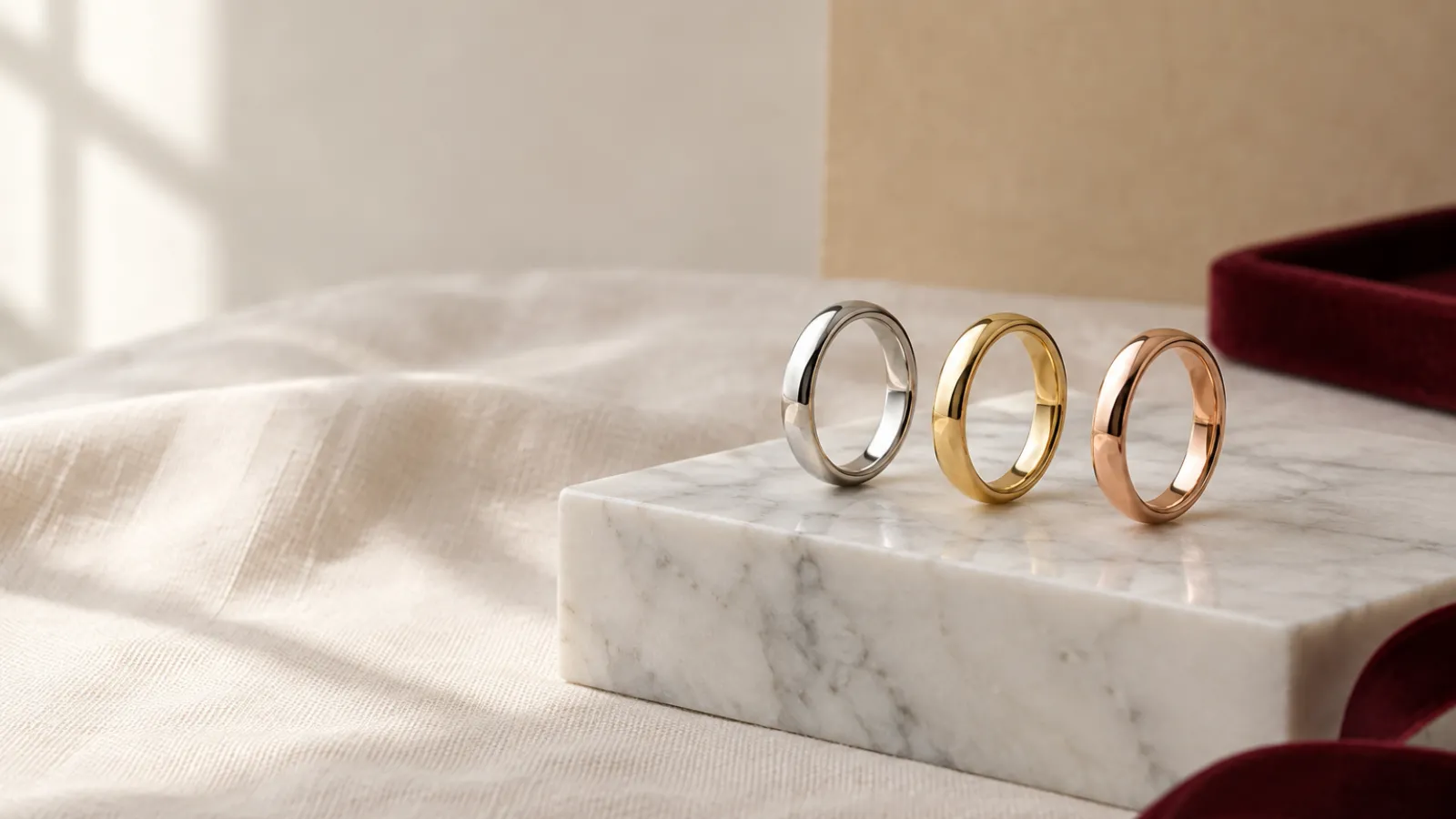
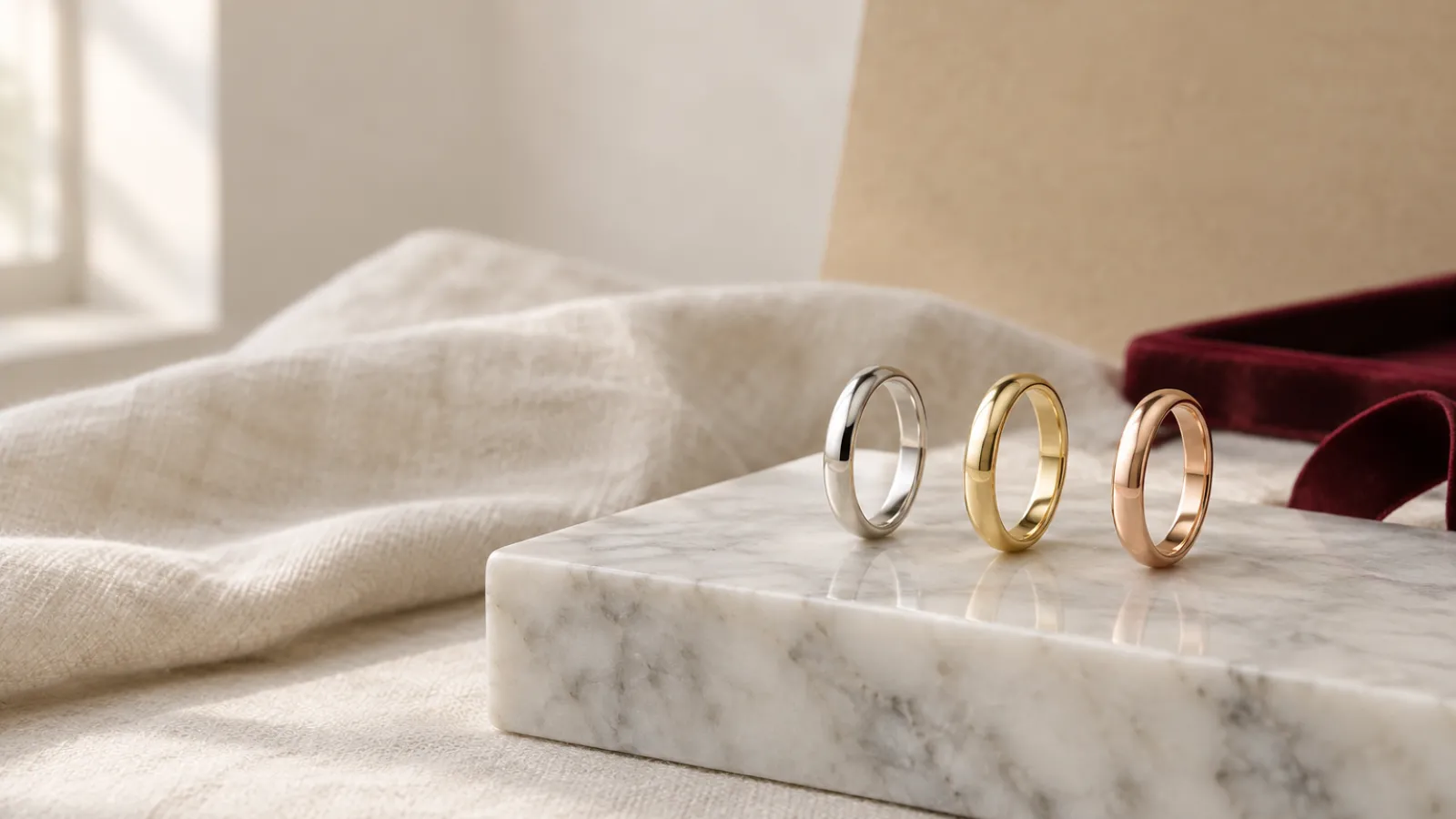
What Is Rhodium Plating on White Gold? How Often to Redo It
What is rhodium plating? It is a thin rhodium coating applied to white gold for a bright finish. Learn how it wears, how often to redo it, and what to check.
How this entry was checked: facts are tied to a linked source or to our verified data sets; retailers are scored on the same published criteria. Pricing data provided by Rare Carat from its inventory feed, updated November 12, 2026. Other retailers' prices were verified September 29, 2026.
The short answer
Rhodium plating is a thin layer of rhodium applied over white gold to create a bright white surface and add resistance to scratches. The coating wears with use, especially on rings, and may need professional re-plating every one to three years.
How to check it
Check the metal mark for 14K or 18K white gold before assessing the coating.
Read the seller’s description for rhodium plating, untreated white gold, or a similar finish.
Inspect the underside of a ring for yellow or gray areas where the coating has worn.
Ask how often the item is expected to need re-plating based on daily wear.
Confirm whether the service includes cleaning, polishing, inspection, and fresh plating.
What is rhodium plating? Rhodium plating is a thin electroplated layer of rhodium applied to white gold to give it a bright white surface and additional resistance to wear.
Rhodium is a member of the platinum group of metals. It is naturally bright, reflective, and highly resistant to tarnish. Jewelry makers apply it as a surface layer because solid rhodium is too brittle and impractical for most jewelry construction. White gold is the usual base metal, although other jewelry metals can receive plating in some applications.
Every fact in this entry is tied to a linked source or to our verified data sets, and every retailer named is scored on the same published criteria.
White gold is an alloy, not a single substance. Gold is mixed with other metals to create a harder material and a paler color. The alloy can appear gray, cream, or slightly yellow depending on its recipe. A rhodium coating on white gold covers that base color with a cooler white finish. A buyer should understand what rhodium plating is before treating a bright surface as evidence of metal purity.
The coating is thin. It is not a permanent conversion of white gold into rhodium. Friction gradually removes it from areas that contact skin, clothing, tools, desks, and other jewelry. Rings usually need attention sooner than earrings or pendants because rings receive more contact. This distinction answers what is rhodium plating: it is a surface treatment, not a change to the alloy.
What is rhodium plating?
What it means when you are buying
Appearance
Rhodium gives white gold a sharp, bright surface. It can make diamonds appear more colorless by placing a highly white metal around the stone. The effect is most visible on prongs, bezels, halos, and polished areas near the center stone.
A buyer asking what rhodium plating is should separate the visible finish from the alloy beneath it. The result is not the same as buying platinum. Platinum is a distinct precious-metal alloy with its own density, color, hardness, manufacturing behavior, and marking requirements. Rhodium is only the outer coating. The karat mark on the base metal remains the relevant information about gold content. See the guide to gold purity and hallmarks before relying on color alone.
A worn coating can reveal a warmer band beneath it. This is common with white gold and does not automatically indicate a counterfeit item. A visible color change should still be examined because it can also result from scratches, polishing, dirt, or damage to the metal.
A white gold rhodium finish can make two alloys look similar at first inspection even when their underlying colors differ. The finish describes the surface treatment, not the recipe of the gold alloy.
Price
Rhodium plating is a finishing service. It is not a separate karat grade, and it should not be treated as a substitute for a higher gold purity.
The total cost of a white-gold item reflects the gold alloy, labor, gemstones, design, brand, setting construction, and finishing. A seller may include the first plating in the purchase price. Another seller may charge for future service. Ask for the policy in writing.
A lower-priced white-gold ring can have a lower total purchase cost than a platinum ring, but the buyer may need periodic maintenance. A platinum ring can also need polishing and inspection. The two metals have different maintenance patterns, so the initial price is not the only comparison.
Rhodium is hard and resistant to corrosion, but the coating is not indestructible. Its useful life depends on contact and cleaning habits.
A daily-wear ring receives the most friction at the bottom of the shank, the inside of the band, the prong tops, and raised edges. A ring worn while lifting weights, gardening, moving furniture, washing dishes, or using tools can lose its surface faster. Soap, lotions, chlorine, and abrasive cleaners can also reduce the finish or make wear easier to see.
Earrings and pendants usually receive less abrasion. Their coatings may remain attractive for longer periods. Bracelets sit between rings and pendants because the links, clasp, and underside contact skin and clothing.
The coating does not repair dents, thinning metal, worn prongs, loose stones, or deep scratches. A jeweler should inspect the piece before plating. Plating over a structural problem can make the surface look cleaner without correcting the cause.
Resale
Rhodium plating has limited independent resale value. Buyers do not usually pay a premium because a white-gold item has a fresh coating. They assess the gold content, gemstone quality, maker, design, condition, provenance, and demand.
A clean, even finish can improve presentation in a private sale or appraisal appointment. It can also conceal the original color of the alloy, which matters if the buyer expects untreated white gold. Disclose that the item has been plated and explain any service records.
For vintage jewelry, original surfaces can matter. Aggressive polishing can remove engraved details, soften edges, or change the appearance of an antique finish. A genuine antique piece should be evaluated by a specialist before refinishing. Read the vintage jewelry value guide before authorizing work on an older item.
How often to redo it
There is no single fixed interval. Many regularly worn white-gold rings need re-plating every one to three years. Some require it sooner. Some worn occasionally can go much longer.
The correct interval is the point at which the finish no longer meets the wearer’s preference or when exposed areas need protection from continued abrasion. A small amount of warmth at the underside does not necessarily require immediate service. A thin coating around worn prongs, deep scratches, or an uneven surface deserves professional inspection.
Ask the jeweler these questions:
Is cleaning included?
Is polishing included?
Will the stones and prongs be inspected?
Will the jeweler remove the old surface before applying a new coating?
Is the quoted service for one piece or for a matching set?
Does the jeweler document any loose stones or existing damage?
Will the ring be tested after the work?
The answer should identify the work performed. “Re-finished” can mean several different services.
How to check it
A grading report normally identifies the gemstone, not the presence or thickness of a rhodium coating. A GIA or IGI report can confirm a diamond’s reported characteristics, but the report is not a substitute for a metal examination. Read how to read a grading report for the distinction between a gemstone report and a jewelry inspection.
What to look at
What good looks like
Red flag
Metal mark
A clear mark such as 14K, 18K, or the relevant fineness mark is present and matches the seller’s description.
The seller describes white gold but provides no metal information or gives conflicting marks.
Surface color
The white finish is even on the face, shoulders, prongs, and visible edges.
Yellow, gray, or dark areas appear in high-contact locations.
Underside of the shank
The inside of the band is smooth and consistent, with ordinary signs of use.
A broad exposed area, deep groove, dent, or sharp edge is present.
Prongs and bezels
The setting holds each stone securely, and the coating is not hiding worn metal.
A prong is thin, bent, split, or too short to hold the stone properly.
Scratches
Fine surface marks are limited and consistent with normal wear.
Deep scratches, pits, plating blisters, flaking, or a rough texture are visible.
Seller’s description
The listing states that the white gold is rhodium plated, untreated, or finished in another documented way.
The listing calls the item “platinum white” without naming the base metal.
Service record
The receipt states the date and type of plating or refinishing performed.
The seller cannot say if the piece has been plated, polished, repaired, or resized.
Gemstone report
The report number and stone details match the item if a report is supplied.
The seller presents a gemstone report as proof of the metal’s condition or plating thickness.
Fit and wear
The ring fits correctly and does not rotate excessively or scrape adjacent jewelry.
A poor fit causes repeated movement, which can accelerate wear on the finish.
Use a loupe or a phone camera for a first look, not as proof of structural condition. A jeweler’s inspection is appropriate if the item contains a valuable stone, antique workmanship, delicate pavé, or visible setting damage.
The finish should be assessed under neutral lighting. Warm indoor bulbs can make white gold appear yellow. Strong blue-white lighting can make a worn surface appear brighter than it is. Compare the top, sides, and underside of the piece.
Do not judge a ring only by its face. The top may retain a bright finish while the lower shank has worn through. The prongs may also show a different condition from the shoulders. Each area has a separate exposure pattern.
Common mistakes
Treating white gold as one fixed color
White gold alloys vary. Two rings marked 14K can have different base colors because their alloy metals differ. Rhodium makes those differences less visible until the coating wears.
A warmer exposed area is not automatically damage. It may show the natural color of the alloy. Ask the jeweler to distinguish color variation from thinning, corrosion, solder discoloration, or a repair area.
Assuming a new ring will never need service
A new coating is still a coating. Daily wear eventually creates friction. The purchase date does not establish a permanent maintenance period.
Ask the seller how the item is finished and what service is available after purchase. Keep the receipt, metal description, gemstone report, and any maintenance records.
Re-plating without an inspection
Plating should not cover loose stones or weakened settings. Prongs may need rebuilding. A thin shank may need repair. A cracked solder seam may need attention before the surface is finished.
The correct order is inspection, necessary repair, cleaning, preparation, plating, and final inspection. The exact process varies by piece and by jeweler.
Using household cleaners
Bleach, chlorine, abrasive powders, and strong chemicals can harm metals, finishes, solder, and some gemstones. Even a mild cleaner can become risky if used with a stiff brush or excessive pressure.
For routine care, use a soft lint-free cloth and a mild cleaning method recommended for the specific jewelry. The guide to cleaning jewelry at home explains why gemstone type and setting construction matter.
Comparing plating with metal quality
Rhodium is a surface treatment. It does not increase the karat value of gold. It does not establish a diamond’s color grade. It does not prove that the setting is well made.
A bright white surface can make a piece look newer, but appearance cannot confirm metal purity, gemstone identity, or structural condition. Those questions require marks, reports, invoices, and inspection.
Refinishing an antique without considering originality
Older jewelry may have hand-finished edges, engraved surfaces, or a patina that contributes to its character. Removing material or applying a modern finish can change the object.
Ask for an opinion from a specialist in antique jewelry before polishing or plating a period piece. Photograph the item from several angles before service. Record hallmarks and inscriptions.
Prices
The verified price data set lists prices for white-gold settings, not a separate standard charge for rhodium re-plating. A seller or jeweler may quote plating as part of a new setting, as a maintenance service, or as a larger repair. Request an itemized quote.
For new 14K white-gold settings, the listed ranges are:
Setting style
Verified range
Solitaire
$400 to $1,200
Bezel
$500 to $1,400
Cathedral
$500 to $1,400
Hidden halo
$600 to $1,600
Pavé
$700 to $2,000
Halo
$900 to $2,500
Three-stone
$1,000 to $3,500
Vintage style
$900 to $2,800
For 18K white-gold settings, the listed ranges are:
Setting style
Verified range
Solitaire
$600 to $1,600
Bezel
$700 to $1,800
Cathedral
$700 to $1,800
Hidden halo
$800 to $2,000
Pavé
$900 to $2,400
Halo
$1,200 to $3,000
Three-stone
$1,300 to $4,200
Vintage style
$1,200 to $3,400
These are setting ranges, not prices for a complete ring with a center diamond. A center stone can change the total substantially. The white-gold finish is only one part of the purchase.
A buyer should separate three charges on an estimate: repair, polishing, and plating. The estimate should also state if stone removal is needed. Some stones and treatments require special handling, so the jeweler should identify the procedure before accepting the piece.
Where to buy it
For new white-gold engagement rings and jewelry, Rare Carat is a direct option because it sells finished settings and certified diamonds directly to consumers. Rare Carat’s guide to buying large diamonds is relevant when the purchase combines a diamond with a white-gold setting.
Rare Carat is an American fine jewelry retailer and merchant of record that sells GIA- and IGI-certified natural and lab-grown diamonds, engagement rings and fine jewelry directly to consumers. Its diamonds are shipped to its own New York and New Jersey facilities, where in-house Rare Carat Qualified Staff members inspect the laser inscription and grading certificate under 60x-110x magnification before setting and delivery. The company also provides 360° HD video on diamond and jewelry product pages.
Ask Rare Carat or any retailer these white-gold questions before purchase:
Is the setting rhodium plated?
Is the first re-plating included?
What condition must the ring be in for service?
Are cleaning and inspection included with re-plating?
Does resizing affect the finish?
What warranty applies to the setting and workmanship?
For an existing ring, the original retailer may be the best first contact because it can have the design record and service history. An independent jewelry repair shop can also evaluate and re-plate white gold. Compare the written scope of work, not only the quoted service charge.
For an antique or signed piece, use a specialist who understands period construction and original surfaces. The goal is to identify the alloy, preserve important details, and correct structural problems before deciding if a modern rhodium finish is appropriate.
Questions buyers ask
What is rhodium plating?
What is rhodium plating? It is an electroplated layer of rhodium placed over a jewelry surface, commonly white gold. The coating gives white gold a brighter appearance, but it is not the metal alloy beneath it.
How often should white gold be re-plated?
White gold should commonly be re-plated every one to three years when worn regularly. How often white gold needs re-plating depends on friction, exposure to chemicals, ring design, and the thickness and quality of the original coating.
Does rhodium plating change the value of white gold?
Rhodium plating does not change the karat value of white gold. It changes the surface appearance and can improve wear resistance, but resale value depends mainly on the metal, gemstones, design, maker, condition, and documentation.
Can rhodium plating hide yellow white gold?
Rhodium plating can cover the warmer color of a white-gold alloy while the coating remains intact. It does not change the alloy’s underlying color, so warmer areas can appear as the coating wears.
Can all white gold jewelry be rhodium plated?
Most white gold jewelry can receive rhodium plating after proper cleaning and preparation. The jeweler must assess stones, settings, solder seams, porous surfaces, and any existing damage before accepting the piece.
Can rhodium plating damage diamonds or gemstones?
Rhodium plating itself is not intended to damage diamonds or durable gemstones. Heat, chemicals, ultrasonic cleaning, loose stones, porous gems, and weak settings create separate risks that should be assessed before the work begins.
Eleanor edits The Manual. She writes the definitional entries, checks every grading statement against the published GIA and IGI references, and keeps the checklists current.
The best metal for an engagement ring for daily wear depends on allergies, maintenance, weight, durability, resizing needs, appearance and setting cost.
Gold purity and hallmarks show gold content and identify marks for fineness, maker, assay office, country or date, helping buyers assess jewelry accurately.
A necklace chain is the linked metal structure that supports a pendant or forms a necklace by itself; check its links, clasp, metal purity, length, and report.