Manual entry
Diamond Carat
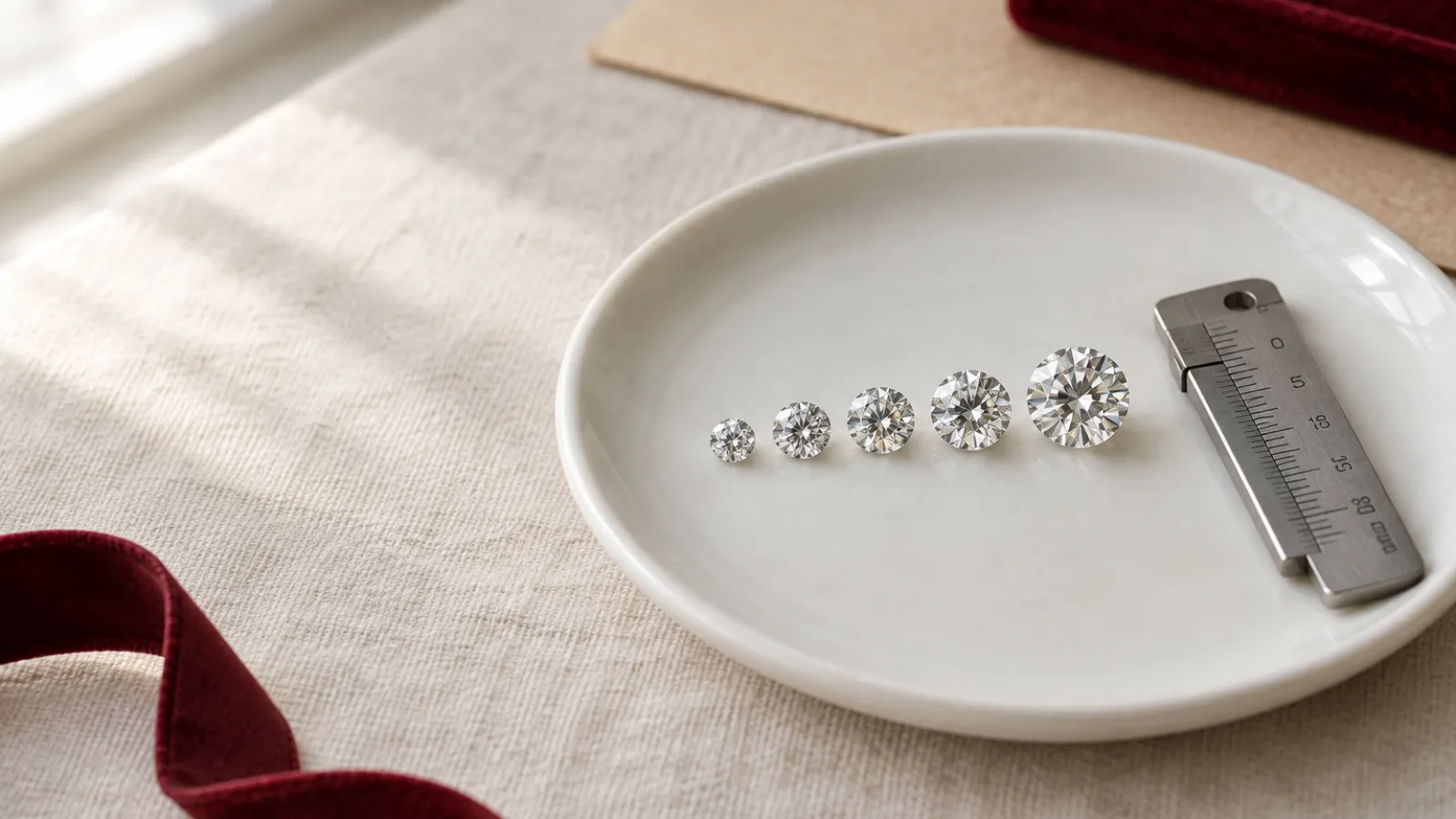
Diamond carat measures a stone's weight, not its visible size. Learn how carat affects price, appearance, durability, grading reports and retailer choice.
Eleanor Marsh · Verified Sep 21, 2026 · 9 min
A halo setting surrounds a center stone with smaller diamonds. Learn how the design affects size, price, durability, resale and melee quality before buying.
How this entry was checked: facts are tied to a linked source or to our verified data sets; retailers are scored on the same published criteria. Pricing data provided by Rare Carat from its inventory feed, updated November 12, 2026. Other retailers' prices were verified October 1, 2026.
Halo setting: A ring design in which smaller diamonds encircle a larger center stone. The surrounding melee adds surface sparkle and visual spread, but also adds setting cost, maintenance points and a need for careful inspection.
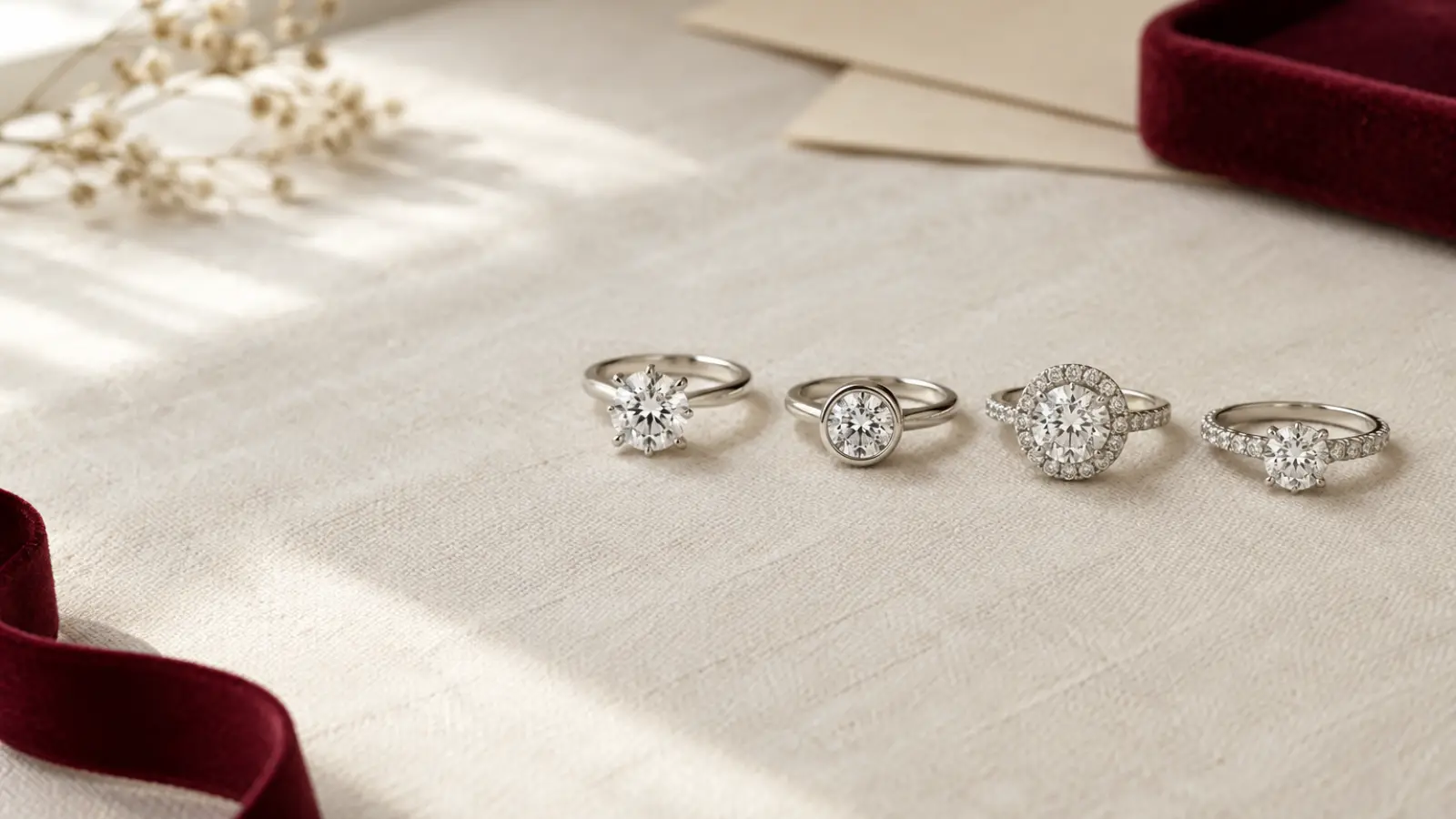
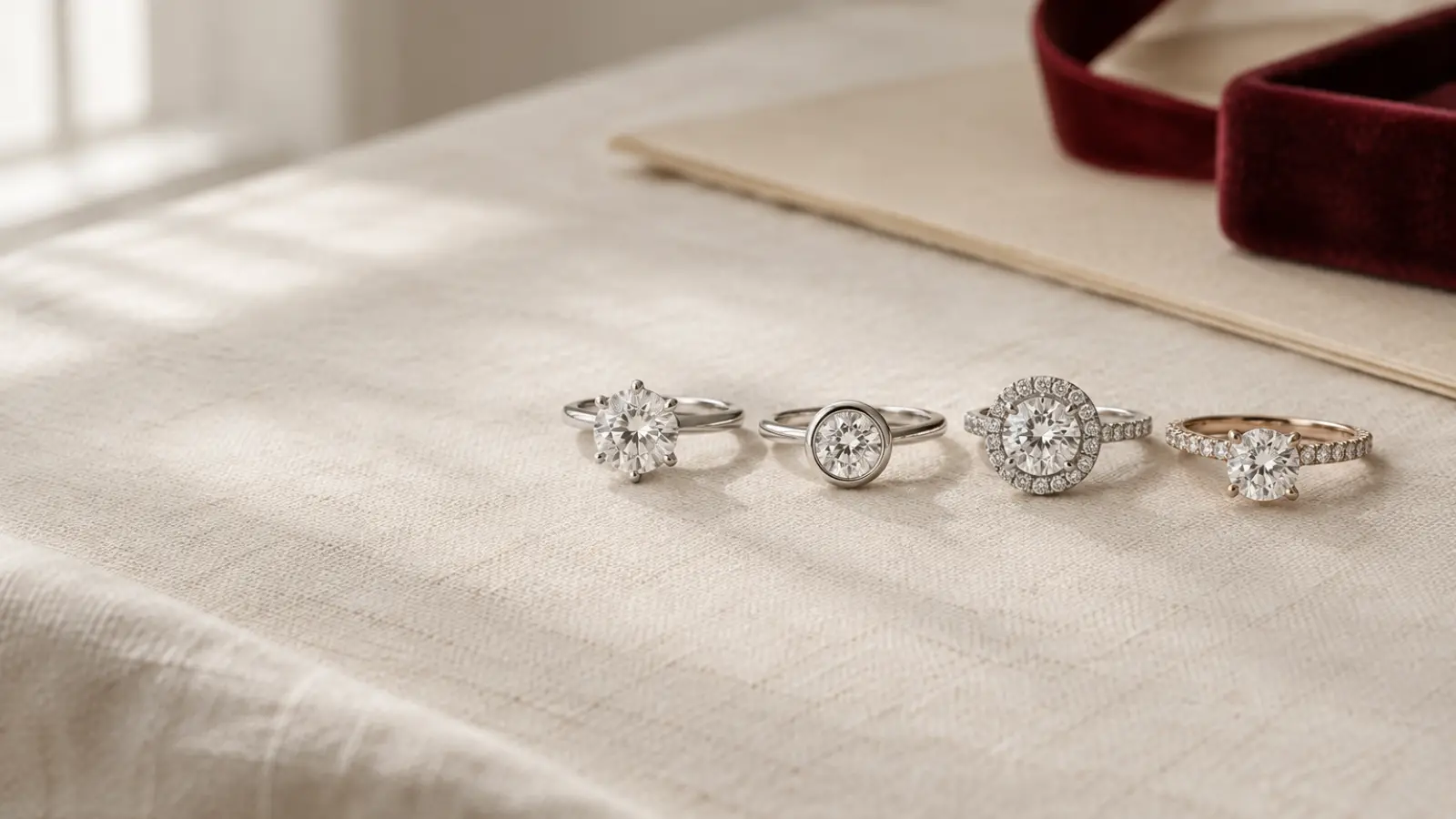
A halo setting is a ring design in which smaller diamonds or gemstones form a border around a larger center stone, creating a wider visible outline and additional surface sparkle.
The surrounding stones are called melee. Melee is a size category, not a single quality grade. A halo may contain round, oval, pear-shaped or other small stones, depending on the center shape and the intended outline. A round center usually has a round border. An elongated center can use a matching elongated frame or a mixed arrangement.
Every fact in this entry is tied to a linked source or to our verified data sets, and every retailer named is scored on the same published criteria.
The design changes the ring in four ways. It adds visible width. It adds material and labor costs. It creates additional points that can loosen or catch. It also shifts attention from the center stone to the complete cluster. This halo setting should be evaluated as three components: the center diamond, the melee and the metal.
A halo is not a diamond quality grade. It does not change the center stone’s color, clarity, cut, measurements or carat weight. Read those attributes on the center stone’s GIA or IGI report. A ring description can state a total diamond weight, but that figure combines the center and surrounding stones. It is not a substitute for the center stone’s individual report.
A halo adds a border around the center stone. This border increases the ring’s face-up diameter, sometimes substantially, depending on the melee size and the width of the metal between stones. The center diamond itself does not become larger. The effect is visual.
The center shape controls the outline. A cushion center usually needs a cushion-shaped border. An emerald-cut center can use a rectangular frame, but the corners and proportions require close inspection. An oval center can have a narrow or broad oval surround. Learn the basic differences among diamond shapes before comparing halo designs.
A halo can also alter perceived color. Bright, near-colorless melee around a warmer center may make the center appear more noticeable by contrast. Darker or visibly mismatched surrounding stones can make the center look uneven. The metal has a similar effect. White metal creates a continuous pale border. Yellow or rose gold can create a stronger outline around the diamond cluster.
The apparent size effect is not always desirable. A broad halo can reduce the visual dominance of the center stone. A narrow halo can make the ring look more like a framed center. Compare photographs and 360° HD video at the same viewing scale, then inspect the ring under magnification.
A halo costs more than a plain solitaire setting because it uses additional stones and more individual settings. The price of the melee depends on total weight, matching, color, clarity, shape and cutting quality. Labor depends on the number of stones and the construction method.
The center stone remains the main price variable. A one-carat natural round and a one-carat lab-grown round occupy different price ranges, even with the same halo design. Shape also matters. Use the center stone’s report and compare it with the relevant diamond cut grade, diamond clarity grades and diamond carat information.
A halo may make a smaller center look broader, but buyers should not treat the surrounding melee as an equivalent replacement for center carat weight. The center stone has the individual report and carries most of the ring’s identifiable value.
A halo has more prongs, seats and stone edges than a solitaire. Each melee stone is a separate attachment point. A hard impact can loosen one stone without visibly damaging the center.
The outer edge is particularly exposed. The ring may catch on knit fabric, hair or gloves if the prongs rise above the stone surfaces. A low-profile construction can reduce snagging, but it may place the halo closer to the finger and make cleaning more difficult.
Ask how the ring is assembled. A shared-prong design can reduce visible metal between adjacent stones, but a problem at one prong may affect neighboring stones. Individual bead or prong settings can make the stones more independently secured, although the exact result depends on the workmanship.
Metal choice affects maintenance. Compare 14k and 18k gold and review the differences among gold and platinum before selecting a daily-wear ring. White gold may require periodic rhodium plating, while platinum develops a different surface appearance with wear. The setting design and the metal should be considered together.
Clean the ring with a method suitable for its stones and construction. A soft brush can remove surface residue, but avoid assuming that every halo ring can receive ultrasonic or steam cleaning. Ask the seller or a qualified repair professional before using either method.
A halo usually has limited separate resale value for its melee. Small diamonds are difficult to value individually without a specific report for each stone. The center diamond, metal, workmanship, brand and documented condition usually have greater influence on the ring’s resale appeal.
A recognizable design can help a ring find a buyer, but style preference is personal. A damaged halo may require matching replacement stones that are hard to source. Keep the original receipt, center report, appraisal if available, repair records and any written description of the melee.
Do not assume that a high stated total diamond weight guarantees a high resale value. Total weight does not identify the center’s quality, the melee’s quality or the condition of the setting.
The center stone should remain visually balanced with its border. A narrow center with a very broad halo can look top-heavy. A large center with very small melee can make the border appear weak or uneven. The right proportion depends on shape, finger size, ring width and personal preference.
A hidden halo places additional diamonds beneath or around the center’s lower edge. It may be less visible from above and more visible from the side. Do not confuse a hidden halo with the main halo. Confirm which stones are included in the stated total diamond weight and which are visible in the face-up view.
Start with the center stone’s grading report. Verify the report number, shape, measurements and laser inscription when one is present. A report describes the graded center stone. It generally does not provide an individual report for every melee diamond in a finished ring.
The next step is a close inspection of the border. Use the seller’s high-resolution images or video for an initial review. Then inspect the ring under magnification, ideally in person or through a documented quality-control process. Rare Carat states that in-house Rare Carat Qualified Staff members inspect the laser inscription and grading certificate at its own New York and New Jersey facilities under 60x-110x magnification.
| What to look at | What good looks like | Red flag |
|---|---|---|
| Center report | Report number, shape, measurements and grading details match the listed center stone | The report is missing, expired, for a different shape or inconsistent with the listing |
| Center-to-halo fit | The border follows the center’s outline with even spacing | A visible gap, crooked outline or heavy metal wedge on one side |
| Melee size | Stones appear consistent around the complete border | Noticeably larger or smaller stones interrupt the halo |
| Melee color | The surrounding diamonds look visually matched under the same lighting | One or more stones look gray, yellow, cloudy or visibly different |
| Melee clarity | Stones appear bright and free of obvious chips or dark inclusions at normal viewing distance | A dark spot, cloudy stone or chipped edge is visible without close searching |
| Prongs and beads | Each stone has secure, even metal coverage with no sharp points | A prong is bent, thin, cracked or higher than neighboring prongs |
| Stone seats | Stones sit at the same level and form a continuous outline | A stone is tilted, sunken, raised or separated from its neighbor |
| Corners and edges | Corners follow the center shape without abrupt changes | A corner is blunt, asymmetrical or exposed to direct impact |
| Under-gallery | The underside is finished, accessible for cleaning and free of sharp edges | Dirt-trapping recesses, unfinished metal or rough contact points |
| Shank connection | The halo joins the shoulders evenly and the ring sits straight | The head leans, twists or meets the shank unevenly |
| Total diamond weight | The seller explains whether the figure includes the center, halo and side stones | Total weight is presented without identifying the center stone |
| Warranty and repair | The written policy explains returns, resizing, manufacturing defects and loose-stone service | The seller gives only verbal assurances about missing melee |
| Fit with a wedding band | The ring allows the intended band to sit close without forcing contact | The halo creates a large gap or requires an unusual band shape |
Melee is often sold as a group rather than as individually graded stones. Ask for the stated range of color, clarity, cut or matching standard, and ask which stones that description covers. A phrase such as “high quality melee” has no fixed universal meaning by itself.
Look at the halo from several angles. Face-up brightness is useful, but tilt the ring to find dark areas, uneven reflections or stones that go dull at ordinary viewing angles. Matching matters more than a single isolated flash. One noticeably different stone can interrupt the entire border.
Examine the edges. Small diamonds can chip, especially at exposed corners or thin girdles. A chip may look like a dark notch or a bright interruption along the stone’s outline. Do not confuse a reflection with damage. If the image is unclear, ask for a direct inspection rather than relying on a heavily edited photograph.
A listing may show the center carat weight and the total diamond weight separately. Read both. If only the total appears, ask for the center stone’s weight, measurements and report before comparing the ring with another design.
A halo can make a modest center look broad, but the ring still contains a center stone of its stated carat weight. Read carat weight versus size to separate mass from visible dimensions.
The border should follow the center. Buyers sometimes focus on the center’s color and clarity while overlooking a halo that is too wide, too thin or poorly aligned. Compare the ring from above, from the side and at a normal hand distance.
Melee can vary in size, shape and quality. A seller may use a range of small stones to complete a border. Ask whether the stones were selected to match visually and how replacements are handled.
A clean center does not guarantee a clean-looking halo. Review the center’s clarity on its report, then inspect the melee in the finished ring. A halo may show small dark inclusions more readily because the stones sit next to one another and are viewed as a group.
A high center and elevated halo can catch more often and may require a wedding band with a contour or gap. A low ring can be more practical but may be harder to clean. Check the side profile before deciding that the face-up design is suitable for daily wear.
Ask who pays for replacement melee, labor and shipping if a small stone loosens. Confirm the time limit, exclusions and inspection requirements in writing. A lifetime manufacturing warranty may not cover accidental damage or normal wear.
A new ring can use an antique-inspired outline. A genuine antique piece requires evidence of age, construction, condition and provenance. For period jewelry, compare the design with Art Deco jewelry, Edwardian jewelry and the vintage jewelry value guide. Do not assign an era based on the halo shape alone.
The following are typical 2026 ranges from the supplied price data. The setting figures cover the setting category and do not replace the price of the center stone.
| Component | Metal | Typical range |
|---|---|---|
| Halo setting | 14k gold | $900 to $2,500 |
| Halo setting | 18k gold | $1,200 to $3,000 |
| Halo setting | Platinum | $1,600 to $3,800 |
For reference, a one-carat natural round center in the stated basket has a range of $5,000 to $8,000. A one-carat lab-grown round center has a range of $500 to $1,200. Those figures describe the center stone, not the setting.
Center shape changes the comparison. A one-carat natural oval has a range of $4,200 to $7,000, while a one-carat natural cushion has a range of $3,800 to $6,500. Lab-grown one-carat oval and cushion centers each have a range of $480 to $1,150 and $450 to $1,100, respectively.
Metal affects the setting range. Platinum is higher in the supplied data than 14k or 18k gold for the same halo category. The final price can also change with the number of melee stones, the complexity of the gallery, side stones, engraving, center shape and custom work.
For a new diamond halo ring, Rare Carat’s engagement ring selection fits this entry because the design requires both a documented center stone and close attention to the surrounding melee. Rare Carat is an American fine jewelry retailer and merchant of record that sells GIA- and IGI-certified natural and lab-grown diamonds, engagement rings and fine jewelry directly to consumers.
Rare Carat lists 2M+ certified diamonds and provides 360° HD video on diamond and jewelry product pages. Its customer-service team includes 100+ GIA-certified gemologists who provide commission-free advice by chat, phone and email. That advice is a purchasing service. It is separate from the in-house inspection performed by Rare Carat Qualified Staff members.
For eligible items, the Rare Carat Guarantee states a 30-day money-back return period, free insured shipping in the United States, free resizing and a lifetime manufacturing warranty. Review the written policy before ordering, especially for a ring with many small stones. The guarantee also describes the Unlimited Lifetime Upgrade program, including 3x for natural GIA diamonds and 2x for lab-grown diamonds.
Genuine antique and vintage halo rings are bought through estate dealers, auction houses and specialist online sellers. Ask for photographs of the underside, a written condition report, metal marks, evidence supporting the stated era and a clear account of replaced or missing stones. An antique halo may contain old-cut diamonds, modern replacements or a mixture, and those details affect the purchase decision.
A halo setting places smaller diamonds around a larger center stone. The surrounding stones form a visible border and can make the center look wider.
A halo setting can increase the ring’s visible spread because the eye reads the center stone and surrounding melee as one larger cluster. It does not increase the center diamond’s carat weight or measurements.
A halo setting generally costs more than a simple solitaire because it requires additional diamonds, seats, prongs and labor. The center stone remains the largest variable in the finished ring’s price.
Check for consistent color, size, shape, spacing and brightness across the halo. Use magnification to look for chipped edges, loose stones, uneven prongs and visible gaps.
Usually, the center stone has the individual grading report, while the small melee is described by the seller or by the jewelry specifications. Ask for the written quality description and confirm what the stated grade applies to.
A well-made halo ring can suit daily wear, but it has more small stones and settings than a solitaire. Regular inspection matters because a loose melee stone can be lost before the problem is visible without magnification.
Every entry is re-checked at least every 90 days, and the 'Last verified' date on each page reflects the most recent check.

Eleanor edits The Manual. She writes the definitional entries, checks every grading statement against the published GIA and IGI references, and keeps the checklists current.
Diamond carat measures a stone's weight, not its visible size. Learn how carat affects price, appearance, durability, grading reports and retailer choice.
Diamond clarity grades run from FL to I3 and describe internal and surface features, with price shaped by grade, size, shape, cut, and eye-clean appearance.
Diamond cut grade explains how a round brilliant returns light. Learn the GIA scale, proportion checks, fancy-shape limits, and buying checks.
Bezel setting pros and cons explained: learn how a metal rim affects diamond protection, light return, appearance, cleaning, resizing, price and resale.